 I am pleased to welcome Jane Loftus to my blog today to share a guest post about the historical setting of her novel, “The Herb Knot.” I would like to thank The Coffee Pot Book Club and Jane Loftus for allowing me to participate in this blog tour.
The historical setting for the Herb Knot is mainly Winchester, where I live (which makes things a lot easier!). The early chapters were set in Ghent, where I used maps, drawings, pictures, and the history of the Flanders cloth trade as a guide, but tried hard to focus on people and their interactions rather than straying too far into descriptions of Ghent itself. I’ve never been to Ghent, although, as it happens, I will be there at the end of August.
Winchester, however, is within walking distance of my house, and its medieval layout and industry have been extremely well documented. The city itself was the former capital of England and seat of King Alfred, but compared to many other cities – Salisbury, for instance, which is also mentioned in the novel – it is quite small. This gives the author fewer opportunities for geographical variety – you’re not going to get docks, as you would in Southampton, or mazes of streets to get lost in, as you would in London. However, this does have advantages.
When Rafi looks out the window in Joan’s turret, it is perfectly feasible for him to have seen all the way down the high street to where his enemies were having a menacing huddle. When he runs from Stefan and gets stuck at the bottom of Hammond’s passage, there really isn’t anywhere else for him to go. He can’t wander unseen through Seven Dials or hide in a Southampton dock warehouse. Unless you leave the city and hide out in the marshes or woods, you’ll probably get caught.
It does make Rafi’s attempts to hide from Roger as he goes about his business that much more difficult, and, ultimately, futile. Roger could stand in any number of places on the High Street and see absolutely everything. It does eventually bite Roger on the backside when Rafi is able to see him leg it up Blue Boar Hill and follow him, but we all know that incident doesn’t end particularly well.
In terms of comparisons with then and now, the castle gate is still there, although the castle itself is long gone. The Guildhall has moved, the inns are now shops, and the Helle Tavern is somewhere beneath Montezuma’s chocolate shop and Occitane, the beauty shop. Not sure either of these would appeal to Adam as much as a large, frothy ale. St Maurice’s, where the curfew bell was rung, is just a tower now, with a flower market underneath. The Abbey has completely gone, bar a few stone tombs near the Tourist Information Board, and the charnel chapel is (probably) under the public toilets in Abbey Gardens.
The cathedral, of course, is still there. There are no markets in the immediate environs anymore; they’re on the High Street. It is not, as Rafi observes, as graceful and elegant as Salisbury Cathedral. It’s squat, it’s square, it’s a bit in your face. But it’s quite lovely and I’m very fond of it even though it was put there by the Normans and I’m not much of a fan of theirs. The top cathedral they built there, though. Gotta give them credit for that.
St John’s is still there, on the hill in the east, overlooking the city. As with many churches, it’s rarely open. It is outside the soke, so not within the city proper, and as you climb, it’s as if you’re in a completely different world. It’s suddenly quieter; there are usually very few people around. If you decided to do a Stefan and hurl someone at a hawthorn tree, you probably wouldn’t be seen (please don’t do this). The frieze is still there and is quite remarkable.
Doesn’t feature top of the list of things to do in Winchester, but it’s top of my list. If it’s open, go in; you won’t be disappointed.
Try not to hide under any tombs, though.
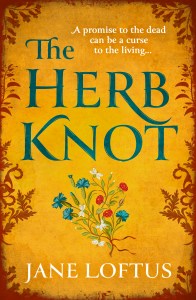 Blurb:
The Hundred Years’ War comes to life in this spellbinding tale of love, betrayal, and conspiracy …
A quest born on the battlefield will change a young boy’s destiny…
Rafi Dubois is five years old when his mother is murdered after the Battle of Crecy in 1346. Alone and lost, Rafi is given a token by the dying Englishman who tried to save his mother’s life: a half-broken family seal which he urges Rafi to return one day to Winchester.
Years later, when Rafi saves a wealthy merchant’s wife from a brutal robbery, he is rewarded with the chance to travel to England, taking the seal with him.
But when he reaches Winchester, Rafi finds himself in a turbulent world full of long-held allegiances, secrets, and treachery. His path is fraught with danger and with powerful enemies working against him, Rafi falls in love with Edith, a market apothecary. But in doing so, Rafi unleashes a deadly chain of events which threatens to overwhelm them both…
The Herb Knot is a sweeping and passionate novel set in one of the most tumultuous times in English history, from a powerful new voice.
Buy Link:
Universal Buy Link: https://books2read.com/u/bzN6Z2
 Author Bio:
Jane Loftus gained a degree in 16th-century European and British history from Surrey before taking a postgraduate degree in modern political history. As a lone parent, she worked in Winchester Waterstones before returning to IT once her son was older.
Hugely passionate about the Middle Ages, she drew inspiration for this novel from the medieval layout of Winchester, which has been painstakingly documented.
Jane is originally from London but has lived in Winchester for over twenty years. When not writing, she is usually out walking or watching costume dramas on Netflix – the more medieval the better. She also plays far too many RPGs.
Author Links:
Website: https://janeloftus.com/
Facebook: https://www.facebook.com/profile.php?id=61577760507961
Instagram: https://www.instagram.com/janeloftusauthor/
Bluesky: https://bsky.app/profile/janeloftus.bsky.social
Amazon Author Page: https://www.amazon.co.uk/stores/author/B0F3Q52X9Y
Goodreads: https://www.goodreads.com/author/show/29357528.Jane_Loftus

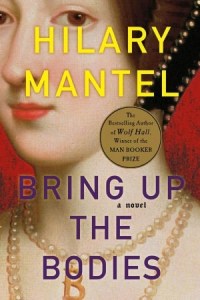 The year is 1535, and Henry VIII is growing bored with his current wife, Anne Boleyn. His eyes are wandering yet again, and this time his sights are set on Jane Seymour. Anne Boleyn had failed to give him his desired son, so Henry decided that it was only fitting for his right-hand man, Thomas Cromwell, to take down a queen. It’s Cromwell’s biggest challenge yet, but it could also become Cromwell’s defining moment. Hilary Mantel explores the pivotal months that pitted Cromwell against the Boleyns in her second book in the Wolf Hall trilogy, called “Bring Up the Bodies.”
 Have you ever looked at a painting and wondered what it must have been like for the artist to paint it? Have you ever wondered what their lives might have been like when they were painting these images that have sparked discussion and intrigue? Usually, we tend to focus on the male artists and their lives, but there has been a trend in recent years to tell the stories of women artists. Take, for example, the story of Maria van Oosterwijk and her maid Geertje Pieters Wyntges. Can these two women find their own successes during Amsterdam’s Golden Age through their art while navigating their own feelings towards each other? Victoria Redel explores the lives of these two women in her latest novel, “I Am You.”
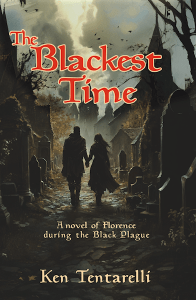
 Today, I am pleased to welcome Ken Tentarelli to share information about his research into Renaissance Italy for his novel, “The Blackest Time.” I would like to thank The Coffee Pot Book Club and Ken Tentarelli for allowing me to participate in this blog tour.
 Blurb:
  Author Bio
 When we think of Elizabethan England, we tend to think of the Golden Age of England. A time of discoveries and for the arts to flourish under the Virgin Queen, Elizabeth I. However, there is a darker side. It was also a time of espionage, fears of invasions from other countries, and the hatred between Catholics and Protestants. The dangers of the Elizabethan underworld have reached the queen, as there is an attempt on her life. Can Jack, the son of a crime boss, change his life and find the culprit before they find him, or will he be betrayed by those he calls his friends? Amie McNee explores the seedy underworld of Elizabethan England in her novel, “To Kill a Queen.”
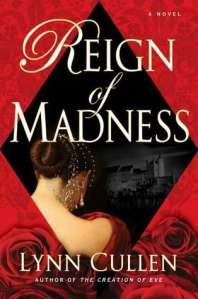 The daughters of Isabel of Castile and Ferdinand of Aragon lived very interesting lives. Of course, we know what happened to Katherine of Aragon, but her elder sister, Juana, has her own tragic tale. She was known as Juana the Mad because the rumors were that when her husband, Philip the Handsome, died, she carried her coffin around for months and would not let him be buried. Was Juana truly mad, or was it all a ruse by powerful men to steal her lands and titles? Lynn Cullen explores Juana of Castile’s life in her novel, “Reign of Madness.”
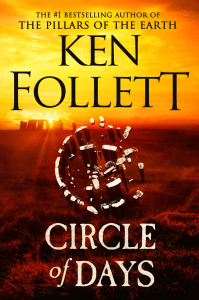 Stonehenge, a marvel of the ancient world that still stands centuries after it was built. It has been the center of mystery and wonder for all who gaze upon it. A gigantic monolithic structure, whose purpose has been a source of discussion since its origins, but that raises another quandary: who were the people who built such an impressive landmark? This single question presents a grand opportunity for historical fiction writers as we don’t have many written records for this period of time, which means authors have room to play. Ken Follett took on the daunting task of telling the tales of those who built this imposing monument in his latest novel, “Circle of Days.”
 There’s nothing like a quest to keep a man going, even on the brink of death, but in the case of Uhtred of Bebbanburg, he has several quests. His main goal is to reclaim his birthright, Bebbanburg, but he also wants to help fulfill Alfred’s dream of uniting the kingdoms to create England. However, life can present even more challenges, and Uhtred knows this all too well. Uhtred not only has to save a royal heir and his daughter, but he also must find the sword that wounded him and place a woman on a throne to rule in a time when women were seen rather than heard. It’s a lot to do, but if anyone is up to the task, it is Uhtred of Bebbanburg. The question is, will he survive? Bernard Cornwell brings us another action-packed novel full of adventures in book 8 of the Saxon Stories series, “The Empty Throne.”
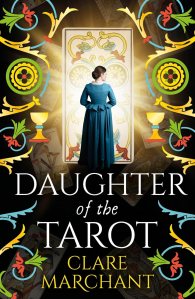 A single deck of cards changed the fate of generations of women. The tarot cards, created in 16th-century Italy, will connect two women separated by centuries. One was a woman in 17th-century London, originally from Milan, who used the cards to rescue women from abusive relationships. The other is a woman from modern-day London starting her life anew when she comes across an old tarot card deck with a missing card. What began as a hunt for a missing card will connect the two women and change lives forever. The cards hold secrets to the past, but will they bring hope or disaster? This is the premise for Clare Marchant’s latest dual-timeline novel, “Daughter of the Tarot.”
 One of the greatest threats to England during the reign of Elizabeth I was the Spanish Armada, under the orders of King Philip II of Spain. In the year 1587, the Spanish ships were spotted off the coast of Devon. Fear grips the country, but one woman is up to the task of keeping her beloved Dartington Hall and its inhabitants from harm. Roberda Chapernowne knows what it means to fight for those she loves and is willing to do it again while her husband, Gawen, is away in Ireland fighting for the Queen after he almost divorced Roberda. Roberda’s life turns upside down when Gawen returns home. Can they rekindle their relationship, or will they fall into despair and ruin? Rosemary Griggs concludes Roberda and Gawen Chapernowne’s stories in her latest novel, “Mistress of Dartington Hall.”
 Adventures of a Tudor Nerd