 I am pleased to welcome Carolyn Hughes to my blog to share a guest post about her latest novel, Sister Rosa’s Rebellion. I would like to thank Carolyn Hughes and The Coffee Pot Book Club for allowing me to participate in this blog tour.
The principal location for Sister Rosa’s Rebellion, the latest novel in my Meonbridge Chronicles series, set in medieval Hampshire, is a priory of nuns, although important plot threads in the novel are also, of course, still set in the community of fictional Meonbridge itself.
However, the central focus of the storyline is the young woman who left Meonbridge at the end of the First Meonbridge Chronicle, Fortune’s Wheel, to become a nun in Northwick Priory. That young woman was Johanna de Bohun, the daughter of the lord and lady of Meonbridge, Sir Richard and Lady Margaret. The shameful motivation behind Johanna’s decision to sequester herself in the priory as Sister Rosa is the primary thread in the story of Sister Rosa’s Rebellion. For when, after fifteen years of contentment, Rosa’s life in the priory is turned upside down, the reason she became a nun is threatened to be revealed.
In this post, I thought I’d share something of the background I’ve drawn upon to paint the picture of life for Sister Rosa and her sister nuns, discussing how I came up with my vision of Northwick Priory, and something of the daily pattern of life inside it.
Northwick Priory is fictional, but, in my mind, it’s sited more or less where the real monastery of Southwick once stood, about nine miles from “Meonbridge” and six miles north of Portsmouth. In medieval times, Southwick Priory was reasonably well-endowed, with many manors, and was also a place of pilgrimage, until it was closed during Henry VIII’s Dissolution of the monasteries. But “Northwick” is relatively poor. Not struggling, as long as the prioress and treasuress can keep on top of their finances, but sufficiently close to the edge that a profligate prioress could easily bring the place to ruin…
Not knowing already how a medieval priory might be laid out, I searched for examples online and found Cleeve Abbey, a ruin in Somerset, destroyed in the Dissolution, that is managed by English Heritage. Cleeve was a monastery, not a nunnery, but, in principle, the layout for both would, or could, be similar. Luckily for me, there’s a plan of the abbey on its web page, which I’ve used very loosely as the model for Northwick.
As at Cleeve, Northwick has two floors, with the more private chambers upstairs and the “day” rooms downstairs. The dorter (the dormitory) is upstairs, with a flight of night stairs leading directly down to the chapel, making it easier for the nuns to access the chapnighttime night time offices. All the sisters, including the prioress, were supposed to sleep in the dorter, although, in Sister Rosa’s Rebellion, the fact that the prioress doesn’t is a matter for great concern!
I imagine the dorter essentially as a long chamber furnished with rows of beds. Privacy wasn’t usual in any medieval environment, even in the grand homes of the gentry. Nonetheless, I’ve introduced a design aspect to Northwick’s dorter that was almost certainly not common in nunneries or monasteries: the inclusion of “cells” within the dorter chamber. I’ve read that, occasionally, the dorter might be partitioned into cells or cubicles, and it suited my purpose for the story of Sister Rosa’s Rebellion to allow this arrangement in Northwick. However, I’ve imagined Northwick’s cubicles as being separated by the flimsiest of partitions, so all the snuffling and snoring noises of the night-time dormitory would still intrude, even if each nun did enjoy a modicum of privacy. It was apparently really rare for a priory to have cells, in the sense of separate chambers, for monks or nuns to sleep in.
,
At Northwick, I have other chambers upstairs, including the prioress’s own – where, in Sister Rosa’s Rebellion, she sleeps and eats, and also entertains both her favourites and visitors, quite contrary to the Rules of the Benedictine order.
The ground floor of Northwick Priory is laid out more or less as at Cleeve. In the centre is the cloister, the great internal courtyard around which the nuns would take their exercise each day, with the chapel to the north of it and the frater (the refectory or dining hall, where all sisters were expected to eat) to the south. Off the sides of the cloister were various chambers, including the Chapter house, where the nuns met daily to hear readings from the order’s Rule, discuss any day-to-day decisions.
Close to the frater would of course be the kitchens, either within the priory buildings, or perhaps in a separate building, for safety.
Sited close to the chapel’s entrance was the sacristy, the room where the priest prepared for services, and where items used in services were,e kept and was therefore also the “office” of the sacrist.
Outside the priory buildings, I’ve given Northwick a gatehouse much like the one at Cleeve, with upper floors. The infirmary was often sited away from the main buildings, presumably to keep infection confined. And there would be other domestic buildings, such as a bakehouse, a brewhouse, and a laundry, and of course, storehouses for various purposes.
I hope you now have a feel for the layout of Northwick Priory, but what of life inside it?
A nun’s day was very structured, arranged around the holy offices, the chapel services (also called the divine offices or the liturgy of the hours) that they were required to attend. The services, which consisted primarily of psalms, hymns, readings, and prayers, were held at fixed times. These canonical hours were not only the specified times for prayer, but also marked the times of day.
Depending upon the time of year, they were broadly as follows:
- Matins: Midnight or sometime during the night
- Prime: The first hour, about 6 a.m.
- Terce: The third hour, about 9 a.m.
- Sext: The sixth hour, about noon
- Nones: The ninth hour, about 3 p.m.
- Vespers: The “lighting of the lamps”, about 6 p.m.
- Compline: The last hour, just before retiring, around 9 p.m.
After Prime, the nuns would usually hold their chapter meeting (mentioned above). Otherwise, between the services, they took their meals (breakfast, dinner, and supper), carried out their work, and in theory spent some time in reading and private study.
I imagine meals were generally modest affairs for most (although, in Sister Rosa’s Rebellion, the prioress decides she can no longer stomach “modest” meals and demands more exotic food for herself). That’s not to say the ordinary nuns’ food was necessarily meagre or unappetizing. They had the resources of the home farm to call upon, and if it was well-managed, there was no reason why they shouldn’t have a varied and nourishing diet. In principle, according to the Benedictine Rule to which Northwick’s nuns adhere, meals were taken in silence or near silence, save for the nun who was reading from the Bible. However, it again suited my “authorly” purposes to relax the rule a little, so “quiet” is required in Northwick’s dorter rather than silence.
As I said, in theory, time was set aside for reading scripture and private study. However, I understand that, by the fourteenth century, reading was no longer widespread – I’m not clear why – and even work occupied less time than it once had, as servants tended to do it.
In a small nunnery like Northwick, most of the nuns would probably have a defined role. Although some of the nuns’ work might be menial, say, working in the kitchen, laundry, or garden, I believe it was more commonplace for servants to carry out these tasks, whilst the nuns themselves undertook administrative tasks. If you’d like to know more about the work of medieval nuns, look out for a post of mine called The working lives of medieval nuns, shared by other hosts on this blog tour.
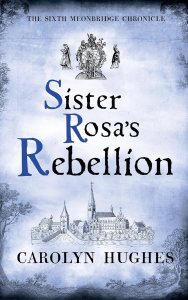 Blurb:
How can you rescue what you hold most dear, when to do so you must break your vows?
1363. When Mother Angelica, the old prioress at Northwick Priory, dies, many of the nuns presume Sister Rosa, formerly Johanna de Bohun, of Meonbridge, will take her place. But Sister Evangelina, Angelica’s niece, believes the position is hers by right, and one way or another, she will ensure it is.
Rosa stands aside to avoid unseemly conflict, but is devastated when she sees how the new prioress is changing Northwick: from a place of humility and peace to one of indulgence and amusement, if only for the prioress and her favoured few. Rosa is terrified her beloved priory will be brought to ruin under Evangelina’s profligate and rapacious rule, but her vows of obedience make it impossible to rebel.
Meanwhile, in Meonbridge, John atte Wode, the bailiff, is also distraught by the happenings at Northwick. After years of advising the former prioress and Rosa on the management of their estates, Evangelina dismissed him, banning him from visiting Northwick again.
Yet, only months ago, he met Anabella, a young widow who fled to Northwick to escape her in-laws’ demands and threats, but is a reluctant novice nun. The attraction between John and Anabella was immediate, and he hoped to encourage her to give up the priory and become his wife. But how can he possibly do that now?
Can John rescue his beloved Anabella from a future he is certain she no longer wants? And can Rosa overcome her scruples, rebel against Evangelina’s hateful regime, and return Northwick to the haven it once was?
Buy Links:
Universal Buy Link: https://books2read.com/u/bWaYM0
This title is available to read on #KindleUnlimited.
 Author Bio:
CAROLYN HUGHES has lived much of her life in Hampshire. With a first degree in Classics and English, she started working life as a computer programmer, then a very new profession. But it was technical authoring that later proved her vocation, word-smithing for many different clients, including banks, an international hotel group, and medical instruments manufacturers.
Although she wrote creatively on and off for most of her adult life, it was not until her children flew the nest that writing historical fiction took centre stage. But why historical fiction? Serendipity!
Seeking inspiration for what to write for her Creative Writing Masters, she discovered the handwritten draft, begun in her twenties, of a novel, set in 14th-century rural England… Intrigued by the period and setting, she realised that, by writing a novel set in the period, she could learn more about the medieval past and interpret it, which seemed like a thrilling thing to do. A few days later, the first Meonbridge Chronicle, Fortune’s Wheel, was underway.
Seven published books later (with more to come), Carolyn does now think of herself as a Historical Novelist. And she wouldn’t have it any other way…
Author Links:
Website: https://carolynhughesauthor.com
Twitter: www.x.com/writingcalliope
Facebook: www.facebook.com/CarolynHughesAuthor
Bluesky: https://bsky.app/profile/carolynhughes.bsky.social
Book Bub: https://www.bookbub.com/authors/carolyn-hughes
Amazon Author Page: https://www.amazon.co.uk/stores/Carolyn-Hughes/author/B01MG5TWH1
Goodreads: https://www.goodreads.com/author/show/16048212.Carolyn_Hughes

 Today, I am pleased to welcome Janet Wertman to my blog as part of the blog tour for her latest novel, Nothing Proved. I would like to thank The Coffee Pot Book Club and Janet Wertman for allowing me to be part of this blog tour.
 Blurb:
  Author Bio:
  The island we know as England is on the cusp of the 10th century. King Alfred is dead, and his son Edward now rules. The kingdom of Wessex is still standing strong, and it looks like the Danes are behaving themselves and keeping the peace, for now. Unfortunately, things are not going smoothly for Uhtred of Bebbanburg. He gets into a bit of mischief and becomes a target of Cnut Longsword, the Viking leader, all while trying to fight for his right to rule his beloved Bebbanburg. Can Lord Uhtred survive his latest adventure, or will his Saxon allies save him in the nick of time? This is the premise of Uhtred’s latest adventure, “The Pagan Lord,” Book 7 in the Saxon Stories series by Bernard Cornwell.
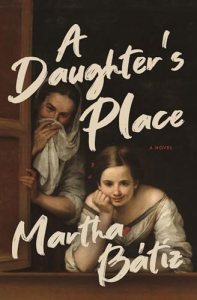 Miguel de Cervantes, the author of Don Quixote, lived quite an interesting life. He was a poet, soldier, war hero, prisoner, husband, brother, uncle, father, and author. His writing might portray a man of honor and dignity, but his home life was messy. You see, Miguel was married, but his daughter was not the daughter of his wife, Catalina de Salazar. His daughter, Isabel, was illegitimate, and when her mother died, Miguel decided the best possible solution was to invite Isabel to live with his sisters and his niece. What’s the worst that could happen? Martha Batiz explores the women’s lives connected to Miguel de Cervantes in her debut novel, “A Daughter’s Place.”
 Florence, Italy, in the 16th century, was a city of opportunity and full of art and architecture. It was also a city on the precipice of great change. The great banking family, the Medicis, holds the reins of government in Florence, and Lorenzo de’ Medici is the family’s current head. However, two bastards will radically change his life and the Medici family. One was a bastard son of a notary who became one of the most famous artists ever. The other was a bastard son who became a priest and the enemy of the Medici family. Their stories of power and ambition intersect in the city of Florence in Phil Melanson’s debut novel, “Florenzer”.
 During the reign of King Henry VIII, the king would elevate well-qualified men to positions of power and prestige. We all know the story of Thomas Cromwell, but it is his mentor, Sir Thomas Wolsey, whose story shows how one can rise from humble beginnings, but whose fate is ultimately tied to the mood of the monarch. The son of a butcher turned scholar who became a priest, a lover, a father, and the closest advisor to the king. His life, his loves, his successes, and his struggles are told in Alison Weir’s latest novel, “The Cardinal.”
 I am pleased to welcome Wendy J. Dunn to my blog today to share a snippet from her novel “The Duty of Daughters” as part of the blog tour for her omnibus “Falling Pomegranate Seeds Duology.” I would like to thank Wendy J. Dunn and The Coffee Pot Book Club for allowing me to be part of this blog tour.
 Blurb:
 Author Bio:
 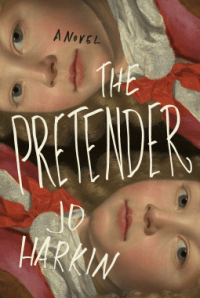 The Wars of the Roses are ending, and with it comes uncertainty about who will lead the country. On one side is King Richard III, who many believe killed his nephews to become King of England; on the other is Breton Henry, Henry Tudor, who believes he is the rightful king due to his bloodline. However, there is a third player in this entire debacle. A young farm boy named John Collan may spend his days daydreaming and studying to his heart’s content, but he is destined for more. A path that will lead him to hobnob with nobility and become the enemy of a king who just sat on his throne. Just who is John Collan, and how did this boy go from the farm to a life of infamy? Jo Harkin tells the story of how John Collan became Lambert Simnel in her novel, “The Pretender.”
 Do you have a favorite historical figure whom you have wondered what would have happened if they survived their dark fate? Have you wondered what would happen if they had fantastical abilities, such as transforming into animals? Maybe the last piece sounds a bit too far-fetched, but it makes for an interesting concept for a novel. What if we took the story of Lady Jane Grey, the Nine-Day Queen of England, and turned the tale into a fantastical comedy full of romance and adventure? Then, you would get the premise of “My Lady Jane” by Cynthia Hand, Brodi Ashton, and Jodi Meadows.
 A princess born to a king and his second wife lost her title and legitimacy when her father decided that her mother, Anne Boleyn, needed to die. Elizabeth Tudor knows the meaning of resilience as she survived her childhood during her father King Henry VIII’s reign. Now that her father is dead Elizabeth is at the mercy of her half-siblings Edward and Mary, plus any scheming man who wants to marry her and get closer to the crown. Can Elizabeth survive her siblings’ reigns or is she destined to be locked in the Tower to await her ultimate fate like her mother? Janet Wertman explores the life of Elizabeth Tudor in her latest series
  Adventures of a Tudor Nerd