Book Review: “The House of Echoes” by Alexandra Walsh

A love that can get through any obstacle even when the couple is married to other people is considered very rare. However, star-crossed lovers at court were practically unheard of, especially multiple couples from the same family. Anne Brandon knows how rare these matches are as her father Charles Brandon married the sister of King Henry VIII. Now she must figure out her feelings about romance while navigating court life. In the modern day, Caroline Harvey has relationship problems while she navigates the loss of her famous writer, grandfather Dexter Blake. How are these two women from different centuries connected and can they fight for who they love or are they destined to be alone? Alexandra Walsh tells both women’s stories in her novel, “The House of Echoes.”

I want to thank Boldwood Books and Net Galley for sending me a copy of this novel. The concept of this novel and the cover were what pulled me into the story. I know about the children of Charles Brandon and Mary Tudor, but when it comes to Charles’ other children, I don’t know much. I wanted to learn a bit about Anne Brandon and have a good time with the story of Caroline Harvey.

We begin with the story of Caroline Harvey as she returns home to England from America after a bad break-up with her former fiance Travis Hibbert. She is the personal assistant to her grandfather, the recluse writer Dexter Blake, the author of the Ether Heracles book series. Dexter Blake is dying and it is up to her and her family to announce it to the rest of the world while releasing the last book in the series and making movies about the books. While the world mourns Dexter’s death, Caroline is given the gift of Dexter’s home and she begins researching the history of the house, which will lead her to an old fling Gideon and his book store Ten-to-Midnight. It is through Caroline’s research that she discovers the story of Anne Brandon and the truth about her life.

Meanwhile, in Tudor England, Anne Brandon is getting used to being the step-daughter of Mary Tudor, the sister of King Henry VIII. She is not used to court life, but she has friends who will become famous like Anne Boleyn and Margaret More Roper. As a young girl, Anne falls head over heels in love with Randall Hanworth and she believes that she is destined to marry him. However, fate and her father have someone else in mind; Edward Grey 3rd Baron of Powis, which made Anne Baroness of Powis. That doesn’t mean it was a happy marriage as the couple never had any children. Anne lived throughout the reign of Henry VIII, saw two of his wives beheaded including her friend Anne Boleyn, and had a great falling out with her father Charles Brandon before he died, which meant that she was left out of his will. Anne was willing to fight for the lands that she believed rightfully belonged to her and the love of her life Randall.

This was a fun novel with so many twists and turns, including one at the end that I did not see coming. I especially love the little details that Walsh included especially coming up with blurbs for each of the Dexter Blake books as well as the inner workings of the Brandon household. As someone who reads a lot about the Tudors, it was refreshing to read about Tudors that were new to me. If you want a fresh take on the Tudor with a modern twist, I greatly recommend you read, “The House of Echoes” by Alexandra Walsh.

Book Review: “Labyrinth” by Kate Mosse

For centuries, the brave knights of Camelot and the Crusaders have searched for the Holy Grail. The cup that Jesus of Nazareth used during his Last Supper is rumored to be a vessel that can grant eternal life or miraculous healing powers. It can be a cup, plate, or stone, but in all stories, the Grail guardians and those searching for it are predominately male. But what if the guardians were male and female and the ones searching for it were predominately female? Alais from 11th-century France and Alice Tanner visiting France in 2007 share a connection that is centuries deep and it all started with a ring, a book, and an image of a labyrinth. How are these two connected to the labyrinth and the Grail and can they protect it from those who want to use it for their dark purposes? Kate Mosse weaves the tale of the Grail and the two women connected by fate in her novel, “Labyrinth.”

This is another one of my bookshop finds. The cover initially caught my eye, followed by the author and the description. Dual-timeline stories have become one of my favorite sub-genres recently, so when I saw this was a feminine take on the Grail quest with a dual-timeline twist, I jumped at the chance to read it.

We begin with Alice and an archeological dig that she decided to volunteer at as a guest of her colleague Shelagh. As an amateur, she knows that she should not go into a cave alone, but she decides to throw caution to the wind and finds the bodies of two people, a leather bag, a stone ring, peculiar writing on the wall, and the image of a labyrinth. This is quite a discovery, except it puts the entire dig in danger as the police want to investigate the scene. Not only that but Shelagh goes missing and someone wants to either harm or kidnap Alice. The discovery of the cave will change Alice’s life, and reconnect her with a man from her past, a man who knows the truth, and a woman from the past who connects all the dots.

In the year 1209, Alais and her family are sitting on pins and needles as the pope has declared a crusade against the people of her faith, the Cathars, who have been deemed as heretics. As the armies of the Catholic church are on the doorsteps of Carcassonne, Alais’s father Bertrand gives her a gift of a book and a stone ring. What Alais will learn is that there are three books in total and a special ring inscribed with the labyrinth to mark the guardians of the Grail. Alais must make the difficult choice to leave her home and travel to the head of the guardians to protect the knowledge of the Grail. Alais is willing to risk everything as both a Cathar and a guardian of the Grail.

This was an absolutely thrilling read, it is also the first time I have read a novel with the Cathars and the Crusade against them featured prominently. There were so many twists, turns, and secrets abound that just when you think you have the novel figured out, something new drops. The balance between the present day and the past was perfect and the characters were so realistic that it felt like I could have a conversation with them. I need to see how this trilogy ends, which does include new characters and timelines. If you want a thrilling historical fiction novel full of twists, turns, history, and myths, “Labyrinth” by Kate Mosse must be on your list.

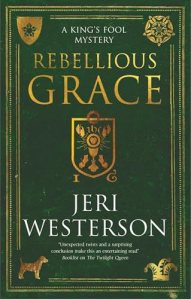
Book Review: “Rebellious Grace” by Jeri Westerson

Christmas is a time of merriment and joy unless you are in the court of Henry VIII in 1536. Then it is a time of stress and murder. Henry’s second wife Anne Boleyn has only been dead for a few months while his third wife Jane Seymour is slowly adjusting to her new role as queen. A rebellion known as the Pilgrimage of Grace is taking over northern England and the leader Robert Aske wants to visit the court to discuss matters with King Henry VIII. To top it all off, a servant of Queen Jane has been murdered and the only one who can solve the crime is a fool, Will Somers. Can Will Somers connect the dots and save those closest to him, or will the treasonous act be another downfall in such a tumultuous year? This is the premise for the third book in the A King’s Fool Mystery series, “Rebellious Grace” by Jeri Westerson.

Thank you Severn House and Net Galley for sending me a copy of this novel. This is the second book in the A King’s Fool Mystery series I have read, the first being The Twilight Queen. While I had issues with The Twilight Queen when I saw that Westerson would cover the Pilgrimage of Grace and Jane Seymour in her next novel, I decided to give the series another chance.

We begin with the discovery of the body. The male servant Geoffrey Payne had his neck slashed in a rather unusual way, but there was no murder weapon by the body. The body is quickly buried and the investigation is left to Sir Nicholas Carew. However, this is not the only distraction at court, as Will Somers will soon find out. There is a real divide between Protestants and Catholics throughout the kingdom and while Queen Jane Seymour acts as a peacemaker at court, in other areas of England, the Pilgrimage of Grace is on the move to bring back Catholicism, led by Robert Aske. Thomas Cromwell has the idea of inviting Robert Aske to join the Christmas celebrations to discuss matters. And then there is the fact that Elizabeth and Mary are joining their father at court as a way to reconcile. So, you know, a very quiet Christmas.

With the craziness of court, Will Somers is of course caught directly in the middle of the mess. He is not only trying to cheer up his friend and employer King Henry VIII, but after it is discovered that poor Mr. Payne’s corpse was dug back up and disemboweled, he is asked to assist Sir Nicholas Carew with the investigation. To add even more drama, there is a connection between the dead man, the queen’s jewels, and the Seymour family. Will has to juggle all of this plus his ever-complicated love life between his wife Marion and his lover Nicholas Pachett.

I loved this mystery, especially the additions of the characters John Blanke, Jane Foole, Jane Seymour, and Edward Seymour. It was so gripping and well-balanced that I finished it in a day, which I hadn’t done with a book in a while. If you want a delightful murder mystery set in the court of Henry VIII or if you have read the other books in the A King’s Fool Mystery series, I highly recommend you read, “Rebellious Grace” by Jeri Westerson.

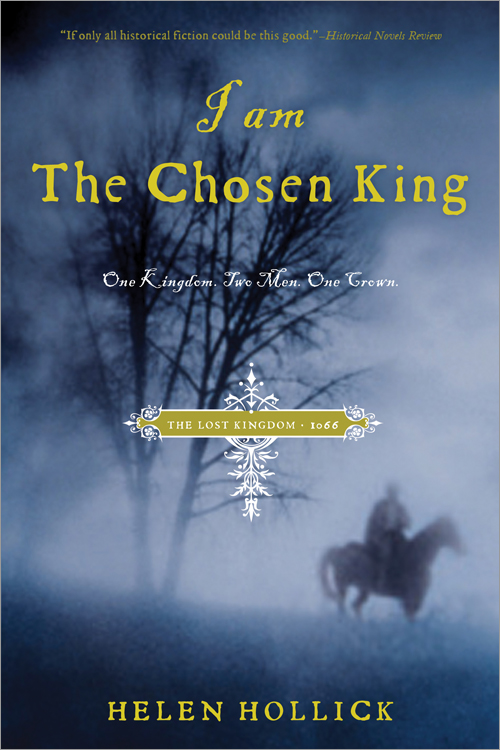
Guest Post: “Book Blast for ‘Harold the King/ I am the Chosen King’ by Helen Hollick

January Harold25YearsI am pleased to welcome Helen Hollick to share the blurb for her book, “Harold the King/ I am the Chosen King,” celebrating its 25th Publication Anniversary. I want to thank The Coffee Pot Book Club and Helen Hollick for allowing me to be part of this special blog tour.

Cover Harold The King UKBlurb: 

First published in 2000 – Celebrating a Silver Anniversary! 

The events that led to the Battle of Hastings and the Norman Conquest of England in 1066 – told from the English point of view. 

Two men. One crown. 

England, 1044. Harold Godwinesson, a young, respected earl, falls in love with an ordinary but beautiful woman. In Normandy, William, the bastard son of a duke, falls in love with power. 

In 1066 England falls vulnerable to the fate of these two men: one, chosen to be a king, the other, determined to take, by force, what he desires. Risking his life to defend his kingdom from foreign invasion, Harold II led his army into the great Battle of Hastings in October 1066 with all the honor and dignity that history remembers of its fallen heroes. 

In this beautifully crafted tale, USA Today bestselling author Helen Hollick sets aside the propaganda of the Norman Conquest and brings to life the English version of the story of the man who was the last Anglo-Saxon king, revealing his tender love, determination, and proud loyalty, all to be shattered by the desire for a crown – by one who had no right to wear it. 

Cover I Am The Chosen King USPraise for Helen Hollick:

“Helen Hollick has it all! She tells a great story, gets her history right, and writes consistently readable books” 

~ Bernard Cornwell 

“A novel of enormous emotional power” 

~ Elizabeth Chadwick 

“Thanks to Hollick’s masterful storytelling, Harold’s nobility and heroism enthrall to the point of engendering hope for a different ending…Joggles a cast of characters and a bloody, tangled plot with great skill” 

~ Publisher’s Weekly 

“Don’t miss Helen Hollick’s colorful recreation of the events leading up to the Norman Conquest.” 

~ Daily Mail 

“An epic re-telling of the Norman Conquest” 

~ The Lady 

“If only all historical fiction could be this good” 

~ Historical Novel Society Review 

Buy Links: 

Universal eBook Link, Harold The King: https://books2read.com/u/4jOdYj  

Harold the King (UK): https://viewbook.at/HaroldTheKing 

I Am the Chosen King (US): https://viewBook.at/ChosenKing 

This title is available on #KindleUnlimited, excerpt in US & Canada.

Helen Hollick (edited)Author Bio: 

First accepted for traditional publication in 1993, Helen became a USA Today Bestseller with her historical novel, The Forever Queen (titled A Hollow Crown in the UK) with the sequel, Harold the King (US: I Am The Chosen King) being novels that explore the events that led to the Battle of Hastings in 1066. Her Pendragon’s Banner Trilogy is a fifth-century version of the Arthurian legend, and she writes a nautical adventure/supernatural series, The Sea Witch Voyages. She has also branched out into the quick read novella, ‘Cosy Mystery’ genre with her Jan Christopher Mysteries, set in the 1970s, with the first in the series, A Mirror Murder incorporating her, often hilarious, memories of working as a library assistant. The fifth in the series, A Memory Of Murder, was published in May 2024. 

Her nonfiction books are Pirates: Truth and Tales and Life of a Smuggler. She is currently writing about the ghosts of North Devon and Jamaica Gold for her Sea Witch Voyages.  

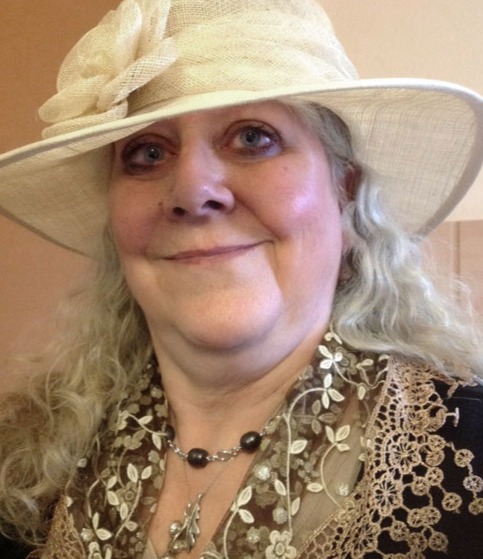
Recognized by her stylish hats, Helen tries to attend book-related events as a chance to meet her readers and social-media followers, but her ‘wonky eyesight’ as she describes her condition of Glaucoma, and severe arthritis is now a little prohibitive for travel. 

She lives with her family in an eighteenth-century farmhouse in North Devon, with their dogs and cats. On the farm, there are showjumper horses, fat Exmoor ponies, an elderly Welsh pony, geese, ducks, and hens, as well as several resident ghosts.

Author Links: 

Website: https://helenhollick.net/ 

Amazon Author Page: https://viewauthor.at/HelenHollick 

Facebook: https://www.facebook.com/helen.hollick 

Blog, supporting authors & their books: https://ofhistoryandkings.blogspot.com/ 

Bluesky: https://bsky.app/profile/helenhollick.bsky.social  

Twitter / X: https://x.com/HelenHollick 

Monthly newsletter: Thoughts from a Devonshire Farmhouse: 

Start Here: January 2024 https://ofhistoryandkings.blogspot.com/2024/01/thoughts-from-devonshire-farmhouse.html (posted on her blog)

Guest Post: “Historical Background to ‘On a Sword’s Edge’ by JR Tomlin”

I am pleased to welcome JR Tomlin to my blog today to share a guest post for her latest novel, “On a Sword’s Edge.” I want to thank JR Tomlin and the Coffee Pot Book Club for allowing me to be part of this blog tour.

During the Viking Age, which ended sometime around 1050, the Norse conquered the Western and Northern Isles of Scotland as well as Caithness in the Northern Scottish mainland. That the Viking Age was over did not mean that the Norse turned around and sailed back to Norway.  

These islands and Caithness were part of Norse jarldoms which they had no intention of giving up. It hardly needs to be mentioned that as the Kingdom of Scotland grew stronger and more organized and gained control of most of what is now Scotland, this would lead to conflict. 

In 1222, Scotland’s King Alexander II subjugated Caithness with what appears to have been little opposition from the Norse. For a time, he was busy subjugating the hitherto semi-independent Argyll and dealing with a revolt in the always difficult region of Galloway. Then he would have turned back to pushing the Norse out of the Isles, but died suddenly, leading a force to the Hebrides. His seven-year-old son, also named Alexander, was the new King of Scots. 

Ecclesiastes 10:16 states with considerable truth: “Woe to you, land, when your king is a child, and your leaders start their parties in the morning!” There were fourteen years of regents squabbling and fighting for power. At several points, the young king and his queen, the daughter of the King of England, were held prisoner by one or another of the factions. However, regencies end eventually and when that one did, a determined young king meant to finish what his father had started. 

As soon as he reached his majority, King Alexander III sent negotiators to discuss the purchase by the Scots of the Western Isles. The King of Norway, King Haakon, was a formidable ruler who had subjugated both Greenland and Iceland. He had no interest in giving up any of the lands subjugated by the Norse. The negotiations quickly broke down. 

At about that time, and the date is vague but probably around 1260, the Stewarts of Dundonald took the Isle of Bute from the Norse. That Isle was essential in that it gave control over important shipping, so this was a serious blow. Faced with a growing threat to their control of those islands and the surrounding waters, King Haakon put together a fleet of more than a hundred warships and sailed first to Shetland and then to the Hebrides. 

King Alexander once more sent negotiators, but events prove he was also planning for invasion. Haakon sailed his fleet around Cape Wrath some four hundred miles south to the Firth of Clyde. He first subjugated Bute, retaking the Stewart’s Rothesay Castle, and sent ships up Loch Long and portaged them to Loch Lomond, ravaging the area. There was little opposition, possibly because King Alexander had already called up the levies. 

The main Norse fleet remained in the Firth of Clyde, just off the coast of Ayr. Whether he intended to attack Ayr itself is open to question, but merely taking Bute was not the end of his intentions. Whatever those intentions were, a particularly severe storm hit on the 1st of October in 1263, sinking several of Haakon’s ships and forcing some aground near the village of Largs. Which is the point at which the novel takes up. 

Blurb: 

Scotland. 1263. The scent of rain mingles with the smoke of campfires as word spreads: the Norse are coming… 

As tempers rise between King Alexander and the Norse King Haakon, at the center of it all is sixteen-year-old William Douglas, a squire in service to Sir John Stewart, Lord High Steward of Scotland. 

When Haakon’s fearsome fleet is espied approaching Scotland’s shores, carrying the greatest invasion force the Norse have ever mustered, the dread of battle settles over the land. Summoned to Ayr Castle, William joins the Scottish forces in a desperate defense. Now tasked with serving his newly knighted brother, Hugh, William has little time to dwell on the fear – or thrill – of his first real taste of war. 

And once the Norse’s menacing line of ships finally touches the shore, Scotland’s fate may rest on more than noble titles and knightly deeds— it’ll take the mettle of every soul on the ground for them to triumph. 

Set against the wind-swept coast of medieval Scotland, On a Sword’s Edge takes you right into the center of The Battle of Largs alongside a mere – yet fearless – squire. 

Buy Link: 

Universal Buy Link: https://books2read.com/u/3R7l8D  

Author Bio:

JR. Tomlin is the author of more than twenty historical novels, set for the most part in Scotland. Her love of that nation is traced from the stories of King Robert the Bruce and the Good Sir James her grandmother read to her when she was small to hillwalking through the Cairngorms where the granite hills have a gorgeous red glow under the setting sun. Later, her writing was influenced by the work of authors such as Alexander Dumas, Victor Hugo, and of course, Sir Walter Scott.

When JR isn’t writing, she enjoys spending time hiking, playing with her Westie, and killing monsters in computer games. In addition to having lived in Scotland, she has traveled in the US, Europe, and the Pacific Rim. She now lives in Oregon in the beautiful Pacific Northwest. 

Author Links

Website: https://www.jrtomlin.com  

Twitter: https://x.com/TomlinJeanne  

Bluesky: https://bsky.app/profile/jrtomlin.bsky.social  

Book Bub: https://www.bookbub.com/authors/j-r-tomlin  

Amazon Author Page: https://www.amazon.com/author/jrtomlin  

Goodreads: https://www.goodreads.com/author/show/4094154.J_R_Tomlin 


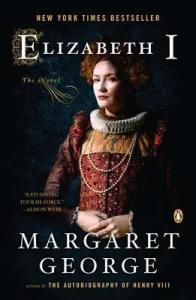
Book Review: “Elizabeth I” by Margaret George

The stories of queens have been told in numerous ways for centuries, but one of the most famous queens in human history is the Virgin Queen, Elizabeth I. The daughter of Anne Boleyn and Henry VIII who famously decided not to marry any man and instead devout her entire life to serve England’s people. That does not mean she was subservient to others she demanded respect and adoration from her subjects. Most stories of Elizabeth I begin in her golden years, but what could a novel about the queen’s silver years tell us about her personality, her reign, and the people who choose to follow or rebel against the famous queen? Margaret George gives her readers an innovative look at the titular queen in her novel, “Elizabeth I.”

This is only the second novel I have read written by Margaret George, the first being the brilliant “The Autobiography of Henry VIII.” I knew that she had written a novel about Elizabeth I, but I had not had the chance to read it until I saw it at a used bookstore. It was an instant buy for me even before I read the description, but the blurb made me even more intrigued.

George does not begin with Elizabeth’s coronation in 1558, like many novels about Elizabeth, but in the year 1588, which was arguably the queen’s most difficult challenge, fending off the Spanish Armada. To start at this most pivotal moment in Elizabeth’s reign is a bold choice that pays off because it sets the tone for the rest of the novel. Nothing is stable for the queen even after victory is won. Shortly after the Armada is defeated, the love of Elizabeth’s life, Robert Dudley Earl of Leicester dies. It is a huge loss for the queen, but she is not the only one who loves Leicester. He leaves behind his wife and cousin to the queen, Lettice Knollys, however, the two women cannot share their grief as the queen banished her cousin from court after she heard about the marriage.

The only one who can connect the two women at this point is Lettice’s son the Earl of Essex, who desires to be a great man, so he becomes a favorite of Queen Elizabeth. The arrogant young up-starter soon finds out that court is not all that he dreamed it would be and that to be a great man, he has to follow every rule of his monarch, which goes as well as you would imagine. What I appreciate about this novel is that George does not gloss over Elizabeth’s reign and instead chooses to show how muddy the political landscape was during the late Elizabethan age. We also get to see events that are not often featured in other novels about the Elizabethan age, such as Roanoke, Grace O’Malley, the return of the Armada, diplomats from farther countries, and the connection between Lettice Knollys and William Shakespeare. She fought every second of every day to keep her crown because she never knew who was the threat and when they would strike next until her dying breath.

I think this novel does an excellent job of showing George’s readers what Elizabeth I was like further into her reign. It balanced both the harsh reality of the Tudor court with plenty of intrigue with Elizabeth the person who had her heart broken on more than one occasion and had to be harsh to fight for what she loved, the English people. If you want an unforgettable portrayal of the Virgin Queen and her court towards the end of her reign, I highly recommend you read, “Elizabeth I” by Margaret George.

Book Review: “City of Silk” by Glennis Virgo

When we think about the period known as the Renaissance, we often think about Italy and the artists like painters and sculptors. However, other craftsmen made Italy their home. Take, for example, tailors and seamstresses. These skilled craftsmen and women can create art you can walk in with their hands. However, there are gender barriers between tailors and seamstresses in that only men can be tailors and only women can be seamstresses. One orphan girl from Bologna not only challenges what it means to be a woman tailor but also challenges one of the wealthiest merchants in the entire city who has a dark connection to her past. This is the premise for Glennis Virgo’s debut novel, “City of Silk.”

I want to thank Allison & Busby and Net Galley for sending me a copy of this novel. I know we are not supposed to judge a book by its cover, but this cover is really why I wanted to read more about it. The description and knowing that it was a debut were also appealing factors as I wanted to see what a new author would do with 16th-century Italy and its complex nature.

We begin with the orphanage of Santa Maria del Baraccano where we find out that our protagonist is a young girl whose parents, a tailor and a seamstress, both died. The girl, Eleana Morandi, was raised in the orphanage, but something happened and she ran away. She would eventually work at the Palazzo of Signora Ruffo, a widowed seamstress who runs a successful business. Elena works as an assistant to Signora Ruffo alongside a girl named Sophia, a former slave. It is a happy life for Elena, until one day, Signora Ruffo arranges a marriage for Elena with Signor Martelli. Elena is not a fan of this idea so she does what stereotypical teenagers do, she runs away from home again.

Elena runs to the workshop of the tailor Maestro Francesco Rondinelli, but he is reluctant to take Elena on as women are not accepted as tailors in the guild, but he allows her to help out in other ways around the workshop. One day, a Signor Antonio della Fontana comes into the workshop and asks for a summer wardrobe. Fontana is not some stranger to Elena as she knows him from her life in the orphanage, but he is not the benevolent merchant that everyone believes him to be. Elena fights not only for the right to become a female tailor but for her friend Laura and the other girls who were traumatized by Fontana. Virgo has created a colorful cast of characters filled with the traumas that they have to deal with in such a short book. My only critique is that as someone who is not as familiar with Italian terms or the locations in 16th-century Bologna, I wish there was a map and a glossary to help the readers picture the world a bit better.

Overall, I found this a rather enjoyable debut full of heart and a cast who care for each other as well as their respective crafts. It shows a different side of Renaissance Italy and once I started reading, I did not want to stop. I am looking forward to seeing what type of story Virgo will tell next. If you want a novel that focuses on a different aspect of the Italian Renaissance, I would recommend you read, “City of Silk” by Glennis Virgo.

Book Review: “When Christ and His Saints Slept” by Sharon Kay Penman

When we consider the issue of succession, we often imagine the crown being passed to the next legitimate heir, regardless of gender, but that was not always the case. We think about the struggles that women like Mary I and Elizabeth I endured to secure and stay on the throne, but one woman came before them so close to becoming England’s first ruling queen. She was the daughter of King Henry I and the next in line to the throne after her brother tragically died, but after her father passed away, it was her cousin Stephen who usurped the throne. The war for the crown which would last decades would be known as The Anarchy is the primary focus for Sharon Kay Penman’s novel, “When Christ and His Saints Slept.”

I found this particular novel when I was going used book shopping and after so many people said that it was their favorite novel by Penman after “The Sunne in Splendour,” I knew that I wanted to buy and read it. I have been a fan of books about the struggle between Empress Matilda and King Stephen and the birth of the Plantagenet dynasty, so I wanted to see what kind of spin Penman would give to this story.

Penman begins her novel with a flashback to the last time Stephen saw his father before he went on Crusade in 1101, which was an influential moment in his young life. We then jump forward to Barfleur, Normandy in November 1120, which is where the legitimate male heir of Henry I, William, boarded the White Ship on a voyage he would not survive. The only legitimate child of Henry I, because the man had quite a few illegitimate children, was Empress Matilda (Maude). Her 1st husband, the Holy Roman Emperor died and since they did not have any children, Henry decides that she needs to remarry and his choice for her next husband is Geoffrey of Anjou. To say their relationship was tempestuous would be an understatement, but they were able to have a large family including Henry Plantagenet, the future King Henry II.

It seemed like all Matilda (known as Maude in this novel) had to do in order to secure the crown was sail to England for her coronation. But that’s not what happened. Instead, her dear cousin Stephen and his wife Matilda, stole her crown. If you think Maude is going to let Stephen do what he wants with her inheritance left to her by her father, you thought wrong because instead Maude decides to fight for her rights in the conflict known as the Anarchy. It was a bloody couple of decades for England full of betrayals and sieges. It will soon turn to not only a fight between Maude and Stephen but between their sons Henry and Eustace. This was not just a battle between nobility but, as we see with one of my favorite characters Ranulf Fitz Roy (a fictional character), it was a battle between barons and the illegitimate children of the old king for the future of England.

This was another absolutely brilliant book by Penman. The way she was able to craft such believable characters based on the historical records is nothing but awe-inspiring. It was a mammoth tome but it needed every single page to develop this rich story that I did not want to end. If you are like me and you crave a thrillingly vivid historical fiction novel, you must check out “When Christ and His Saints Slept” by Sharon Kay Penman.

Guest Post: “A Turbulent Time of Secrets, Spies, and Hidden Treaties” by Elizabeth St. John

I am pleased to welcome Elizabeth St John to my blog to share a guest post about her latest novel, The King’s Intelligencer. I want to thank Elizabeth St John and The Coffee Pot Book Club for allowing me to participate in this blog tour.

The inspiration for The King’s Intelligencer arose from my research for The Godmother’s Secret, centered on the mystery of the missing princes in the Tower of London. During this time, I visited Westminster Abbey, specifically the Chapel of the Innocents, where Sir Christopher Wren’s marble urn—commissioned by Charles II in 1675—allegedly contains the bones of Edward V and Richard, Duke of York. The inscription claims the princes were murdered by their “perfidious uncle Richard the Usurper” and secretly buried in the Tower for 191 years. Standing near the urn, close to where my seventeenth-century character Franny Apsley’s parents, Sir Allen and Frances Apsley, are buried, I began to question the authenticity of this narrative. 
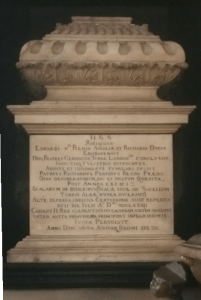
I turned to further research to find out more. Helen Maurer’s paper Bones in the Tower: A Discussion of Time, Place and Circumstance and Annette Carson’s article The Bones in the Urn cast doubt on the identity of the remains. What if these bones weren’t the princes’ at all, but a politically convenient discovery designed to bolster Charles II’s claim to the throne during a period of intense religious and political tension? 

This idea gains significance when we consider the political climate of the late 17th century. Charles II ruled during a time of deep religious divides between Protestants and Catholics. Though Charles outwardly professed Protestantism, he secretly favored Catholicism and converted on his deathbed. His brother, James II, was openly Catholic, which led to his eventual overthrow during the Glorious Revolution of 1688. The discovery of the princes’ bones in 1674 provided Charles II with an opportunity to legitimize his reign, portraying himself as a restorer of justice for the murdered princes, and distancing himself from his brother’s Catholic sympathies. 

The timing of the discovery raised questions about whether the bones were used to manipulate public opinion and strengthen Charles’s position. Further research revealed more secrets. I explored the details of the Secret Treaty of Dover, a clandestine agreement between Charles II and Louis XIV of France. In this treaty, Charles promised to declare himself a Catholic in exchange for financial support. This hidden agreement, uncovered years later, underscores the precarious balance of power in 17th-century England and allowed me to link national concerns to my family history.


In this climate of political maneuvering, espionage became crucial. Intelligencers gathered information covertly, often operating unofficially, and reported back to their patrons the news and gossip that was circulating. This secretive world provided the perfect backdrop for my protagonist, Franny Apsley, who navigates the hidden loyalties, treaties, and espionage of 17th-century England. A friend remarked that these intelligencers hung around coffee shops and eavesdropped on other people…which sounded just the kind of thing Franny would have done.  

Franny’s family was deeply involved in real-life espionage. In the third book of The Lydiard Chronicles, Written in Their Stars, we follow her parents, Sir Allen, and Frances Apsley, along with her cousin Nan Wilmot, Countess of Rochester, who were all engaged in covert activities during the English Civil War. Nan cleverly deceived Oliver Cromwell to protect her Royalist family and later negotiated her Parliamentarian relative’s release at the Restoration. Meanwhile, Franny’s brother, Peter Apsley, worked as an intelligencer for Charles II and James II, receiving substantial payments for his covert work. This family history inspired the espionage elements of The King’s Intelligencer, imagining Franny following in their footsteps. 

And what about the bones? Even if the present monarch permits DNA testing, the remains may have deteriorated too much to provide conclusive results. If the bones are proven to belong to the princes, we would still lack crucial details—like the cause of death or the identity of their murderer. The mystery of the bones remains unsolved, leaving historians and novelists alike to speculate. 

The King’s Intelligencer blends historical fact with fiction, following Franny Apsley as she embarks on a dangerous quest for truth. Uncovering hidden secrets and navigating espionage, Franny’s journey ultimately reveals how personal and national histories intersect. This novel is a companion to The Godmother’s Secret and The Lydiard Chronicles, continuing to explore the secrets buried in the past. 

Blurb: 

London, 1674: When children’s bones are unexpectedly unearthed in the Tower of London, England’s most haunting mystery—the fate of the missing princes—is reignited.  


Franny Apsley, trusted confidante to Charles II’s beloved niece and heir, Lady Mary Stuart, is caught up in the court’s excitement surrounding the find. Yet, as a dark family secret comes to light, Franny realizes the truth behind the missing princes is far more complex—and dangerous—than anyone suspects. Recruited by her formidable cousin Nan Wilmot,  Dowager Countess of Rochester, to discover the truth behind the bones, Franny is thrust into the shadowy world of intelligencers. But her quest is complicated by an attraction to the charismatic court artist Nicholas Jameson, a recent arrival from Paris who harbors secrets of his own. 

Pursued by Nicholas, Franny searches for evidence hidden in secret family letters and paintings and uncovers a startling diplomatic plot involving Lady Mary, which causes Franny to question her own judgment, threatens the throne, and sets England on a course for war. With only her courage and the guidance of an enigmatic spy within the royal household, Franny must decide how far she will go to expose the truth—and whether that truth will lead to England’s salvation or her own heartbreak. 

In a glittering and debauched society where love is treacherous and loyalty masked, Franny must navigate a world where a woman’s voice is often silenced and confront the ultimate question: What is she willing to risk for the sake of her country, her happiness, and her family’s safety? 


A captivating historical novel of conspiracy, passion, and courage, The King’s Intelligencer is one woman’s quest for a truth that could change the fate of a nation. A companion to the critically acclaimed best-selling novels The Godmother’s Secret and The Lydiard Chronicles, The King’s Intelligencer weaves together beloved characters and actual events to bring a suspenseful mystery to life. 


Buy Links: 


This title is available to read on #Kindle Unlimited. 


Universal Buy Link: https://geni.us/KingsIntelligencer  

Author Bio

Elizabeth St.John’s critically acclaimed historical fiction novels tell the stories of her ancestors: extraordinary women whose intriguing kinship with England’s kings and queens brings an intimately unique perspective to Medieval, Tudor, and Stuart times. 

Inspired by family archives and residences from Lydiard Park to the Tower of London, Elizabeth spends much of her time exploring ancestral portraits, diaries, and lost gardens. And encountering the occasional ghost. But that’s another story. 

Living between California, England, and the past, Elizabeth is the International Ambassador for The Friends of Lydiard Park, an English charity dedicated to conserving and enhancing this beautiful centuries-old country house and park. As a curator for The Lydiard Archives, she is constantly looking for an undiscovered treasure to inspire her next novel. 


Elizabeth’s works include The Lydiard Chronicles, a trilogy set in 17th-century England during the Civil War, and The Godmother’s Secret, which unravels the medieval mystery of the missing princes in the Tower of London. Her latest release, The King’s Intelligencer, follows Franny Apsley’s perilous quest to uncover the truth behind the sudden discovery of the princes’ bones. In Charles II’s court of intrigue and deceit, Franny must decide what she’ll risk—for England’s salvation, her family’s safety, and her own happiness. 


Author Links


Website:

https://www.elizabethjstjohn.com/  

Twitter:

https://x.com/ElizStJohn      

Facebook:

https://www.facebook.com/ElizabethJStJohn/  

LinkedIn:

https://www.linkedin.com/in/elizabethjstjohn/  

Instagram:

https://www.instagram.com/elizabethjstjohn/  

Threads:

https://www.threads.net/@elizabethjstjohn  

Bluesky:

https://bsky.app/profile/elizabethstjohn.bsky.social  

Book Bub:

https://www.bookbub.com/profile/elizabeth-st-john  

Amazon Author Page:

https://geni.us/AmazonElizabethStJohn  

Goodreads:

https://geni.us/GoodreadsElizStJohn  



Book Review: “Queen Bess: A Tudor Comes to Save America” by Maria Vetrano

Have you ever read about a historical figure and wondered what it would be like to interact with them in the present day? How would they deal with modern problems and technology? Could they function in the 21st century or would they become overwhelmed? And even if they could come to the 21st century, how would it affect their timeline and history? This intriguing premise plays out in Maria Vetrano’s novel, “Queen Bess: A Tudor Comes to Save America,” which sees Queen Elizabeth I coming forward about 400 years in time to become the President of the United States in the 2028 election.

I want to thank Maria Vetrano for sending me a copy of her novel. When I read the description of this novel, it was an intriguing concept to me. I do enjoy a modern tale from time to time and I was interested to see how Queen Elizabeth I of England could become a US President and how she would adjust to life in the modern world.

We begin our adventure with Dakota Wynfred, a self-made billionaire in the cybersecurity field, whose only desire is to go back in time to see her mother one more time and potentially bring her mother back to the year 2027. As Dakota and her mother are discussing matters, she tells her mother that the political environment is a mess thanks to President Robert Vlaskas, who Dakota cannot stand. Dakota believes that there is no one capable in modern time to defeat Vlaskas so a plan is formulated to use Dakota’s time travel machine to go back in time even further to get a leader who she believes can defeat Vlaskas. She has chosen Gloriana herself, Queen Elizabeth I from 1588. While transporting the queen from the Tudor era is easy, acclimating her to the ways of the 21st century proves a challenge, especially knowing that they have a limited window to make sure Elizabeth is ready to run for president.

While I thought the concept of this book was unique, the execution for me is what let this book down. I’ll start with the time travel element. As someone who watched Star Trek and the Librarians, I know there are some rules of time travel like not telling the people in the period of the past you are visiting you are from the future (or giving them a biography about their life), and you don’t bring anyone into the future from the past as there could be consequences to history in general. I wanted to see more of how Elizabeth being in the 21st century would affect the 16th century and the idea of technology not working in the 16th century as it was not invented during that time, but that is not what I got as a reader. When Elizabeth did arrive in the year 2027, we see her getting used to the world of technology, fashion, and popular culture, which did not seem to help with running a political campaign and Elizabeth’s accent in this book bothered me quite a bit. I feel like Vetrano should have done more research into the 16th century and Elizabeth’s reign to make this version of Elizabeth I more believable. Finally, I think the ending is rushed and left me questioning this book and what the point of this novel truly was.

Overall, this was a frustrating read for me as I saw the potential for a cool book, but it stumbled so many times. It felt like the Tudor/historical elements were sprinkled in a modern sci-fi/political fantasy novel, which just did not work well for me as a reader. This may not have been the book for me, but if you want a different take on the Tudors, a time travel novel with modern political elements, “Queen Bess: A Tudor Comes to Save America” by Maria Vetrano might be a book for you.