
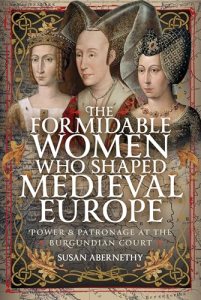
 Throughout European history, we tend to think about the countries as a whole when it comes to the political sphere of influence. We think of the big countries like France, Spain, Italy, Germany, Austria, and England as having the most impact, but we have to consider that during the Middle Ages, duchies held immense power. Take, for example, the Duchy of Burgundy, also known as the Burgundian Empire. It was a part of France, but that does not mean that the dukes stayed on the side of the French. The Burgundians used their influence to expand and marry into the medieval European families, affecting European history as a whole. While we tend to focus on the Dukes of Burgundy, we should be paying attention to the women of this duchy. That is why Susan Abernethy chose to focus on these women in her latest book, “The Formidable Women Who Shaped Medieval Europe: Power and Patronage at the Burgundian Court.”
I would like to thank Pen and Sword Books and NetGalley for sending me a copy of this book. I enjoyed Susan Abernethy’s first book about Catherine of Braganza. When I heard that she was writing a book about medieval Burgundian women, I was intrigued. I know a little bit about historical figures connected to Burgundy, but I didn’t know much about the history of the duchy itself, so I was excited to learn more.
Abernethy begins by giving her readers a brief history of how Burgundy became a kingdom and a duchy of France. While the history of Burgundy is extensive, we are mainly focusing on the Valois Dukes of Burgundy and the women in their lives. The Valois Dukes of Burgundy were Philip the Bold, John the Fearless, Philip the Good, and Charles the Bold. While this is primarily about the women of Burgundy, it is important to understand the political and military landscape that these women had to deal with in Burgundy and other countries during this time.
The bulk of this book focuses on the women of the Burgundian empire, starting with Margaret of England, Duchess of Brabant, in the 13th century, and ending with Queen Juana of Castile, in the 16th century. We get to hear stories about duchesses and queens, countesses and diplomats, and even a saint. They had to deal with wars, international diplomacy, family drama, and husbands who were not faithful. There were some familiar figures like Mary of Guelders, Queen of Scots, Jacquetta of Luxembourg, Margaret of York, Duchess of Burgundy, and Margaret of Austria, but the majority of these women were new to me, which was very exciting.
It’s a lot of ground to cover, but Abernethy has a way of telling the stories of women comprehensively. I thoroughly enjoyed learning about Burgundy and these extraordinary women who made the duchy an empire. If you are someone who wants to learn about the Duchy of Burgundy, I would recommend you read “The Formidable Women Who Shaped Medieval Europe: Power and Patronage at the Burgundian Court” by Susan Abernethy.
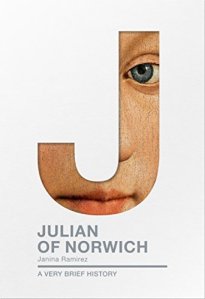 When we think about the most impactful women authors, we often think about writers like Agatha Christie, Mary Shelley, and Jane Austen. However, when it comes to religious texts, we have to go back in time centuries. We think about nuns like Bridget of Sweden and a mother of 14 children named Margery Kempe. Yet, we must include an anchorite who stayed in her cell for almost thirty years. Her book, Revelations of Divine Love, is considered the first great work of English prose, but many people are not familiar with the author until now. Janina Ramirez tells the story of Julian of Norwich and how impactful her book was in her book, “Julian of Norwich: A Very Brief History.”
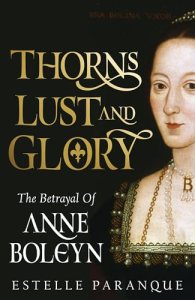 A young woman catches the attention of a king already married to a princess from a faraway kingdom. The king desires the young lady and divorces his wife to marry her. However, there is a catch. The young lady spent some time in the French court of Francis I and Claude of France, whereas the king’s wife was the daughter of the Spanish King and Queen as well as the aunt of the Holy Roman Emperor. The Great Matter of Henry VIII, Anne Boleyn, and Catherine of Aragon is considered one of the messiest divorces in English history and rightfully so when you consider the diplomatic consequences that this divorce would have across Europe. Estelle Paranque highlights the connection between Anne Boleyn and the French court in her latest book, “Thorns, Lust, and Glory: The Betrayal of Anne Boleyn.”
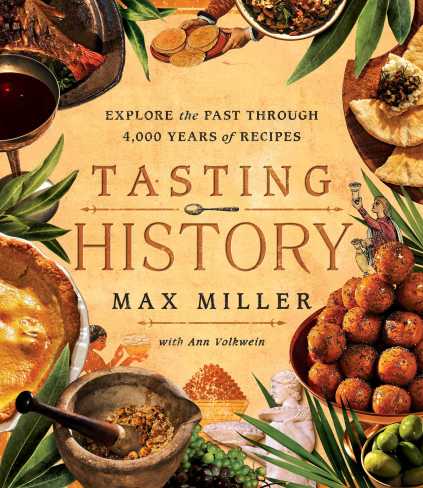 When we think of the phrase “historical recipes,” many of us would think about the recipes passed down in our families. These would be dishes you would make on special occasions and remind you of memories of loved ones. But what about recipes from so far back in the past that no one alive remembers who wrote down the recipes? The recipes that can only be found in history books and manuscripts? Max Miller has taken the arduous task of trying to bring some of these recipes back from the past to the modern age through his Youtube channel, and now this cookbook, “Tasting History: Explore the Past through 4,000 Years of Recipes.”
 The year is 1522, and London is in a jovial mood. King Henry VIII and his wife Catherine of Aragon are to play host to the Holy Roman Emperor Charles V as he visits England. As one of King Henry VIII’s most loyal advisors, Cardinal Wolsey had the great honor of hosting a grand masque featuring King Arthur and the Black Knight for the distinguished company. Unfortunately, as preparations for the luxurious masque are in full swing, Wolsey’s historian is horrifically murdered. The only one who can solve the case is Anthony Blanke, the son of John Blanke, the trumpeter before the masque is ruined, and Henry VIII discovers the truth. The story of this case is told in Steven Veerapen’s latest novel, “Of Blood Descended.”
 When we think of Vikings, a few images come to mind. It is either the cartoonish image of warriors with horned helmets or blood-soaked warriors from TV shows like The Vikings. They are seen as men and women who fight Christians in England and France and sometimes into North America, but we do not see them in the east. With archaeological digs and discoveries being made recently, what can the artifacts tell us about the Viking world? In “River Kings: A New History of the Vikings from Scandinavia to the Silk Roads,” Dr. Cat Jarman takes her readers on a journey of discovery, following the trail of a single carnelian bead.
 When we read about those who lived in past centuries, there is often a disconnect. We know that they were also human beings like we are, but we see how different their ways of life are compared to ours, and it feels incredibly bizarre. We can find wisdom from the past for our more modern lives. One of the most unlikely sources of knowledge for our daily lives comes from the lives of men and women who choose to take a religious path. In her latest book, “How to Live Like a Monk: Medieval Wisdom For Modern Life,” Daniele Cybulskie shows her readers how medieval monks can help us live our best lives here in the present.
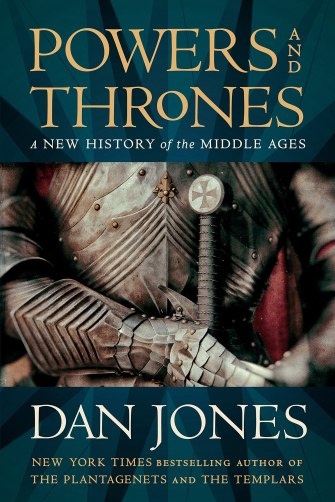 When we study human history, in general, we tend to pick a country and a period to focus on and research. Books on the subject material tend to focus on one land with interactions between other nations. It is infrequent for authors to take on multiple countries unless concentrated on one event that affected numerous locations. Those books often read like textbooks and can be a bit dry. Finding the perfect balance between these elements and engaging with the reader is a monumental task for any author, but Dan Jones has taken on the challenge. His latest behemoth tome, “Powers and Thrones: A New History of the Middle Ages,” takes on the gigantic task of telling the story of the Middle Ages from diverse perspectives.
 Adventures of a Tudor Nerd