
 As the weather gets colder, the leaves turn brilliant colors and fall from their trees, marking the perfect time of the year to snuggle with a blanket, a cup of tea, and a good spooky tale. Many would reach for a modern supernatural story, but ghost tales have been hiding in archives for centuries. One such story comes from the time of King Richard II. It was first found and transcribed from Latin in 1922 by medievalist M.R. James. Dan Jones has taken on the challenge to retell this story for a modern audience. Initially written by an unknown monk of Byland Abbey, this medieval ghost story is called “The Tale of the Tailor and the Three Dead Kings.”
I want to thank Head of Zeus Books and NetGalley for sending me a copy of this book. I am a big fan of Dan Jones and his historical nonfiction books, so I was thrilled when I heard about this title.
Our tale begins with the tailor named Snowball and his horse Borin traveling home from Gilling to Ampleforth one November night. All of a sudden, Snowball is attacked by a raven that transforms into a grotesque dog. The dog gives Snowball a mission that only he can complete, to find a specific priest to ask for absolution for a criminal with no name and whose crime we do not know. If he does not return to the same spot where he has met the dog, there will be consequences.
To give readers even more information, Jones includes the story of how M.R.James came to find the tale and why he chose to bring this story into the 21st century. He also tells the story of Byland Abbey and includes the original Latin text for those who feel ambitious to translate it themselves.
I am not usually a fan of creepy ghost stories, but I found this tale entirely enthralling, and it sent chills down my back in a matter of pages. Even though Jones does not include that many physical descriptions for characters like Snowball and Borin, I can picture this tale playing out. For his first venture into the world of fiction, I think Jones does a brilliant job, and I hope one day he will make an anthology of medieval ghost stories. If you want a delightfully ghoulish ghost story that is perfect for fall, I highly recommend you read “The Tale of the Tailor and the Three Dead Kings” by Dan Jones.
 The period of human history that we know today as the Middle Ages spanned over a thousand years, and within that time, significant progress was made into understanding our world. Inventions and discoveries were made not just in Europe but throughout the known world during this time. One area of study that saw a lot of change was medical studies and understanding the human body. How did physicians heal the sick during the Middle Ages, and how did their experiences change their field of study? These questions and more are all explored in Juliana Cummings’ latest book, “Medicine in the Middle Ages: Surviving the Times.”
 A man hidden from the world languishes for decades in a prison cell. He is not allowed to speak to anyone, or he will face severe consequences. Often in literature, his head is covered in a mask made of iron. His identity and why he angered King Louis XIV so much have remained a mystery for centuries. The prisoner was known as the man in the iron mask throughout history, but who was this enigmatic figure? In her latest book, “The Man in the Iron Mask: The True Story of Europe’s Most Famous Prisoner,” Josephine Wilkinson dives deep into the archives to construct his story and the stories of the men behind the mystery.
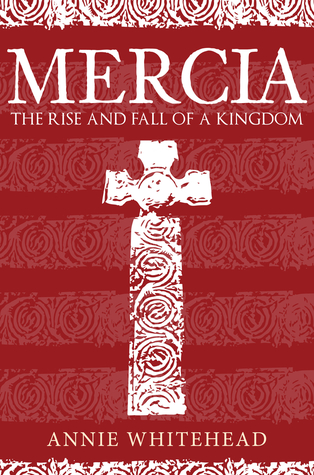 England’s history is full of daring moves and colorful characters, but it is also very ancient compared to other countries. We often considered the “start” of English history in school as the Norman Conquest in 1066. Nevertheless, this was just a stage in the massive story of the island. We have to consider those who called England their home; those who knew England, not as a unified country, but seven kingdoms known as the heptarchy. The most famous of these seven kingdoms was Wessex, the last kingdom, but their mortal enemy had a rich history of their own. Mercia was a thriving kingdom for hundreds of years, with colorful characters that many people are not familiar with. Annie Whitehead has taken the tales of this forgotten kingdom to the forefront with her book, “Mercia: The Rise and Fall of a Kingdom.”
 In the middle of the night on November 25, 1120, screams could be heard from the English Channel. A ship known as The White Ship hit a rock and began to sink. Those on board were the glamorous English elite, including the legitimate son of King Henry I, William Aetheling. In an era where people feared the sea and could not swim, those on board sank to their watery death on that cold winter night that began with such frivolity. No one knew that night that this one disaster at sea would cause a dynastic struggle that would lead to the founding of the infamous Plantagenet dynasty. In his latest book, “The White Ship: Conquest, Anarchy and the Wrecking of Henry I’s Dream”, Charles Spencer takes his readers on a journey to fully understand the impact that this tragedy had on the English royal family.
 Have you ever read a history book and wondered what life was really like for those who lived in the past? To understand a time period and the motives of the people of the past, we have to understand the structure of their society. How they understood things like class, sex, violence, government, and religion is essential for us to understand what separates us from our ancestors. What they ate, what they wore, and where they slept also give a unique insight into the time period. It can be a difficult undertaking to figure out all of the different aspects of the past connect and to present it cohesively, yet acclaimed historian Ian Mortimer has embraced this challenge head-on to tackle one of the most complex periods of the past; the Elizabethan era. His love letter to the Elizabethan age entitled, “The Time Traveler’s Guide to Elizabethan England” is a delightfully imaginative guide to the past.
 Numerous castles with remarkable stories dot the landscapes of many European countries, especially England. Few are in good condition whereas others are in a rather ruinous stage. In the village of Sheriff Hutton, there is a shell of a once illustrious castle that protected England and its monarchs for centuries, aptly named Sheriff Hutton Castle. For those who are familiar with the family York and the Nevilles of the Wars of the Roses, you might be familiar with the name of this castle, but do you know the entire story of the castle? Why was this castle so significant to the history of northern England and why did it fall into disarray? These questions and more are explored in Alexander Hill’s debut book, “A Princely Lodging: A History of Sheriff Hutton Castle”.
 Adventures of a Tudor Nerd