
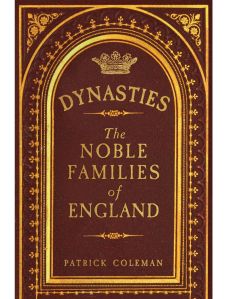
 When we think about royal history, we often tend to think about the monarchs and their immediate families. However, the stories of the noble families that surround the crown can have some of the more interesting tales of how the families were created and how they survived. The stories of the English nobility are particularly fascinating, with some families and titles dating back centuries. How did these great families begin? How did they earn their titles? Who were the major figures in these noble houses, and how did they survive to the modern day? Patrick Coleman explores the tales of the nobility and how they shaped England’s history in his book, “Dynasties: The Noble Families of England.”
I would like to thank Amberley Publishing for sending me a copy of this book. As someone who reads extensively about the royal families of England, I sadly know very little about the individual noble houses of England and their histories. When I saw this book, it instantly caught my eye, and I knew I wanted to read it.
It should be noted that this book is more of a resource for understanding the nobility of England rather than a riveting read. Coleman doesn’t just throw his readers blindly into the fray. Instead, he begins by explaining the origins of the nobility and its hierarchy. He also dives into how the titles were passed and the elements of the coat of arms, and finally, explores the seats of the noble families. It is a firm foundation for novices of the nobility and a nice refresher for experts in the field.
We finally come to the central premise of this book, the exploration of the noble families of England that have survived to the present day. Each chapter explores a different family, their origins, how they gained their titles, famous or infamous figures in their family trees, their family seat, and the current holder of the title. The noble families featured in this book include: the Howards, the Seymours, the Thynnes, the Somersets, the Stanleys, the Percys, the Grosvenors, the Cecils, the Russells, the Cavendishes, the Lascelles, the Manners, the Herberts, the Wellesleys, and the Spencer-Churchills. There were some stories that I knew because of my own pursuits into the past, but others were completely new, which was thrilling.
I learned so much about the nobility and these famous families. It was very well written and extremely well researched. If you are looking for a resource that can help you better understand the great families of England, I recommend you read “Dynasties: The Noble Families of England” by Patrick Coleman.
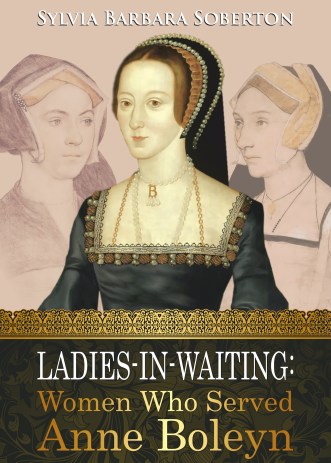 The story of Anne Boleyn and her rise and fall has been told throughout the centuries in numerous ways. With tales of this memorable monarch came rumors of what happened inside her court and the women who served her during her reign. We tend to look at her life through the lens of the men who interacted with Anne Boleyn at court, but what about the women who knew her? Stories of ladies-in-waiting selling the queen out and secret romances ran rampant throughout the centuries, but how much truth is in these tales? Sylvia Barbara Soberton explores these questions in her latest book, “Ladies-in-Waiting: Women Who Served Anne Boleyn.”
 Adventures of a Tudor Nerd