Book Review: “Sinners” by Elizabeth Fremantle

The year is 1599 in Rome, Italy. A young rich woman stands in front of an executioner’s block. She is a mother, a daughter, a sister, a lover, and a killer. Her victim was her father, a man who made her life and the lives of her family members a living hell. When she falls in love with one of her father’s spies, she believes that it is a way out. However, the path she chooses to embark on will bring deadly consequences. What is the truth surrounding this case, and is Beatrice Cenci a cold-blooded murderer or a victim looking for her freedom? Elizabeth Fremantle explores the life of Beatrice Cenci and the circumstances of this crime in her latest novel, “Sinners.”

When I heard that Elizabeth Fremantle had a new novel coming out soon, I jumped at the chance to read it. I loved “Disobedient” and “Queen’s Gambit,” so I was excited to see what story she would tell in this novel. I had never heard of Beatrice Cenci before reading this novel, which was a thrilling prospect, as it allowed me to discover a new historical figure.

We begin with Beatrice as a young girl being forced to leave the convent where she received her education. Her father, Francesco Cenci, had just remarried, and Beatrice had a new stepmother named Lucrezia. We then jump forward twelve years to the Palazzo Cenci in Rome. Beatrice found the body of her brother Rocco, who was killed by the Orestesi, the mortal enemy of the Cenci. After the funeral, Francesco decides to move to La Rocca, a fortress which is more of a prison than a home.

Francesco becomes paranoid and even more possessive of his family, especially Beatrice, who should have been married by now. Instead, Beatrice is trapped in her grief and fears her father. But, there is a glimmer of hope for Beatrice as she finds her soul mate in the castle keeper and spy for her father, Olimpio. Unfortunately, the glimmer can only last for a moment as Francesco’s paranoia reaches a fever pitch and a plan is hatched to rid the family of Francesco forever. Even with the death of Francesco, the family is not out of danger as they must deal with the consequences of their plan.

This is another grippingly beautiful and tragic novel written by Elizabeth Fremantle. Beatrice Cenci’s story was heartbreaking and heavy, but it was a stunning read. I found myself feeling so sympathetic towards Beatrice and Olimpio, even though she did commit a heinous crime. “Sinners” by Elizabeth Fremantle is a binge-worthy read that will have you on the edge of your seat the entire time and will give you a better understanding of the treacherous time and Beatrice Cenci, a woman trapped in an impossible situation. An absolute must-read for any fan of historical fiction.

Book Review: “Thus with a Kiss I Die” by Christina Dodd

We all know the story of Romeo and Juliet. Two crazy kids in love, whose families hated each other they decided to make the ultimate sacrifice and die for each other. One of the greatest tragic love stories of all time. But what if it didn’t end in tragedy? What if Romeo and Juliet had their happy ending and had a large family? In this version of Verona, Romeo and Juliet have a large family, and their eldest daughter Rosaline is the most beautiful, headstrong girl in all of Verona. Unfortunately, Rosaline (Rosie) has got herself in quite a mess with an unwanted prince fiancé, a ghost who only she can see, and a murder investigation. Can Rosie solve the case and figure out her love life before things go horribly wrong? This is the premise of the second book of the Daughter of Montague series by Christina Dodd called “Thus with a Kiss I Die.”

I would like to thank Kensington Publishing and Net Galley for sending me a copy of this novel. While I have not read the first book in this series, I thought the idea of Romeo and Juliet surviving and having a family was such a fun concept. Sometimes you just need a book that is based on a historical work of fiction as a way to escape reality, and that’s okay.

We begin where the first book in the series, “A Daughter of Fair Verona,” left off. Rosie is waiting in a garden for her one true love, Lysander, but her plans are foiled when the Prince of Verona, Escalus, kisses Rosie. Now, she is engaged to a prince. She should be thrilled, but Rosie is trying to think of every possible way to get out of this arrangement. Meanwhile, Rosie and her family are invited to dinner with the Prince and his family, which includes his Nonna Ursula and his young sister, Princess Isabella. Escalus (known as Cal in his family) is an orphan prince. His father was killed by an unknown assassin, and his mother died in a convent while giving birth to Princess Isabella.

While exploring the palace, Rosie hears a voice and discovers that it belongs to the ghost of Prince Escalus the Elder, Cal’s father. He wants Rosie to figure out who killed him, which kicks off the mystery portion of this book. On top of all of this, Juliet is about to give birth. Rosie has her hands full while she is trying to figure out her love life and solve a murder mystery before she is murdered or married to the prince.

This was a fun read that is more modern than historical, with the dialogue. Sure, it’s set in 16th-century Verona with Romeo and Juliet as side characters, but you could place Rosie and Cal in a modern setting and it would work just as well. Overall, I found this an absolute joy and a great escape. If you want a historical fiction novel with a unique twist, a murder mystery, and a love triangle, I suggest you read “Thus with a Kiss I Die” by Christina Dodd.

Book Review: “Michelangelo and the Pope’s Ceiling” by Ross King

The Italian Renaissance was a time of great artwork, eccentric artists, and patrons who created these masterpieces. While the art tells a story, the artist and patron want the audience to understand, but sometimes the story of how the art came to be can be just as fascinating. One of the most famous pieces of art from the early 16th century was the ceiling of the Sistine Chapel. A stunning piece created by an artist who primarily created sculptures, and his patron was a pope who was more like a warrior. The story of how Michelangelo and Pope Julius II created an unlikely team to create this remarkable masterpiece is told in Ross King’s book, “Michelangelo and the Pope’s Ceiling.”

This is one of those books that caught my eye in a used bookstore. I am a fan of art history, so it intrigued me when I saw the title. Obviously, I have seen images of the Sistine Chapel, and I knew that Michelangelo was the one who painted the ceiling, but beyond that, I didn’t know much about this piece or the history behind it. With the recent Papal Conclave, which takes place in the Sistine Chapel, I thought this would be the perfect time to read this book.

The year is 1508, and the Sistine Chapel has just been restored. Pope Julius II wants someone to paint the ceiling of the Chapel. While others would have easily chosen a painter who knew how to paint frescoes as an ideal choice, Julius II and his assistant, Donato Bramante, decided to pick the young man who was in charge of carving Pope Julius’ tomb, Michelangelo Buonarroti. To say Michelangelo was not a fan of this assignment from the Pope would be an understatement. All the man wanted to do was sculpt amazing sculptures like David and the tomb for the Pope, but no, the Pope wanted him to paint. So he reluctantly taught himself how to paint in fresco over four years to create this masterpiece, telling tales of the Old Testament in the Bible with a specific emphasis on Creation and the stories of Moses. 

Those four years saw much action for Michelangelo and Pope Julius II, who was known as il papa terribile. Michelangelo had to keep an eye on his fresco, his rival Raphael, and his family, who were always causing trouble. Pope Julius had to fight not only illness, but also the French, led by King Louis XII, which led to the creation of the Holy League against France. King also lays out the process and the inspiration for Michelangelo’s masterpiece, which I found quite fascinating. 

This was a captivating read that gave such wonderful information about the era and the creation of this masterpiece. I have been a fan of art history and the history of the 16th century, so this book ticked so many boxes for me. If you want a delightful book full of art history and the history of Italy during the 16th century, I would recommend reading “Michelangelo and the Pope’s Ceiling” by Ross King.

Book Review: “Bitter Greens” by Kate Forsyth

For centuries, fairy tales have entertained and taught lessons to those young and young at heart. One of the most memorable stories was the tale of Rapunzel, the maiden a witch kidnapped because her parents stole a Rapunzel plant from her while Rapunzel’s mother was pregnant. For years, Rapunzel languished in a Tower, her hair growing exponentially until a rogue/ prince climbs her hair and rescues the damsel in distress. The witch dies and Rapunzel and her hero live happily ever after. At least, that is how the story has been passed down to us throughout the centuries, but where did the story come from and how are the stories of three women from different generations and countries connected? Kate Forsyth weaves together the stories of three women and their fates into one delightful novel called, “Bitter Greens.”

I want to thank Allison & Busby and Net Galley for sending me a copy of this novel. When I am not reading historical fiction or nonfiction, I do enjoy reading fairy tales retold, so when I heard about this novel and how it would explore the origins of the story of Rapunzel, it was intriguing to me.

Forsyth breaks down her novel into three separate narratives based on the lives of three women. We begin with Charlotte-Rose de la Force, a woman who weaves stories on a whim at the court of the Sun King Louis XIV. Charlotte is the person who gave the Rapunzel story some of the main characteristics that we are familiar with from the Italian origin story by Giambattista Basile. Her life choices have caused the king to send Charlotte to exile in a convent. It is in the convent that Charlotte meets Soeur Seraphina and she learns the story of Margherita and Selena Leonelli.

Margherita is the daughter of a mask maker and his wife. When she turns 7, a sorceress named La Strega Bella tells her parents that it is time to pay for their crime of stealing bitter greens. La Strega Bella wants to raise Margherita as her child, so she kidnaps Margherita, changes her name to Petrosinella, and places her in a convent. When Margherita turns 12, she is taken from the convent, placed in a tower, and given her characteristically long hair.

The question is why did La Strega Bella take Margherita from her parents just to put her in a tower with such long hair? It is through Selena Leonelli’s story that we can discover the truth about La Strega Bella. A woman who had to survive in the dark days of the plague in the early 16th century when her family died, she learned how to use spells and the power of plants from a woman named Sibillia. Life was not always fair for Selena, but then she met a man named Tiziano, who we know as Titian, and she inspired his art. Selena is afraid of growing old and wants to stay young forever, so she comes up with a dark and twisted plan.

This novel is dark and full of tragedies, love, and adventures. While I did enjoy reading it, there were a few historical inaccuracies, such as the plague doctor uniform was not introduced until the 17th century, not the 16th century. If you want a dark version of a fairy tale retold with a historical twist, I think you will enjoy “Bitter Greens” by Kate Forsyth.

Book Review: “City of Silk” by Glennis Virgo

When we think about the period known as the Renaissance, we often think about Italy and the artists like painters and sculptors. However, other craftsmen made Italy their home. Take, for example, tailors and seamstresses. These skilled craftsmen and women can create art you can walk in with their hands. However, there are gender barriers between tailors and seamstresses in that only men can be tailors and only women can be seamstresses. One orphan girl from Bologna not only challenges what it means to be a woman tailor but also challenges one of the wealthiest merchants in the entire city who has a dark connection to her past. This is the premise for Glennis Virgo’s debut novel, “City of Silk.”

I want to thank Allison & Busby and Net Galley for sending me a copy of this novel. I know we are not supposed to judge a book by its cover, but this cover is really why I wanted to read more about it. The description and knowing that it was a debut were also appealing factors as I wanted to see what a new author would do with 16th-century Italy and its complex nature.

We begin with the orphanage of Santa Maria del Baraccano where we find out that our protagonist is a young girl whose parents, a tailor and a seamstress, both died. The girl, Eleana Morandi, was raised in the orphanage, but something happened and she ran away. She would eventually work at the Palazzo of Signora Ruffo, a widowed seamstress who runs a successful business. Elena works as an assistant to Signora Ruffo alongside a girl named Sophia, a former slave. It is a happy life for Elena, until one day, Signora Ruffo arranges a marriage for Elena with Signor Martelli. Elena is not a fan of this idea so she does what stereotypical teenagers do, she runs away from home again.

Elena runs to the workshop of the tailor Maestro Francesco Rondinelli, but he is reluctant to take Elena on as women are not accepted as tailors in the guild, but he allows her to help out in other ways around the workshop. One day, a Signor Antonio della Fontana comes into the workshop and asks for a summer wardrobe. Fontana is not some stranger to Elena as she knows him from her life in the orphanage, but he is not the benevolent merchant that everyone believes him to be. Elena fights not only for the right to become a female tailor but for her friend Laura and the other girls who were traumatized by Fontana. Virgo has created a colorful cast of characters filled with the traumas that they have to deal with in such a short book. My only critique is that as someone who is not as familiar with Italian terms or the locations in 16th-century Bologna, I wish there was a map and a glossary to help the readers picture the world a bit better.

Overall, I found this a rather enjoyable debut full of heart and a cast who care for each other as well as their respective crafts. It shows a different side of Renaissance Italy and once I started reading, I did not want to stop. I am looking forward to seeing what type of story Virgo will tell next. If you want a novel that focuses on a different aspect of the Italian Renaissance, I would recommend you read, “City of Silk” by Glennis Virgo.

Book Review: “Medici Heist” by Caitlin Schneiderhan

The year is 1517, and Florence is experiencing great change. No longer is it a grand republic that it once was; instead, it is under the control of the Medici family. They ruthlessly controlled Florence, especially Pope Leo X, who was born Giovanni di Lorenzo de’ Medici. The people suffer as the Medici become increasingly wealthy, but a band of misfits and thieves plan to give some power back to the people with one of the greatest heists of 16th century Italy. Can they survive as a group when revelations from the past and dangers lurk around every corner? The adventure with this ragtag team of thieves as they fight for Florence is explored in Caitlin Schneiderhan’s novel, “Medici Heist.”
I want to thank Feiwel and Friends and Net Galley for sending me a copy of this novel. It’s been a little bit since I read a new YA historical fiction novel, and so when I read the description of this one, I jumped at the chance to read it. I like a good novel set in Italy during the Renaissance, so I wanted to see what Schneiderhan could bring to the genre.

We kick off with Pope Leo X in all his grandeur entering the city and being greeted by a girl named Cat throwing a mud pie at the Pope. This incident sets the mood of the city towards the Medicis. We then jump to meeting our main four protagonists; the con woman/ leader of the misfits Rosa Cellini, Sarra the Tinkerer, Khalid the skilled fighter, and Giacomo the master of disguise. Along with the apothecary Agata, Dominic the apprentice, and even Michelangelo, the crew has decided that the only way to free Florence from Medici rule was to steal the indulgences that the people gave the church for the forgiveness of their sins so they spend less time in purgatory when they died. The Medicis were able to gather about 10,000 florins, an impressive amount that the band of thieves hoped to split evenly. However, complications do arise such as unexpected reminders of the past, romances, and those who want the treasure for their nefarious purposes.

While I do applaud Schneiderhan for writing her first-ever historical fiction novel, which is not an easy task, I did have a few issues when I was reading this particular novel. I felt like this book read more like a screenplay in that it gave locations and information, but it was hard to visualize for someone who cannot see these locations as images. The characters felt a bit generic and blended together, especially with the short chapters that might have been purposeful to get through the story quickly, but I was not able to build a connection to these characters. Finally, I feel like this story does not feel like it could take place in the 16th century, except for a few famous name drops, historical places, and the currency used at the time. It feels too modern and it could be put into any period and it would still work. I wanted to get lost in 16th century Florence and that did not happen for me.

Overall, as a YA heist book, I think it is a pretty good book, but it missed the mark when it came to the historical element for me. I feel like the concept of this book was strong, but the execution was a bit lacking. It was a difficult book for me to read and at times, I did want to put it into a did not finish pile, which I never do with books. I know that some books just are not right for me, but they might be right for other people, which is why I continued to read this book. If you do want to read this book, it might be a good idea to have a device next to you to look up the locations mentioned to help visualize what is happening. If you want a heist book with some history sprinkled in, “Medici Heist” by Caitlin Schneiderhan might be the book for you.

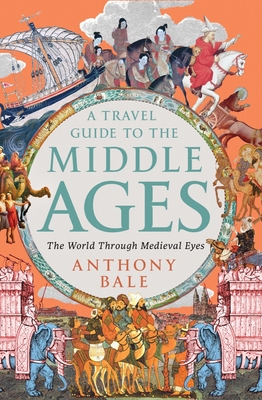
Book Review: “A Travel Guide to the Middle Ages: The World Through Medieval Eyes” by Anthony Bale

A travel guide to the middle agesWhen we think about travel in the Middle Ages, we often think of wealthy nobles or those who went to war fighting in foreign lands. However, that is merely a misconception. Travel was open to everyone, from the wealthy, the poor, the pious pilgrims, and the merchants. Each group had their reasons for traveling to different countries. Still, they all wrote down their experiences to tell future generations about their encounters and encourage others to explore the world, both the known and unknown parts. Anthony Bale has compiled many of these accounts into one comprehensive book called, “A Travel Guide to the Middle Ages: The World Through Medieval Eyes.”

I want to thank W. W. Norton & Company and Net Galley for sending me a copy of this book. I am always looking for a new element to study about the past, especially the Middle Ages. When I saw this title and the concept that it was going to explore beyond Europe, it intrigued me as I tend to focus on medieval Europe and I wanted to expand my knowledge of the medieval world as a whole.

Bale begins by giving his readers a bit of a foundation for understanding the travel guide genre’s origins, the directions as they were understood by those living in the medieval world, and how medieval Europeans understood the layout of the world through the mappae mundi. He also explains the origins of one of the first globes, the Behaim Globe( also known as the Erdapfel), which was created by Martin Behaim who came from a family of merchants.

Every good travel saga needs a starting point and this one happens to begin in England where pilgrims set out for a journey to Rome and Jerusalem. Along the way, Bale introduces his readers to the main cities of Europe, sites of pilgrimage, dangerous passes, and tips like how to understand foreign languages and exchange rates between the different currencies. Once we reach Italy and later Jerusalem, our focus moves away from pilgrimage to exploration and trade. Bale tends to focus on testimonies from pilgrims, merchants, and diplomats to paint a picture of the Western world heading to the East, as far as Japan (Cipangu) and Ethiopia in Africa. He does show some Eastern travelers coming to the West towards the end, but I wish we could see more of those interactions and more female voices in this book.

Overall, I found this book informative and a fascinating read to see how people in the Middle Ages saw the world around them. There were some dry spots along the way, but I think for those who want an introductory book to how medieval Europeans viewed the world through their travels, it would be a great book. If this sounds like you, check out, “A Travel Guide to the Middle Ages: The World Through Medieval Eyes” by Anthony Bale.

Guest Post: “Turning the World to Stone” Excerpt by Kelly Evans

Turning the World to Stone Tour BannerI am pleased to welcome Kelly Evans to my blog today to share an excerpt from her novel, “Turning the World to Stone.” I want to thank Kelly Evans and The Coffee Pot Book Club for allowing me to be part of this blog tour. 

“I’m worried about the Holy Father.”

“All of Italy is.”

His lack of concern inflamed her already smouldering ire. “How can you be so unmoved? You know how serious our situation is.”

He replied with the same uninterested tone. “I’ll take care of it.”

Caterina’s pique overwhelmed her. “What? Like you have been? Emboldening our enemies and making new ones when we need friends right now?”

Girolamo glared at her, and Caterina felt slightly smug at finally pushing him into revealing himself. Mocking her tone, he lashed out. “What? Friends like your Bossi? Your closest advisor, always around to do your bidding.” He glanced around the room. “I’m surprised he’s not lurking in the shadows, waiting to whisper in your ear. I’ve often wondered if he whispers about himself and you and if my children are even mine.”

This was the best he could do? Insinuations? She was grateful Bossi wasn’t around to hear such slander.

Her husband went on. “Or friends like that little puttana, your lady? Where is she? She’s always sniffing around.” He glared at her with such disdain it felt like she’d been hit by him. “You need to mind your own business, arrogant Milanese whore that you are.”

Caterina stood, her body trembling. “How dare you?”

“I dare because I can. You have been too free with me, wife. You should watch yourself.” Girolamo moved his hand to his knife hilt threateningly but knocked over his glass of wine in the process. His face a deep red, he picked up the glass and threw it across the room before storming out.

As he exited the main door to the hall, Luisa entered through another just in time to see Caterina stare open-mouthed and then collapse on the floor. 

Turning the World to Stone coverBook Title and Author Name: 

Turning the World to Stone – The Life of Caterina Sforza Part One 1472 to 1488 

by Kelly Evans

Blurb:

Vilified by history, Caterina Sforza learned early that her life was not her own. Married at age ten, she was a pawn in the ever-changing political environment of Renaissance Italy.

Resigned to her life as a fifteenth-century wife, Caterina adapted to the role she was expected to play: raising and educating her children, helping the poor in her new home, and turning a blind eye to her husband’s increasingly shameful behaviour. But Fate had other plans for her, and soon Caterina’s path would be plagued by murder, betrayal, and heartbreak. 

“Could I write all, the world would turn to stone.”

Buy Links: 

This title is available to read on #KindleUnlimited.

Universal Link: https://mybook.to/Caterina

Amazon UK: https://www.amazon.co.uk/Turning-World-Stone-Caterina-Sforza/dp/1778022421

Amazon US: https://www.amazon.com/Turning-World-Stone-Caterina-Sforza-ebook/dp/B0C1HZHT93

Amazon CA: https://www.amazon.ca/Turning-World-Stone-Caterina-Sforza-ebook/dp/B0C1HZHT93

Amazon AU: https://www.amazon.com.au/Turning-World-Stone-Caterina-Sforza-ebook/dp/B0C1HZHT93

Kelly EvansAuthor Bio:

Born in Canada of Scottish extraction, Kelly Evans graduated in History and English, then moved to England, where she worked in the financial sector. While in London, Kelly continued her studies in history, concentrating on Medieval History, and travelled extensively through Eastern and Western Europe. 

Kelly is now back in Canada with her husband, Max, and a rescue cat. She writes full-time, focussing on illuminating little-known women in history with fascinating stories. When not working on her novels, Kelly writes Described Video scripts for visually impaired individuals, plays oboe, and enjoys old sci-fi movies. 

Social Media Links:

Website: https://www.kellyaevans.com

Twitter: https://twitter.com/ChaucerBabe

Facebook: https://www.facebook.com/kellyevansauthor

Instagram: https://www.instagram.com/kellyevansauthor/

Pinterest: https://www.pinterest.ca/kellyewrites/

Book Bub: https://www.bookbub.com/profile/kelly-evans

Amazon Author Page: https://www.amazon.com/stores/Kelly-Evans/author/B0187JGTOQ

Goodreads: https://www.goodreads.com/author/show/14335541.Kelly_Evans

Book Review: “Henry VIII and Charles V: Rival Monarchs, Uneasy Allies” by Richard Heath

75418858._SX318_Two kings, two rivals from different countries defined the 16th century. One was the spare to his father’s crown, but when his eldest brother suddenly passed away, he became the next Tudor king. The other was the sole heir to his parent’s large kingdom and would become the Holy Roman Emperor. Wars, the Reformation, and family drama kept these two men, Henry VIII and Charles V, busy and at each other’s throats. They would sometimes join and fight for one another’s causes, showing the importance of international politics. With each new scenario, their relationship would shift, either for the best or the worst. Richard Heath has combined the stories of these two monarchs, these “frenemies,” into one joint biography, “Henry VIII and Charles V: Rival Monarchs, Uneasy Allies.”

Thank you, Pen and Sword Books and Net Galley, for sending me a copy of this book. I have read many books about Henry VIII, but Charles V was a side character in many of these books. When I saw this book, learning more about Charles V intrigued me.

Heath begins his book with Henry VIII, the second son of Henry VII and Elizabeth of York. He was never destined to become king, but when his eldest brother, Arthur, died unexpectantly, he became the next King of England. In contrast, Charles V was destined to become King of Spain as he was the only son of King Philip I, King of Castile, and Queen Juana of Castile and Aragon. Henry VIII had multiple wives and one legitimate son who would not live long as king. In contrast, Charles V had one wife, Isabella of Portugal, and numerous children, including the next King of Spain, Philip II.

Henry VIII and Charles V had similar ideals and were raised to be devout Christians, even if the way they fought for their faith was different. Charles V’s aunt, Catherine of Aragon, was Henry VIII’s first wife. The two monarchs and their respective countries, the Holy Roman Empire, Spain, and England, enjoyed close relationships. However, the 16th century was notorious for its ever-shifting political landscape, especially concerning the wars in France, and Italy, that involved King Francis I, the Pope, and Suleiman the Magnificient.

To untangle the messy political dilemma of the 16th century in a dual biography is quite a feat, which Heath does well. I wish he had included a chart to break down the different treaties and wars he chose to highlight in this book because I needed help figuring out which war was which and what each treaty agreed to do. Overall, I think if you want a decent introduction to the life of Charles V and how his relationship with Henry VIII changed over time, I would recommend you read “Henry VIII and Charles V: Rival Monarchs, Uneasy Allies” by Richard Heath.

Book Review: “Pursuing a Masterpiece: A Novel” by Sandra Vasoli

63226327._SY475_What if you found information about a mysterious portrait that would radically change how we view history forever? Who would you tell? When Zara Rossi entered the Ancient Manuscripts Room at the Papal Archives in Rome, she never imagined how a single letter would change her life and the Tudor community. Each piece of the puzzle unlocks a new story from the past and allows Zara to explore the remarkable tale of this masterpiece. Follow the clues with Zara Rossi to solve this mystery from the past in Sandra Vasoli’s latest book, “Pursuing a Masterpiece: A Novel.”

Thank you, Sandra Vasoli and GreyLondon Press, for sending me a copy of this novel. I am always looking for a new way to incorporate Tudor history into a story, so when I heard the description of this particular book, I was captivated.

Zara Rossi begins her adventure into the past by going to the Ancient Manuscripts Room and the Papal Archives, which is an immense honor as you have to be invited even to have a chance to go into the Archives. She is looking for personal letters of Pope Clement VII to find his reaction to Henry VIII’s split from Rome. Instead, she found a letter from the Grand Master of the Order of St. John, Villiers de L’lsle-Adam, about a double portrait of King Henry VIII and Anne Boleyn.

As Zara uncovers the tale with each clue in the modern age, Vasoli introduces her audience to a colorful cast of characters that span centuries. Starting in the 16th century, we are introduced to Henry VIII, Anne Boleyn, his advisors, Hans Holbein the Younger, and the Court Astronomer Nikolaus Kratzer. We also become acquainted with the Order of St. John and rebellious Catholics horrified by this painting. But, we do not stay in the 16th century for long as Vasoli transports her readers to the middle of an 18th-century swashbuckling pirate adventure in the Caribbean that ends up in France with a murder, a trip on the Titanic with a fashion designer for the rich and famous, and an encounter with scoundrels from World War II at Hever Castle.

Vasoli created a complex yet spectacular story of pursuing the truth that will rock the academic world with vibrant characters and compelling cases. Zara is a main character that I could personally relate to, and while I was reading, I was hoping she would find her way to not only the truth about the painting but for her to be happy with her family and friends. Her desire to uncover the truth, no matter the cost, is genuinely admirable. I wanted to know if Zara would ever find the truth, but at the same time, I did not want the story to end.

Vasoli created a masterpiece by not only creating a thought-provoking fictitious double portrait of Henry VIII and Anne Boleyn but a novel that is unlike anything I have read. It’s a love letter to the past and those who pursue the truth behind even the smallest fragment left by our ancestors. If you want a thrilling Tudor-based historical fiction novel, “Pursuing a Masterpiece: A Novel” by Sandra Vasoli is a must-read.