
 English royal history is filled with fantastic stories of triumphs and tribulations, grand romances, and divorces that shook the foundations of the monarchy. It is also filled with struggles over religion, wars both inside England and with foreign nations, and heartbreaking child losses. We often think about the spouses of the Plantagenets and the Tudors when we think about royal romances, but we shouldn’t forget about the dynasties that came after, like the Stuarts. So how did the Stuart dynasty come to be and how did the unions between monarchs and their significant others affect the dynasty and England? Heather R. Darsie explores this often-overlooked dynasty and the stories of their marriages and romances in her latest book, “Stuart Spouses: A Compendium of Consorts from James I of Scotland to Queen Anne of Great Britain.”
I want to thank Pen and Sword Books and Net Galley for sending me a copy of this book. I didn’t know much about the Stuarts before reading this book, except for those associated with the Plantagenets and the Tudors. I wanted to learn more about the Stuarts because I tend to stop after the death of Elizabeth I, so when I heard that Darsie was writing a book about the consorts of the Stuart dynasty, it was intriguing to me.
Darsie begins by explaining that she will be exploring the entirety of the Stuart dynasty, starting with its patriarch Walter Fitzalan, Stewart of Scotland for David I of Scotland in the 1100s. It is a fascinating story of how the family went from serving the monarchy to being the rulers of Scotland, all the way up to 1406 when James I became King of Scotland. The first royal consort that Darsie discusses might be familiar to anyone who knows about the origins of the Tudors, Joan Beaufort. We then track the Scottish story of the Stuarts through the death of Mary Queen of Scots through their significant others such as Mary of Guelders, Margaret of Denmark, Margaret Tudor, Madeleine of Valois, Marie de Guise, Francis II of France, Henry Stewart Lord Darnley, and James Hepburn 4th Earl of Bothwell.
It was under James VI of Scotland that things changed drastically for both England and Scotland as James became King James I of England with the death of Elizabeth I, and so James’ wife Anna of Denmark became the first Stuart Queen of England. This is the segment that I thoroughly enjoyed because they were new stories for me. We have Henriette Marie of France, a Catholic queen who married Charles I who was a Protestant, which did not have a happy ending as we get to see the English Civil War play out and the execution of Charles I on January 30, 1649. Darsie also includes the stories of the women who married Oliver Cromwell and his son Richard Cromwell, both Lord Protectors of England when the monarchy was not popular. Eventually, the Stuarts returned to their place on the English throne with Charles II and his queen Catherine of Braganza; followed by the women who married James Stewart Duke of York, Anne Hyde and Mary of Modena. James would become James II before the Glorious Revolution led by William of Orange, which led to the co-rulers William III and Mary II. Finally, we reach the tragic tale of Queen Anne of Great Britain and her Prince Consort George of Denmark.
I was so impressed with the amount of stories over centuries that Darsie was able to cover in this book. It was a fantastic introduction to Scottish Stuart history, how the dynasty survived, and created international relationships that allowed England to thrive. There were tales of tragedies, but there were also alliances that created stronger bonds, religious rifts, and romances. This was another triumph for Darsie and it is a book that made me interested in reading more about the Stuarts. If you are like me and you want a book that is a fantastic introduction to the Stuart monarchs and their consorts, I highly recommend you read, “Stuart Spouses: A Compendium of Consorts from James I of Scotland to Queen Anne of Great Britain” by Heather R. Darsie.
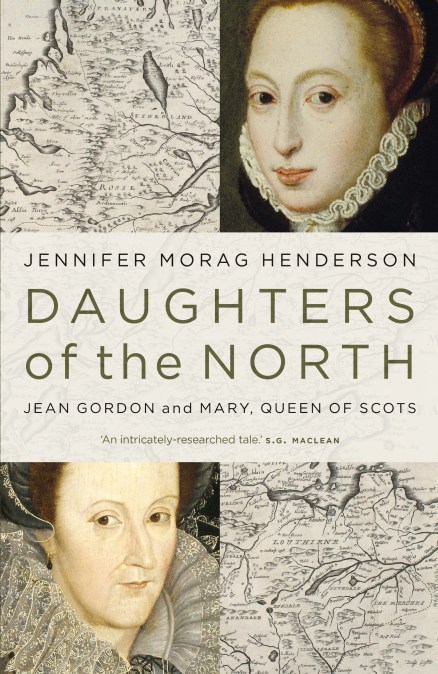 In the late 16th/ early 17th centuries, Scotland was chaotic and full of dynamic characters near or on the throne. People like Mary of Guise, Mary Queen of Scots, Lord Darnley, Earl of Bothwell, the four Maries, and James VI/I show how turbulent the Scottish court was to those around it. However, the stories of those who lived outside the court system and tried their best to maintain control of the country for their monarch tend to fade into obscurity. Take for example the story of Jean Gordon. A noblewoman who was married three times; to James Hepburn, Earl of Bothwell, Alexander Gordon, Earl of Sutherland, and her true love, Alex Ogilive. Jean’s story is full of heartaches, clashing clans, religious squabbles, and loyalty to one’s family, which is told in Jennifer Morag Henderson’s book, “Daughters of the North: Jean Gordon and Mary, Queen of Scots.”
 Adventures of a Tudor Nerd