Book Review: “Bring Up the Bodies” by Hilary Mantel

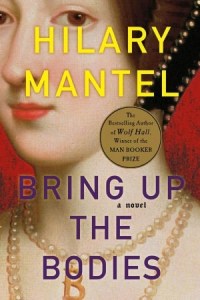
The year is 1535, and Henry VIII is growing bored with his current wife, Anne Boleyn. His eyes are wandering yet again, and this time his sights are set on Jane Seymour. Anne Boleyn had failed to give him his desired son, so Henry decided that it was only fitting for his right-hand man, Thomas Cromwell, to take down a queen. It’s Cromwell’s biggest challenge yet, but it could also become Cromwell’s defining moment. Hilary Mantel explores the pivotal months that pitted Cromwell against the Boleyns in her second book in the Wolf Hall trilogy, called “Bring Up the Bodies.”
Although the first book in the series, “Wolf Hall,” was a challenging read, I still wanted to continue reading the series. We all know Thomas Cromwell’s story, but since I started the Mantel retelling of his life, I wanted to see how she will handle the fall of Anne Boleyn.

We pick up where we left off in the first book, at Wolf Hall in 1535, where Henry VIII meets Jane Seymour and her family. The King is tired of Anne Boleyn, even though she is pregnant with what is hopefully Henry’s heir. Once they get back from Wolf Hall, rumors begin to spread about Anne’s infidelity while Cromwell is working on the dissolution of the monasteries. Anne has alienated so many people at court that they wonder if it’s time for a change and if perhaps Henry will take back Katherine of Aragon.

But it is too little too late. Katherine of Aragon will pass away without seeing her daughter, Mary. Anne believes that she is safe; however, fortune’s wheel is always turning. A jousting accident will rock the court and change the trajectory of Anne’s life forever. After Anne suffers a miscarriage, Henry decides now is the time to send in Cromwell to bring down the queen. We get the opportunity to see the downfall of Anne Boleyn and the men around her through the eyes of the man who brought about her fall from grace and her untimely death.

I enjoyed this novel more than Wolf Hall because there was that sense of drama and danger. We see Cromwell at his most impactful moment, but we also see that he is not some monster, but a human who was following orders. Mantel’s writing style may still be a bit difficult, but I felt this one was easier to follow along with than the first book. I cannot wait to see how Mantel will finish this trilogy. If you want to continue the Wolf Hall trilogy and see how the Cromwell/ Boleyn feud ends, I highly recommend you read “Bring Up the Bodies” by Hilary Mantel.

Book Review: “Henry VIII’s Controversial Aunt, Honor Lisle: Her Life, Letters, and Influence on the Tudor Court” by Amy Licence

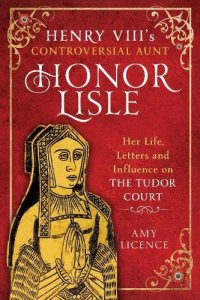
Marrying into the royal family is not all sunshine and rainbows. Of course, we tend to think about those who marry the king, the queen, the prince, or the princess. But we also need to consider the aunts and the uncles of the royals as part of the family. Take, for example, Arthur Plantagenet, the illegitimate son of Edward IV and the uncle of Henry VIII. His second wife, Honor Lisle, would help him rule Calais; however, she is best known for her letters and her devout Catholic faith during the Reformation in England. So why is Honor Lisle considered a controversial figure, and what was the cause of the fall of Honor and Arthur from the royal good graces? Amy Licence explores the life of Henry VIII’s step-aunt in the first full biography dedicated to Honor Lisle, which is entitled “Henry VIII’s Controversial Aunt, Honor Lisle: Her Life, Letters, and Influence on the Tudor Court.”
I would like to thank Pen & Sword Books and NetGalley for providing me with a copy of this book. I have heard of Honor Lisle and her letters, but I did not know much about her life before this book. I did know that she was married to Arthur Plantagenet, but I had assumed that he was her first husband, so I didn’t know about her life before Arthur. When I saw that Amy Licence was writing a biography about Honor Lisle, I knew I wanted to read it.

Licence begins with the birth of Honor Grenville, Lady Basset, Lady Lisle Plantagenet. She was born in 1493 to Thomas and Isabel Grenville in the small town of Bideford, Devon. Her father served the first Tudor king, Henry VII, as Esquire of the Body, so Honor’s family did have some connection before Honor’s marriage to Arthur. Honor’s mother died a year after she was born, but her father did not die until 1513. In 1515, Honor would marry her first husband, Sir John Basset, and they would have between 7 and 8 children before his death in January 1528. 

A year later was a monumental year for England as it was the start of the divorce between Henry VIII and Catherine of Aragon, which would be known as the Great Matter. It was also the year that Honor married Arthur Plantagenet. The couple would move to Calais, where Arthur would rule for his nephew. This is where we get to see the Lisle letters, Honor’s dictated correspondence to prominent figures in Tudor England. Honor and Arthur would go into debt, dealing with the constant threat of war, balance their faith and be loyal to the King, and handle a plot by Reginald Pole that would try to remove Henry VIII from the throne. 

I found it so interesting to see Honor’s perspective on the big issues of the Tudor court while staying in France, as well as how life in Calais was different from it was in London during this time. Honor Lisle’s life and letters give us great insight into the reign of Henry VIII from the perspective of someone who was outside of England during the major events of his reign. Licence’s research, combined with an easy-to-follow writing style, makes this a very well-written biography. If you want a biography about a lesser-known Tudor woman and her famous letters, I highly recommend you read “Henry VIII’s Controversial Aunt, Honor Lisle: Her Life, Letters and Influence on the Tudor Court” by Amy Licence.

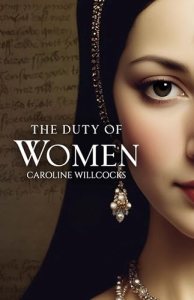
Book Review: “The Duty of Women” by Caroline Willcocks

The Tudor court during the reign of King Henry VIII was a treacherous place to be, even for the humble female musician. It was full of men and women vying for a position of power, and they were ready to give anything and everything for that power. This is the world that Kat Cooke finds herself in. After faithfully serving Queen Katherine of Aragon for years, she must switch her loyalties to Anne Boleyn, but when things get dangerous, where will Kat’s loyalties lie? Can Kat survive such turbulent times or sacrifice everything she holds dear? Kat’s story is told in the second book of Caroline Willcocks’ Tudor Queens series, “The Duty of Women.”

I want to thank Atmosphere Press and NetGalley for sending me a copy of this novel. While I have not read the first book in this series, “Of Aragon,” I did want to read this book because the premise sounded intriguing, and I have seen this book floating around on social media. I have not read any books by Caroline Willcocks, so I was looking forward to seeing what her writing style and approach to the Tudors was like.

Kat Cooke is an adopted foundling living in the court of Henry VIII. She is a married woman, and throughout she tells her story to her daughter. It should be noted that Kat is not an ordinary adopted foundling; she is the daughter of Katherine of Aragon and Henry VIII, who was believed to have been born stillborn, which was revealed in book one of this series. Having Kat in the court as the unknown child of Katherine of Aragon and Henry VIII adds depth to her character as Kat is both inside and outside the court circle. We enter the story with Queen Katherine of Aragon away from court and Anne Boleyn starting to create her influence over the court. It is at the height of the Great Matter, and we get a chance to see Thomas Cromwell working with Kat’s husband, Will, to put Anne Boleyn on the throne while dismantling the Catholic church in England.

It is through Kat’s story to her daughter that we get to see how the court interacts with one another during this tumultuous time. Willcocks portrays the relationship between Anne Boleyn and Jane Seymour as a Mean Girls situation. We also get to see the relationship between Anne and Henry, Anne and Cromwell, and Sir Thomas Wyatt’s affection for Anne. Although Sir Thomas Wyatt and Anne Boleyn never were a couple, Kat and Thomas do develop quite an interesting relationship that will shape her entire future and shake her relationship with Will forever.

Overall, I think this was a decent book with a unique take on the story of the Great Matter, the rise and fall of Anne Boleyn, and the short reign of Jane Seymour. The story of Kat and Will Cooke is fresh and welcoming when compared to other Tudor novels. I am interested in reading the first book in this series and the other books in the series when they are published. I think if you want a fresh take on the Great Matter, “The Duty of Women” and the Tudor Queens series by Caroline Willcocks should be something you check out.

Book Review: “Rebellious Grace” by Jeri Westerson

Christmas is a time of merriment and joy unless you are in the court of Henry VIII in 1536. Then it is a time of stress and murder. Henry’s second wife Anne Boleyn has only been dead for a few months while his third wife Jane Seymour is slowly adjusting to her new role as queen. A rebellion known as the Pilgrimage of Grace is taking over northern England and the leader Robert Aske wants to visit the court to discuss matters with King Henry VIII. To top it all off, a servant of Queen Jane has been murdered and the only one who can solve the crime is a fool, Will Somers. Can Will Somers connect the dots and save those closest to him, or will the treasonous act be another downfall in such a tumultuous year? This is the premise for the third book in the A King’s Fool Mystery series, “Rebellious Grace” by Jeri Westerson.
Thank you Severn House and Net Galley for sending me a copy of this novel. This is the second book in the A King’s Fool Mystery series I have read, the first being The Twilight Queen. While I had issues with The Twilight Queen when I saw that Westerson would cover the Pilgrimage of Grace and Jane Seymour in her next novel, I decided to give the series another chance.

We begin with the discovery of the body. The male servant Geoffrey Payne had his neck slashed in a rather unusual way, but there was no murder weapon by the body. The body is quickly buried and the investigation is left to Sir Nicholas Carew. However, this is not the only distraction at court, as Will Somers will soon find out. There is a real divide between Protestants and Catholics throughout the kingdom and while Queen Jane Seymour acts as a peacemaker at court, in other areas of England, the Pilgrimage of Grace is on the move to bring back Catholicism, led by Robert Aske. Thomas Cromwell has the idea of inviting Robert Aske to join the Christmas celebrations to discuss matters. And then there is the fact that Elizabeth and Mary are joining their father at court as a way to reconcile. So, you know, a very quiet Christmas.

With the craziness of court, Will Somers is of course caught directly in the middle of the mess. He is not only trying to cheer up his friend and employer King Henry VIII, but after it is discovered that poor Mr. Payne’s corpse was dug back up and disemboweled, he is asked to assist Sir Nicholas Carew with the investigation. To add even more drama, there is a connection between the dead man, the queen’s jewels, and the Seymour family. Will has to juggle all of this plus his ever-complicated love life between his wife Marion and his lover Nicholas Pachett.

I loved this mystery, especially the additions of the characters John Blanke, Jane Foole, Jane Seymour, and Edward Seymour. It was so gripping and well-balanced that I finished it in a day, which I hadn’t done with a book in a while. If you want a delightful murder mystery set in the court of Henry VIII or if you have read the other books in the A King’s Fool Mystery series, I highly recommend you read, “Rebellious Grace” by Jeri Westerson.

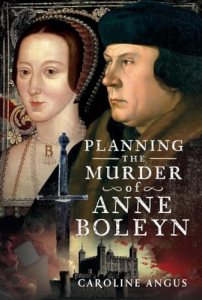
Book Review: “Planning the Murder of Anne Boleyn” by Caroline Angus

The 16th century was filled with tales of remarkable women. Still, one of the most defining figures of the century was a woman of noble birth who the King of England fell in love with and decided that he was going to divorce his first wife of over twenty years to marry her. The Great Matter caused a great scandal across Europe, however, it was a love match that would not last long. The relationship between Henry VIII and his second wife Anne Boleyn would turn volatile and in the end, Anne and the men around her would be executed. We often blame Anne Boleyn’s death at the foot of Henry VIII’s right-hand man Thomas Cromwell, but who was behind the death of this famous queen? Caroline Angus has chosen to re-examine the case to find out who was truly responsible for the fall of this famous queen in her latest book, “Planning the Murder of Anne Boleyn.”

I would like to thank Pen and Sword Books and NetGalley for sending me a copy of this book. I have enjoyed previous books by Caroline Angus, so when I heard that she was writing a book about Anne Boleyn’s “ trial,” I was curious to see what new insights she would bring to the case.

Angus begins by explaining to her audience that this case is hard to put together centuries after the fact because papers pertaining to the case were destroyed after the verdict was carried out. She then dives into how the fall of Anne Boleyn and the men around him happened, starting with the aftermath of the Great Matter, and the divorce between Henry VIII and Katherine of Aragon. We see how the Boleyns rose to power and Henry was so infatuated with Anne that he knew she would be the next Queen of England. Angus explores the men and women who served Anne Boleyn and Thomas Cromwell, it was fascinating to see how they would shape the case against the queen. Finally, we get to see the rivalry between Thomas Cromwell and Anne Boleyn develop regarding religious reform issues and Princess Mary’s place in the line of succession.

The second half of this book focuses on the actual fall, trial, and execution of Anne Boleyn and the men who were associated with her. Angus takes the time to do a diary-style section, starting at the time when the idea to remove Anne from power to her actual execution to show her readers how quick this “case” was and to show that Henry wanted her out of his life permanently. She has taken the available information and the gaps left behind to create a plausible case for what truly happened in these few weeks. Angus shows what Princess Mary and Jane Seymour had to do with the fall of Anne Boleyn. We also see that most people knew that Anne Boleyn and the men around her were innocent and didn’t deserve to die, but it was a foregone conclusion as the king wanted them dead.

Overall, I found this enjoyable and enlightening with the new information Angus brought to the table. Yes, there is a bit of repetition of information already shared in previous books about Anne Boleyn, but it was one of the most infamous cases in English history, so it has been examined for centuries. It’s hard to show new information about this case without repeating facts that we already know but I think Angus does an excellent job of balancing the old and the new information about this case. If you want a solid book specifically about the fall of Anne Boleyn, I recommend you read, “Planning the Murder of Anne Boleyn” by Caroline Angus.

Book Review: “Heroines of the Tudor World” by Sharon Bennett Connolly

Heroines of the Tudor WorldThe world of the 16th century was full of change and equally colorful characters. Most of the dynamic figures of this century were women, who were willing to fight in their ways for what they believed in, whether it was family, faith, or their country. They were heroines in different ways, and each had a story to tell. Each woman had to deal with her obstacles to reach their desired goal, no matter what her station was, from queens and great heiresses to nuns, and even a pirate. Sharon Bennett Connolly has decided to include a handful of these stories in her latest book, “Heroines of the Tudor World.”
I would like to thank Amberley Publishing for sending me a copy of this book. I have been a fan of Sharon Bennett Connolly’s books on medieval women, so when I heard that she was going to tackle the 16th-century and the Tudor world, I knew I wanted to read it. I wanted to see what stories she would select and how far into the Tudor world she would explore.

Connolly begins her book by explaining how the 16th century differed from the medieval times as records about women were becoming more accessible. It was also a time of transition, reformation, and the discovery of the “new world.” Each chapter focuses on a different kind of woman; from the ideal to martyrs for their faiths, scandalous heroines, those who were disinherited, pawns in the bigger game of life, warriors, captives, and survivors. Although it can be difficult to place certain tales of women in just one category, Connolly gave her readers a thrilling look into the 16th century.

It was the stories of these extraordinary women who made this book an exceptional read. There are the typical women who are featured heavily in these kinds of narratives; Elizabeth of York, Margaret Beaufort, the wives of Henry VIII, Mary I, Elizabeth I, Mary Queen of Scots, and Catherine de Medici. However, Connolly decided to include lesser-known women. We have mistresses like Diane de Poitiers and spies like Margaret Dymoke, Lady Coffin. Some great heiresses were disinherited like Claude of France and Elizabeth Fitzgerald, as well as pawns like Marguerite de Valois and captives such as Lady Katherine Gordon and Honor Grenville, Lady Lisle. Of course, some women decided to take matters into their own hands and fight for what they believed in, such as Isabella of Castile, Jeanne d’Albret Queen of Navarre, and Grace O’Malley.

I thoroughly enjoyed learning about the heroines that Connolly included in this book, but my only complaint is that it was not a longer book. There are so many interesting women outside of the European world in the 16th century and I wish she would have highlighted them. Maybe Connolly will write a sequel book to this one to include even more Tudor heroines. If you have enjoyed Sharon Bennett Connolly’s previous books and you are a Tudor nerd, I highly suggest you read, “Heroines of the Tudor World.”

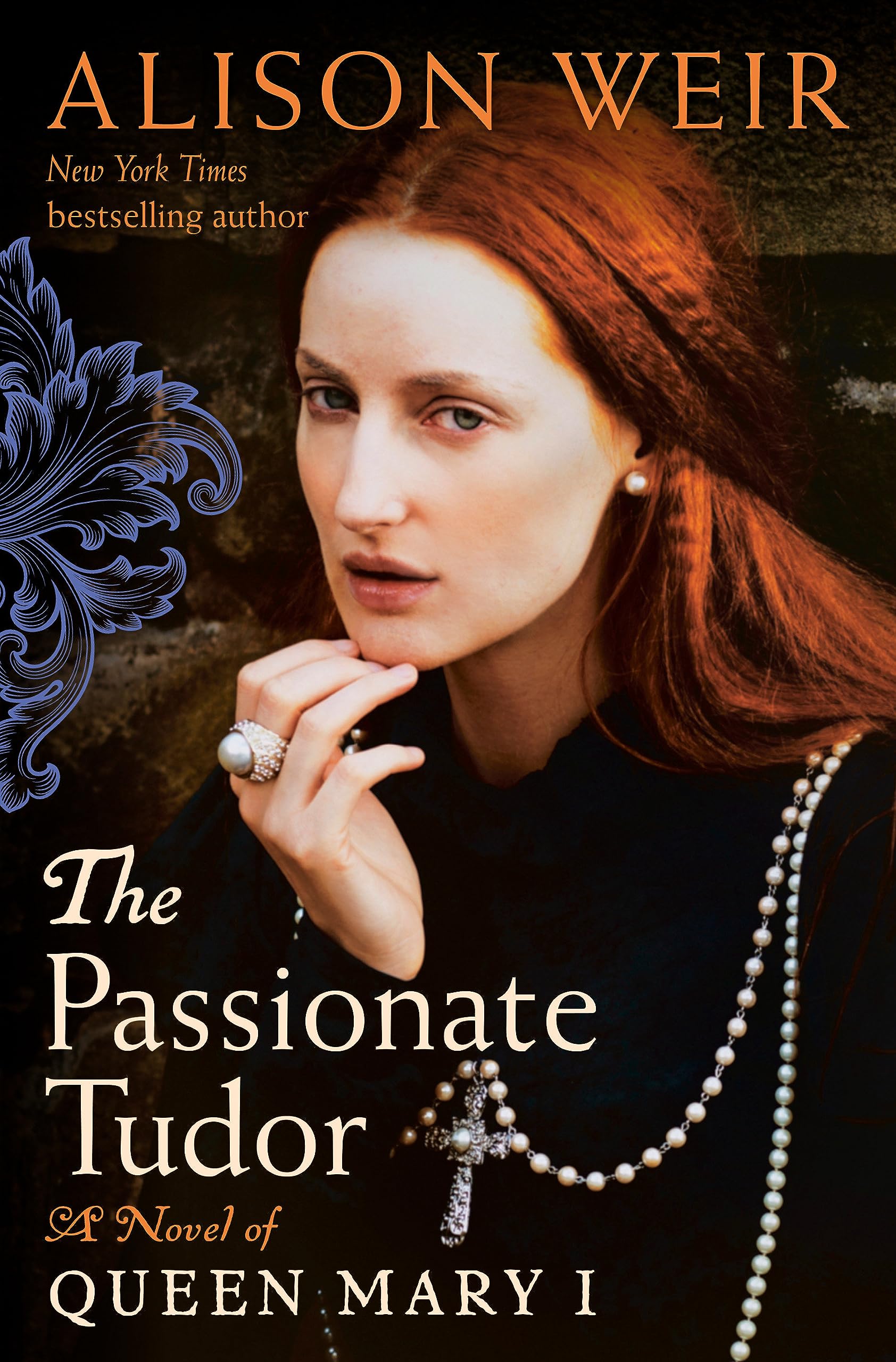
Book Review: “The Passionate Tudor: A Novel of Queen Mary I” by Alison Weir

The Passionate TudorA king’s eldest child is usually the next in line to inherit the throne and become the next ruler. At least that is how the line of succession is supposed to work if the heir is male. Mary I knew this better than anyone. As the eldest daughter of King Henry VIII, she knew that once her mother Katherine of Aragon had a son, Mary would become a pawn in the marriage game. She was willing to accept this fate until her father fell in love with Anne Boleyn. Mary is declared a bastard and must fight for her inheritance and the crown of England while maintaining her Catholic faith. Alison Weir tells the tale of this remarkable woman, from her tumultuous childhood to her short reign that marked her legacy, in her latest novel, “The Passionate Tudor: A Novel of Queen Mary I.”

I would like to thank Ballantine Books and Net Galley for sending me a copy of this book. I have enjoyed the previous novels in The Tudor Rose trilogy by Alison Weir about Elizabeth of York and King Henry VIII, so when I heard she was writing a book about Mary I, I knew I wanted to read it. Mary I is one of those figures who shows how devastating it can be to be close to the throne and the hard decisions one makes when king or queen of a country.

Weir began her novel with Mary at the age of nine in 1525. She is her parent’s pride and joy as she is their only child. Her mother Katherine of Aragon is arranging an advantageous marriage for Mary that would create a strong alliance for England. Not even the birth of her half-brother Henry Fitzroy could dampen Mary Tudor’s spirits. However, that all changed when Anne Boleyn entered the picture and the Great Matter was made public. Katherine of Aragon is no longer queen, Anne Boleyn is Mary’s stepmother, and Mary is now declared a bastard in favor of her half-sister Elizabeth Tudor.

Mary’s life after the birth of Elizabeth Tudor begins to become even more tragic. Her mother Katherine of Aragon dies before she can see her daughter again and Anne Boleyn is executed for treason soon afterwards. Henry VIII marries Jane Seymour, has his desired male heir Edward VI, before Jane tragically dies quickly. As the Supreme Head of the Church of England, Henry wants his daughter Mary, a devout Catholic, to submit to his will, which she ultimately does. We also get to see how Mary interacted with her other stepmothers, Anna of Cleves, Katherine Howard, and Katherine Parr, until the death of her father Henry VIII. Before he died, Henry VIII revised his Act of Succession, making Mary Edward’s heir if he did not have children. However, Edward VI has his idea for who will succeed him after he dies and he names Lady Jane Grey as his heir, although that plan does not last long and Mary is proclaimed the first queen of England to rule on her own.

Weir shows Mary’s life and reign in a very sympathetic way. Even though she does still give her the nickname “Bloody Mary”, we can see a woman who is concerned about the faith of her kingdom and the well-being of her family, especially Edward, Prince Philip her husband, and Elizabeth, who she argues with on matters that matter to her. It is such a tragedy that Mary never had a child that she desperately wanted to have as she suffered through phantom pregnancies. At the end of the day, whether it was matters of faith or family, Mary was someone who was passionate and someone who desired to be loved.

This is a delightful novel about a woman who has often been vilified but maybe we should have sympathy for everything she had to endure starting at a young age. I enjoyed this novel very much and I look forward to the next novel by Weir. If you have enjoyed the previous books in the Tudor Rose trilogy or you just want a different take on Mary I’s story, I highly suggest you read, “The Passionate Tudor: A Novel of Queen Mary I” by Alison Weir.

Book Review: “The Last Days of Henry VIII: Conspiracies, Treason, and Heresy at the Court of the Dying Tyrant” by Robert Hutchinson

The Last Days of Henry VIII

King Henry VIII, who ruled as a tyrant for almost 40 years, is dying. He caused mayhem and mischief by marrying six wives, killing two of them, with the dissolution of the monasteries, the creation of the Church of England, and his international policies. In short, it was a hot mess towards the end of his reign. So how did the last few months of King Henry VIII play out and how was he honored by those closest to the throne? Robert Hutchinson takes an in-depth look into this tumultuous period in history in his book, “The Last Days of Henry VIII: Conspiracies, Treason, and Heresy at the Court of the Dying Tyrant.”

I found this particular book in a used bookstore one day and decided to try it. I have heard of Robert Hutchinson, but I have never read any of his books. 

Hutchinson begins with the day that King Henry VIII breathed his last breath on January 28, 1547. He is no longer the glamorous Renaissance prince, but rather he is a hugely obese man with festering wounds on his legs. The years have taken their toll on the king, but no one feels sympathy for the man. He has made so many around him live in abject terror for decades. Now, it is time for a fresh start with the reign of King Edward VI, his beloved son.

We then jump back in time so that Hutchinson can show his readers exactly why King Henry VIII was feared towards the end of his life. He starts with the last three marriages of Henry VIII, Anne of Cleves, Catherine Howard, and Katherine Parr. The way that Hutchinson characterized Anne of Cleves and Catherine Howard in this book irked me quite a bit, even though I know this book is older and there is new research about both queens that contradicts Hutchinson’s perspective. 

Multiple marriages were not the only concern during the last years of Henry VIII’s life as he had to deal with heretics, international politics, and how the country should be run after his death. What I found truly fascinating about this book is the sources that Hutchinson used to tell the tale of the last years of Henry VIII’s life. They show how chaotically terrifying Henry’s court was towards the end. Hutchinson shows how the ambitious men around Edward VI tried to take control, but failed miserably as Edward VI, Mary I, and Elizabeth I ruled with just as much vigor as their powerful father. Finally, we see what happened to Henry VIII’s earthly remains and why his marvelous tomb vanished, leaving a simple marker to indicate where he and his beloved Jane Seymour were buried. 

Hutchinson does his due diligence to show how maniacal Henry VIII was, especially towards the end of his life. He does not mince words in his opinions about Henry and his court, which I may not agree with completely, but he makes strong arguments for his opinions. Overall, a very well-written and informative book. If you want a book that explores the final years of the infamous king, I would suggest you check out, “The Last Days of Henry VIII: Conspiracies, Treason, and Heresy at the Court of the Dying Tyrant” by Robert Hutchinson.

Book Review: “The Great Survivor of the Tudor Age: The Life and Times of Lord William Paget” by Alex Anglesey

The Great SurvivorRulers cannot govern alone. They require a team of men and women behind them to operate as a cohesive unit. The same can be said for rulers during the Tudor dynasty. We know the stories of men like Cardinal Wolsey and Thomas Cromwell, two men who rose through the ranks to prominent seats of power to ultimately have disastrous falls from grace. However, there was a third Tudor politician who should be in this discussion about rags-to-riches stories. He was the son of a common merchant who went to serve most of the Tudor monarchs as an advisor. Conspiracies and rebellions kept him on his toes, but he ultimately survived the Tudor dynasty, which was a difficult thing to achieve. His name was Lord William Paget and his story is told by his descendant Alex Anglesey in his debut book, “The Great Survivor of the Tudor Age: The Life and Times of Lord William Paget.”

I would like to thank Pen and Sword Books and Net Galley for sending me a copy of this book. I have heard the name William Paget in previous books that I have read about the Tudors, but he is one of those figures that felt like a footnote to me. When I heard that there was going to be a biography about Paget, I wanted to read it and learn more about this Tudor politician.

Alex Anglesey, the current Marquess of Anglesey, tells the story of how when he was a child living in the family home of Plas Newydd. Anglesey was able to use family letters to piece together the story of his ancestor, William Paget, a man of low status who rose through the ranks and served four Tudor monarchs.

The beginning of Paget’s international political career was traveling all across Europe to convince other European countries to accept the Great Matter. During this time, William married Anne Preston and they had nine children. He was the secretary for both Queen Jane Seymour and Anne of Cleves, and he witnessed the dissolution of the monasteries before making his way into the Privy Council as a clerk.

Paget’s first major role was as the English ambassador to France during the reign of King Francis I and gave news to the king about the downfall of Katherine Howard, but it did not last long as he was needed back in England to become Secretary of State. He was King Henry VIII’s private secretary towards the end of his life and helped craft Henry’s last will and testament. After siding with Edward Seymour during the reign of Edward VI, William barely survived a stay in the Tower of London, but he did. During Mary I’s reign, he helped organize the marriage between Mary I and Philip and witnessed the infamous burnings of Protestants. Paget only saw a few years of Elizabeth’s reign before he passed away.

Anglesey shows how Paget and his family were able to survive the Tudor dynasty by staying neutral on matters like religion while still promoting peace. I did find this book a bit dry in places and some of the references to the modern age felt a bit out of place. Overall, it was informative and not a bad read for a debut book. If you want to learn more about a lesser-known political figure who lived during the Tudor dynasty, I suggest you read, “The Great Survivor of the Tudor Age: The Life and Times of Lord William Paget” by Alex Anglesey.

Book Review: “Jane Seymour: An Illustrated Life” by Carol-Ann Johnston

Jane SeymourKing Henry VIII’s six wives each have their unique story that transcends time. Katherine of Aragon was his first wife, the mother of Mary Tudor, and the one Henry left behind after 24 years to marry his mistress Anne Boleyn, the most famous of his wives and the mother of Elizabeth Tudor. Anna of Cleves had the shortest marriage to Henry VIII and ended up with an excellent annulment deal. Catherine Howard was young and a bit naive when it came to the ways of men, which led to her downfall while Catherine Parr survived until the end of Henry VIII’s reign. These five women are stories we know by heart, but the one whose story remains a mystery is Jane Seymour, Henry’s third wife, and the mother of the future King Edward VI. In her debut book, “Jane Seymour: An Illustrated Life” Carol-Ann Johnston tells the story of the wife who gave Henry his desired son.

I want to thank Pen and Sword Books and Net Galley for sending me a copy of this book. Jane Seymour is someone who I have wanted to learn more about ever since I started studying the Tudors. When I heard that the founder of the Jane Seymour- Henry VIII’s Third Wife was turning her research into a book, I knew I wanted to read it.

Johnston begins by tracing the origins of the Seymour family to the town of Touraine, Saint-Maur-sur-Loire, and a man named Richard de St. Maur from the 7th and 8th centuries. She then traces the family to John Seymour, the Sheriff of Hampshire, the one who inherited Wolf Hall, and the grandfather of Jane Seymour. Johnston also explores how Jane Seymour, Anne Boleyn, and Catherine Howard were related, as they were all half-second cousins. Sir John and Margery Seymour had a large family with at least 9 children including Jane, Thomas, and Edward, who would play important roles in the Tudor court.

The bulk of this particular book explores the time Jane Seymour spent at the Tudor court, starting with her time with Katherine of Aragon, exploring her relationship with Anne Boleyn, and finally her time as Queen of England. We get to see how she dealt with big events in the reign of Henry VIII like the Great Matter, the rise and fall of Anne Boleyn, the Pilgrimage of Grace, and the Dissolution of the Monasteries. Johnston also explores what made Jane Seymour famous, the birth of her son Edward VI and her death a matter of days afterward.

For her debut book, I think Johnston does a decent job telling Jane Seymour’s story for a modern audience with lovely photographs of ways she was remembered through art and architecture. There were some really interesting facts about Jane’s life that I did not know about including her family’s origin and her suitor before Henry, but a lot of this felt like information that I already knew from other books. I think it would be nice if Johnston does write another book that she focuses on the origins of the Seymour family because it covers centuries of English history and I am sure there are some intriguing tales in their family tree.
Overall, I enjoyed this book and the information I learned from reading it. If you want to learn more about Jane Seymour’s life and her family, I recommend reading, “Jane Seymour: An Illustrated Life” by Carol-Ann Johnston.