
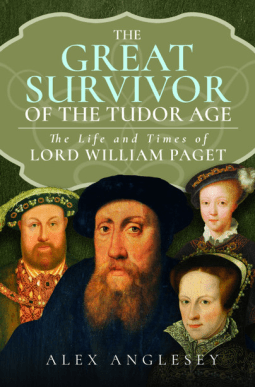
 Rulers cannot govern alone. They require a team of men and women behind them to operate as a cohesive unit. The same can be said for rulers during the Tudor dynasty. We know the stories of men like Cardinal Wolsey and Thomas Cromwell, two men who rose through the ranks to prominent seats of power to ultimately have disastrous falls from grace. However, there was a third Tudor politician who should be in this discussion about rags-to-riches stories. He was the son of a common merchant who went to serve most of the Tudor monarchs as an advisor. Conspiracies and rebellions kept him on his toes, but he ultimately survived the Tudor dynasty, which was a difficult thing to achieve. His name was Lord William Paget and his story is told by his descendant Alex Anglesey in his debut book, “The Great Survivor of the Tudor Age: The Life and Times of Lord William Paget.”
I would like to thank Pen and Sword Books and Net Galley for sending me a copy of this book. I have heard the name William Paget in previous books that I have read about the Tudors, but he is one of those figures that felt like a footnote to me. When I heard that there was going to be a biography about Paget, I wanted to read it and learn more about this Tudor politician.
Alex Anglesey, the current Marquess of Anglesey, tells the story of how when he was a child living in the family home of Plas Newydd. Anglesey was able to use family letters to piece together the story of his ancestor, William Paget, a man of low status who rose through the ranks and served four Tudor monarchs.
The beginning of Paget’s international political career was traveling all across Europe to convince other European countries to accept the Great Matter. During this time, William married Anne Preston and they had nine children. He was the secretary for both Queen Jane Seymour and Anne of Cleves, and he witnessed the dissolution of the monasteries before making his way into the Privy Council as a clerk.
Paget’s first major role was as the English ambassador to France during the reign of King Francis I and gave news to the king about the downfall of Katherine Howard, but it did not last long as he was needed back in England to become Secretary of State. He was King Henry VIII’s private secretary towards the end of his life and helped craft Henry’s last will and testament. After siding with Edward Seymour during the reign of Edward VI, William barely survived a stay in the Tower of London, but he did. During Mary I’s reign, he helped organize the marriage between Mary I and Philip and witnessed the infamous burnings of Protestants. Paget only saw a few years of Elizabeth’s reign before he passed away.
Anglesey shows how Paget and his family were able to survive the Tudor dynasty by staying neutral on matters like religion while still promoting peace. I did find this book a bit dry in places and some of the references to the modern age felt a bit out of place. Overall, it was informative and not a bad read for a debut book. If you want to learn more about a lesser-known political figure who lived during the Tudor dynasty, I suggest you read, “The Great Survivor of the Tudor Age: The Life and Times of Lord William Paget” by Alex Anglesey.
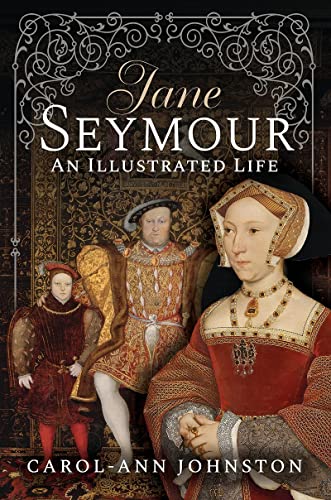 King Henry VIII’s six wives each have their unique story that transcends time. Katherine of Aragon was his first wife, the mother of Mary Tudor, and the one Henry left behind after 24 years to marry his mistress Anne Boleyn, the most famous of his wives and the mother of Elizabeth Tudor. Anna of Cleves had the shortest marriage to Henry VIII and ended up with an excellent annulment deal. Catherine Howard was young and a bit naive when it came to the ways of men, which led to her downfall while Catherine Parr survived until the end of Henry VIII’s reign. These five women are stories we know by heart, but the one whose story remains a mystery is Jane Seymour, Henry’s third wife, and the mother of the future King Edward VI. In her debut book, “Jane Seymour: An Illustrated Life” Carol-Ann Johnston tells the story of the wife who gave Henry his desired son.
 When we think about the Tudor dynasty, we often focus on the women in King Henry VIII’s life and his children, at least when it comes to novels. Writing about this larger-than-life figure, this notorious king and controversial figure in English history, are usually considered ambitious. Few have attempted to write a book about the king’s entire reign, but Alison Weir has embarked on this endeavor in her latest novel, “The King’s Pleasure: A Novel of Henry VIII.”
 Today, I am pleased to welcome Judith Arnopp to my blog to share the blurb from her latest novel, “A Matter of Faith.” I would like to thank Judith Arnopp and The Coffee Pot Book Club for allowing me to be part of this tour.
  Blurb:
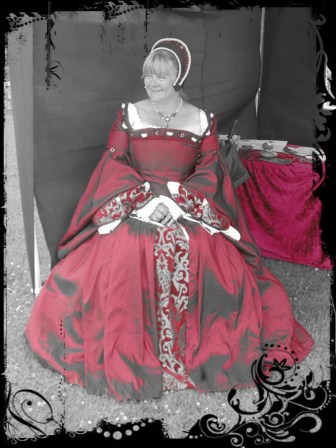 Author Bio:
 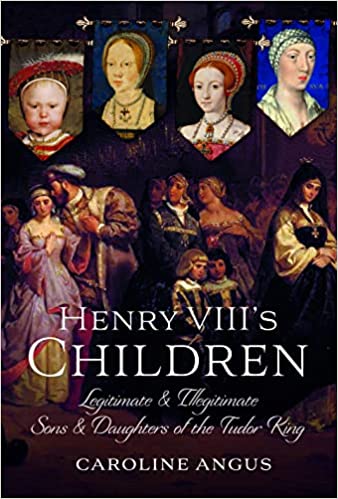 When we think about the title royal children, images of children who get whatever they want, being spoiled with gems and gowns, and ruling kingdoms, they are married to create alliances. In that sense, it would define a life of luxury. However, for the children of King Henry VIII, luxury was not always in their dictionary. What was life like for the legitimate and illegitimate children of Henry VIII? Caroline Angus explores this question in her latest book, “Henry VIII’s Children: Legitimate and Illegitimate Sons and Daughters of the Tudor King.”
 The world of someone close to a king, especially someone close to King Henry VIII, was full of hazards and great triumphs. All the glist and glamor of the Tudor court could not save them from the rage of the King. This could apply to anyone who fell during the reign of this infamous King, but none more so than his second wife and queen, Anne Boleyn. Much has been written about Anne Boleyn and her dramatic fall from grace, specifically the final month of her life, but what was she doing in her last year alive? Natalie Grueninger hopes to answer this question in her latest book, “The Final Year of Anne Boleyn.”
 Two women who served Anne Boleyn must deal with the ramifications of staying on opposite sides of the queen’s downfall. One is the next bride of King Henry VIII, who must give the king the son he desires or suffer the consequences. The other is a lady in waiting who holds a dark secret and a relic of the past that could be dangerous to both women. Many of us know the story of Jane Seymour, but is there more to the queen who was able to give King Henry VIII the son he desired? What about the mysterious Margery Horsman? What role did she play in Anne Boleyn’s and Jane Seymour’s inner circles? In her third book, “Keeper of the Queen’s Jewels,” Adrienne Dillard tells the tale of these women bonded by fate to work together to survive such a tumultuous time.
 Many actors and actresses have portrayed the lives of Henry VIII and his six wives in modern films and dramas. When asking Tudor nerds which Henry VIII stood out the most, the most popular response is Keith Michell in the 1970s BBC series, “The Six Wives of King Henry VIII.” I had not heard about this series until I started “Adventures of a Tudor Nerd.” Many people have wanted me to watch the series solely for the performance of Keith Michell, so when a coworker allowed me to borrow her DVD copy of the series, I finally decided it was time to tackle this legendary series.
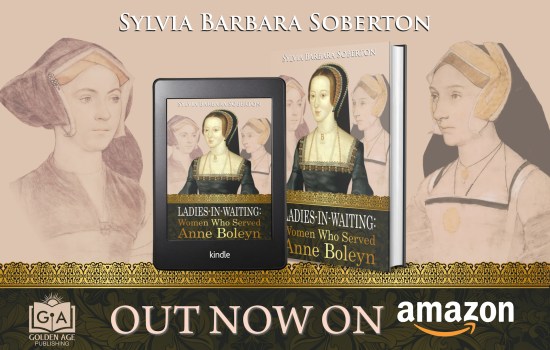 Today, I am pleased to welcome Sylvia Barbara Soberton to my blog to discuss one of the women featured in her latest book, “Ladies-in-Waiting: Women Who Served Anne Boleyn.”
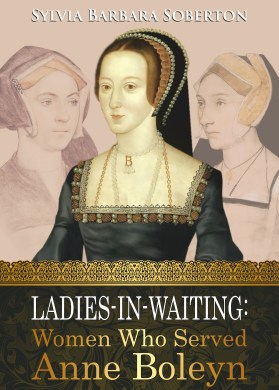 Description:
 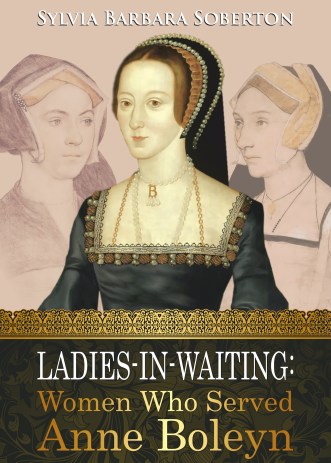 The story of Anne Boleyn and her rise and fall has been told throughout the centuries in numerous ways. With tales of this memorable monarch came rumors of what happened inside her court and the women who served her during her reign. We tend to look at her life through the lens of the men who interacted with Anne Boleyn at court, but what about the women who knew her? Stories of ladies-in-waiting selling the queen out and secret romances ran rampant throughout the centuries, but how much truth is in these tales? Sylvia Barbara Soberton explores these questions in her latest book, “Ladies-in-Waiting: Women Who Served Anne Boleyn.”
 Adventures of a Tudor Nerd