
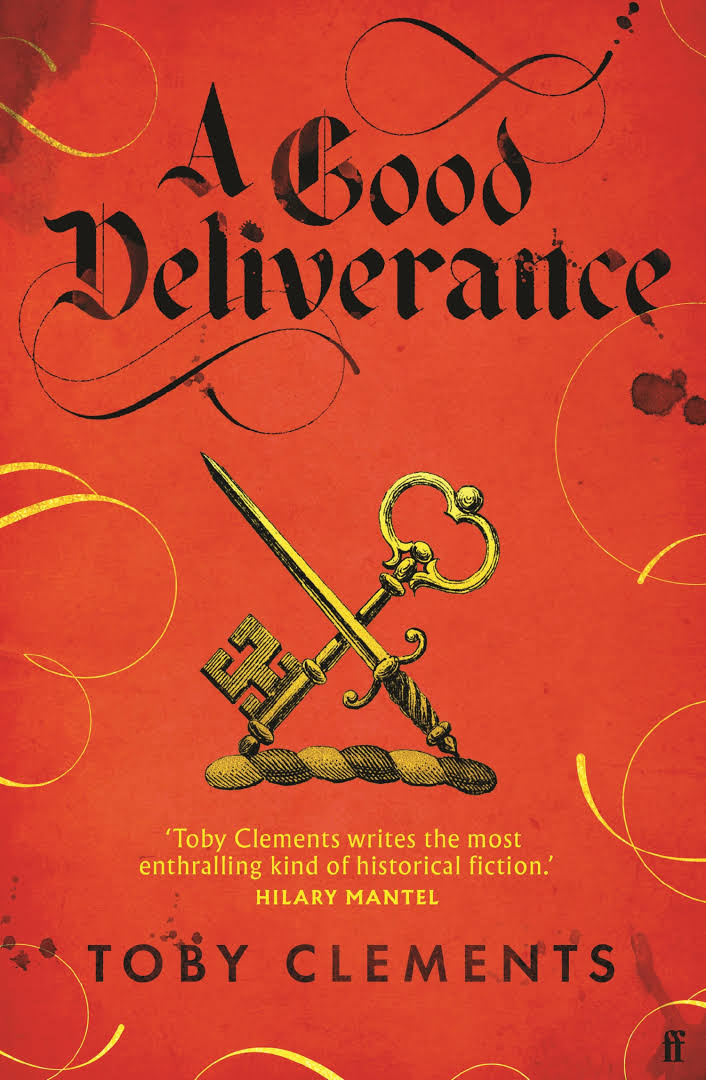
 The world of King Arthur and his Knights of the Round Table is filled with stories of adventures and romance. Many authors have tried to tell these tales in a way that will allow their books to live for centuries, but none were more successful than Sir Thomas Malory and his book Le Morte Darthur. King Arthur, Lady Guinevere, Sir Lancelot, Merlin, and Sir Gawain embark on numerous adventures including the Lady of the Lake, Camelot, the sword Excalibur, and the Quest for the Holy Grail. These tales were the epitome of chivalry and valiant knights in shining armor, but the author behind them was anything but perfect. Sir Thomas Malory has had his fair share of time in a prison cell. Who was Sir Thomas Malory and why did his book about King Arthur and the Knights of the Round Table still resonate with readers centuries after it was written? In his latest novel, “A Good Deliverance,” Toby Clements hopes to reveal the truth of this famous author whose story has been overshadowed by the myths he wrote down in his legendary tome.
I would like to thank Faber Books for sending me a copy of this novel. I have heard about the book Morte Darthur, as it is considered one of the most prominent texts about King Arthur, but when it comes to the author himself, I know nothing about his life. When I heard about this novel, the premise intrigued me enough to read it.
Clements begins his novel with Malory’s surprise arrest at a very old age. Malory is unsure why he has returned to prison as he has tried to live an honest life after he spent some time in the same cell over 20 years ago. He is at the mercy of King Edward IV. While imprisoned, waiting for word from his lawyer, Malory befriends a boy who is the son of one of the jailers named Brunt and he tells the young man his tale. Malory was the son of a knight who fought under King Henry IV in the search for the Welsh miscreant Owen Glendower. We get to see Malory become a knight and his fascination for King Arthur and the Knights of the Round Table that would become his magnum opus Morte Darthur. We see Malory’s moments of glory and utter defeat, his rivals, and the women that he admired from afar. Through Malory, we get to see how England changed, starting with Henry IV to his son Henry V, the young King Henry VI, and finally the first Yorkist King Edward IV. We also get to witness events such as the year of the 3 popes, the coronation of Henry V, Agincourt, the death of Jeanne d’Arc, the coronations of King Henry VI, and the beginning of the conflict known as the Wars of the Roses.
In a way, Clements created his Arthurian legend for Sir Thomas Malory with the way he chose to write this novel. However, it was the structure of this novel that bothered me when I was reading it, specifically the bullet points that Clements chose to include. When I am reading a novel, I want to read a cohesive piece, but the bullet points made it feel messy, which was probably used to simulate Malory as a storyteller figuring out what he wants to say to his young audience and what he wants to omit, however, it was just irritating for me to read. I don’t mind bullet points in nonfiction books, but it just doesn’t work for me in historical fiction. As for the main character, Sir Thomas Malory is okay, but there were moments where he rubbed me the wrong way. I did, however, enjoy his relationship with the boy.
Overall, it was a decent book. I think there were elements that I didn’t enjoy entirely, but the way Clements was able to incorporate the changes of the 15th century with the Arthurian legends to tell the story of this author was very unique. I think if you are a fan of Sir Thomas Mallory, the Arthurian legends, or the events of the 15th century, you might enjoy, “A Good Deliverance” by Toby Clements.
 I am pleased to welcome Chris Tomasini to my blog today to share an excerpt from his novel, “Close Your Eyes- A Fairy Tale.” I would like to thank Chris Tomasini and The Coffee Pot Book Club for allowing me to be part of this tour.
  Blurb:
 Adventures of a Tudor Nerd