
 The Great Matter was a defining event in the lives of King Henry VIII, Catherine of Aragon, and Anne Boleyn. One of the world’s messiest divorces, it saw Henry VIII trying everything in his bag of tricks to annul his marriage to Catherine of Aragon to marry his new infatuation, Anne Boleyn. While we know that the basis for his argument that he should be able to divorce Catherine comes from the book of Leviticus in the Bible, we often see Henry’s debate through the Catholic and Protestant lenses. However, Henry relied on another group of people who had not been on English soil for centuries, the Jews. What does Jewish law bring to the discussion of the Great Matter and did it help Henry? Jerry Rabow examines this often overlooked aspect of Henry’s road to divorce in his book, “Henry VIII and His Rabbis: How the King Relied on Jewish Law to End His First Marriage- and Why He Failed.”
I want to thank Amberley Publishing for sending me a copy of this book. Obviously, as a Tudor nerd, I am very familiar with the Great Matter, but when I saw that it was focusing on Jewish law and how it pertained to this case in particular. I have some knowledge of theological debates from college, so I wanted to see how in-depth Rabow would go.
Rabow begins by exploring the phenomenon known as Tudormania before diving into a brief history of the Jewish people in England before Henry VIII’s reign. He then takes the time to provide background information about the Great Matter, including discussing the Leviticus Prohibitions, which would be the base of Henry’s argument for his divorce. I have to say that the way Rabow covered the Tudor portion of this book felt like he oversimplified things or made assertions about their characters that felt generic.
When it comes to the main topic, Rabow spends a bit of time explaining Jewish law and the different Jewish traditions. This foundation is important because different Jewish traditions understand the Leviticus Prohibitions in different ways. One tradition believes in a levirate marriage, which allows a brother to marry his sister-in-law if his brother dies without an heir. So essentially what happened when Henry married Catherine after Arthur died. To say Henry was not thrilled with this branch of Jewish tradition would be an understatement. Rabow shows his audience how Henry VIII relied on Jewish scholars in Italy to help defeat the Pope’s gridlock on the matter.
I think the theological matters and the history of the Jewish people and scholars were interesting in this book. Where it fell short for me was when Rabow entered the Tudor court. Overall, it was an interesting book with a unique twist on the story of the Great Matter. If you want a book that explores the Great Matter with a twist, I suggest you read, “Henry VIII and His Rabbis: How the King Relied on Jewish Law to End His First Marriage- and Why He Failed” by Jerry Rabow.
 In an age when most women of power did not have much power outside their own countries, one stood higher than most. She was not even supposed to become queen, but fate had a bigger mission for the young woman: rescue Christianity from dying out. As a ruler, this seems like a monumental task to complete especially when their enemies were the Ottoman Empire and the Turks at the height of the power. There was one woman who was up to the challenge while fighting to reclaim Spain for the Christians, exploring the new world, and dealing with her family drama. Isabella of Castile is either viewed as a saintly queen or a horrible woman ruler, but what do the archives tell us about her reign? Kirstin Downey tells the story of this revolutionary queen in her biography, “Isabella: The Warrior Queen.”
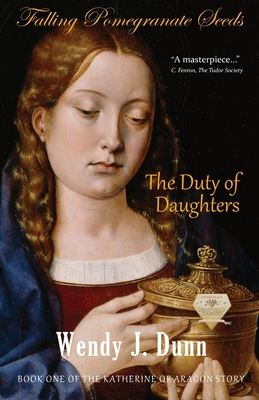 A young Spanish princess sits with her close friend, sisters, and brother as their beloved tutor, Dona Beatriz Galindo, tells them a story. As the children of Ferdinand of Aragon and Isabel of Castile, they must marry and create alliances to strengthen their kingdoms, while Beatriz must ensure they are ready for the challenge. Childhood ends rather quickly with a holy war against the Moors, the expulsion of the Jews from the kingdom, and death around every corner. In her novel, “Falling Pomegranate Seeds: The Duty of Daughters,” Wendy Dunn transports readers into a world of hope and sorrow, life and death.
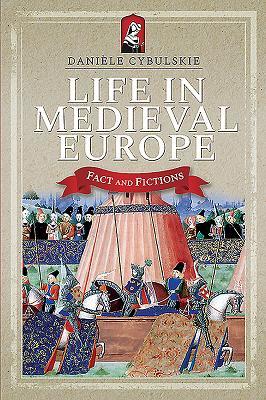 Have you ever read a book, either historical fiction or nonfiction, about medieval Europe and wondered if what the author was writing about was true? What about historical movies or dramas? You know that they probably have the facts about the important people and events correct, or at least you hope, but you wonder about the small details. What did they eat? How did they keep themselves clean and healthy? How did religion and the criminal justice system work in medieval Europe? What was medieval warfare like? These questions and more are explored in Daniele Cybulskie’s enchanting book, “Life in Medieval Europe: Fact and Fiction”.
 Adventures of a Tudor Nerd