 Today, I am pleased to welcome Heather R. Darsie to my blog to share an excerpt from her latest book, “Children of the House of Cleves: Anna and Her Siblings.” I would like to thank Heather R. Darsie and Amberley Publishing for allowing me to be part of this blog tour. \
Anna von der Mark and her siblings, deemed by their father to be known as being “of Cleves,” his family’s territory, came from a somewhat new line of ducal power. The Duchy of Cleves existed as a county for hundreds of years before becoming a duchy. From whom the dynasty descends is a bit of a mystery, but thankfully, they have a certain mythology to explain,
“The noble Von der Mark family traces their lineage from a princess named Beatrix and her hero, the mythical Swan Knight Elias Gral… Family lore held that …[it was] the [Roman] Orsini…arrived in Cleves …. Such tales of noble heritage were common in the Medieval to Early Modern period…
A family origin tale specific to the Von der Marks involves the young, beleaguered heiress Beatrix. Beatrix, heiress of Nijmegen and Cleves, married the legendary Swan Knight after he floated down the Rhine in his boat, pulled by a swan wearing a golden collar. At the time, according to legend, Beatrix was being aggressively pursued by her suitors. The Swan Knight, named Elias Gral, came to her rescue. He agreed to be Beatrix’s husband on the condition that she never ask about his origin. The couple was happily wed for some time and had three sons together. Beatrix convinced one of her sons to ask Elias about his background. Elias sorted what was going on and instantly disappeared. Beatrix died shortly after Elias’ disappearance.
…. Elias Gral … lived in the 8th century…, and served the Frankish leader Charles Martel. … Martel was imprisoned in Cologne around 714 by his stepmother Plectrude because Martel’s father died, and Plectrude wished for her son to be heir. Gral helped free Martel from prison in Cologne. In return, Martel raised the Bailiwick of Cleves to the status of county, creating Gral the first Count of Cleves.….
The Von der Mark dynasty, thought to have arisen from servants of the Grals, was established when Margaretha [of Cleves] married Count Adolf von der Mark. Through the right of Margaretha, Adolf and Margaretha’s children became counts and countesses of the combined Duchy of Cleves and County of Mark, simply called Cleves-Mark…
Margaretha’s and Count Adolf von der Mark’s son, also named Adolf, greatly expanded the territories under Cleves-Mark’s control. Adolf of Cleves-Mark had his own son, whom he also named Adolf. This second Adolf of Cleves-Mark was the last Count of Mark and first Duke of Cleves.… Duke Adolf … married Marie of Burgundy in 1406. Marie was a daughter of John the Fearless, and sister of Philip the Good. Marie was only about thirteen years old when she married Adolf. Marie did not move to Cleves until 1415, when she was around twenty-two years old.
Duke Adolf and Marie of Burgundy had a lasting impact on the court culture in Cleves. Marie popularized the concept of the Frauenzimmer, which is directly translated as, “women’s room”, but was more like a women’s shadow court of the main masculine court. Women occupied the offices necessary to administering the Frauenzimmer. …
Marie of Burgundy and Duke Adolf of Cleves-Mark had eight children together, all of whom lived to adulthood and married well. It is through Marie’s and Adolf’s children that Mary, Queen of Scots and Louis XII of France were related to Anna of Cleves and her siblings.”
Anna’s family was known to be very supportive of the Holy Roman Emperor throughout the 15th century and on into the 16th. Unfortunately, her brother Wilhelm’s unreasonable behavior
 If this excerpt piqued your interest, consider reading Children of the House of Cleves: Anna and Her Siblings, set for release in the UK on 15 June 2023 and in the US/Internationally on 12 September 2023. Can’t wait until September? The US Kindle version is released on 15 June, too! You might also like to read Heather R. Darsie’s biography on Anna of Cleves, the first researched and written from the German perspective, Anna, Duchess of Cleves: The King’s Beloved Sister. Links below.
Amazon UK
Children of the House of Cleves, Anna and Her Siblings hardcover (15 June 2023): https://www.amazon.co.uk/Children-House-Cleves-Anna-Siblings/dp/1445699427/ref=sr_1_1?crid=19OOEUO2EX5PV&keywords=heather+darsie&qid=1686571230&sprefix=heather+darsi%2Caps%2C190&sr=8-1
Children of the House of Cleves, Anna and Her Siblings Kindle (15 June 2023): https://www.amazon.co.uk/Children-House-Cleves-Anna-Siblings-ebook/dp/B0C74VTCR3/ref=tmm_kin_swatch_0?_encoding=UTF8&qid=1686571230&sr=8-1
Amazon US
Children of the House of Cleves, Anna and Her Siblings hardcover (12 September 2023): https://www.amazon.com/Children-House-Cleves-Anna-Siblings/dp/1445699427/ref=sr_1_1?crid=5K793F0IN117&keywords=heather+darsie&qid=1686571143&sprefix=heather+darsie%2Caps%2C87&sr=8-1
Children of the House of Cleves, Anna and Her Siblings Kindle (15 June 2023): https://www.amazon.com/Children-House-Cleves-Anna-Siblings-ebook/dp/B0C74VTCR3/ref=tmm_kin_swatch_0?_encoding=UTF8&qid=1686571143&sr=8-1
 Heather R. Darsie works as an attorney in the US. Along with her Juris Doctorate, she has a BA in German, which was of great value in her research. She completed multiple graduate-level courses in Early Modern History, with her primary focus being the Holy Roman Empire under Charles V. She runs the website MaidensAndManuscripts.com and is a co-host of the Tudors Dynasty podcast.
Sources & Suggested Reading
Darsie, Heather R. Children of the House of Cleves: Anna and Her Siblings. Stroud: Amberley (2023).
Darsie, Heather R. Anna, Duchess of Cleves: The King’s Beloved Sister. Stroud: Amberley (2019).

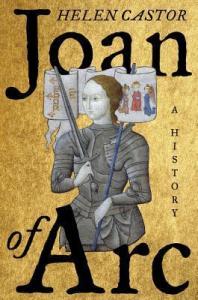 We all believe we know the story of Joan of Arc, one of the patron Saints of France. A young peasant woman who God called to lead the dauphin to the altar to be crowned King Charles VII of France in a time of civil war between the Armagnacs and the Burgundians, as well as the continuation of the war between England and France. It was a political quagmire, but somehow, as the story goes, Joan of Arc resolved the civil war and gave France a fighting chance against the English. But what did Joan of Arc actually accomplish during her short life? Helen Castor examines the life of this extraordinary young woman in her book “Joan of Arc: A History.”
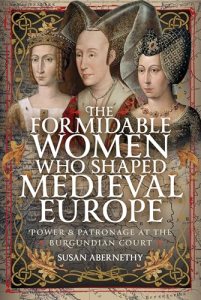 Throughout European history, we tend to think about the countries as a whole when it comes to the political sphere of influence. We think of the big countries like France, Spain, Italy, Germany, Austria, and England as having the most impact, but we have to consider that during the Middle Ages, duchies held immense power. Take, for example, the Duchy of Burgundy, also known as the Burgundian Empire. It was a part of France, but that does not mean that the dukes stayed on the side of the French. The Burgundians used their influence to expand and marry into the medieval European families, affecting European history as a whole. While we tend to focus on the Dukes of Burgundy, we should be paying attention to the women of this duchy. That is why Susan Abernethy chose to focus on these women in her latest book, “The Formidable Women Who Shaped Medieval Europe: Power and Patronage at the Burgundian Court.”
 Adventures of a Tudor Nerd