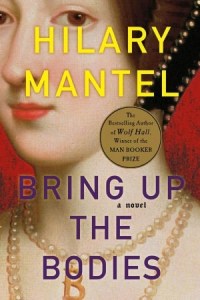
Book Review: “Bring Up the Bodies” by Hilary Mantel

The year is 1535, and Henry VIII is growing bored with his current wife, Anne Boleyn. His eyes are wandering yet again, and this time his sights are set on Jane Seymour. Anne Boleyn had failed to give him his desired son, so Henry decided that it was only fitting for his right-hand man, Thomas Cromwell, to take down a queen. It’s Cromwell’s biggest challenge yet, but it could also become Cromwell’s defining moment. Hilary Mantel explores the pivotal months that pitted Cromwell against the Boleyns in her second book in the Wolf Hall trilogy, called “Bring Up the Bodies.”

Although the first book in the series, “Wolf Hall,” was a challenging read, I still wanted to continue reading the series. We all know Thomas Cromwell’s story, but since I started the Mantel retelling of his life, I wanted to see how she will handle the fall of Anne Boleyn.

We pick up where we left off in the first book, at Wolf Hall in 1535, where Henry VIII meets Jane Seymour and her family. The King is tired of Anne Boleyn, even though she is pregnant with what is hopefully Henry’s heir. Once they get back from Wolf Hall, rumors begin to spread about Anne’s infidelity while Cromwell is working on the dissolution of the monasteries. Anne has alienated so many people at court that they wonder if it’s time for a change and if perhaps Henry will take back Katherine of Aragon.

But it is too little too late. Katherine of Aragon will pass away without seeing her daughter, Mary. Anne believes that she is safe; however, fortune’s wheel is always turning. A jousting accident will rock the court and change the trajectory of Anne’s life forever. After Anne suffers a miscarriage, Henry decides now is the time to send in Cromwell to bring down the queen. We get the opportunity to see the downfall of Anne Boleyn and the men around her through the eyes of the man who brought about her fall from grace and her untimely death.

I enjoyed this novel more than Wolf Hall because there was that sense of drama and danger. We see Cromwell at his most impactful moment, but we also see that he is not some monster, but a human who was following orders. Mantel’s writing style may still be a bit difficult, but I felt this one was easier to follow along with than the first book. I cannot wait to see how Mantel will finish this trilogy. If you want to continue the Wolf Hall trilogy and see how the Cromwell/ Boleyn feud ends, I highly recommend you read “Bring Up the Bodies” by Hilary Mantel.

Book Review: “Thomas More: A Life” by Joanne Paul

The year is 1535, and an educated scholar, father, writer, and the former Chancellor of England marches to his demise. His crime was staying silent on an issue that the King deemed extremely important: the idea that the King of England should be the Supreme Head of the Church of England, not the Pope. As a Catholic, Sir Thomas More does not agree with this decree and must die. How did one of the most prominent Tudor scholars of his age fall so quickly? Joanne Paul explores the rise and dramatic fall of this infamous Tudor figure in her latest biography, “Thomas More: A Life.”

Joanne Paul is slowly becoming one of my favorite nonfiction writers. Her debut, “The House of Dudley,” was spectacular, and when I heard that she was writing a biography about Thomas More, I knew I wanted to read it. I know the basic information about Thomas More’s life and his books about the Wars of the Roses and Utopia, but I wanted a book that gives more details about his life.

Thomas More was the son of the lawyer John More and his wife Agnes, born in 1478. A child of the Wars of the Roses, the shifting sands of the political landscape of his youth will prepare him for the tumultuous Tudor court of his adulthood. While he recalls the reign of King Richard III in his book about the period, it should be noted that he was a boy during the king’s reign. 

Thomas became a scholar who specialized in Humanism and created a community of like-minded scholars and artists, including men like Desiderius Erasmus. Thomas More would marry twice, to Jane Colt, the mother of his children, Margaret, Elizabeth, Cecily, and John, and Alice Harpur. He would ensure that all his children received a proper Humanist education, and his children, especially Margaret, were praised for their scholarly abilities. He would begin to write like he was running out of time and create one of his most famous works about politics, Utopia, as well as go toe to toe against Martin Luther himself. 

 More would continue his academic pursuits, even when he captured the attention of King Henry VIII, who would appoint him Chancellor of England. While a great honor, Thomas did not agree with the King on the Great Matter as he believed Queen Katherine of Aragon was the rightful wife of King Henry VIII. He would persecute those whom he deemed as heretics as a devout Catholic man, and it was ultimately his faith that would lead to his earthly doom. When Henry VIII decided that he wanted his people to swear an oath that Henry VIII was the Supreme Head of the Church of England instead of the Pope. As a devout Catholic, Thomas More’s silence was deafening, and he was condemned as a traitor to the crown, destined to be executed.

Even though Thomas More was a controversial figure of the Tudor era for Ricardians and Protestants alike, we in the modern age can learn a lot from his life and apply it to our own time. Paul does it again, as this is a stunning biography of a man who was a scholar and an outspoken Catholic in a time when the King’s power was becoming dangerous.  The way she weaves the historical facts, including More’s numerous pieces of writing, with a narrative that is easy to follow is astounding. Truly, this is the definitive biography on Sir Thomas More. If you want a fabulous biography on such an infamous figure of the Tudor age, I highly recommend you read “Thomas More: A Life” by Joanne Paul.

Book Review: “The Cardinal” by Alison Weir

During the reign of King Henry VIII, the king would elevate well-qualified men to positions of power and prestige. We all know the story of Thomas Cromwell, but it is his mentor, Sir Thomas Wolsey, whose story shows how one can rise from humble beginnings, but whose fate is ultimately tied to the mood of the monarch. The son of a butcher turned scholar who became a priest, a lover, a father, and the closest advisor to the king. His life, his loves, his successes, and his struggles are told in Alison Weir’s latest novel, “The Cardinal.”
I would like to thank Ballantine Books and Net Galley for sending me a copy of this novel. I am a fan of Weir’s novel, so when I saw her writing a new one about Sir Thomas Wolsey, I knew I wanted to read it. Wolsey is someone who tends to be a side character, so to have a novel dedicated to his life was an exciting idea.

Weir begins her story with Thomas (known in this novel as Tom) at the age of 11, going to school. His father, Robert Wolsey, is a butcher from Ipswich who wants his son to climb the social ladder in the church. Tom will eventually rise to the level of becoming King Henry VII’s chaplain and will begin working with King Henry VIII. Life for Tom is thrilling with the twists and turns of court life, but the one thing that is missing in his life is someone to share it with. Since he is a member of the church, he cannot marry or have his own family, but things change for Tom when he meets Joan Larke. Their love for each other is genuine, even though it is taboo in the eyes of the church and King Henry VIII, which comes across as quite hypocritical.

It was under King Henry VIII that Tom’s star rose to remarkable heights. He became a Cardinal, was the King’s right-hand man and best friend, and was able to create the architectural marvel of Hampton Court Palace. But his rise in prominence came with a cost. Tom must help the king navigate not only international affairs, such as the Field of Cloth of Gold, but also more personal matters, such as the divorce of King Henry VIII and Katherine of Aragon, which would become known as The Great Matter. Tom would have many enemies at court, including Anne Boleyn, the future wife of King Henry VIII, who would ultimately lead to Tom’s fall from grace.

This is such an engrossing novel about one of the most complex figures of the Tudor dynasty. Thomas Wolsey’s story shows the struggle of fighting for those you love over the ambitions and prestige of the glittering court life. If you want an excellent novel about one of Henry VIII’s closest advisors and his life, I would highly recommend you read “The Cardinal” by Alison Weir.

Guest Post: “Snippet from ‘The Duty of Daughters’ by Wendy J. Dunn

I am pleased to welcome Wendy J. Dunn to my blog today to share a snippet from her novel “The Duty of Daughters” as part of the blog tour for her omnibus “Falling Pomegranate Seeds Duology.” I would like to thank Wendy J. Dunn and The Coffee Pot Book Club for allowing me to be part of this blog tour.

Snippet:

“Josefa, you mistake my meaning.” Beatriz stared at the coverlet of Josefa’s bed. “All of us must walk our own roads, but ’tis wrong to prevent women from walking so many roads just because we’re women. Even Plato said, ‘Nothing can be more absurd than the practice of men and women not following the same pursuits with all their strengths and with one mind, for thus, the state instead of being whole is reduced to half.’ I so agree. Our world cuts off its nose to spite its own face by insisting the only purpose for women is to bear children and perpetuate the human race, as also said Plato. Surely ’tis far too hard a view to forever blame women for Eve’s sin.”

Blurb: 

In the Falling Pomegranate Seeds Duology, readers are transported to the rich historical tapestry of 15th and 16th-century Europe, where the lives of remarkable women unfold against the backdrop of political upheaval and personal struggles.  

In the first book, beginning in 1490, Castile, Doña Beatriz Galindo, a passionate and respected scholar, serves as an advisor to Queen Isabel of Castile. Beatriz yearns for a life beyond the constraints imposed on women, desiring to control her own destiny. As she witnesses the Holy War led by Queen Isabel and her husband, King Ferdinand of Aragon, Beatriz dedicates herself to guiding Queen Isabel’s youngest child, Catalina of Aragon, on her own path. Beatriz’s role as a tutor and advisor becomes instrumental in shaping Catalina’s future as she prepares to become England’s queen.  

Fast forward to the winter of 1539 in the second book, where María de Salinas, a dear friend and cousin of Catalina (now known as Katherine of Aragon), pens a heartfelt letter to her daughter, the Duchess of Suffolk. Unable to make the journey from her London home due to illness, María shares her life story, intricately woven with her experiences alongside Catalina. Their friendship has endured through exile and tumultuous times. María seeks to shed light for her daughter on the choices she has made in a story exploring themes of friendship, betrayal, hatred, and forgiveness. Through María’s narrative, the eternal question Will love ultimately triumph? 

Buy Link: 

Universal Buy Link: https://books2read.com/u/bax5n6  

Author Bio: 

Wendy J. Dunn is an award-winning Australian writer fascinated by Tudor history – so much so, she was not surprised to discover a family connection to the Tudors, not long after the publication of her first Anne Boleyn novel, which narrated the Anne Boleyn story through the eyes of Sir Thomas Wyatt, the elder.  

Her family tree reveals the intriguing fact that one of her ancestral families – possibly over three generations – had purchased land from both the Boleyn and Wyatt families to build up their own holdings. It seems very likely Wendy’s ancestors knew the Wyatts and Boleyns personally. 

Author Links

Website: www.wendyjdunn.com  

Facebook: https://www.facebook.com/authorwendyjdunn 

Instagram: https://www.instagram.com/wendyjdunnauthor/  

Threads: https://www.threads.net/@wendyjdunnauthor  

Book Bub: https://www.bookbub.com/profile/wendy-j-dunn  

Amazon Author Page: https://www.amazon.com/stores/author/B004FRTZFA  

Goodreads: https://www.goodreads.com/author/show/197156.Wendy_J_Dunn

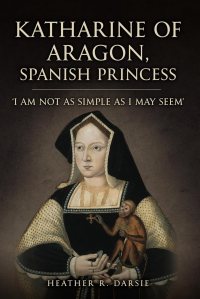
Book Review: “Katharine of Aragon, Spanish Princess: ‘I Am Not as Simple as I May Seem’” by Heather R. Darsie

We all know the gist of the tragic tale of Katharine of Aragon. A Spanish princess who was brought to England to marry the heir of the Tudor throne, Prince Arthur Tudor. When the prince died mere months after their wedding day, Katharine was left in limbo and desolate as the Kings of Spain and England bickered over her dowry. Eventually, she would marry King Henry VIII, was his wife for over twenty years, and have numerous miscarriages before Henry decided to divorce her and marry Anne Boleyn. We know how Katharine’s story ends, but how did the stories of her Trastamara family influence her life and her reign as Queen of England? Heather R. Darsie explores Katharine’s Spanish origins in her latest book, “Katharine of Aragon, Spanish Princess: ‘I Am Not as Simple as I May Seem.’”

I would like to thank Amberley Publishing for sending me a copy of this book. I have enjoyed Darsie’s books, “Anna, Duchess of Cleves: The King’s Beloved Sister” and “Children of the House of Cleves: Anna and Her Siblings.” While her previous books focus on German history and sources, Darsie decided to shift her attention to Spain with this particular book. I was curious how much new information and insight Darsie would provide about Katharine’s life.

Darsie begins by having lovely family trees and a timeline listing the numerous figures that will be covered in this book, because as stated before, this book covers the origins of Katharine of Aragon’s family, the Trastamaras. The book is broken down into three sections. The first focuses on the Trastamaras and the history of the crowns of Castile and Leon and Aragon, culminating with Katharine’s parents, Isabella I of Castile and Leon, and Ferdinand II of Aragon. The second focuses on Katharine’s early life, how she became the bride of Prince Arthur Tudor of England, and how his death affected Katharine. Finally, part three explores Katharine of Aragon’s life as queen consort of King Henry VIII.

To me, the true highlight of this book is the exploration of the Trastamara family tree. While I do know a bit about the origins of Isabella I of Castile and Leon from a book I just read on her life, I did not know the origins of the family. Starting with the origins of both the elected composite crown of Aragon and the inherited composite monarchy of Castile and Leon, we see how the Trastamara dynasty started like the Tudor dynasty. It was a dynasty full of drama, civil wars, a member who married a corpse, a king who died due to alcohol burns, and many mistresses. It is through these stories that you can see where Katharine of Aragon and her daughter Mary I got their strength and determination to keep on fighting for what they believed in, even when the odds were very much against them.

This is yet another triumph by Darsie. It is extremely informative, meticulously researched, and easy to read. It gives the reader a better understanding of not only Spanish royalty and its complexity, but also a better appreciation of Katharine of Aragon. If you want an excellent book exploring the life of King Henry VIII’s first wife from a different perspective, I highly recommend you read “Katharine of Aragon, Spanish Princess: ‘I Am Not as Simple as I May Seem’” by Heather R. Darsie.

Book Review: “Holbein: The Ambassadors” by Tracy Borman

Do you have a favorite painting? One that grabs your attention whenever you look at it and discover something new. Most paintings are from da Vinci, van Gogh, Rembrandt, Picasso, or Michelangelo, just to name a few. However, there is one artist that I feel doesn’t get a whole lot of attention unless you study the 16th century: Hans Holbein the Younger. While Holbein is known for his single portraits, his double portrait, known as The Ambassadors, is stunning to look at and is filled with symbolism. Tracy Borman, in collaboration with the National Gallery, has written a short book about this remarkable painting entitled “Holbein: The Ambassadors.”
Since this is a small book (less than a hundred pages), I will keep this review brief. The Ambassadors is a painting most likely commissioned in 1533 by Hans Holbein the Younger. For years, the identity of the sitters has been debated, but they were finally identified as Jean de Dinteville, the French ambassador to England, and Georges de Selve, ambassador to Emperor Charles V. At the time of the painting of this double portrait, England was in the midst of the Great Matter, the divorce of Henry VIII and Katherine of Aragon, so a few elements are alluding to the changes happening in Europe during this time, which Borman explores in depth. She also explores the life of “the King’s Painter” Hans Holbein the Younger and how you can see his distinct style in this piece. Finally, Borman also explores how the painting was kept for centuries, as well as the research that was conducted on it, and the preservation processes that the National Gallery

This was a fun and informative little book about one of my favorite paintings. It gave me a new appreciation for Holbein and this stunning painting. If you want a book about a piece of art from the 16th century, you should check out “Holbein: The Ambassadors” by Tracy Borman.

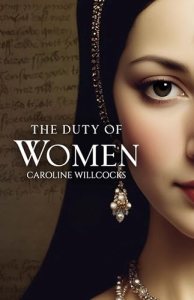
Book Review: “The Duty of Women” by Caroline Willcocks

The Tudor court during the reign of King Henry VIII was a treacherous place to be, even for the humble female musician. It was full of men and women vying for a position of power, and they were ready to give anything and everything for that power. This is the world that Kat Cooke finds herself in. After faithfully serving Queen Katherine of Aragon for years, she must switch her loyalties to Anne Boleyn, but when things get dangerous, where will Kat’s loyalties lie? Can Kat survive such turbulent times or sacrifice everything she holds dear? Kat’s story is told in the second book of Caroline Willcocks’ Tudor Queens series, “The Duty of Women.”

I want to thank Atmosphere Press and NetGalley for sending me a copy of this novel. While I have not read the first book in this series, “Of Aragon,” I did want to read this book because the premise sounded intriguing, and I have seen this book floating around on social media. I have not read any books by Caroline Willcocks, so I was looking forward to seeing what her writing style and approach to the Tudors was like.

Kat Cooke is an adopted foundling living in the court of Henry VIII. She is a married woman, and throughout she tells her story to her daughter. It should be noted that Kat is not an ordinary adopted foundling; she is the daughter of Katherine of Aragon and Henry VIII, who was believed to have been born stillborn, which was revealed in book one of this series. Having Kat in the court as the unknown child of Katherine of Aragon and Henry VIII adds depth to her character as Kat is both inside and outside the court circle. We enter the story with Queen Katherine of Aragon away from court and Anne Boleyn starting to create her influence over the court. It is at the height of the Great Matter, and we get a chance to see Thomas Cromwell working with Kat’s husband, Will, to put Anne Boleyn on the throne while dismantling the Catholic church in England.

It is through Kat’s story to her daughter that we get to see how the court interacts with one another during this tumultuous time. Willcocks portrays the relationship between Anne Boleyn and Jane Seymour as a Mean Girls situation. We also get to see the relationship between Anne and Henry, Anne and Cromwell, and Sir Thomas Wyatt’s affection for Anne. Although Sir Thomas Wyatt and Anne Boleyn never were a couple, Kat and Thomas do develop quite an interesting relationship that will shape her entire future and shake her relationship with Will forever.

Overall, I think this was a decent book with a unique take on the story of the Great Matter, the rise and fall of Anne Boleyn, and the short reign of Jane Seymour. The story of Kat and Will Cooke is fresh and welcoming when compared to other Tudor novels. I am interested in reading the first book in this series and the other books in the series when they are published. I think if you want a fresh take on the Great Matter, “The Duty of Women” and the Tudor Queens series by Caroline Willcocks should be something you check out.

Book Review: “Mary Tudor: Queen of France” by Amy McElroy

The life of a 16th-century princess is not all that it is cracked up to be. You can have jewels, and glamorous dresses, attend the glittering yet treacherous court, and have numerous homes. You must marry the person the king says you should marry to create strong alliances for the kingdom, so the concept of marrying for love is not in your vocabulary. You had to ensure your opinions were kept in line with the monarch’s views so you didn’t meet a disastrous end. In other words, the closer you are to the throne, the more scrutiny is forced upon you. No one understood this advice better than Mary Tudor, the daughter of King Henry VII and the younger sister of Henry VIII. She was a daughter, a sister, a wife, a queen, a duchess, and a mother. Her remarkable story is told in Amy McElroy’s book, “Mary Tudor: Queen of France.”
I want to thank Pen and Sword Books and Net Galley for sending me a copy of this book. I have read Amy McElroy’s previous books, “Women’s Lives in the Tudor Era” and “Educating the Tudors,” and I enjoyed both books. When I heard that she would write her first-ever biography on Mary Tudor, I jumped at the chance to read it because Mary is my favorite of the children of Henry VII and Elizabeth of York.

McElroy begins with a quick overview of the conflict that brought the Tudors to the throne, the Wars of the Roses. The marriage of Mary’s parents, Henry VII and Elizabeth of York united the kingdom and started the Tudor dynasty. Like any dynasty, it was important to have heirs, spares, and daughters who could be used essentially as pawns in the marriage market to create strong alliances. Mary’s eldest brother Arthur married Katherine of Aragon to form an alliance with Spain and her older sister Margaret married James IV of Scotland for another alliance. From a young age, Mary Tudor was a proposed bride for Charles of Castile, the son of King Philip the Handsome and Queen Joanna of Castile and Aragon, who would become Holy Roman Emperor Charles V. Unfortunately, this marriage plan fizzled, but another bride groom was waiting in the wing, King Louis XII of France.

Mary’s marriage to King Louis XII of France and her time as Queen of France did not last long because Louis died mere months after their wedding. Now Mary could have returned to England or stayed in France and waited for another royal match to happen, but Mary chose option number three. Mary’s heart belonged to her brother Henry VIII’s best friend Charles Brandon, and the two devised a plan to marry in secret. It was out of the ordinary and it did create quite the scandal, but at the end of the day, it was a love match. Charles and Mary had a family and were involved in court politics including the Great Matter, before Mary died on June 26, 1533.

I think what has impressed me about McElroy’s books, including this one, is her ability to reveal something new to the subject material. While I knew quite a bit about Mary’s life, it was the marriage negotiations and her inner circle that truly fascinated me. If you want a new book about the sister of Henry VIII with new insight into her life and the politics of marriage, I highly suggest you read, “Mary Tudor: Queen of France” by Amy McElroy.

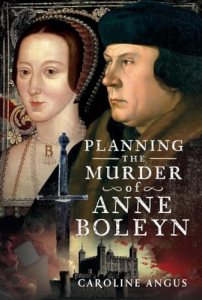
Book Review: “Planning the Murder of Anne Boleyn” by Caroline Angus

The 16th century was filled with tales of remarkable women. Still, one of the most defining figures of the century was a woman of noble birth who the King of England fell in love with and decided that he was going to divorce his first wife of over twenty years to marry her. The Great Matter caused a great scandal across Europe, however, it was a love match that would not last long. The relationship between Henry VIII and his second wife Anne Boleyn would turn volatile and in the end, Anne and the men around her would be executed. We often blame Anne Boleyn’s death at the foot of Henry VIII’s right-hand man Thomas Cromwell, but who was behind the death of this famous queen? Caroline Angus has chosen to re-examine the case to find out who was truly responsible for the fall of this famous queen in her latest book, “Planning the Murder of Anne Boleyn.”

I would like to thank Pen and Sword Books and NetGalley for sending me a copy of this book. I have enjoyed previous books by Caroline Angus, so when I heard that she was writing a book about Anne Boleyn’s “ trial,” I was curious to see what new insights she would bring to the case.

Angus begins by explaining to her audience that this case is hard to put together centuries after the fact because papers pertaining to the case were destroyed after the verdict was carried out. She then dives into how the fall of Anne Boleyn and the men around him happened, starting with the aftermath of the Great Matter, and the divorce between Henry VIII and Katherine of Aragon. We see how the Boleyns rose to power and Henry was so infatuated with Anne that he knew she would be the next Queen of England. Angus explores the men and women who served Anne Boleyn and Thomas Cromwell, it was fascinating to see how they would shape the case against the queen. Finally, we get to see the rivalry between Thomas Cromwell and Anne Boleyn develop regarding religious reform issues and Princess Mary’s place in the line of succession.

The second half of this book focuses on the actual fall, trial, and execution of Anne Boleyn and the men who were associated with her. Angus takes the time to do a diary-style section, starting at the time when the idea to remove Anne from power to her actual execution to show her readers how quick this “case” was and to show that Henry wanted her out of his life permanently. She has taken the available information and the gaps left behind to create a plausible case for what truly happened in these few weeks. Angus shows what Princess Mary and Jane Seymour had to do with the fall of Anne Boleyn. We also see that most people knew that Anne Boleyn and the men around her were innocent and didn’t deserve to die, but it was a foregone conclusion as the king wanted them dead.

Overall, I found this enjoyable and enlightening with the new information Angus brought to the table. Yes, there is a bit of repetition of information already shared in previous books about Anne Boleyn, but it was one of the most infamous cases in English history, so it has been examined for centuries. It’s hard to show new information about this case without repeating facts that we already know but I think Angus does an excellent job of balancing the old and the new information about this case. If you want a solid book specifically about the fall of Anne Boleyn, I recommend you read, “Planning the Murder of Anne Boleyn” by Caroline Angus.

Book Review: “Heroines of the Tudor World” by Sharon Bennett Connolly

Heroines of the Tudor WorldThe world of the 16th century was full of change and equally colorful characters. Most of the dynamic figures of this century were women, who were willing to fight in their ways for what they believed in, whether it was family, faith, or their country. They were heroines in different ways, and each had a story to tell. Each woman had to deal with her obstacles to reach their desired goal, no matter what her station was, from queens and great heiresses to nuns, and even a pirate. Sharon Bennett Connolly has decided to include a handful of these stories in her latest book, “Heroines of the Tudor World.”

I would like to thank Amberley Publishing for sending me a copy of this book. I have been a fan of Sharon Bennett Connolly’s books on medieval women, so when I heard that she was going to tackle the 16th-century and the Tudor world, I knew I wanted to read it. I wanted to see what stories she would select and how far into the Tudor world she would explore.

Connolly begins her book by explaining how the 16th century differed from the medieval times as records about women were becoming more accessible. It was also a time of transition, reformation, and the discovery of the “new world.” Each chapter focuses on a different kind of woman; from the ideal to martyrs for their faiths, scandalous heroines, those who were disinherited, pawns in the bigger game of life, warriors, captives, and survivors. Although it can be difficult to place certain tales of women in just one category, Connolly gave her readers a thrilling look into the 16th century.

It was the stories of these extraordinary women who made this book an exceptional read. There are the typical women who are featured heavily in these kinds of narratives; Elizabeth of York, Margaret Beaufort, the wives of Henry VIII, Mary I, Elizabeth I, Mary Queen of Scots, and Catherine de Medici. However, Connolly decided to include lesser-known women. We have mistresses like Diane de Poitiers and spies like Margaret Dymoke, Lady Coffin. Some great heiresses were disinherited like Claude of France and Elizabeth Fitzgerald, as well as pawns like Marguerite de Valois and captives such as Lady Katherine Gordon and Honor Grenville, Lady Lisle. Of course, some women decided to take matters into their own hands and fight for what they believed in, such as Isabella of Castile, Jeanne d’Albret Queen of Navarre, and Grace O’Malley.

I thoroughly enjoyed learning about the heroines that Connolly included in this book, but my only complaint is that it was not a longer book. There are so many interesting women outside of the European world in the 16th century and I wish she would have highlighted them. Maybe Connolly will write a sequel book to this one to include even more Tudor heroines. If you have enjoyed Sharon Bennett Connolly’s previous books and you are a Tudor nerd, I highly suggest you read, “Heroines of the Tudor World.”