
Book Review: “Nothing Proved” by Janet Wertman

A princess born to a king and his second wife lost her title and legitimacy when her father decided that her mother, Anne Boleyn, needed to die. Elizabeth Tudor knows the meaning of resilience as she survived her childhood during her father King Henry VIII’s reign. Now that her father is dead  Elizabeth is at the mercy of her half-siblings Edward and Mary, plus any scheming man who wants to marry her and get closer to the crown. Can Elizabeth survive her siblings’ reigns or is she destined to be locked in the Tower to await her ultimate fate like her mother? Janet Wertman explores the life of Elizabeth Tudor in her latest series Regina and the first novel, “Nothing Proved” explores Elizabeth’s turbulent adolescence. 
I would like to thank Janet Wertman for sending me a copy of this novel. I have always been a big fan of novels about Elizabeth I and so when I heard that Wertman was writing another Tudor series all about Elizabeth I, I jumped at the chance to read it.

From an early age, Elizabeth Tudor swore she would never marry, especially after seeing how her mother Anne Boleyn, and her numerous stepmothers were treated by her father. Now her father King Henry VIII is dead, her brother Edward VI is King of England, and she is separated from the stepmother that she loved Katherine Parr after several unwanted incidents with Katherine’s husband Thomas Seymour. Elizabeth never got to see her beloved stepmother again and Thomas has his eyes on marrying Elizabeth or possibly taking control of the king. Bad mistakes on both parts, but it does not mean that Elizabeth is safe from scandal as Edward’s council believes that Elizabeth was involved in the plot against the king.

Elizabeth may have survived Edward’s reign, but her step-sister Mary’s reign is a different case. Mary is a devout Catholic who does not trust Elizabeth. She believes that Elizabeth is part of the plots to overthrow Mary and become the next queen of England. These accusations are dangerous and will place Elizabeth in the Tower. Luckily, Elizabeth is not alone as she has her ladies in waiting as well as friends like Robert Dudley and William Cecil, who is the second protagonist in this novel. It was a nice touch to add William Cecil’s point of view because he rarely gets a starring role in historical fiction novels so it was interesting to see his perspective on matters leading up to the moment Elizabeth becomes queen.

I found this an enjoyable novel that explored Elizabeth’s adolescent years which were some of her most turbulent. We can see her signature resilience and the formation of her close-knit circle of allies and friends that will become so important during her reign. If you are a fan of Elizabethan novels,  I think you will  thoroughly enjoy, “Nothing Proved” book one in the Regina series by Janet Wertman.

Book Review: “The Passionate Tudor: A Novel of Queen Mary I” by Alison Weir

The Passionate TudorA king’s eldest child is usually the next in line to inherit the throne and become the next ruler. At least that is how the line of succession is supposed to work if the heir is male. Mary I knew this better than anyone. As the eldest daughter of King Henry VIII, she knew that once her mother Katherine of Aragon had a son, Mary would become a pawn in the marriage game. She was willing to accept this fate until her father fell in love with Anne Boleyn. Mary is declared a bastard and must fight for her inheritance and the crown of England while maintaining her Catholic faith. Alison Weir tells the tale of this remarkable woman, from her tumultuous childhood to her short reign that marked her legacy, in her latest novel, “The Passionate Tudor: A Novel of Queen Mary I.”

I would like to thank Ballantine Books and Net Galley for sending me a copy of this book. I have enjoyed the previous novels in The Tudor Rose trilogy by Alison Weir about Elizabeth of York and King Henry VIII, so when I heard she was writing a book about Mary I, I knew I wanted to read it. Mary I is one of those figures who shows how devastating it can be to be close to the throne and the hard decisions one makes when king or queen of a country.

Weir began her novel with Mary at the age of nine in 1525. She is her parent’s pride and joy as she is their only child. Her mother Katherine of Aragon is arranging an advantageous marriage for Mary that would create a strong alliance for England. Not even the birth of her half-brother Henry Fitzroy could dampen Mary Tudor’s spirits. However, that all changed when Anne Boleyn entered the picture and the Great Matter was made public. Katherine of Aragon is no longer queen, Anne Boleyn is Mary’s stepmother, and Mary is now declared a bastard in favor of her half-sister Elizabeth Tudor.

Mary’s life after the birth of Elizabeth Tudor begins to become even more tragic. Her mother Katherine of Aragon dies before she can see her daughter again and Anne Boleyn is executed for treason soon afterwards. Henry VIII marries Jane Seymour, has his desired male heir Edward VI, before Jane tragically dies quickly. As the Supreme Head of the Church of England, Henry wants his daughter Mary, a devout Catholic, to submit to his will, which she ultimately does. We also get to see how Mary interacted with her other stepmothers, Anna of Cleves, Katherine Howard, and Katherine Parr, until the death of her father Henry VIII. Before he died, Henry VIII revised his Act of Succession, making Mary Edward’s heir if he did not have children. However, Edward VI has his idea for who will succeed him after he dies and he names Lady Jane Grey as his heir, although that plan does not last long and Mary is proclaimed the first queen of England to rule on her own.

Weir shows Mary’s life and reign in a very sympathetic way. Even though she does still give her the nickname “Bloody Mary”, we can see a woman who is concerned about the faith of her kingdom and the well-being of her family, especially Edward, Prince Philip her husband, and Elizabeth, who she argues with on matters that matter to her. It is such a tragedy that Mary never had a child that she desperately wanted to have as she suffered through phantom pregnancies. At the end of the day, whether it was matters of faith or family, Mary was someone who was passionate and someone who desired to be loved.

This is a delightful novel about a woman who has often been vilified but maybe we should have sympathy for everything she had to endure starting at a young age. I enjoyed this novel very much and I look forward to the next novel by Weir. If you have enjoyed the previous books in the Tudor Rose trilogy or you just want a different take on Mary I’s story, I highly suggest you read, “The Passionate Tudor: A Novel of Queen Mary I” by Alison Weir.

Book Review: “Kateryn Parr: Henry VIII’s Sixth Wife” by Laura Adkins

kateryn parrThe final wife, the one who survived. These words are what people think about when it comes to Katherine (Kateryn) Parr. However, before she even met Henry VIII, she had already lived quite a life, being married twice before meeting the king. She was a scholar, reformer, daughter, stepmother, wife, and mother. A woman who lived a rather intriguing life and happened to marry the King of England, Kateryn Parr’s life has been told in numerous mediums for centuries. Now, Laura Adkins has chosen to write about this famous Tudor wife in the biography, “Kateryn Parr: Henry VIII’s Sixth Wife.”
I want to thank Pen and Sword Books and Net Galley for sending me a copy of this book. Katherine Parr is my favorite wife of Henry VIII and one of my favorite Tudor queens. I have read a few novels and nonfiction books that featured Katherine Parr, but I have yet to read a biography about the titular woman, until now.

Adkins begins her dive into the past not in the Tudor era, but in the 18th century as we see a group of ladies finding the tomb of Kateryn Parr at Sudeley Castle and her tomb being opened several times. We then jump back into the past and explore the Parr family. Kateryn was the eldest child of Thomas and Maud Parr. We get to see Kateryn’s childhood with her siblings William and Anne and how the Parr siblings continued the Parr legacy in their own ways.

We then dive into Kateryn’s marriages, starting with Edward Borough, then John Neville Lord Latimer, King Henry VIII, and finally Thomas Seymour. With each relationship, we get to see Kateryn change from a young teen who was trying to survive to a strong woman who is willing to fight for those she loves and the faith she believes in. We see Kateryn become a stepmother to the Latimer children, Mary, Edward, and Elizabeth, and finally become the mother of her child, Mary Seymour. Adkins chooses to focus on the different elements of Kateryn’s life instead of having a traditional chronological biography, which is a unique take on Kateryn’s story. I will say that because of the format of this book, there was some repetition of different stories and facts in this book.

Overall, I think this was a decent biography about Kateryn Parr. It was easy to read and included actual letters written to and by Kateryn. A loyal wife and stepmother who influenced those around her long after she died. If you want to read a solid biography about this remarkable woman, I suggest you read, “Kateryn Parr: Henry VIII’s Sixth Wife” by Laura Adkins.

Book Review: “The Lady Rochford Saga- Part 1: Into the Ranks of the Deceived” by Danielle Marchant

Into the Ranks of the DeceivedThe tragedies of the Boleyns and the Howards left many with scars and heartache, none more so than Jane Parker. The daughter of Henry Parker, Lord Morley, Jane is seen to be destined for a great marriage and a successful career at court. As one of the ladies to serve Queen Catherine of Aragon, Jane witnesses the splendor, glam, and intrigue needed to survive in the court of Henry VIII. Danielle Marchant has taken inspiration from what she has studied about Jane Parker to create “The Lady Rochford Saga- Part 1: Into the Ranks of the Deceived.”
I would like to thank Danielle Marchant for sending me a copy of this novel. I have wanted to read more about Jane Parker/Jane Boleyn since reading “The Raven’s Widow” by Adrienne Dillard.

The novel begins with Henry Parker and his wife Alice Parker attending the Tudor court of Henry VIII and Katherine Parr during Christmas. Their daughter Jane recently died, but now they must pick up the pieces while keeping their daughter’s memory alive. We then jump back to when Jane first enters the court of Henry VIII and Catherine of Aragon as a shy, naive girl.

As an audience we see Jane grow from a girl into a woman in love with the debonair George Boleyn. Jane gets close to Mary and Anne Boleyn as they move from the French court to Henry VIII’s court, trying to navigate scandals and typical court drama. Marchant chooses to show the glamorous Field of the Cloth of Gold and the identity of Henry VIII’s “Mistress Parker” from Jane’s perspective, which was a unique twist to the tale.

I think it is a decent start to a trilogy about Jane Boleyn, but I do wish it was a single long novel instead of three short books, so the audience can be more immersed in the story. I think Marchant does have a passion for the Tudor dynasty and I think her stories will get better the more she writes. If you want a series about Jane Boleyn written by an independent author, you should check out, “The Lady Rochford Saga- Part 1: Into the Ranks of the Deceived,” by Danielle Marchant.

Book Review: “The Last Days of Henry VIII: Conspiracies, Treason, and Heresy at the Court of the Dying Tyrant” by Robert Hutchinson

The Last Days of Henry VIII

King Henry VIII, who ruled as a tyrant for almost 40 years, is dying. He caused mayhem and mischief by marrying six wives, killing two of them, with the dissolution of the monasteries, the creation of the Church of England, and his international policies. In short, it was a hot mess towards the end of his reign. So how did the last few months of King Henry VIII play out and how was he honored by those closest to the throne? Robert Hutchinson takes an in-depth look into this tumultuous period in history in his book, “The Last Days of Henry VIII: Conspiracies, Treason, and Heresy at the Court of the Dying Tyrant.”

I found this particular book in a used bookstore one day and decided to try it. I have heard of Robert Hutchinson, but I have never read any of his books. 

Hutchinson begins with the day that King Henry VIII breathed his last breath on January 28, 1547. He is no longer the glamorous Renaissance prince, but rather he is a hugely obese man with festering wounds on his legs. The years have taken their toll on the king, but no one feels sympathy for the man. He has made so many around him live in abject terror for decades. Now, it is time for a fresh start with the reign of King Edward VI, his beloved son.

We then jump back in time so that Hutchinson can show his readers exactly why King Henry VIII was feared towards the end of his life. He starts with the last three marriages of Henry VIII, Anne of Cleves, Catherine Howard, and Katherine Parr. The way that Hutchinson characterized Anne of Cleves and Catherine Howard in this book irked me quite a bit, even though I know this book is older and there is new research about both queens that contradicts Hutchinson’s perspective. 

Multiple marriages were not the only concern during the last years of Henry VIII’s life as he had to deal with heretics, international politics, and how the country should be run after his death. What I found truly fascinating about this book is the sources that Hutchinson used to tell the tale of the last years of Henry VIII’s life. They show how chaotically terrifying Henry’s court was towards the end. Hutchinson shows how the ambitious men around Edward VI tried to take control, but failed miserably as Edward VI, Mary I, and Elizabeth I ruled with just as much vigor as their powerful father. Finally, we see what happened to Henry VIII’s earthly remains and why his marvelous tomb vanished, leaving a simple marker to indicate where he and his beloved Jane Seymour were buried. 

Hutchinson does his due diligence to show how maniacal Henry VIII was, especially towards the end of his life. He does not mince words in his opinions about Henry and his court, which I may not agree with completely, but he makes strong arguments for his opinions. Overall, a very well-written and informative book. If you want a book that explores the final years of the infamous king, I would suggest you check out, “The Last Days of Henry VIII: Conspiracies, Treason, and Heresy at the Court of the Dying Tyrant” by Robert Hutchinson.

Book Review: “The King’s Pleasure: A Novel of Henry VIII” by Alison Weir

The King's PleasureWhen we think about the Tudor dynasty, we often focus on the women in King Henry VIII’s life and his children, at least when it comes to novels. Writing about this larger-than-life figure, this notorious king and controversial figure in English history, are usually considered ambitious. Few have attempted to write a book about the king’s entire reign, but Alison Weir has embarked on this endeavor in her latest novel, “The King’s Pleasure: A Novel of Henry VIII.”
I want to thank Ballantine Books and Net Galley for sending me a copy of this novel. I have not read many books about the reign of King Henry VIII, except for “The Autobiography of King Henry VIII” by Margaret George, so when I heard that Alison Weir was writing a novel about the titular king, I knew I had to read it.

Weir begins her novel with a moment that must have been difficult for young Prince Henry or Harry as he is referred to in this book. His brother died recently, and his beloved mother, Elizabeth of York, just died, leaving Henry as King Henry VII’s only heir. Henry does not have the best relationship with his father, but he now must fill the void as the heir apparent after Arthur died, leaving his young wife, Katherine of Aragon, a widow. When King Henry VII died, Henry became King Henry VIII and selected a woman he had fallen for to become his queen, Katherine of Aragon.

The bulk of this novel revolves around the relationships between Henry and his first two wives, Katherine of Aragon and Anne Boleyn. Weir is sympathetic toward Katherine of Aragon’s struggles, whereas her portrayal of Anne Boleyn may come across as a bit harsh. Jane Seymour is portrayed as a quiet and obedient queen, and Anna of Cleves’ focus is more on her looks and how Henry treated her more as a sister than a wife. Katherine Howard is someone Henry falls for hard and is devastated by her downfall, and Katherine Parr is the firebrand reformer who wants to heal Henry’s family at the end of his life.

Weir also touches on the complex political web that Henry was involved in, not just in England but European politics of the 16th century. We also see how Henry interacted with his children and how the emotional weight of all of his decisions weighed on him.

I think for how much of a challenge it is to write a novel about King Henry VIII, Alison Weir has done an admirable job in the king’s portrayal. I don’t necessarily agree with how some of the queens were portrayed, but I did enjoy this novel as a whole. I would suggest reading this novel before the Six Tudor Queens series to understand Henry’s perspective before his wives’ stories. If you have enjoyed the latest books about Henry VIII’s wives and his mother, Elizabeth of York, you should read “The King’s Pleasure: A Novel of Henry VIII” by Alison Weir.

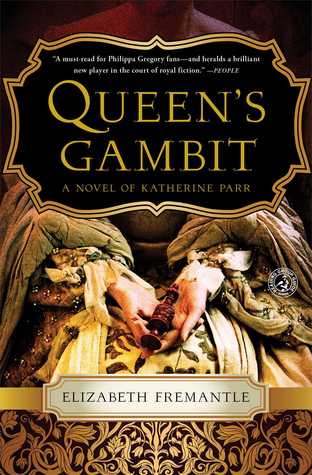
Book Review: “Queen’s Gambit: A Novel of Katherine Parr” by Elizabeth Fremantle

18950719To be married to a king may seem like a dream, but reality can be cruel. Take the wives of Henry VIII. After saying ” I do,” each wife had to deal with complex challenges after saying “I do.” We all know the poem; divorced, beheaded, died, divorced, beheaded, survived, but does that define these queens? After the death of her second husband, Katherine Parr must choose between Henry VIII and Thomas Seymour, the man who has captured her heart. She must navigate love, court intrigues, and the treacherous religious landscape of England in the 1540s to survive. Katherine’s life as Queen of England and how close she came to a disastrous fall from grace are explored in Elizabeth Fremantle’s first novel, “Queen’s Gambit: A Novel of Katherine Parr.”

I have heard about this particular novel for years, and I have wanted to read it for a long time. Katherine Parr is my favorite wife of King Henry VIII, but sadly there are not many novels about her. When it was announced that this novel would be turned into a new movie called “Firebrand,” I knew now was the perfect time to read this book.

“Queen’s Gambit” begins with Katherine Parr at the deathbed of her second husband, Lord Latymer. Their relationship was full of love, but it was also stained with tragedy as Katherine was left alone to fend off the Pilgrimage of Grace, which scarred both Katherine and her stepdaughter Meg for years to come. With the death of Lord Latymer, Katherine returns to court with Meg and her beloved maid Dot, where she falls hard to the debonair Thomas Seymour. Their love can never be as another man has his eyes on the desirable widow, and no one ever disobeys King Henry VIII. Katherine Parr marries the king and becomes his sixth wife, a queen of England.

As queen, Katherine’s life might seem like a dream, but dealing with an ailing husband and trying to promote her religious views without losing her head is a balancing act. I thoroughly enjoyed how Fremantle portrayed Katherine and her time as queen and eventually the wife of Thomas Seymour. Her relationships with Henry VIII, Thomas Seymour, Anne Askew, Mary, Elizabeth, and Edward are complicated but well fleshed out. I also enjoyed the additional characters that Fremantle included in Katherine’s tale, especially the loyal to a fault Dot and Huicke, the king’s physician whose friendship would become invaluable to Katherine.

This was my first time reading a book by Elizabeth Fremantle, and I cannot wait to read another story. Fremantle does a superb job of telling Katherine’s story in an engaging and thoughtful manner. It was so interesting that I did not want this novel to end.

Katherine Parr was not just the final wife who survived King Henry VIII’s last years. She was a wife, a loving stepmother, a widow, a woman in love, a caring friend, a writer, and a reformer. Her life was full of risks, tragedies, and love. If you love Tudor historical fiction novels, you will adore “Queen’s Gambit: A Novel of Katherine Parr” by Elizabeth Fremantle.

Book Review: “Tudor Roses: From Margaret Beaufort to Elizabeth I” by Amy Licence

36762189When one studies a specific dynasty, we tend to focus on the stories of those who rule their respective countries and explore the men who influenced the king’s decisions. A dynasty’s legacy tends to be viewed from the military and legal victories of the men, but just as important are the women who stood beside the king. Royal women tend to be considered side characters of the dynasty who were only crucial for their inheritance, who they married, and the children they could produce. But if we focused on the story of the royal women in a specific dynasty, what could we learn about the dynasty? Amy Licence took this concept to explore women’s voices and decided to tackle the Tudor dynasty in her latest book, “Tudor Roses: From Margaret Beaufort to Elizabeth I.”

I want to thank Amberley Publishing for sending me a copy of this book. I am always looking for a new perspective on the Tudor dynasty. Although there is nothing new about exploring the lives of Tudor women, the idea of analyzing the Tudor queens and their reigns in one book is so unique and vital.

Licence starts her book at the very beginning of the Tudor dynasty with the stories of Margaret Beaufort and Elizabeth Woodville. These women are often viewed as enemies on opposite sides of the Wars of the Roses. Still, closer examination shows how alike they were and how they came together to unite the warring factions with the marriage of their children, Henry VII and Elizabeth of York. The first Tudor queen, Elizabeth of York, was seen as the pinnacle of excellence and the ideal queen for those who would try to follow in her footsteps. We also get to see how Margaret and Mary Tudor influenced their family’s legacy, even though they never sat on the English throne like their brother, Henry VIII.

The next group of Tudor queens that we examine are the wives of Henry VIII; Catherine of Aragon, Anne Boleyn, Jane Seymour, Anne of Cleves, Catherine Howard, and Catherine Parr. These queens mark a different aspect of being a royal woman and helped England move forward. Finally, Licence explores the lives of the daughters of Catherine of Aragon, Frances Brandon, and Anne Boleyn, who would become queens themselves; Lady Jane Grey, Mary I, and Elizabeth I.

Licence shows how England and Europe viewed women who wielded power throughout this book. Although the Tudor dynasty only lasted 118 years, the change was significant and impactful. The Tudors queens had to navigate not only their traumas through the most public lens, but they had to balance their own beliefs with the shifting political landscape of Europe. There are also glimpses of how other European queens navigated the tumultuous 16th century and how their lives and women’s education influenced the Tudor queens.

Book Review: “Inside the Tudor Court: Henry VIII and his Six Wives through the eyes of the Spanish Ambassador” by Lauren Mackay

25266205The story of King Henry VIII and his six wives has been regaled for centuries in different mediums. We love the marital problems of this one English king because of how much of an impact it made on all of Europe in the 16th century and beyond. Yet our love affair with the Tudor dynasty would not have gotten to the point that it is today without the tireless efforts of the ambassadors who went to England to report the news of the day to their respected kings and emperors. We tend to think that the ambassadors are better left in the shadows, working to promote peace between countries and report what was happening, but one man made a name for himself as an ambassador and transcended time. His name was Eustace Chapuys. His story and his mission are finally being told in Lauren Mackay’s brilliant debut book, “Inside the Tudor Court: Henry VIII and his Six Wives through the eyes of the Spanish Ambassador”.

I have heard about this book in the past and how much of an impact it has made in the Tudor community in the past. I have read Lauren Mackay’s two other books and I have enjoyed them thoroughly and so I really wanted to read this book.

To understand the man behind the now-infamous words about the Tudors, especially Henry VIII and Anne Boleyn, we have to go back to Chapuys hometown of Annecy. It is here where we see the Chapuys family rise in prominence to the point where Eustace Chapuys was employed by the Holy Roman Emperor Charles V as the Spanish Ambassador to England. His main job was to report information back to Charles about the Henirican court as accurately as possible.

Chapuys started his job as ambassador at a critical junction in English history when Henry VIII was in the middle of his divorce from his first wife Katherine of Aragon in 1529. Chapuys admired Katherine of Aragon’s strength and worked tirelessly to protect her daughter Mary. Since Chapuys had a close connection to those who were essential in the Tudor court, he has given historians fabulous insights into these tumultuous times. It was really his relationship with Anne Boleyn which has caused a lot of controversy over the years and has blackened Chapuys’ name for centuries. Mackay has masterfully examined Chapuys’ correspondences to uncover the truth about how he felt about the Tudor court from 1529 until 1545.

You cannot separate Tudor history during the reign of Henry VIII and the works of Eustace Chapuys, which is why this biography and Mackay’s research are so essential in understanding the 16th century. It sheds new light on the stories of Henry VIII and the lives of his six wives; Katherine of Aragon, Anne Boleyn, Jane Seymour, Anne of Cleves, Catherine Howard, and Catherine Parr. Chapuys was not afraid to speak his mind and to share the rumors of the day, which gives us significant insight into how the royal family was perceived by their public, both the positive and the negative aspects.

Eustace Chapuys has been one of those ambassadors who we think we know, but do we really? Mackay has rescued the much-maligned messenger of Charles V and restored him to the glory that he so rightfully deserves. Chapuys’ story was hidden in plain sight, but it took an extraordinary historian to bring his story to the spotlight. If you think you know about Eustace Chapuys and the Henrician court, you need to read this sublime biography, “Inside the Tudor Court: Henry VIII and his Six Wives through the eyes of the Spanish Ambassador” by Lauren Mackay. It might change how you view the Tudor dynasty.

Book Review: “Katharine Parr: The Sixth Wife” by Alison Weir

34020934._SY475_A woman twice widowed with no children of her own has the opportunity to choose who she will marry next. Will she marry the man of her dreams or marry the man who has been married numerous times and has killed two of his wives already? It seems like a no-brainer who she should choose, but the man she married for her third marriage was the man who was married numerous times before simply because he is the notorious King Henry VIII and you do not disobey the king. However, his last wife, Katharine Parr, is willing to fight for the religious reforms and her stepchildren that she loves dearly. In the last book of the Six Tudor Queens series, “Katharine Parr: The Sixth Wife”, Alison Weir takes her readers on an extraordinary journey to explore who this brave woman was and why she is the one who survived Henry’s last days.

I would like to thank NetGalley and Random House/ Ballantine Books for sending me a copy of this novel. I have enjoyed the Six Tudor Queens series so far and I was looking forward to reading the last book. Like many people, I know what happened with Katharine during her marriage to Henry VIII and her fourth marriage to Thomas Seymour, but I am not well informed when it comes to her first two marriages. Katharine Parr has been my favorite wife of King Henry VIII for a while now and I wanted to read a novel about her life, to see what Weir’s interpretation of her life story would be like.

Katharine Parr’s story begins with her childhood and her connection with her family. It was unique to see how her childhood helped shaped what type of queen she would become as her mother pushed hard for her daughters to be well educated. Katharine’s first husband, Sir Edward Burgh, was just a boy who followed whatever his father, Sir Thomas Burgh, asked him to do. I think Weir has a unique spin on Katharine’s life with Edward Burgh and their marriage, but it did not last long as Edward Burgh would die in 1533.

Katharine’s second husband, John Neville 3rd Baron Latimer, was her longest marriage. Although they had no children of their own, like Katharine’s marriage to Edward Burgh, it was a happy relationship. They may have differed when it came to their views on religion, but they did seem to love each other. Their happy household was thrown asunder when the Pilgrimage of Grace and Robert Aske knocked on their door and asked for help. There was a real sense of danger during this episode and the bravery that Katharine showed was nothing short of astounding.

When John died, Katharine was left with a choice of who her third husband would be; either the ailing Henry VIII or the suave and debonair Thomas Seymour who deeply loved Katharine. Katharine’s choice was Henry VIII who she hoped she could sway to accept the religious reforms that she believed in strongly. She developed a friendship with the king and his children, but she was still in love with Thomas Seymour. She wrote books during this time that gave her comfort during the difficult times when the court tried to attack her for what she believed and wanted to pit her against Henry. In the end, love triumphed over sorrow and Katharine survived to live with her beloved until the end of her days.

I found this book an absolute treat to read. As someone who loves Katharine Parr and her story, this novel just made me love her even more. The one problem that I had was actually with the spelling of her name as Weir spelled it a bit differently than what I am used to, but it was really a minor detail. I am a bit sad that this is the last book in this wonderful series, but this book was worth the wait.

This novel was a delight to read. It was full of action and intrigue, intense love, and immense sorrow. Katharine was one remarkable woman, just like every wife of Henry VIII Weir has written about in this marvelous series. “Katharine Parr: The Sixth Wife” by Alison Weir is a masterpiece in historical fiction and the perfect conclusion to the Six Tudor Queens series that will leave readers satisfied.