Book Review: “Thomas More: A Life” by Joanne Paul

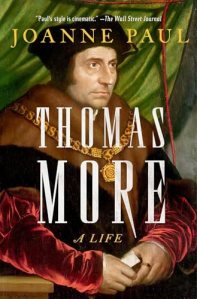
The year is 1535, and an educated scholar, father, writer, and the former Chancellor of England marches to his demise. His crime was staying silent on an issue that the King deemed extremely important: the idea that the King of England should be the Supreme Head of the Church of England, not the Pope. As a Catholic, Sir Thomas More does not agree with this decree and must die. How did one of the most prominent Tudor scholars of his age fall so quickly? Joanne Paul explores the rise and dramatic fall of this infamous Tudor figure in her latest biography, “Thomas More: A Life.”

Joanne Paul is slowly becoming one of my favorite nonfiction writers. Her debut, “The House of Dudley,” was spectacular, and when I heard that she was writing a biography about Thomas More, I knew I wanted to read it. I know the basic information about Thomas More’s life and his books about the Wars of the Roses and Utopia, but I wanted a book that gives more details about his life.

Thomas More was the son of the lawyer John More and his wife Agnes, born in 1478. A child of the Wars of the Roses, the shifting sands of the political landscape of his youth will prepare him for the tumultuous Tudor court of his adulthood. While he recalls the reign of King Richard III in his book about the period, it should be noted that he was a boy during the king’s reign. 

Thomas became a scholar who specialized in Humanism and created a community of like-minded scholars and artists, including men like Desiderius Erasmus. Thomas More would marry twice, to Jane Colt, the mother of his children, Margaret, Elizabeth, Cecily, and John, and Alice Harpur. He would ensure that all his children received a proper Humanist education, and his children, especially Margaret, were praised for their scholarly abilities. He would begin to write like he was running out of time and create one of his most famous works about politics, Utopia, as well as go toe to toe against Martin Luther himself. 

 More would continue his academic pursuits, even when he captured the attention of King Henry VIII, who would appoint him Chancellor of England. While a great honor, Thomas did not agree with the King on the Great Matter as he believed Queen Katherine of Aragon was the rightful wife of King Henry VIII. He would persecute those whom he deemed as heretics as a devout Catholic man, and it was ultimately his faith that would lead to his earthly doom. When Henry VIII decided that he wanted his people to swear an oath that Henry VIII was the Supreme Head of the Church of England instead of the Pope. As a devout Catholic, Thomas More’s silence was deafening, and he was condemned as a traitor to the crown, destined to be executed.

Even though Thomas More was a controversial figure of the Tudor era for Ricardians and Protestants alike, we in the modern age can learn a lot from his life and apply it to our own time. Paul does it again, as this is a stunning biography of a man who was a scholar and an outspoken Catholic in a time when the King’s power was becoming dangerous.  The way she weaves the historical facts, including More’s numerous pieces of writing, with a narrative that is easy to follow is astounding. Truly, this is the definitive biography on Sir Thomas More. If you want a fabulous biography on such an infamous figure of the Tudor age, I highly recommend you read “Thomas More: A Life” by Joanne Paul.

Book Review: “The Cardinal” by Alison Weir

During the reign of King Henry VIII, the king would elevate well-qualified men to positions of power and prestige. We all know the story of Thomas Cromwell, but it is his mentor, Sir Thomas Wolsey, whose story shows how one can rise from humble beginnings, but whose fate is ultimately tied to the mood of the monarch. The son of a butcher turned scholar who became a priest, a lover, a father, and the closest advisor to the king. His life, his loves, his successes, and his struggles are told in Alison Weir’s latest novel, “The Cardinal.”

I would like to thank Ballantine Books and Net Galley for sending me a copy of this novel. I am a fan of Weir’s novel, so when I saw her writing a new one about Sir Thomas Wolsey, I knew I wanted to read it. Wolsey is someone who tends to be a side character, so to have a novel dedicated to his life was an exciting idea.

Weir begins her story with Thomas (known in this novel as Tom) at the age of 11, going to school. His father, Robert Wolsey, is a butcher from Ipswich who wants his son to climb the social ladder in the church. Tom will eventually rise to the level of becoming King Henry VII’s chaplain and will begin working with King Henry VIII. Life for Tom is thrilling with the twists and turns of court life, but the one thing that is missing in his life is someone to share it with. Since he is a member of the church, he cannot marry or have his own family, but things change for Tom when he meets Joan Larke. Their love for each other is genuine, even though it is taboo in the eyes of the church and King Henry VIII, which comes across as quite hypocritical.

It was under King Henry VIII that Tom’s star rose to remarkable heights. He became a Cardinal, was the King’s right-hand man and best friend, and was able to create the architectural marvel of Hampton Court Palace. But his rise in prominence came with a cost. Tom must help the king navigate not only international affairs, such as the Field of Cloth of Gold, but also more personal matters, such as the divorce of King Henry VIII and Katherine of Aragon, which would become known as The Great Matter. Tom would have many enemies at court, including Anne Boleyn, the future wife of King Henry VIII, who would ultimately lead to Tom’s fall from grace.

This is such an engrossing novel about one of the most complex figures of the Tudor dynasty. Thomas Wolsey’s story shows the struggle of fighting for those you love over the ambitions and prestige of the glittering court life. If you want an excellent novel about one of Henry VIII’s closest advisors and his life, I would highly recommend you read “The Cardinal” by Alison Weir.

Television Series Review: “Shardlake”

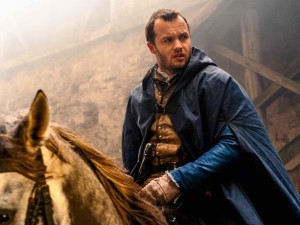
The year is 1536 and England is amid great religious change. King Henry VIII and his top advisor Thomas Cromwell wanted to close the top monasteries in the country so they initiated the dissolution of the monasteries. One such religious house is St. Donatus monastery in Scarnsea, so Cromwell sends one of his commissioners, Robin Singleton, to investigate the monastery and persuade the monks to leave their home. However, things do not go to plan and Singleton is brutally murdered. Now, Cromwell must rely on a lawyer named Matthew Shardlake and Jack Barak to solve the murder case and close the monastery once and for all. With a house full of secrets, suspicion, and monks fearful of the future, can Shardlake and Barak solve the case before they become the next victim?

This is the premise of the latest Tudor drama on Disney +, called Shardlake, based on the first book in the Matthew Shardlake series by C.J. Sansom, titled “Dissolution.” I remember falling in love with this book series when I first read it about four years ago and I did hope that one day, it would be turned into a television series because Sansom’s writing style was so vivid and his characters leaped off the pages. When it was first announced that Disney + was going to produce this show, it was exciting to know that it was finally going to be adapted for television, but it was also nerve-wracking because since it is one of my favorite Tudor book series, I was hoping that it would do the book justice.

I decided that before the show was due to release, I was going to reread “Dissolution” as I forgot the story and how it played out in the book. This was a joy as Sansom’s writing style is still vibrant and filled with many twists and turns. I was hoping that the show could capture the sense of excitement and danger and how he recreated the Tudor world that Sansom in his books for his readers, especially after it was announced that CJ Sansom passed away two days before the show premiered. I wanted the show to honor Sansom’s legacy and craft as a wonderful storyteller and extremely passionate about the Tudor dynasty.

As I have recently read “Dissolution” right before watching “Shardlake”, I feel like I cannot keep this review as spoiler-free as I would have liked, so this is your warning, I will be spoiling some things in the show and the book.

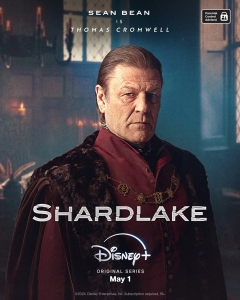
Before we dive into the story, we have to set out our cast of characters, starting with Matthew Shardlake, played brilliantly by Arthur Hughes. Hughes can present Shardlake in such a believable way that it feels like he jumped off the pages. We also have Jack Barak, the funny playboy who adds some light notes to the story, played by Anthony Boyle. I am not going to lie, I was shocked that they decided to replace Mark Poer with Jack Barak, but once I saw the interactions between Shardlake and Barak on set, it made sense. Wrapping up the main actors is Thomas Cromwell played masterfully by Sean Bean. When the casting was announced about Bean being Cromwell, it was hard to picture the historical figure, but when I saw him on the screen having his first scene with Shardlake about the relics, my doubts vanished. He does an excellent portrayal of Thomas Cromwell.

I must applaud the casting crew for creating such a diverse cast, just as diverse as the book that it is inspired by. Some of my standouts include Ruby Ashbourne Serkis as Alice, Irfan Shamji as Brother Guy, and Joe Barber as Simon Whelplay. Regarding the casting of Babou Ceesay as Abbot Fabian, I did not have a problem with it because I think he did a great job portraying a character in a fictional drama based on a historical fiction novel. The one character that I was a bit confused about was the inclusion of Norfolk played by Peter Firth, as he was not in the original story and didn’t add much to the story as a whole.

I think as a whole, the costumes did look relatively decent. However, a few, especially Dr. Goodhap’s outfit, looked synthetic and threw off the illusion of it being a Tudor period drama. I also wanted to see more head coverings for the male characters and for Alice, although the clothing colors were not as dark as I feared. I liked the addition of the relics, the parrot, and the manuscripts to add depth to the drama, and the use of candles instead of torches, always a major plus for history nerds when watching historical dramas.

One of my big issues was the monastery of St. Donatus itself. It has been reported that they filmed in Hungary, Romania, and Austria, primarily at Hunedoara Castle and Kruezenstein Castle. That is a big red flag for authenticity. They may be beautiful locations, but they were not an English monastery during the 16th century when monasteries were dissolved. You can tell that it was not filmed in England and it does take away from the illusion that is so important when it comes to historical dramas; you want to be transported to the location that the author had in mind, especially when Sansom included a map on the monastery in his book.

Now let’s address the elephant in the room, the story of the “Shardlake” series. For the most part, the Shardlake television series stays pretty close to the story, except for a few glaring exceptions. When they mentioned the holy relic went missing, they did not mention the beheaded bird on the altar, which is probably for the best because it is a rather disturbing image. We also have the scenes with Simon Whelplay, who is portrayed as a nervous youth who is constantly getting into trouble. His death plays out a little differently in the book, as he slips and falls in the bathhouse, whereas in the show, he plummets from a tower. In both cases, it is revealed that he was drugged with belladonna. I did feel a bit sad that they didn’t flesh out the relationship between Brother Guy and Shardlake as that was my favorite friendship in the book series. They could have easily had a scene where we could see the potential for their friendship to grow past the monastery.

The two major issues I had were inclusions to the plot of the story. I did not like the addition of Norfolk as a big-name villain for Shardlake because, in the book series, the major historical figures took a back seat to the original characters Sansom created. My biggest issue with this show was Barak’s character arc. At first, I thought it was an odd choice to include him over Mark Poer in the series, but then they decided to combine character traits, like Barak falling for Alice which felt so wrong, luckily he does not run away with her. And then Barak randomly killed Goodhap and got away with it. He admitted to Shardlake that he killed Goodhap and it felt like Shardlake ignored the entire issue, which feels completely off for Shardlake. If they do make another season and they have the actors playing Shardlake and Barak back, it is just going to feel a bit awkward between them.

Overall, I thought the “Shardlake” series was a decent adaptation of the Matthew Shardlake series by C.J. Sansom, but the books will always be superior. If you want to jump into the Tudor world with a murder mystery filled with twists and turns, you should check out “Shardlake” on Disney +, and if you want to read the book series, check out the Matthew Shardlake series by CJ Sansom.

What are your opinions about the “Shardlake” series on Disney + and what is your favorite book written by CJ Sansom?

If you are curious about my views about the Matthew Shardlake book series by CJ Sansom, you can find my review here: https://adventuresofatudornerd.com/2020/09/27/book-series-review-the-matthew-shardlake-series-by-c-j-sansom/

Sources for Images and Cast Information:

https://www.imdb.com/title/tt27390563/fullcredits/?ref_=tt_cl_sm

https://www.rottentomatoes.com/tv/shardlake

Book Review: “The Last Days of Henry VIII: Conspiracies, Treason, and Heresy at the Court of the Dying Tyrant” by Robert Hutchinson

The Last Days of Henry VIII

King Henry VIII, who ruled as a tyrant for almost 40 years, is dying. He caused mayhem and mischief by marrying six wives, killing two of them, with the dissolution of the monasteries, the creation of the Church of England, and his international policies. In short, it was a hot mess towards the end of his reign. So how did the last few months of King Henry VIII play out and how was he honored by those closest to the throne? Robert Hutchinson takes an in-depth look into this tumultuous period in history in his book, “The Last Days of Henry VIII: Conspiracies, Treason, and Heresy at the Court of the Dying Tyrant.”

I found this particular book in a used bookstore one day and decided to try it. I have heard of Robert Hutchinson, but I have never read any of his books. 

Hutchinson begins with the day that King Henry VIII breathed his last breath on January 28, 1547. He is no longer the glamorous Renaissance prince, but rather he is a hugely obese man with festering wounds on his legs. The years have taken their toll on the king, but no one feels sympathy for the man. He has made so many around him live in abject terror for decades. Now, it is time for a fresh start with the reign of King Edward VI, his beloved son.

We then jump back in time so that Hutchinson can show his readers exactly why King Henry VIII was feared towards the end of his life. He starts with the last three marriages of Henry VIII, Anne of Cleves, Catherine Howard, and Katherine Parr. The way that Hutchinson characterized Anne of Cleves and Catherine Howard in this book irked me quite a bit, even though I know this book is older and there is new research about both queens that contradicts Hutchinson’s perspective. 

Multiple marriages were not the only concern during the last years of Henry VIII’s life as he had to deal with heretics, international politics, and how the country should be run after his death. What I found truly fascinating about this book is the sources that Hutchinson used to tell the tale of the last years of Henry VIII’s life. They show how chaotically terrifying Henry’s court was towards the end. Hutchinson shows how the ambitious men around Edward VI tried to take control, but failed miserably as Edward VI, Mary I, and Elizabeth I ruled with just as much vigor as their powerful father. Finally, we see what happened to Henry VIII’s earthly remains and why his marvelous tomb vanished, leaving a simple marker to indicate where he and his beloved Jane Seymour were buried. 

Hutchinson does his due diligence to show how maniacal Henry VIII was, especially towards the end of his life. He does not mince words in his opinions about Henry and his court, which I may not agree with completely, but he makes strong arguments for his opinions. Overall, a very well-written and informative book. If you want a book that explores the final years of the infamous king, I would suggest you check out, “The Last Days of Henry VIII: Conspiracies, Treason, and Heresy at the Court of the Dying Tyrant” by Robert Hutchinson.

Book Review: “Children of the House of Cleves: Anna and Her Siblings” by Heather R. Darsie

When we think of the German Duchy of Cleves, our first thoughts tend to go to Anna of Cleves, King Henry VIII’s fourth wife, whom he immediately divorced due to not being attracted to her looks, at least according to English tales. We tend to leave Anna’s German life to the side and forget about her family’s story when we study the ever-changing 16th and 17th centuries, even though Germany was dealing with the Reformation. We have an inkling about how life might have been like for Anna of Cleves in England with the fabulous book, “Anna, Duchess of Cleves: The King’s Beloved Sister,” but what about Anna’s siblings, Sybylla, Wilhelm, and Amalia? Heather Darsie has decided to take up the challenge of telling the story of Anna of Cleves’ family from the German perspective in her latest book, “Children of the House of Cleves: Anna and Her Siblings.”

I want to thank Amberley Publishing for sending me a copy of this book. I thoroughly enjoyed Darsie’s first book on Anna, Duchess of Cleves. So when I heard she was writing a new book about Anna’s family and their impact on 16th and 17th-century European history, I knew I wanted to read it.

Darsie begins her book by explaining how the duchy system worked in Germany and the birth of William IV, Duke of Julich-Berg, in 1455, and we are introduced to John II, Duke of Cleves-Mark (grandfather of the von der Mark siblings and was known as the “Childmaker” for his illegitimate children). We also learn how the German duchies connected with the Holy Roman Empire and its often rocky relationship with the papacy in Rome. It is essential background information to fully understand the political and religious quagmire in which Anna and her siblings would be involved during the 16th century.

We then transition to the marriage of Johann III of Cleves-Mark and Maria of Julich-Berg, the parents of Sybylla, Anna, Wilhelm, and Amalia. It is through their marriage that the United Duchy of Julich-Berg-Cleves is formed. During their reign as the Duke and Duchess of Julich-Berg-Cleves, we see the emergence of Lutheranism, the rise of the Reformation, and the political landscape starting to shift.

The marriages of the von der Mark children and their consequences comprise the bulk of this book. Sybylla, the eldest child, married Johann Friedrich von Wettin, the Elector of Saxony and one of the founding members of the Schmalkaldic League. Anna married King Henry VIII, and we all know how well that marriage went, and Amalia never married. Wilhelm’s martial history is a bit more complex as he married Jeanne d’ Albret to align with France. Still, when that became a disaster, he married Maria von Habsburg, Hereditary Archduchess of Austria.

The tale of the von der Mark children is full of heartache, madness, war, and religious change. Although the von der Mark dynasty and the Duchy of Cleves lasted less than two centuries, it had a lasting impact, culminating in the Thirty Years’ War. Darsie has done a masterful job of collecting and presenting the story of Anna and her siblings to an English audience concisely. “Children of the House of Cleves: Anna and Her Siblings” by Heather R. Darsie is a marvelous dive into the life of 16th and 17th-century Germany that any Tudor nerd would find utterly delightful and insightful.

Book Review: “Of Judgement Fallen: An Anthony Blanke Tudor Mystery” by Steven Veerapen

Of Judgement FallenThe year is 1523, and England is again preparing for war against its mortal enemy, France. Cardinal Wolsey is firmly in power as King Henry VIII’s right-hand man who is about to open Parliament, but Sir Thomas More’s star is slowly rising. London is busy, and at the center of it, all is Wolsey’s trumpeter and groom, Anthony Blanke. In this chaos of Wolsey’s household where murder and betrayal lie, and the enemies of the Cardinal begin to pile up. It is up to Anthony Blanke to clear his name and find the murderer before it is too late. Anthony’s latest thrilling adventure occurs in Steven Veerapen’s novel, “Of Judgement Fallen: An Anthony Blanke Tudor Mystery.”

Thank you, Polygon Books and Steven Veerapen, for sending me a copy of this novel. I enjoyed the first Anthony Blanke novel, “Of Blood Descended,” so when I heard that there was going to be a second mystery, I could not wait to read it.

Veerapen opens his novel with his first victim, Lancelot Cosyn, a scholar who is in a lot of pain and is on a mission. He is a man who detests Cardinal Wolsey, who he thinks is the source of evil in England, and he has chosen to take action by visiting the great man. Unfortunately, he is found dead inside Wolsey’s home before the meeting. Wolsey assigns Anthony Blanke the task of finding the person behind the murder of Cosyn before the news reaches the King’s ear and before Parliament opens.

As Anthony begins his investigation, more bodies of the Cardinal’s enemies start to pile up around him, so he enlists the help of Sir Thomas More to find the murderer. The color of his skin and how close Anthony is to the case make people suspect him of being involved in these dastardly deeds. Anthony, his friend Mark, and a pup named Bo work with Thomas More to prove Anthony’s innocence and determine why these people were murdered and who was behind the chaos in London.

What I love about this series is the diversity that Veerapen has chosen to show in Tudor England. Racism and religious issues are complex issues to discuss. Still, Veerapen has given his audience a window into the past and showed what it might have been like for a person of color to prove themselves in the court of Henry VIII while also dealing with people deemed as heretics for their beliefs.

This was a well-written mystery full of twists and turns that kept me guessing until the end. I had no clue who might have done it until the end, a sign of a fantastic mystery writer. If you are a fan of the first Anthony Blanke murder mystery and want another adventure, “Of Judgement Fallen: An Anthony Blanke Tudor Mystery” by Steven Veerapen must be on your to-be-read pile.

Book Review: “The King’s Pleasure: A Novel of Henry VIII” by Alison Weir

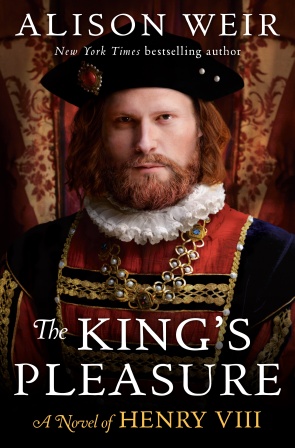
The King's PleasureWhen we think about the Tudor dynasty, we often focus on the women in King Henry VIII’s life and his children, at least when it comes to novels. Writing about this larger-than-life figure, this notorious king and controversial figure in English history, are usually considered ambitious. Few have attempted to write a book about the king’s entire reign, but Alison Weir has embarked on this endeavor in her latest novel, “The King’s Pleasure: A Novel of Henry VIII.”

I want to thank Ballantine Books and Net Galley for sending me a copy of this novel. I have not read many books about the reign of King Henry VIII, except for “The Autobiography of King Henry VIII” by Margaret George, so when I heard that Alison Weir was writing a novel about the titular king, I knew I had to read it.

Weir begins her novel with a moment that must have been difficult for young Prince Henry or Harry as he is referred to in this book. His brother died recently, and his beloved mother, Elizabeth of York, just died, leaving Henry as King Henry VII’s only heir. Henry does not have the best relationship with his father, but he now must fill the void as the heir apparent after Arthur died, leaving his young wife, Katherine of Aragon, a widow. When King Henry VII died, Henry became King Henry VIII and selected a woman he had fallen for to become his queen, Katherine of Aragon.

The bulk of this novel revolves around the relationships between Henry and his first two wives, Katherine of Aragon and Anne Boleyn. Weir is sympathetic toward Katherine of Aragon’s struggles, whereas her portrayal of Anne Boleyn may come across as a bit harsh. Jane Seymour is portrayed as a quiet and obedient queen, and Anna of Cleves’ focus is more on her looks and how Henry treated her more as a sister than a wife. Katherine Howard is someone Henry falls for hard and is devastated by her downfall, and Katherine Parr is the firebrand reformer who wants to heal Henry’s family at the end of his life.

Weir also touches on the complex political web that Henry was involved in, not just in England but European politics of the 16th century. We also see how Henry interacted with his children and how the emotional weight of all of his decisions weighed on him.

I think for how much of a challenge it is to write a novel about King Henry VIII, Alison Weir has done an admirable job in the king’s portrayal. I don’t necessarily agree with how some of the queens were portrayed, but I did enjoy this novel as a whole. I would suggest reading this novel before the Six Tudor Queens series to understand Henry’s perspective before his wives’ stories. If you have enjoyed the latest books about Henry VIII’s wives and his mother, Elizabeth of York, you should read “The King’s Pleasure: A Novel of Henry VIII” by Alison Weir.

Book Review: “The Final Year of Anne Boleyn” by Natalie Grueninger

61817724The world of someone close to a king, especially someone close to King Henry VIII, was full of hazards and great triumphs. All the glist and glamor of the Tudor court could not save them from the rage of the King. This could apply to anyone who fell during the reign of this infamous King, but none more so than his second wife and queen, Anne Boleyn. Much has been written about Anne Boleyn and her dramatic fall from grace, specifically the final month of her life, but what was she doing in her last year alive? Natalie Grueninger hopes to answer this question in her latest book, “The Final Year of Anne Boleyn.”

I want to thank Pen and Sword Books and NetGalley for sending me a copy of this book. I am always learning new facts about influential Tudors, like Anne Boleyn, so when I heard about this book, I knew it would be on my to-be-read pile.

We begin our journey to Anne’s demise with the court’s changes in 1535. There is still tons of support for Henry’s first wife, Katherine of Aragon, and her daughter Mary, even with the new Act of Respecting the Oath to the Succession, which proclaimed Princess Elizabeth as King Henry VIII’s heir, not Mary. Anne interacts with ambassadors from foreign lands, like Charles de Solier from France and Eustace Chapuys, the imperial ambassador.

My favorite part of this book is how much care Grueinger took in telling the story of Anne Boleyn’s final progress with Henry VIII. I have never read an account of this progress in the details Grueinger provided, including where she stayed and who served her at different royal houses. We also see how she dealt with the divide between Catholics and Protestants and how she relaxed in her downtime.

Grueninger examines Anne’s fall from grace and how it took place, starting with Henry’s dramatic fall from his horse and Anne’s tragic miscarriage of a son that would have secured her place on the throne. Here, we see the death of Katherine of Aragon and the rise of Jane Seymour. Emotions are running high, and rumors are flying all over Europe, so Grueninger takes the time to bust a few of these myths. Finally, we look at the show trials and the executions that sealed the fate of Anne Boleyn and the men associated with her.

Natalie Grueninger’s passion for telling the true story of Anne Boleyn is evident on every page of this book with the amount of research she poured into this subject. This book presents Anne Boleyn in a new sympathetic light, which any Tudor fan would appreciate. If you want a beautiful nonfiction book that examines the tragic fall of Anne Boleyn, I highly recommend you read “The Final Year of Anne Boleyn” by Natalie Grueninger.

Television Series Review: “The Six Wives of King Henry VIII”

81uwnQbeXvL._SY445_Many actors and actresses have portrayed the lives of Henry VIII and his six wives in modern films and dramas. When asking Tudor nerds which Henry VIII stood out the most, the most popular response is Keith Michell in the 1970s BBC series, “The Six Wives of King Henry VIII.” I had not heard about this series until I started “Adventures of a Tudor Nerd.” Many people have wanted me to watch the series solely for the performance of Keith Michell, so when a coworker allowed me to borrow her DVD copy of the series, I finally decided it was time to tackle this legendary series.

For those unfamiliar with the older Tudor dramas like this series, it should be noted that the focus is not on sex or bloody battles but on the relationships between Henry and his six wives. Therefore, the costumes and the scenery take a step back in quality that one would expect when compared with modern dramas. I think the English brides’ outfits are well done, but the native gowns for Katherine of Aragon and Anne of Cleves felt a bit off for me.

Keith Michell plays the titular king, but I will discuss his performance later. I want to look at the actresses who played Henry’s six wives. Each episode focuses on each wife’s story, how they became his wife, and how their story ended.

We begin with Katherine of Aragon, played by Annette Crosbie, who was the wife of Prince Arthur, but when he died, Katherine struggled to survive in a foreign land until it was decided that she would marry her former husband’s brother, Henry VIII. The couple seems to be in love until Katherine cannot deliver a son for the king, so he decides it’s time for a divorce, which we call The Great Matter. With Katherine out of royal favor, it is time for Henry’s second wife, Anne Boleyn, played by Dorothy Tutin, to make her appearance. When it comes to Anne Boleyn’s performances, I don’t know if I like Tutin’s portrayal; it just rubbed me the wrong way.

My favorite episode of this series was Jane Seymour, played by Anne Stallybrass, who shows a more complex side to Jane’s story. We see her interacting with the Seymour family and her desire to reunite Henry VIII and his daughter Mary. The way the episode was structured with Jane on her death bed and witnessing flashbacks to her time with Henry VIII, the issue of the Pilgrimage of Grace, and the birth of her beloved son Edward. With Jane’s death, we see the more human side of Henry as he is in deep mourning for his beloved queen.

It would be several years until he married again to Anne of Cleves to secure a German Protestant alliance. Anne of Cleves, played by Elvi Hale, is a young woman of average looks and very little money who wants to learn everything she can about England. I like how we are introduced to Hans Holbein in this episode and to see how Anne felt about her marriage and ultimate divorce from Henry VIII.

With the divorce of Anne of Cleves settled, Henry VIII turned his gaze on the young Catherine Howard, played by Angela Pleasence. Catherine is young, naive, and only concerned about being queen and having men fawn over her. It was interesting to see Catherine Howard as a nursemaid to the King and how angry he was with her uncle after her execution. Finally, we are introduced to Henry’s final wife, the devout reformer Catherine Parr, played by Rosalie Crutchley. We witness the end of the King’s reign and the rise of the Seymour family to help the young king Edward VI.

Of course, these stories could not be told without side characters like Thomas Wolsey, Thomas, and Edward Seymour, King Henry VII, Eustace Chapuys, Jane Boleyn, and Will Somers. I was a little surprised that they included torture scenes for Anne Askew and Mark Smeaton, especially since they did not show the execution scenes for Anne Boleyn and Catherine Howard. Several small Easter eggs for Tudor fans sprinkled in are quite delightful to discover.

Now, it’s time to discuss the big guy, King Henry VIII, played masterfully by Keith Michell. Before watching this drama, I was only familiar with Keith Michell from his performances in Murder She Wrote and the episodes I would watch with my mom. We begin with Henry as a young king enchanted with Katherine of Aragon. They are madly in love, and it is hard to believe they would ever separate, but they eventually do when Anne Boleyn catches his eye.

Throughout this entire series, we see Michell’s acting range through the rapid emotional change of the king. One minute he could be lovey-dovey, the next raging mad, and then bawling his eyes out. What impressed me the most about Michell’s performance was how we saw Henry VIII’s size and shape change in each episode. As Tudor fans, we have screamed at the TV when we see modern adaptations of Henry VIII that do not meet our standards for what older Henry should look like. Michell exceeds all expectations and gives his audience one of the most believable King Henry VIII performances in modern history.

Overall, I found this a decent show where the political and romantic drama of the reign of King Henry VIII shines through the screen. The queens and the counselors did take a back seat to the titular king, but I did not mind that. If you want to watch a legendary series about the reign of King Henry VIII that does not have the sex and scandals of a modern drama, I highly recommend you watch the BBC series, “The Six Wives of King Henry VIII,” starring Keith Michell.

Casting Source:

https://www.imdb.com/title/tt0066714/?ref_=tt_mv_close

Book Series Review: The Matthew Shardlake Series by C.J. Sansom

Have you ever read a historical fiction series that made you stop and think that the plots of the books could be possible? They make you question the way you look at the past and wonder why no one had ever written a series like it before. You feel like you are friends with the protagonist and his pals and you despise the nefarious villains that try to thwart the efforts of the heroes. You feel like the books are true escapism and that you can visualize the world that the author has created using a combination of facts and fictional ideas.

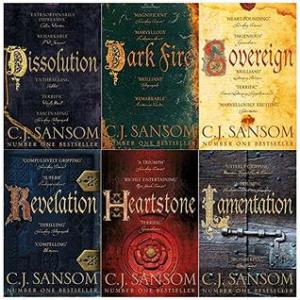
Now, I could be describing any number of historical fiction series, but this one, in particular, blew me away. If you have been following my blog or my page, you know that I am talking about the Matthew Shardlake series by C.J. Sansom. The books are all unique, yet read in the chronological order that Sansom intended, shows the amazing progress of England through the reign of the Tudors and how these changes affected those living during this time. We follow the hunch-back lawyer Matthew Shardlake on seven of his more infamous cases, each one more dangerous than the previous one: Dissolution, Dark Fire, Sovereign, Revelation, Heartstone, Lamentation, and Tombland.
Before I jumped into this series, I honestly had never heard of it, except when people mentioned these books in posts that I asked my followers what they are reading. I do not normally read murder mystery novels, but since it was based in the Tudor dynasty, I decided to give it a shot and I wholeheartedly loved it. I am so glad no one spoiled this series for me. I might fangirl a bit during this review, but I will try my best not to spoil this series for anyone else. I want to discuss the different elements of this series that I have comes to enjoy. I would love to continue to discuss this series with those of you who have read it and have enjoyed it as much as I have.

Characters

Matthew Shardlake

Matthew Shardlake is our main protagonist in this series, aptly named after him. As mentioned above, he is a hunch-back lawyer who works hard to solve mostly murder mysteries. He fights for what he believes is right, even when times get tough. There are sometimes when he is not even sure what he stands for, especially when it comes to his stance on religion and if he supports those in power. He is constantly the butt of everyone’s jokes and for the most part, they don’t bother him. He fights against notorious enemies while defending his friends and those who cannot defend themselves. Matthew is unlucky when it comes to love, but that does not mean that we can’t help but root for him to find his happily ever after. There were so many times that I was not sure Matthew was going to survive, but Sansom’s plan for his loveable protagonist throughout this series was simply brilliant. A protagonist who I will never forget.

Jack Barak

We are first introduced to Jack Barak in book two of the series, “Dark Fire”. He was a rogue working for the mighty Thomas Cromwell. He teams up with Shardlake for what seems like only one case, but the two men soon develop a lasting friendship, even when things get a bit rocky between them. In the third book, “Sovereign”, Jack is introduced to the love of his life, Tamasin. Their relationship will be tumultuous at times, but it is caring and it does survive the test of time. He is the bad boy turned family man that everyone loves. He does make stupid mistakes, but you cannot help but admire his tenacity.

Guy Malton

Next to Matthew Shardlake and Jack Barak, Guy Malton is probably one of my favorite characters. We are introduced to Guy when he was working in a monastery in “Dissolution”. Guy goes from a former monk to a well known and respected apothecary with his shop. He is unlike anyone who Matthew has ever met as he is a Moorish man turned Christian monk. I love the fact that Sansom went this direction to show how truly diverse the Tudor world was. Guy challenges Matthew when it comes to religion and what he believes is right when it comes to science. He is the wise old man that heals everyone’s wounds and is a comforting counsel when someone needs his help.

Nicholas Overton

Nicholas Overton is Matthew’s young assistant in the last two books, “Lamentation” and “Tombland”. He comes from a wealthy family, but when a disagreement happens, he goes to work for Matthew Shardlake. He is young and naive but loyal to a fault. He believes that everything should be handed to him on a silver platter until life gives him a rude awakening call. We don’t get to see him develop as a character as much as the others, but I hope if Sansom writes any more novels, he includes Nicholas Overton.

Historical Figures

Now, some characters are historical figures that make an appearance in the novels that left a lasting impression on me while I was reading. The calculating Thomas Cromwell, who was always trying to stay in his majesty’s favor and do his bidding until the bitter end. The dastardly Richard Rich, who I have always felt was a bit shady, but Sansom made me hate him even more. The legend himself, King Henry VIII, who is glittery and magnanimous to his people, but if you cross him, his true colors come out in full force. Catherine Parr, the scholar turned queen whose writings and her views on religious reform walk a fine line between what is acceptable and what is considered heretical. Elizabeth Tudor, the intellectual daughter of the king who has a similar temper to that of her father, but has a longing to help the Boleyn family in honor of her mother.

What is brilliant about Sansom’s series is that these historical figures are more background characters or they are villains. They are not the protagonists, as they are portrayed in other historical novels. The real heroes are the average people, reminding the reader that under all the glitz and glam of the Tudor court, there were regular men and women were trying to survive during such tumultuous times.

Cases

With such a remarkable cast of characters, Sansom had to put them through extremely difficult obstacles to test their limits and to give his readers a breathtaking look into the Tudor world. Whether it is the dissolution of a monastery, a race to find a mysterious flame, a radical killing based on the book of Revelation, or the sinking of the Mary Rose, Sansom takes us on a non-stop roller coaster of emotions. Just when you thought you had the case figured out, a monkey wrench is thrown into the mix and all of the sudden, our intrepid heroes are risking their lives because one of the villains knew that they were getting too close.

Since all of these novels revolve around murder mysteries, I think it is only right that we should discuss the murders themselves. In “Dissolution”, there is a typical advancement of murder to cover up the original crime. As the series progresses, you can see the wheels turning in Sansom’s head as he comes up with even more dastardly ways to kill off in his novels. There were points where I was starting to get concerned just from the graphic details of some of these deaths and executions. They will be engrained in my brain for a long time, which is a sign of how delightful Sansom’s writing style truly is, especially in this series.
The Details

As I mentioned before, what sets this series apart from others that I have read are those exquisite details. I think what helped is the fact that C.J. Sansom does have a Ph.D. in history, so he understands how important accurate facts are to historical fiction readers. The fact that Sansom decided to use his skills as a Doctor in History to write a Tudor historical fiction murder mystery series is awe-inspiring.

He was able to create a Tudor world that feels so real that you forget that you are reading novels. From scenic descriptions to the more gruesome accounts of horrific events, Sansom takes us on a trip to the past that we do not want to leave. We are craving more adventures after we finish every novel.

The Future

However, as I am writing this review, Tombland is the final book in the Shardlake series. C.J. Sansom is currently ill and I wish him nothing but the best in his recovery. These seven books make for a fabulous series, but Sansom has mentioned that he does wish for the series to go through the reign of Elizabeth I, which I would love.

As I was reading this series, I came up with some ideas for spin-off series to continue the adventures of Matthew Shardlake and his friends. For prequels, I was thinking that Sansom could either follow the adventures of Jack Barak working for Cromwell or Guy Malton as he learns how to be Moorish and a monk. Then there is the sequel, which I think would have Nicholas Overton as the protagonists and the children that we have seen grow up during this series. They could solve mysteries in the Elizabethan era into the Stewarts, bridging the gap between the two dynasties. I also think that if Sansom does write more novels with this cast of characters, it would be fun to explore other countries, in Europe or beyond, during the 15th and 16th centuries. I think it would expand the world for the readers and give them a taste of other royal dynasties and what else was going on in the world during the time of the Tudor dynasty in England.

Update: On Saturday, April 27, 2024, CJ Sansom died. Thank You CJ Sansom for sharing your passion for the past, especially the 16th century with The Matthew Shardlake series. Your stories have inspired countless historians and historical fiction writers, giving readers a historical escape for years.
Conclusion

I am so glad so many of you recommended that I should read this series. I would have never picked it up if it had not been for you. I now know why so many people love it. It is one of those series that you have to read from start to finish, even though each adventure is a treat by themselves. It is one of those series that I will reread soon so that I can visit Matthew Shardlake and his friends all over again.

I wanted to write this series review because the Shardlake series is easily becoming one of my favorite historical fiction series and I had a lot to say about it. I decided to leave major details of the individual novels out of this review so that those who are not familiar with these seven stunning, spellbinding novels can experience them for themselves without spoilers. If you do want to know how I feel about each book, I have included links to each of the reviews down below.

Dissolution:https://adventuresofatudornerd.com/2020/06/06/book-review-dissolution-by-c-j-sansom/

Dark Fire:https://adventuresofatudornerd.com/2020/06/20/book-review-dark-fire-by-c-j-sansom/

Sovereign: https://adventuresofatudornerd.com/2020/07/05/book-review-sovereign-by-c-j-sansom/

Revelation: https://adventuresofatudornerd.com/2020/07/21/book-review-revelation-by-c-j-sansom/

Heartstone: https://adventuresofatudornerd.com/2020/08/04/book-review-heartstone-by-c-j-sansom/

Lamentation: https://adventuresofatudornerd.com/2020/08/22/book-review-lamentation-by-c-j-sansom/

Tombland: https://adventuresofatudornerd.com/2020/09/21/book-review-tombland-by-c-j-sansom/

I want to leave the last part of this review for those who have read this remarkable series to discuss it. I know that is not a series that is often discussed, so I thought that you should have your say. What is your favorite book in the series and why? Who is your favorite character and why? Who is your favorite villain and why? Why do you enjoy this series?