 I am pleased to welcome Rosemary Hayes to my blog today as part of the blog tour for her latest novel, “The King’s Command: For God or Country.” I would like to thank Rosemary Hayes and The Coffee Pot Book Club for allowing me to be part of this tour.
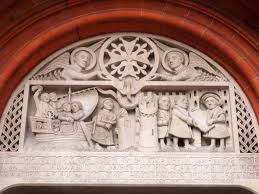
In the early 16th century, the reformist ideas of John Calvin and Martin Luther spread through France and many embraced their new Protestant doctrines. These French Reformists became known as the Huguenots. They believed that the Bible alone gave divine guidance, they rejected the authority of the Pope and the priesthood and they argued for separation of church and state.

All this directly challenged the authority of the Catholic church and led to bitter division between Catholics and Protestants, leading to the Wars of Religion which raged in France from 1562 until 1598. Hatred ran deep, armies were raised and atrocities were committed by both sides.
These wars were finally brought to an end through the actions of King Henry IV.
As a Huguenot, Henry was involved in the Wars of Religion and, while King of Navarre, led Protestant forces against the French royal army. When he succeeded to the French throne in 1589, he at first kept the Protestant faith – the only French king to do so – but had to fight against the powerful Catholic League, which denied that he could wear the French crown as a Protestant. After several years of stalemate, he converted to Catholicism, reportedly saying “Paris is well worth a mass”!

Henry was a pragmatic politician, and he promulgated the Edict of Nantes (1598) which granted official tolerance to Protestantism, thereby effectively ending the Wars of Religion and, for eighty years or so, the Huguenots thrived.
While the Edict of Nantes brought religious peace to France, some hard-line Catholics and Huguenots remained dissatisfied and in 1610 Henry was assassinated by a Catholic zealot. Henry was succeeded by his son Louis XIII.
Louis XIII and his Chief Minister, Cardinal Richelieu, were not at all tolerant of the Huguenots. They abhorred their growing influence and attacked their strongholds.

After the capitulation of La Rochelle (the most important of the Huguenots’ strongholds) the Grace of Alais was signed in June 1629. Although this reaffirmed the Edict of Nantes, it ordered that the Huguenot military organization should be broken up and the Huguenot fortresses destroyed.
So, although the Huguenots continued to be allowed to practice their faith, their trades, and their professions, their position was considerably weakened by having no fortifications and no army.
When Louis XIII’s son, Louis IV, finally took control of his kingdom in 1661, he quickly set about reforming France according to his vision.
His vision included making France a wholly Catholic country. His mantra was ‘One realm, one religion, one King’ and he swore to wipe out the ‘false religion’ of Protestantism once and for all.
Many Huguenots could see the way the wind was blowing and quietly left France to find refuge in Protestant countries.
In France, the rights of Huguenots continued to be systematically eroded by Louis and his advisers, and the Edict of Nantes, which had protected them for so long, was finally revoked in 1685. At the time of the revocation, Huguenot pastors were given two weeks to leave the country or face death. However, their congregations were forbidden from leaving because Louis did not want to lose the skills of these hard-working and successful people.
Pressure continued to mount and Huguenots’ lives became impossible if they continued to be loyal to their faith. Unless they converted to Catholicism, they would forfeit their property, be unable to practice their professions or trades and their children would be forcibly removed from them to be brought up as Catholics. They were banned from holding gatherings, even in private, and their temples were destroyed.
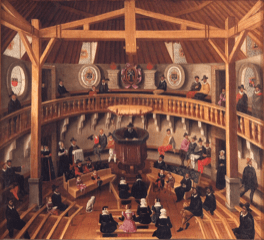
In many places, on the King’s orders, brutal soldiers were sent in to force households to convert and thousands did, to save their skins.

Some held out and suffered terribly, others tried to flee the country and were caught and punished, the men sent to row in the galleys in the Mediterranean (a death sentence) or executed, the women imprisoned and the children sent to be brought up in Catholic institutions.

There are stories of escape where fleeing Huguenots managed to elude their pursuers and make their way to other countries, but also horrific accounts of greedy sea captains taking money from them and then tossing them overboard, of tortures inflicted on those who refused to convert and of refugees hiding on board ships having noxious gas fed into their hiding places. There were plenty of financial rewards offered to those betraying Huguenots and to soldiers finding stowaways, with spies and informers everywhere.
Little wonder, then, that France was emptied of some of its most skilled citizens during these unsettled times. The Protestant countries to which the Huguenots fled were hugely enriched by their presence. Doctors, lawyers, weavers, gold and silversmiths, clockmakers, lace makers, shoemakers, jewelers, glove makers, bookbinders, perfumers. These folk passed on their skills to those who gave them refuge and became valued citizens of their adopted countries.
My ancestors were a prosperous Huguenot family from Gascony and for the last two years, I have been researching what happened to them and how they escaped to London in 1692. My book ‘The King’s Command’ is very loosely based on their experience.
 Blurb:
16-year-old Lidie Brunier has everything; looks, wealth, health, and a charming suitor but there are dark clouds on the horizon. Lidie and her family are committed Huguenots and Louis XIV has sworn to stamp out this ‘false religion’ and make France a wholly Catholic country. Gradually Lidie’s comfortable life starts to disintegrate as Huguenots are stripped of all rights and the King sends his brutal soldiers into their homes to force them to become Catholics. Others around her break under pressure but Lidie and her family refuse to convert. With spies everywhere and the ever-present threat of violence, they struggle on. Then a shocking betrayal forces Lidie’s hand and her only option is to try and flee the country. A decision that brings unimaginable hardship, terror, and tragedy and changes her life forever.
‘One of the very best historical novels I have ever read’
Sandra Robinson, Huguenot Ancestry Expert
Buy Links:
This title is available to read with #KindleUnlimited.
Universal Link: https://books2read.com/u/bW6zGG
Amazon UK: https://www.amazon.co.uk/dp/B0CB4RH68S
Amazon US: https://www.amazon.com/Kings-Command-God-Country-ebook/dp/B0CB4RH68S/
Amazon AU: https://www.amazon.com.au/Kings-Command-God-Country-ebook/dp/B0CB4RH68S/
Amazon CA: https://www.amazon.ca/Kings-Command-God-Country-ebook/dp/B0CB4RH68S/
 Author Bio:
Rosemary Hayes has written over fifty books for children and young adults. She writes in different genres, from edgy teenage fiction (The Mark), historical fiction (The Blue Eyed Aborigine and Forgotten Footprints), middle-grade fantasy (Loose Connections, The Stonekeeper’s Child and Break Out) to chapter books for early readers and texts for picture books. Many of her books have won or been shortlisted for awards and several have been translated into different languages.
Rosemary has traveled widely but now lives in South Cambridgeshire. She has a background in publishing, having worked for Cambridge University Press before setting up her own company Anglia Young Books which she ran for some years. She has been a reader for a well-known authors’ advisory service and runs creative writing workshops for both children and adults.
Rosemary has recently turned her hand to adult fiction and her historical novel ‘The King’s Command’ is about the terror and tragedy suffered by the French Huguenots during the reign of Louis XIV.
Author Links:
Website: https://www.rosemaryhayes.co.uk
Twitter: https://twitter.com/HayesRosemary
Amazon Author Page: https://www.amazon.co.uk/Rosemary-Hayes/e/B00NAPAPZC
Goodreads: https://www.goodreads.com/author/show/80106.Rosemary_Hayes

 For centuries, fairy tales have entertained and taught lessons to those young and young at heart. One of the most memorable stories was the tale of Rapunzel, the maiden a witch kidnapped because her parents stole a Rapunzel plant from her while Rapunzel’s mother was pregnant. For years, Rapunzel languished in a Tower, her hair growing exponentially until a rogue/ prince climbs her hair and rescues the damsel in distress. The witch dies and Rapunzel and her hero live happily ever after. At least, that is how the story has been passed down to us throughout the centuries, but where did the story come from and how are the stories of three women from different generations and countries connected? Kate Forsyth weaves together the stories of three women and their fates into one delightful novel called, “Bitter Greens.”
 A man hidden from the world languishes for decades in a prison cell. He is not allowed to speak to anyone, or he will face severe consequences. Often in literature, his head is covered in a mask made of iron. His identity and why he angered King Louis XIV so much have remained a mystery for centuries. The prisoner was known as the man in the iron mask throughout history, but who was this enigmatic figure? In her latest book, “The Man in the Iron Mask: The True Story of Europe’s Most Famous Prisoner,” Josephine Wilkinson dives deep into the archives to construct his story and the stories of the men behind the mystery.
 Adventures of a Tudor Nerd