
 I am pleased to welcome Justin Newland to my blog today to share some background information about his novel, The Midnight of Eights. I want to thank The Coffee Pot Book Club and Justin Newland for allowing me to be part of this blog tour.
This guest post relates to the historical background of my novel, The Midnight of Eights. The genesis of any single historical event is always multiple, a combine compound of different influences, some obvious, some subtle, So, in this short space, the best I can do is paint some broad brush strokes.
The novel culminates in the repulse of the Spanish Armada, but what led to King Philip of Spain’s fatal decision to build and dispatch a fleet of 130 warships to invade England in 1588 AD?
Let’s start in 1556. That was when Charles V, the Holy Roman Emperor and King of Spain, abdicated and passed his territories to his son, Philip, who inherited the Netherlands. The Dutch were mostly Protestant but were now under the control of a Catholic monarch. Philip sent the Duke of Alba to suppress any revolt and impose Catholic rule.
 In England in 1570, the Protestant Queen Elizabeth suppressed the Catholic-inspired Northern rebellion and for her troubles was excommunicated by Pope Pius V. In a Papal Bull entitled Regnans in Excelsis, he declared her to be a heretic and “the pretended Queen of England and the servant of crime.” Significantly for English Catholics, the Pope released all of her subjects from any allegiance to her and excommunicated any that obeyed her.
In December 1585, Elizabeth and the Privy Council finally responded to the Dutch call for help, and the Queen sent English troops and vessels to support their resistance.
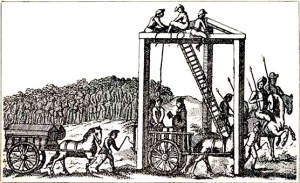
The Papal Bull persuaded many English Catholics to plot against Elizabeth. One was Sir Francis Throckmorton, a Catholic noble. He planned to depose Elizabeth and replace her with Mary, Queen of Scots. Mary, the Queen’s cousin, was Catholic, and a distant heir to the English throne. Francis Walsingham, the Queen’s spymaster, with the help of Nelan Michaels, the hero of the novel The Midnight of Eights, uncovered his plot and had Throckmorton executed at Tyburn in London in July 1584. The Tyburn Tree, a nickname for the gallows at Tyburn, was a prominent site for public executions in London and was given the chilling epithet, ‘the tree that was never green.’
 Anthony Babington was the next English Catholic noble to attempt to depose Elizabeth and replace her with Mary. But when her letters to Babington were intercepted by Walsingham’s spies, proving her involvement to depose Elizabeth, Mary, Queen of Scots, was tried and executed in 1587. For King Philip, Mary’s death was the tipping point. He decided to despatch the Armada and bring England and its heretic Queen to heel once and for all.
During the fleet preparations in Cadiz, Philip ordered his admirals to search for women on board the ships and remove them, so that God’s will prevailed.
In April 1588, the Pope blessed the Armada emblem, the Madonna, and all the Spanish mariners watched in holy awe as it fluttered high on the masts of the galleons, galleasses, and supply ships.
The Armada was not just a fleet of ships. As far as the Spanish were concerned, it was primarily a holy instrument to remove evil from the world.
Justin Newland
18th March 2025
Photo #1: Pope Pius V, courtesy of Wikipedia
Photo #2: The Tyburn Tree, courtesy of Wikipedia
 Blurb:
1580-Nelan Michaels docks at Plymouth after sailing around the world aboard the Golden Hind. He seeks only to master his mystical powers – the mark of the salamander, that mysterious spirit of fire – and reunite with his beloved Eleanor.
After delivering a message to Francis Walsingham, he’s recruited into the service of the Queen’s spymaster, where his astral abilities help him to predict and thwart future plots against the realm.
But in 1588, the Spanish Armada threatens England’s shores.
So how could the fledgling navy of a small, misty isle on the edge of mainland Europe repulse the greatest fleet in the world?
Was the Queen right when she claimed it was divine intervention, saying, ‘He blew with His winds, and they were scattered!’?
Or was it an entirely different intervention – the extraordinary conjunction of coincidences that Nelan’s astral powers brought to bear on that fateful Midnight of Eights?
Buy Links:
Universal Buy Link: https://mybook.to/TheMidnightofEights
Author Website (where buyer can enter a dedication): https://www.justinnewland.com/the-midnight-of-eights~193
Wordery (for free UK delivery): https://wordery.com/the-midnight-of-eights-justin-newland-9781835740330
Barnes and Noble (US): https://www.barnesandnoble.com/w/the-midnight-of-eights-justin-newland/1146325263?ean=2940185990643
Waterstones (UK): https://www.waterstones.com/book/the-midnight-of-eights/justin-newland/9781835740330
Kobo (International): https://www.kobo.com/gb/en/ebook/the-midnight-of-eights
Saxo (DK): https://www.saxo.com/dk/the-midnight-of-eights_bog_9781835740330
Kindle Unlimited:
https://www.amazon.co.uk/Midnight-Eights-Justin-Newland-ebook/dp/B0D9Y7YRDG
 Author Bio:
Justin Newland’s novels represent an innovative blend of genres from historical adventure to supernatural thriller and magical realism.
Undeterred by the award of a Maths Doctorate, he conceived his debut novel, The Genes of Isis (ISBN 9781789014860, Matador, 2018), an epic fantasy set under Ancient Egyptian skies.
His second book, The Old Dragon’s Head (ISBN 9781789015829, Matador, 2018), and is set in Ming Dynasty China in the shadows of the Great Wall.
Set during the Great Enlightenment, The Coronation (ISBN 9781838591885, Matador, 2019) speculates on the genesis of the most important event in the modern world – the Industrial Revolution.
The Abdication (ISBN 9781800463950, Matador, 2021) is a mystery thriller in which a young woman confronts her faith in a higher purpose and what it means to abdicate that faith.
The Mark of the Salamander (ISBN 9781915853271, Book Guild, 2023), is the first in a two-book series, The Island of Angels. Set in the Elizabethan era, it tells the epic tale of England’s coming of age.
The latest is The Midnight of Eights (ISBN 9781835740 330, Book Guild, 2024), the second in The Island of Angels series, which charts the uncanny coincidences of time and tide that culminated in the repulse of the Spanish Armada.
His work in progress is The Spirit of the Times which explores the events of the 14th Century featuring an unlikely cast of the Silk Road, Genghis Khan, the Black Plague, and a nursery rhyme that begins ‘Ring a-ring a-roses’.
Author, speaker, and broadcaster, Justin gives talks to historical associations and libraries, appears on LitFest panels, and enjoys giving radio interviews. He lives with his partner in plain sight of the Mendip Hills in Somerset, England.
Author Links:
Website: https://www.justinnewland.com/
Twitter: https://x.com/JustinNewland53
Facebook: https://www.facebook.com/justin.newland.author/
LinkedIn: https://www.linkedin.com/in/justin-newland-b393aa28/
Instagram: https://www.instagram.com/drjustinnewland/
Book Bub: https://www.bookbub.com/authors/justin-newland
Goodreads: https://www.goodreads.com/jnewland
Amazon Author Page: https://www.amazon.co.uk/stores/Justin-Newland/author/B06WRQVLT8
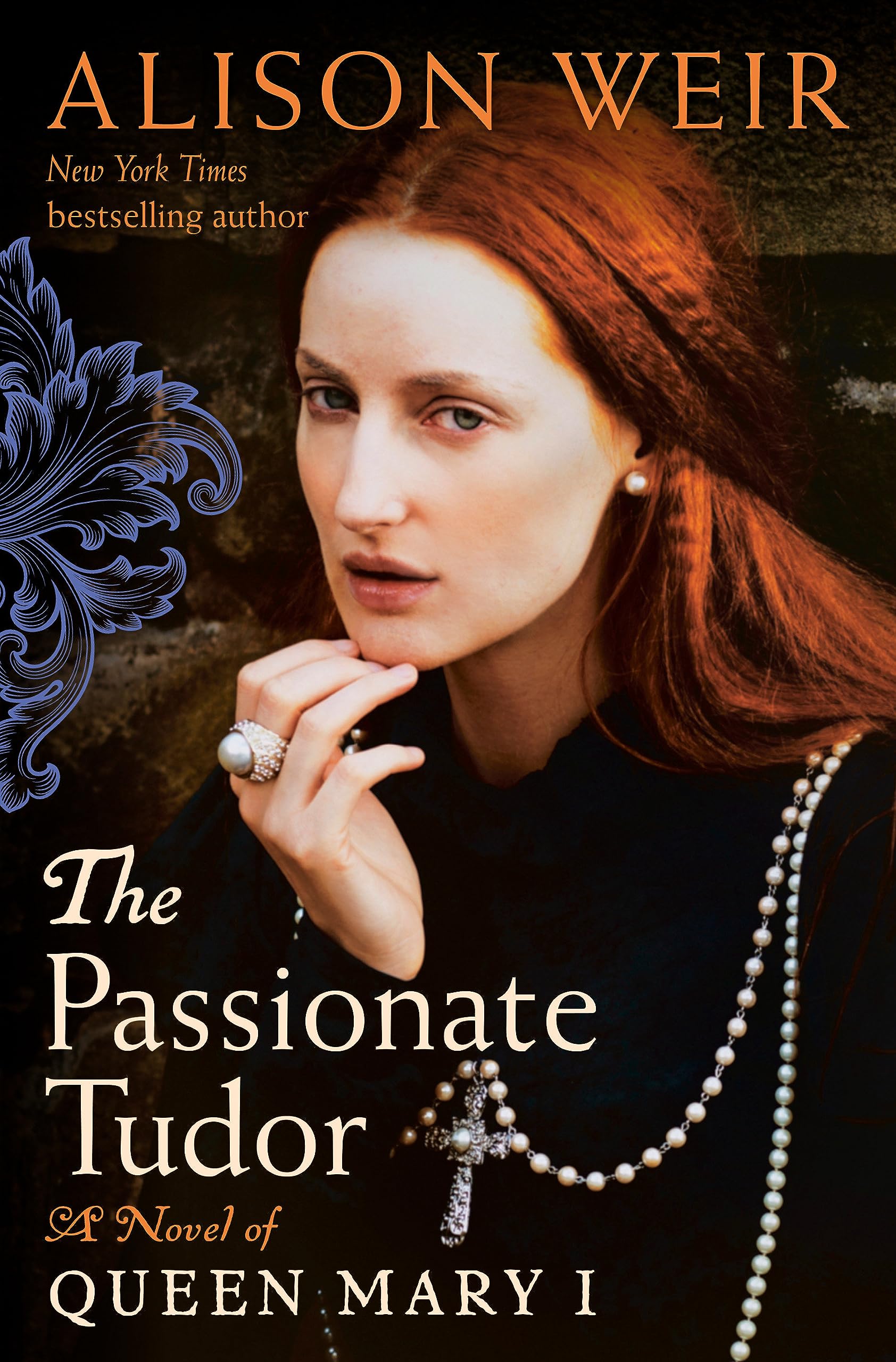 A king’s eldest child is usually the next in line to inherit the throne and become the next ruler. At least that is how the line of succession is supposed to work if the heir is male. Mary I knew this better than anyone. As the eldest daughter of King Henry VIII, she knew that once her mother Katherine of Aragon had a son, Mary would become a pawn in the marriage game. She was willing to accept this fate until her father fell in love with Anne Boleyn. Mary is declared a bastard and must fight for her inheritance and the crown of England while maintaining her Catholic faith. Alison Weir tells the tale of this remarkable woman, from her tumultuous childhood to her short reign that marked her legacy, in her latest novel, “The Passionate Tudor: A Novel of Queen Mary I.”
 Two kings, two rivals from different countries defined the 16th century. One was the spare to his father’s crown, but when his eldest brother suddenly passed away, he became the next Tudor king. The other was the sole heir to his parent’s large kingdom and would become the Holy Roman Emperor. Wars, the Reformation, and family drama kept these two men, Henry VIII and Charles V, busy and at each other’s throats. They would sometimes join and fight for one another’s causes, showing the importance of international politics. With each new scenario, their relationship would shift, either for the best or the worst. Richard Heath has combined the stories of these two monarchs, these “frenemies,” into one joint biography, “Henry VIII and Charles V: Rival Monarchs, Uneasy Allies.”
 When we think about the Tudor dynasty, we think about the monarchs who made the dynasty, but we also pay attention to those around the king or queen who sat on the throne. There were families like the Boleyns, the Howards, and the Seymours who stood on the sidelines for a short amount of time, but one family saw the majority of the dynasty through highs and extreme lows. The Dudleys have been seen as a power-hungry family who would do anything to sit on the throne of England, but is there more to their story? In her debut book, “The House of Dudley: A New History of Tudor England,” Joanne Paul explores the lives of this extraordinary family to find the truth about their ambitions and their resilience.
 The Tudors were a royal family striving to survive in England through male heirs. Yet, its strongest rulers were female, Elizabeth, and her eldest half-sister, Mary. Obviously, many remember Queen Elizabeth I for her “Golden Age” and the first woman monarch of England to rule by her own right, but that title should really go to Mary I. Elizabeth tends to get all of the attention, but Mary’s life was full of her own struggles. In “Mary Tudor: A Story of Triumph, Sorrow and Fire”, Anthony Ruggiero explores the myths and the facts about this much-maligned and tragic figure in English history.
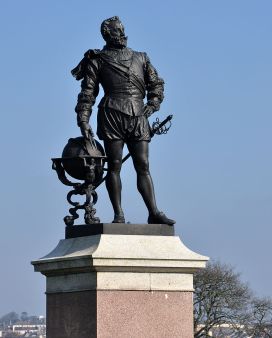 Two things I remember being taught about Francis Drake at school are he was the first British man to sail around the world, and that he nonchalantly played a game of bowls as the Spanish Armada sailed up the British Channel in 1588.
 Another popular belief is that Drake was the hero of the defeat of the Spanish Armada. Although he was made vice-admiral of the English fleet sent out to fight the Armada, Drake spotted a damaged galleon falling behind, and couldn’t resist boarding her. The first captured ship of the Armada, the Nuestra Señora del Rosario (Our Lady of the Rosary) was commanded by the Spanish Admiral General Don Pedro de Valdés, and was taken as a prize.
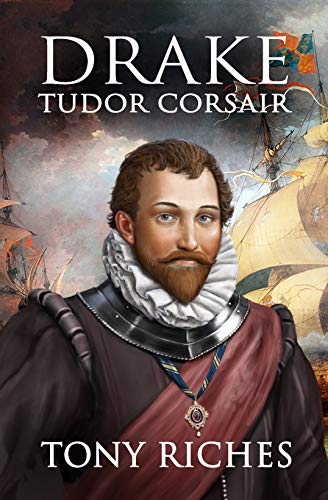 Drake- Tudor Corsair
 lives in Pembrokeshire, West Wales and is a specialist in the history of the Tudors. For more information about Tony’s books please visit his website tonyriches.com and his blog, The Writing Desk and find him on Facebook and Twitter @tonyriches
 After the death of Henry VIII and Edward VI, there was an explosion of religious intolerance, not just in England, but in Europe as a whole. Many believe that it was Mary I “Bloody Mary” who really started this trend, however, the fires of hatred between Protestants and Catholics extended further into the reigns of Elizabeth I and James I of England. We often focus on the monarchs and their inner circles during this time and how the religious persecutions affected the decisions that they made. That tells only part of the story, but how did this religious fighting between Protestants and Catholics affect the normal person? What were their lives like? Ken Follett explores this topic in his third book in his historical fiction series, the Kingsbridge Series, “A Column of Fire”.
 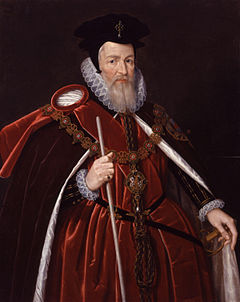 (Born September 13, 1520- Died August 4, 1598)
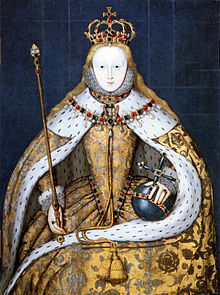 (Born September 7, 1533- Died March 24, 1603)
 Elizabeth I was perhaps the most influential monarch in English history. There are episodes in her life that became legendary. From her tumultuous childhood to her reign where everyone either wanted her to marry or put someone else on the throne, Elizabeth’s life was hardly easy. Even though much is known about her public life as queen, we really do not know a lot about her private life. In Alison Weir’s book, “The Life of Elizabeth I”, the gap between the public Elizabeth and the private Elizabeth is bridged in order to give a more complete biography of this fascinating English queen.
 Adventures of a Tudor Nerd