
 One of the greatest threats to England during the reign of Elizabeth I was the Spanish Armada, under the orders of King Philip II of Spain. In the year 1587, the Spanish ships were spotted off the coast of Devon. Fear grips the country, but one woman is up to the task of keeping her beloved Dartington Hall and its inhabitants from harm. Roberda Chapernowne knows what it means to fight for those she loves and is willing to do it again while her husband, Gawen, is away in Ireland fighting for the Queen after he almost divorced Roberda. Roberda’s life turns upside down when Gawen returns home. Can they rekindle their relationship, or will they fall into despair and ruin? Rosemary Griggs concludes Roberda and Gawen Chapernowne’s stories in her latest novel, “Mistress of Dartington Hall.”
I would like to thank Troubador Publishing and Net Galley for sending me a copy of this novel. I have enjoyed Griggs’ previous novels, so when I saw that she had another novel coming out to end Roberda Chapernowne’s story, I knew I had to read it to see how Roberda’s story ended.
We are thrust straight into the action with this novel. It’s 1587, and rumors of Spanish ships have been spotted off the English coast. Fear grips the inhabitants of Dartington Hall, but the mistress of the house, Roberda Chapernowne, is ready to take control of the situation. She has been in charge for the last three years, following her husband, Gawen, who left her and his family to fight in Ireland for Queen Elizabeth I. Now, Gawen has returned home, which makes things extremely awkward as Gawen tried to divorce Roberda. Now, he is back and wants to reconcile their relationship, but Roberda’s faithful maid Clotilde, who has stood by her side every step of the way, is hesitant.
Gawen and Roberda reconcile while raising their children while dealing with the threat of a Spanish invasion. Unfortunately, their brief return to normalcy is dashed when Gawen is injured while hunting and dies, leaving Roberda to take care of the children and the estate. But being a widow who has mostly daughters and only one son is difficult. We see how Roberda deals with her children’s inheritances, her family in France, and a budding romance for Roberda.
I found this an enjoyable conclusion to Roberda Chapernowne’s story. I liked how this book series and this novel in particular focused on lesser-known figures in the Tudor age, instead of the typical royals. If you are a fan of the previous novels in this series, I recommend you read “Mistress of Dartington Hall” by Rosemary Griggs.
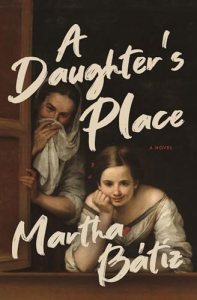 Miguel de Cervantes, the author of Don Quixote, lived quite an interesting life. He was a poet, soldier, war hero, prisoner, husband, brother, uncle, father, and author. His writing might portray a man of honor and dignity, but his home life was messy. You see, Miguel was married, but his daughter was not the daughter of his wife, Catalina de Salazar. His daughter, Isabel, was illegitimate, and when her mother died, Miguel decided the best possible solution was to invite Isabel to live with his sisters and his niece. What’s the worst that could happen? Martha Batiz explores the women’s lives connected to Miguel de Cervantes in her debut novel, “A Daughter’s Place.”
 Adventures of a Tudor Nerd