
 There’s nothing like a quest to keep a man going, even on the brink of death, but in the case of Uhtred of Bebbanburg, he has several quests. His main goal is to reclaim his birthright, Bebbanburg, but he also wants to help fulfill Alfred’s dream of uniting the kingdoms to create England. However, life can present even more challenges, and Uhtred knows this all too well. Uhtred not only has to save a royal heir and his daughter, but he also must find the sword that wounded him and place a woman on a throne to rule in a time when women were seen rather than heard. It’s a lot to do, but if anyone is up to the task, it is Uhtred of Bebbanburg. The question is, will he survive? Bernard Cornwell brings us another action-packed novel full of adventures in book 8 of the Saxon Stories series, “The Empty Throne.”
Cornwell begins with Uhtred, the young Uhtred, who is serving Lady Aethelflaed as she fights against the Danes. Their enemies believe the elder Uhtred is dead, but he is far from it. Unfortunately, Uhtred the elder was injured during his fight with Cnut, and the injury is causing him pain. But a little pain is not going to stop Uhtred from fulfilling his oaths. He finds out that Lord Aethelhelm is after Aethelstan, the illegitimate son of King Edward, who actually might be legitimate. Aethelstan is staying safe with Uhtred’s daughter Stiorra, but when Uhtred realizes they are in danger, he rushes to their aid. What Uhtred does not realize is that his daughter Stiorra is a pagan and is stronger than he thinks.
Once things are settled with his family, Uhtred receives word that Lady Aethelflaed will be fighting for the throne of Mercia as her husband Aethelred is dying. It’s a risky endeavor, as women did not rule during this time, but Uhtred the Elder comes up with a plan to make sure she becomes Aethelflaed, Lady of the Mercians. Finally, Uhtred must find Cnut’s sword Ice-Spite, and the journey will lead him to Wales, a great battle, and one of Uhtred’s children leaving on their own adventure.
This is so far my favorite book in the series. The fact that we got to see Aethelflaed become the Lady of the Mercians while Uhtred stood by her side. We got to see Uhtred the Younger and Stiorra grow up in this book and start on their own paths. And of course, we get to see Uhtred of Bebbanburg and his men being badasses in battle. Such a fun and thrilling novel, and I can’t wait to see where Cornwell takes this series. If you are a fan of the first seven books in the Saxon Stories series, you will love “The Empty Throne” by Bernard Cornwell.
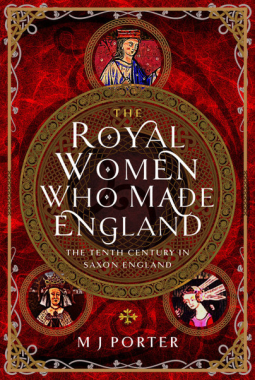 When we think about England, we often think about a unified country with an illustrious history of wars and triumphs. However, England in the 10th century was drastically different. It was barely a country as it was newly formed through politics, but it faced the risk of elimination with a carousel of kings and Viking raiders. Some of the most notable kings of this era include Alfred, Edward the Elder, Athelstan, Edward the Martyr, and Aethelred II, but the most fascinating figures of this time were the women who were hidden in the shadows of the past. M.J. Porter uses the written record from the 10th and 11th centuries to tell the tales of these remarkable women in her book, “The Royal Women Who Made England: The Tenth Century in Saxon England.”
 Adventures of a Tudor Nerd