Book Review: “Marguerite: Hell Hath No Fury” by Judith Arnopp

I would like to thank The Coffee Pot Book Club and Judith Arnopp for sending me a copy of this novel. I have enjoyed her novels about Margaret Beaufort, so when I heard that she was writing a novel about Margaret of Anjou, I was intrigued to see what she could add to her story.

Arnopp begins with Marguerite on the verge of leaving her beloved France to become the new Queen of England. She is to be the bride of the son of King Henry V, King Henry VI. She imagines that her new husband will be similar to his father, a warrior, and that Marguerite will be able to stop the Hundred Years’ War between France and England. Instead, she is married to Henry VI, a man who is extremely devout to his faith, and lives in an England that hates Marguerite. It’s not the picture-perfect situation, but Marguerite tries to make the best of it, including falling in love not only with her husband but also with Somerset and Exeter, men loyal to her husband.

In time, Marguerite does indeed become a mother to Prince Edward, the Lancastrian heir, but it is then that her life truly begins to fall apart. A few months before, King Henry VI fell ill and remained that way for the rest of his life. Marguerite tried to become the Protector of the Realm, but the position went to Richard, Duke of York. Rivalries would turn deadly, and the Lancastrians would face the Yorkists on the battlefield. With the king incapacitated, Marguerite must be a mother, wife, queen, and general to make sure that the Lancastrian cause survives and her family can live to fight for the crown that is rightfully theirs.

This was a very good novel about a woman who was trying to keep her family and her country together while finding love. Arnopp does a great job exploring what life must have been like for Marguerite in a turbulent time. If you want a novel that explores what life was like for the Lancastrian queen during the Wars of the Roses, I recommend you read “Marguerite: Hell Hath No Fury” by Judith Arnopp. 

Blurb: 

Marguerite: Queen of England 

From the moment Henry VI’s new queen, Marguerite of Anjou, sets foot on English soil, she is despised by the English as a foreigner and blamed for the failures of the Hundred Years’ War in France. 

 Her enemies impede her role as the king’s consort, and when Henry sinks into apparent madness, her bid to become regent is rejected. Marguerite must fight, not only for her position but to maintain Henry’s possession of the crown.  

The ambitious Duke, Richard of York, seizes control of the country, thrusting Marguerite aside and inflating the mutual hatred between the houses of York and Lancaster. But the queen refuses to relinquish power and fights determinedly for the rights of her son, Edward of Lancaster. 

The long and bitter civil conflict, which come to be known as the War of the Roses, commences. 

Buy Link: 

Universal Buy Link: https://mybook.to/mhhnf  

This title is available to read on #KindleUnlimited. 

Author Bio

A lifelong history enthusiast and avid reader, Judith holds a BA in English / Creative Writing and a Master’s in Medieval Studies. She lives on the coast of West Wales, where she writes both fiction and non-fiction. She is best known for her novels set in the Medieval and Tudor period, focusing on the perspective of historical women, but recently she has written a trilogy from the perspective of Henry VIII himself. 

Judith is also a founder member of a re-enactment group called The Fyne Companye of Cambria, which is where and why she began to experiment with sewing historical garments. She now makes clothes and accessories both for the group and others. She is not a professionally trained sewer but, through trial, error, and determination, has learned how to make authentic-looking, if not strictly historically accurate, clothing. A non-fiction book about Tudor clothing, How to Dress like a Tudor, was published in 2023 by Pen and Sword. 

She runs a small seaside holiday let in Aberporth and when she has time for fun, likes to garden and restore antique doll’s houses. You can find her on most social media platforms. 

Her novels include: 

A Song of Sixpence: The Story of Elizabeth of York 

The Beaufort Chronicle: the life of Lady Margaret Beaufort (three-book series) 

The Henrician Chronicle: comprising: 

A Matter of Conscience: Henry VIII, the Aragon Years (Book One of The Henrician Chronicle) 

A Matter of Faith: Henry VIII, the Days of the Phoenix (Book Two of The Henrician Chronicle) 

A Matter of Time: Henry VIII, the Dying of the Light (Book Three of The Henrician Chronicle) 

The Kiss of the Concubine: A Story of Anne Boleyn 

The Winchester Goose: at the court of Henry VIII 

Intractable Heart: The Story of Katheryn Parr 

Sisters of Arden: on the Pilgrimage of Grace 

The Heretic Wind: The Life of Mary Tudor, Queen of England 

Peaceweaver 

The Forest Dwellers 

The Song of Heledd 

The Book of Thornhold 

A Daughter of Warwick: The Story of Anne Neville, Queen of Richard III 

Marguerite: Hell Hath no Fury! 

Author Links

Website: http://www.judithmarnopp.com/ 

Blog: http://www.juditharnoppnovelist.blogspot.co.uk/  

Twitter / X: https://twitter.com/JudithArnopp  

Facebook: https://www.facebook.com/thetudorworldofjuditharnopp  

Instagram: https://www.instagram.com/tudor_juditharnopp/  

Threads: https://www.threads.net/@tudor_juditharnopp  

Bluesky: https://bsky.app/profile/jarnopp.bsky.social  

Pinterest: https://www.pinterest.co.uk/jarnopp/  

Book Bub: https://www.bookbub.com/profile/judith-arnopp  

Amazon Author Page: http://author.to/juditharnoppbooks  

Goodreads: https://www.goodreads.com/author/show/4088659.Judith_Arnopp  

Book Review: “A Tapestry of Treason” by Anne O’Brien

The medieval world could be a treacherous place to live in, especially when it comes to life in the medieval court. There was so much backstabbing and men reaching for titles and crowns that were not given to them. Take, for example, the House of York. Now, we will assume that their desire for the throne truly came to fruition during the period known as the Wars of the Roses in the 15th century. However, the sons and the daughter of Edmund of Langley and Isabella of Castile were fiercely loyal to those they served and were ruthless to those who they deemed as their enemies. This is the world that Constance of York, Lady Despenser, is raised in, but when her world is turned upside down, will she choose to stay on the sideline, or will she scheme with her family and fight for what they believe is right? Constance’s story is woven together in Anne O’Brien’s novel, “A Tapestry of Treason.”
I did have Anne on my blog with a guest post for her novel, “The Queen’s Rival,” and read it, which was a lot of fun, so I decided that I wanted to read more of her novels. I didn’t know a lot about Constance of York before this book, so I was excited to see she would tell Constance’s story.

We begin our tale in 1399 when Richard II sits on the throne, and the House of York is riding high. Constance of York is married to Thomas Lord Despenser, and her family, led by her father Edmund Langley, are sitting in good favor of their cousin, the king. However, things do not stay the same for long as Henry Bolingbroke comes back from exile to take back his Lancastrian titles and lands, but he ends up taking the throne as Henry IV and imprisoning Richard II. Well, Constance and her family simply cannot have an usurper take the throne from their cousin. So, a plan is hatched with Constance’s husband, Thomas, at the center to try and free Richard II from his captivity. To say this failed massively would be an understatement, as it led to the execution of Thomas Lord Despenser. 

As a widow, Constance hopes to live a normal life, especially after she falls in love with Edmund Holland, Earl of Kent. He wishes to marry Constance, but her family gets in the way of this love match. Constance is asked to help with a scheme to put one of the Mortimer boys on the throne and overthrow King Henry IV, but to do so, Constance must free the boys from their captivity. Constance agreed, and I wanted to scream at her. She throws away her chance at happiness for a plot that was easily foiled, and Constance ends up imprisoned herself. She loses the one real chance at marrying the man she truly loves as he marries another, and to top it all off, she ends up pregnant with his child. 

While Constance of York was not a main character that I particularly enjoyed, O’Brien’s writing style is engaging, and it shows how tumultuous this period was for those closest to the throne. Overall, I enjoyed this novel and I am looking forward to reading more novels by Anne O’Brien. If you are like me and want to read a novel about a time in medieval England that’s not discussed much, I would suggest you read, “A Tapestry of Treason,” by Anne O’Brien.

Guest Post: “The Percies and the Battle of Shrewsbury” by Mercedes Rochelle

I am pleased to welcome Mercedes Rochelle back to my blog to share an article about the Percy family and the Battle of Shrewsbury as part of the blog tour for her novels The Usurper King and The Accursed King. I want to thank Mercedes Rochelle and The Coffee Pot Book Club for allowing me to be part of this blog tour.
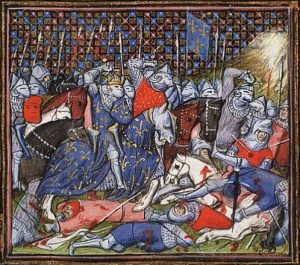
The Percies were such a powerful force in the North they practically acted like rulers in their own kingdom. For much of Richard II’s reign and the beginning of Henry IV’s, Earl Henry Percy and his son, Sir Henry (nicknamed Hotspur) alternated between the wardenships of the East Marches and the West Marches toward Scotland. They were experienced in dealing with the tempestuous Scots, and their retainers were fiercely loyal. When Henry IV returned from exile and began his campaign that led to the throne, the Percies were his staunchest supporters; they provided a large portion of his army. Henry Percy was directly responsible for persuading King Richard to turn himself over to Henry Bolingbroke—the beginning of the end of Richard’s fall. 

Caption: Froissart Chronicles by Virgil Master, Source: Wikimedia 

Naturally, this was not done out of sheer kindness. Henry Percy expected to be amply rewarded for his services, and at the beginning he was. But the king was uncomfortable about the potential threat of this overweening earl. He soon began to promote his brother-in-law, Ralph Neville the Earl of Westmorland as a counterbalance, chipping away at Percy’s holdings and jurisdictions. Additionally, the Percies felt that they were not being reimbursed properly for their expenses; by 1403 they claimed that the king owed them £20,000—over £12,000,000 in today’s money. But even with all this going on, it’s likely that the earl may have contained his discontent, except for the belligerence of his impetuous son.  

One possible catalyst was Hotspur’s refusal to turn over his hostages taken at the Battle of Homildon Hill. This battle was a huge win for the Percies in 1402, where so many leaders were taken—including the Earl of Douglas—that it left a political vacuum in Scotland for many years to come. Once he learned of this windfall, King Henry insisted that the Percies turn over their hostages to the crown. It was his right as king—even if it was against the code of chivalry— though his highhanded demand was probably not the wisest choice, considering the circumstances. There were many possible reasons he did so. He was desperately short of funds—as usual. It’s possible he may have wanted to retain the prisoners as a means of ensuring Scottish submission. Earl Henry agreed to turn over his hostages, but Hotspur absolutely refused to surrender Archibald Douglas, letting his father take the king’s abuse. One can only imagine that all was not well in the Percy household, either. 

There was more at stake. The king had just returned from a humiliating fiasco in Wales, where he had campaigned in response to the English defeat at Pilleth, where Edmund Mortimer was captured by the Welsh. Mortimer was the uncle of the eleven-year-old Earl of March, considered by many the heir-presumptive to the throne (and in Henry’s custody). Edmund was also the brother of Hotspur’s wife. By the time Henry demanded the Scottish hostages, it was commonly believed that the king had no intention of ransoming Mortimer; after all, he was safely out of the way and couldn’t champion his nephew’s cause. This rankled with Hotspur, and it is possible that he thought to use Douglas’s ransom money to pay for Mortimer’s release himself. 

Hotspur finally rode to London in response to the king’s demands, but he went without Douglas. Needless to say, this immediately provoked an argument. When Hotspur insisted that he should be able to ransom his brother-in-law, Henry refused, saying he did not want money going out of the country to help his enemies. Hotspur rebutted with, “Shall a man expose himself to danger for your sake and you refuse to help him in his captivity?” Henry replied that Mortimer was a traitor and willingly yielded himself to the Welsh. “And you are a traitor!” the king retorted, apparently in reference to an earlier occasion when Hotspur chose to negotiate with Owain Glyndwr rather than arrest him. Allegedly the king struck Percy on the cheek and drew his dagger. Of course, attacking the king was treason and Hotspur withdrew, shouting “Not here, but in the field!” All of this may be apocryphal, but it is certainly powerful stuff. 

The whole question of Mortimer’s ransom became moot when he decided to marry the daughter of Glyndwr and openly declare his change of loyalties on 13 December 1402. No one knows whether Hotspur’s tempestuous interview with King Henry happened before or after this event; regardless, a bare minimum of eight months passed before Shrewsbury. Were they planning a revolt all this time? It is likely that early in 1403 one or both of the Percies were in communication with the Welsh. Owain Glyndwr was approaching the apex of his power, and a possible alliance between him, Mortimer, and the Percies could well have been brewing. It would come to fruition later on as the infamous Tripartite Indenture (splitting England’s rule between them), but by then Hotspur was long dead. 

Caption: BnF MS Franc 81 fol. 283R Henry IV and Thomas Percy at Shrewsbury from Jean de Wavrin- Creative commons license 

No one has been able to satisfactorily explain just why the Percies revolted against Henry IV. Most of the evidence points to their self-aggrandizement. And looking at the three years following his coronation, it became evident that King Henry was not willing to serve as their puppet, nor was he willing to enhance their power at the expense of the crown. The Percies’ ambitions were thwarted by the king’s perceived ingratitude, and the consensus of modern historians is that they hoped to replace him with someone more easily manipulated. 

There was one more Percy involved in all this: Thomas, younger brother of Earl Henry and uncle to Hotspur. He was probably the most able—if the least flamboyant—member of the Percy clan in this period. From soldier to commander, Admiral of England to Ambassador, Captain of Calais, Justiciary of South Wales, he made it all the way to Steward of the Royal Household. And that wasn’t all. He was also Earl of Worcester, which almost made him an equal to his brother, the great Earl of Northumberland.  

His involvement in the Shrewsbury uprising was puzzling. He had much to lose and nothing to gain. Shakespeare notwithstanding, I don’t really think Thomas was the motivating force behind the rebellion that led to the Battle of Shrewsbury. It’s true that his fortunes were waning; the king had recently replaced him as Lieutenant of Wales with the sixteen-year-old Prince Henry. Whether the Percies won or lost the battle, there’s a better-than-even chance that he would rise and fall along with them, whether he participated in the rebellion or not. Was that enough to push him over the edge? I suspect that his affection for Hotspur had a lot to do with it, and in the end, it’s likely he couldn’t conceive of fighting against his own kin. Poor Thomas lost his head the day after the battle, paying a high price for his loyalty. 

THE USURPER KING by Mercedes Rochelle 

Book 4 of The Plantagenet Legacy 

Blurb: 

From Outlaw to Usurper, Henry Bolingbroke fought one rebellion after another. First, he led his own uprising. Then he captured a forsaken king. Henry had no intention of taking the crown for himself; it was given to him by popular acclaim. Alas, it didn’t take long to realize that having the kingship was much less rewarding than striving for it. Only three months after his coronation, Henry IV had to face a rebellion led by Richard’s disgruntled favorites. Repressive measures led to more discontent. His own supporters turned against him, demanding more than he could give. The haughty Percies precipitated the Battle of Shrewsbury which nearly cost him the throne—and his life. 

To make matters worse, even after Richard II’s funeral, the deposed monarch was rumored to be in Scotland, planning his return. The king just wouldn’t stay down and malcontents wanted him back. 

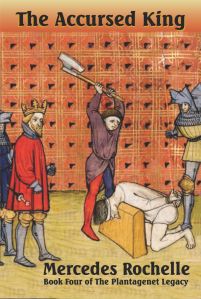
THE ACCURSED KING by Mercedes Rochelle 
Blurb: 

What happens when a king loses his prowess? 

The day Henry IV could finally declare he had vanquished his enemies, he threw it all away with an infamous deed. No English king had executed an archbishop before. And divine judgment was quick to follow. Many thought he was struck with leprosy—God’s greatest punishment for sinners. From that point on, Henry’s health was cursed and he fought doggedly on as his body continued to betray him—reducing this once great warrior to an invalid. 

Fortunately for England, his heir was ready and eager to take over. But Henry wasn’t willing to relinquish what he had worked so hard to preserve. No one was going to take away his royal prerogative—not even Prince Hal. But Henry didn’t count on Hal’s dauntless nature, which threatened to tear the royal family apart.

Buy Links: 

Universal Buy Links: 

The Usurper King: https://books2read.com/u/3nkRJ9  

The Accursed King: https://books2read.com/u/b5KpnG  

The Plantagenet Legacy Series Links: 

Amazon US Series Link 

Amazon UK Series Link 

All titles in the series are available to read on #KindleUnlimited. 

Author Bio

Mercedes Rochelle is an ardent lover of medieval history and has channeled this interest into fiction writing. She believes that good Historical Fiction, or Faction as it’s coming to be known, is an excellent way to introduce the subject to curious readers. 

Her first four books cover eleventh-century Britain and events surrounding the Norman Conquest of England. Her new project is called “The Plantagenet Legacy” taking us through the reigns of the last true Plantagenet King, Richard II, and his successors, Henry IV, Henry V, and Henry VI. She also writes a blog: HistoricalBritainBlog.com to explore the history behind the story.  

Born in St. Louis, MO, she received by BA in Literature at the University of Missouri St.Louis in 1979 then moved to New York in 1982 while in her mid-20s to “see the world”. The search hasn’t ended! 

Today she lives in Sergeantsville, NJ with her husband in a log home they had built themselves. 

Author Links

Website: https://mercedesrochelle.com/   

Twitter: https://x.com/authorrochelle  

Facebook: https://www.facebook.com/mercedesrochelle.net  

Book Bub:  https://www.bookbub.com/authors/mercedes-rochelle  

Amazon Author Page:  https://www.amazon.com/stores/Mercedes-Rochelle/author/B001KMG5P6  

Goodreads: https://www.goodreads.com/author/show/1696491.Mercedes_Rochelle

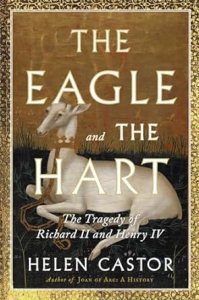
Book Review: “The Eagle and the Hart: The Tragedy of Richard II and Henry IV” by Helen Castor

The story of the Plantagenets is filled with high triumphs and devastating tragedies. It is a story of families torn apart for a crown and the desire to either rule with an iron fist for the glory of England or live a life of luxury at the expense of their citizens. The story explored in this particular book is the tale of two cousins born months apart, Richard of Bordeaux and Henry Bolingbroke. Richard and Henry were not born to become King of England, but Fortune’s Wheel had a different plan for the cousins. So how did these cousins become kings and how did their tale turn to tragedy not only for their relationship but for all of England? Helen Castor tells the tale of these two Plantagenet kings in her latest book, “The Eagle and the Hart: The Tragedy of Richard II and Henry IV.”
I want to thank Avid Reader Press and Net Galley for sending me a copy of this book. I have seen this book on social media and ever since it was announced, I knew I wanted to read it. I have enjoyed Castor’s posts online as well as her documentary on the She-Wolves, based on her book of the same name, so when I heard about this one, it was an intriguing premise and so I jumped at the chance to read it. 

The fact that Richard of Bordeaux and Henry Bolingbroke became King Richard II and King Henry IV respectively is quite the story. Richard was the son of Edward The Black Prince and Henry was the son of John of Gaunt; both of their fathers were sons of Edward III and so the idea was that one of his sons would inherit the throne. However, Edward III had different plans after the death of Edward The Black Prince. It was announced that the young Richard of Bordeaux would be crowned King of England. This should have been the first red flag for England because it means that a Regency council must be formed. There are fights for power and fights over finances that culminate in the Peasants’ Revolt. Richard II doesn’t have much desire to fight for his country on the battlefield against the French or the Scottish, but he does care about favoring his favorites, even if it means turning the government against him. One such group, the Appellant Lords, will prove an extremely dangerous challenge for Richard II, and it will include his cousin Henry Bolingbroke. While many of the Appellant Lords will end up dead, Henry Bolingbroke is merely exiled, which in the long run, was not the best decision for Richard II. 

In 1400, John of Gaunt died and the title as well as the lands of the Duke of Lancaster were turned over to Richard II while Henry Bolingbroke was in exile in France. This marks the turning point for Henry as he decides to invade England while Richard is away dealing with problems in Ireland. It will end with Richard’s abdication and the coronation of Henry Bolingbroke as King Henry IV. However, things are not all sunshine and rainbows for Henry IV, the 1st Lancastrian King of England, as he finds out that it is not easy being a king. 

I must applaud Castor for writing a dual biography that is both balanced and utterly brilliant. It did take me a while to read this book because I was taking so many notes while I was reading and it gave me a better understanding of this tumultuous time. I would suggest that if you do read this book, take your time so that you can understand the complex nature of the conflict between these two cousins. If you are a fan of the Plantagenet dynasty, I highly recommend you read, “The Eagle and the Hart: The Tragedy of Richard II and Henry IV” by Helen Castor.

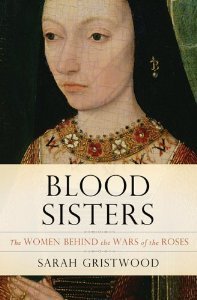
Book Review: “Blood Sisters: The Women Behind the Wars of the Roses” by Sarah Gristwood

Blood SistersWhen it comes to studying wars from the past, we often focus on the men who fought during the battles the strategies that were implemented to win and the plans that backfired spectacularly. So frequently in the study of wars, we forget about the women left behind, but in fact, they had bigger roles to play than sitting on the sidelines. For example, the royal women who lived in England during the conflict known as the Wars of the Roses played an essential role in how the wars concluded. These women are slowly coming into the spotlight in biographies and historical fiction novels, but it is rare to read a book about the Wars of the Roses where the central figures are the women, until now. Sarah Gristwood has taken seven women from this age and weaved their stories into her book, “Blood Sisters: The Women Behind the Wars of the Roses.”

I have been interested in the Wars of the Roses and the women who lived during that period for years. I heard about this book when I started studying this period, but I have never had a chance to read it, until now.

There were so many strong women from this period, but Gristwood narrowed her choices down to seven remarkable women to focus on; Margaret of Anjou, Margaret Beaufort, Elizabeth Woodville, Elizabeth of York, Cecily Neville, Anne Neville, and Margaret of Burgundy. By choosing these women, Gristwood is presenting a story of a conflict that spanned multiple generations, both York and Lancaster, and showing how both the English and Burgundian nobility dealt with the changes that were happening when the Tudors took control.

Gristwood begins with the marriage of Margaret of Anjou and Henry VI. Though she was French by birth, her loyalty was always going to be with her husband’s Lancasterian family. That meant she would eventually become enemies with the proud Cecily Neville, the wife of Richard Duke of York and mother of King Edward IV and King Richard III, but Margaret was allied with Margaret Beaufort, the tenacious mother of King Henry VII, the founder of the Tudor dynasty. The conflict passed onto the daughters of these women, like Anne Neville and Margaret Burgundy, as well as the daughter of Jacquetta of Luxembourg, Elizabeth Woodville. These women would continue the conflict and help seal the fate of the Lancastrians, see the rise and fall of the Yorkists, and the beginning of the Tudor dynasty through the marriage of Elizabeth of York, the daughter of Elizabeth Woodville, and Henry Tudor. This book spans decades and includes events like the disappearance of the Princes in the Tower, well into the Tudor dynasty such as the pretenders, the marriage of Prince Arthur and Catherine of Aragon, the death of Prince Arthur, and the rise of Henry VIII.

This was a delightful look into the Wars of the Roses through the eyes of the women who lived through this period. They were mothers, daughters, wives, queens, fighters, and survivors. They showed that without their tenacity and determination to fight for what they believed was right and for their families. If you are a fan of the women who defined the Wars of the Roses, I highly suggest you read, “Blood Sisters: The Women Behind the Wars of the Roses” by Sarah Gristwood.

Book Review: “On This Day in the Wars of the Roses” by Dan Moorhouse

On this day in the Wars of the RosesThe Wars of the Roses, a conflict that engulfed English politics for over 30 years and heralded a new dynasty, the Tudors. While there were battles and political intrigue galore during this period of unrest, there were also births, marriages, and deaths of powerful figures. Each day during the Wars of the Roses holds significance to nobles and commoners alike. Dan Moorhouse has compiled his years of research into this conflict into his book, “On This Day in the Wars of the Roses.”

I would like to thank Dan Moorhouse for sending me a copy of this book. I have been studying the Wars of the Roses for a few years now and so when I hear about books on the subject, I jump at the chance to read them to see if they bring any new revelations to the period.

Like many other books that focus on historical events of the past, Moorhouse highlights each date, starting from January and ending in December. However, unlike other books, the dates do not go in chronological order by year the entries jump from decade to decade, telling a more comprehensive story of the conflict.

Throughout this book, Moorhouse explores major battles, the disappearances of the Princes in the Tower, the madness of King Henry VI, and plots and executions of nobles and commoners alike. We also get to see how commoners got along during these tumultuous times through advancements in trade, alchemy, military tactics, and marriages. By focusing on the stories of those who were not nobility, Moorhouse is showing that even though this was a conflict for the crown, normal life moved on, as it always does.

Moorhouse is very knowledgeable about the period and can share all that he knows succinctly. He is also able to keep a neutral tone, neither siding with the Lancastrians nor the Yorkists, for the historical facts to speak for themselves. I found myself enjoying this book and the new stories from this conflict that I never knew. If you want a different approach to the Wars of the Roses, I recommend you read, “On This Day in The Wars of the Roses” by Dan Moorhouse.

Book Review: “The Queen’s Rival” by Anne O’Brien

the queen's rivalEngland is in the midst of chaos in a conflict known as the Wars of the Roses. The Yorkist cause is formulating a case to take the throne’s power from Henry VI and the Lancastrians and replace the king with Richard, Duke of York, whose claim to the throne is a bit stronger. Caught in the middle of the Wars of the Roses was one strong and courageous woman who would fight tooth and nail for her family and the Yorkist cause. Her name was Cecily Neville, Duchess of York, and her story is masterfully told in Anne O’Brien’s novel, “The Queen’s Rival.”

A few years ago, I hosted Anne O’Brien to discuss this book as part of a blog tour for The Coffee Pot Book Club. I will admit that this was the first time I had read a novel by Anne O’Brien, but I had heard amazing things about her writing style, so when I saw this novel at a bookstore, it was an instant buy for me.

We begin in the year 1459 and the house of York is facing a disaster. The Yorkists have lost the Battle of Ludford Bridge and must now separate and go into exile. Cecily can only watch as the Lancastrians lay siege to her home, forcing her and her young children to be imprisoned at Tonbridge Castle. This moment might have broken Cecily’s spirit, but Cecily is a proud Neville, willing to fight until the bitter end to see her family safe and secure on the throne of England. Along the way, she must endure heartache (such as the death of her husband Richard Duke of York) and moments of betrayal, such as George, Duke of Clarence, and Richard, Earl of Warwick. Cecily’s name and reputation are dragged through the mud on numerous occasions. However, she gets to witness moments of glory, the crowning of her sons Edward IV and Richard III, and the birth of her grandchildren, to create the House of York.

My favorite aspect of this novel is that the chapters are not written like traditional chapters. The chapters are a series of letters to and from Cecily to her family members or those she considers her enemies to convince them to give her and her family leniency. Cecily’s main correspondences are with her sisters, Anne Duchess of Buckingham, and Katherine Dowager Duchess of Norfolk. One of my favorite characters is the author of England’s Chronicle, who reminds me of a gossip columnist, ready to spill all the secrets and rumors to anyone who will hear it.

I had such a fun time reading this novel. Even though I knew the events of the Wars of the Roses and what would happen, I found it refreshing to read it as a series of letters so that you can sense how the historical figure might have felt during that moment. This may have been my first novel by Anne O’Brien, but it definitely will not be my last. If you want a thrilling novel about the Wars of the Roses from the perspective of Cecily Neville, I highly suggest you read, “The Queen’s Rival” by Anne O’Brien.

Book Review: “Red Rose, White Rose” by Joanna Hickson

20892659One woman is torn between the loyalty to her birth family and the loyalty to her family by marriage. Now, this may sound like the story of Elizabeth of York, but alas, it is not. This story does take place in the fifteenth century, but it is the story of Elizabeth of York’s grandmother, “The Rose of Raby,” Cecily Neville. Born to the proud Neville family, who were proud Lancastrians, Cecily’s father, Ralph Neville, the Earl of Westmorland, arranged a marriage for his daughter to the young and ambitious Richard, Duke of York. She is now one of the most powerful women in England, but with power comes risks of ruin as Cecily has a secret that could be disastrous. War looms between the Red Roses of Lancaster and the White Roses of York, one that will transform English history forever, with Cecily caught in the middle. Her story is told in Joanna Hickson’s novel, “Red Rose, White Rose.”

Hickson begins her book by showing the interaction between Cecily and her half-brother, Cuthbert or Cuddy. Cecily is engaged to Richard Duke of York when she is kidnapped but is later rescued by John Neville, a distant cousin. In John Neville’s care, Cecily Neville’s life takes an unexpected turn, and a secret relationship is formed between the two. Although I know this was a fictitious relationship invented for this book, it still did not sit well with me. I have always thought Cecily was loyal and devoted to her husband and family (even though there were rumors of her and a knight having an affair), so this did not fit my view of Cecily Neville.

The bulk of this novel explores how Cecily and Richard were able to navigate the complex world of 15th-century English politics while their family grew. We also see Cuthbert fall in love and have his own family while he stays by Cecily’s side during such a tumultuous time.

This novel did not spend much time on the Wars of Roses. We get to see the origins of the major battles and how Edward became king, but we don’t see Cecily trying to hold her family together. I wanted to see her interactions with her sons Edward, George, and Richard during their feuding years. I wanted to see her reactions to Edward’s marriage to Elizabeth Woodville and her interactions with her daughter-in-law. In short, I wanted a longer story that focused more on the Wars of the Roses and how Cecily Neville dealt with the changes in her family dynamic due to the throne’s power.

Overall, this novel was enjoyable and well-written. Some elements were included that I disagreed with their concept. The story was engaging and gave Hickson’s audience a sneak-peek into Cecily Neville, Richard Duke of York, and their children. If you want a solid novel about Cecily Neville, I recommend reading “Red Rose, White Rose” by Joanna Hickson.

Book Review: “The Last White Rose: A Novel of Elizabeth of York” by Alison Weir

58735042During medieval wars, one’s fate is often determined by the spin of the Wheel of Fortune, even for those who did not fight a single battle. One could be living a life of luxury, stability reigning supreme, and is destined to marry a foreign king or prince, but when the wheel begins to spin, all seems lost, and the things that once were as good as guaranteed fall by the wayside. This description could fit any number of stories from the past. Still, the one highlighted in this particular novel is the story of the eldest daughter of King Edward IV and Elizabeth Woodville and the first Tudor queen. In the first book of her latest book series, “The Last White Rose: A Novel of Elizabeth of York,” Alison Weir shows how one woman was able to ride the highs and lows of life to secure her family’s legacy and transform English history forever.

I want to thank Penguin Random House- Ballantine Books and NetGalley for sending me a copy of this novel. I am always thrilled when a new Alison Weir book is announced, whether fiction or nonfiction. I thoroughly enjoyed the Six Tudor Queens series, so when I heard that there would be a new book series with the story of Elizabeth of York being the first novel, I knew I wanted to read it. Of course, I had read her biography of Elizabeth of York, so I wanted to see how her research would translate into a historical fiction novel.

Elizabeth of York was born and raised to be a queen. As the eldest daughter of Edward IV and Elizabeth Woodville, it was her destiny to be married to a king or a prince to strengthen England through a foreign alliance. However, her life took a drastic turn when her father tragically died. Her brothers disappeared when they were in the Tower of London awaiting the coronation of Edward V, which never occurred. Richard III, Elizabeth’s uncle, became king, which forced Elizabeth Woodville to seek sanctuary with her daughters. A daring plan was crafted to unite the houses of York and Lancaster through marriage; Elizabeth of York was to marry a young man in exile, Henry Tudor.

The marriage created the Tudor dynasty, but that does not mean Elizabeth and Henry’s married life was full of sunshine and roses. The road to securing their dynasty was full of heartache and plenty of pretenders. The love between Elizabeth and Henry and Elizabeth’s love for her family allowed the dynasty to survive the turbulent times.

I loved the relationship that Weir was able to craft between Elizabeth, Henry, and her family. However, there were elements of the story that I disagreed with; they were minor, like her portrayal of Elizabeth’s relationship with Richard III and the idea that Arthur had been very ill since his birth. These elements did not take away from the joy I had reading this novel.

Overall, I found the first novel of the Tudor Roses series engaging and a delight to read. Alison Weir has brought the tragic yet triumphant story of the first Tudor queen to life through excellent prose and captivating details. If you are a fan of Alison Weir and her historical fiction novels, or just a fan of Tudor novels in general, you will find “The Last White Rose: A Novel of Elizabeth of York” an enchanting escape into the past.

Book Review: “The King’s Mother: Book Three of The Beaufort Chronicle” by Judith Arnopp

41wbe9UI8AL._SX309_BO1,204,203,200_A series of wars that engulfed England for over thirty years finally comes to its conclusion. The Plantagenet dynasty is no more and the once outlaw is now the first king of the brand new dynasty, the Tudors. Margaret Beaufort is reunited with her beloved son, Henry Tudor as he is crowned King Henry VII. As Henry faces the numerous challenges of being a father and a king, his mother is right by his side to guide and protect him and his family. In the epic conclusion to her Beaufort Chronicle series, Judith Arnopp explores the transition for Margaret Beaufort in the early years of the Tudor dynasty in, “The King’s Mother”.

Since I have read the previous books in this series, it was only natural that I read “The King’s Mother”. I have thoroughly enjoyed Judith Arnopp’s writing in the past and I wanted to know how she would conclude this ingenious series.

We reunite with Margaret Beaufort and her son Henry as they prepare for the event that she has been dreaming of, his coronation. To unite both the houses of York and Lancaster to ensure peace would prevail, Henry Tudor married Elizabeth of York. Their young family grows with their sons and daughters: Arthur, Margaret, Henry, and Mary. There were other children, but they died very young. Margaret Beaufort watches her grandchildren grow and acts as an advisor to Henry as the Mother of the King.

For the most part, peace and harmony reign throughout the land. However, trouble was never too far off from the comforts of the Tudor court. Pretenders lurch around every corner and rebellions are on the edge of boiling over. Henry tries to navigate the intricate European marriage market to make the best possible matches for his children.

To see these events full of hope and sorrow from the eyes of Margaret Beaufort was a delight. This was all she ever wanted, to see her son happy and alive, but for her to realize that even after the war there would be danger around every corner. Margaret was not a monster mother-in-law to Elizabeth like she is portrayed in other historical fiction novels, yet she is not a saint. Arnopp’s Margaret Beaufort is simply a human mother and grandmother who is just trying to do her best for her family.

I have thoroughly enjoyed Arnopp’s Beaufort Chronicle and this is the perfect conclusion. I have always been a fan of Margaret Beaufort and her life story. This series made me love her story even more. It made Margaret feel like a regular human being instead of the monster that other novels portray her to have been. If you want an insider’s look into the early years of the Tudor dynasty through the eyes of its matriarch, I highly recommend you read The Beaufort Chronicle by Judith Arnopp, especially the third book, “The King’s Mother”.