
 We all know the story of Anne Boleyn. The story of the English noblewoman who caught the eye of King Henry VIII, who decided to divorce his first wife, Katharine of Aragon, to marry Anne. He broke away from Rome and created the Church of England to do it, but marital bliss did not last long, as a few years later, Anne would leave their three-year-old daughter Elizabeth behind when she was executed by Henry over charges of adultery. We know this version of the story, but what if we look at Anne’s story from a continental European perspective? How does her story change when we view her life through a religious lens? Heather R. Darsie hopes to show her audience a different side of Anne Boleyn in her latest book, “‘If Any Person Will Meddle of My Cause’: The Judicial Murder of Anne Boleyn.”
I would like to thank Amberley Publishing for sending me a copy of this book. I have thoroughly enjoyed Darsie’s previous books because she adds depth to the Tudor dynasty by exploring European sources that are not prevalent in other nonfiction books about the Tudors. When I heard that she was writing a book about the fall of Anne Boleyn, I was curious to see what new information her continental sources would provide to Anne’s story.
So, how do you add something new to Anne Boleyn’s story when it is one of the most discussed topics when it comes to studying the Tudors? Darsie explains that her book is not a typical book about Anne Boleyn, as it focuses briefly on Anne’s life and examines the legal, religious, and international contexts surrounding her life. Each chapter of this book begins with part of a poem by Sir Thomas Wyatt, which is a nice touch as he was an admirer of Anne Boleyn. The first part of the book was a bit of an overview of Anne’s life, but Darsie did not go into much depth about Anne’s fall. Instead, she shows the relationships between England and continental Europe with the different political powerhouses. I found the information about the relationship between England and the German princes particularly interesting. It is these relationships that would prove pivotal in Anne’s life, reign, and fall from grace.
It is truly part two where Darsie shines. It is here that she focuses on the religious aspects of Anne’s fall. We all know that Anne was a bit more radical when it came to her religious views, but Darsie takes it a step further. She shows how England was trying to break from Rome centuries before Henry came along. Then, we get to see the religious reformers of England and of Europe who impacted Anne’s religious leanings. There is also an incident in Munster with the Anabaptists that freaked out Henry VIII very badly. Once you put the pieces together that Darsie lays out, it is quite astounding.
As someone who reads a lot about Anne Boleyn, I am always looking for a new approach to her life. This is exactly what I wanted. By the end, I was speechless, and it brought new life to Anne’s fall and ultimate death. If you are a Tudor nerd and want a new angle to Anne Boleyn’s story, I highly recommend you read “‘If Any Person Will Meddle of My Cause’: The Judicial Murder of Anne Boleyn” by Heather R. Darsie.
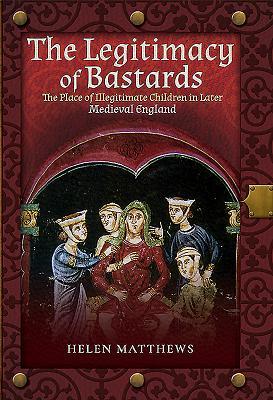 In the medieval world, a person’s lineage was everything. It determined who you could marry, what job you could have, and where you could live. To be considered a legitimate child meant that the world was your oyster, for the most part. It was a bit difficult if you were considered an illegitimate child. We often look at lineage when it comes to royal families, but what about the nobility and the gentry. If you were considered an illegitimate child in the late medieval time period to a family who is part of the nobility or the gentry, what kind of opportunities would be available to you? This question and others are explored in Helen Matthews’ book, “The Legitimacy of Bastards: The Place of Illegitimate Children in Later Medieval England”.
 Adventures of a Tudor Nerd