
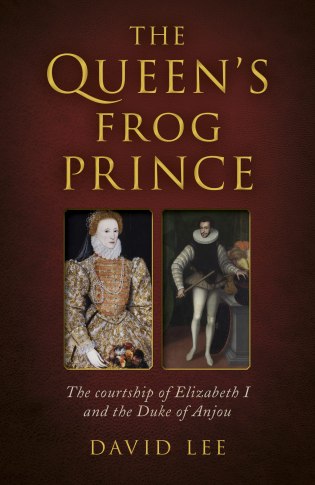
 Romances in the Tudor era are legendary for their effects on English, European, and world history. From international matches to domestic love stories, the Tudors had a way of capturing our attention with whom they married. The one Tudor whose relationships caught everyone’s attention just as much as Henry VIII is his daughter with Anne Boleyn, Elizabeth I. The legendary “Virgin Queen” did have some men who caught her eye and some that she even considered marrying. There was Robert Dudley, but the one who may surprise a lot of people is the French prince, Francis Duke of Anjou. So how did this whirlwind romance begin and why did Elizabeth choose to stay single instead of marrying to secure a strong alliance with France? In his latest book, “The Queen’s Frog Prince: The Courtship of Elizabeth I and the Duke of Anjou,” David Lee explores the heart of this long-forgotten international romance.
I would like to thank Chronos Books for sending me a copy of this book. I am always looking for a new book about the reign of Elizabeth I. I will admit that I was one of those people who did not take her relationship with the Duke of Anjou as a serious infatuation, but when I heard about this title, I wanted to see if I could be proven wrong.
Unlike many books dedicated to the reign of Elizabeth I, Lee begins in 1579, when the relationship between Elizabeth and the Duke of Anjou began. Elizabeth knew that if she was going to marry anyone, it had to be soon or there would be no Tudor heirs to inherit the throne. The top contender for her heart, Robert Dudley, betrayed the queen and married Lettice Knollys behind her back in 1578. The following year, she was presented with an opportunity to marry the younger brother of the King of France, Francis Duke of Anjou.
The bulk of this book examines the correspondence between Elizabeth I and the Duke of Anjou through their letters from 1579 until the end of the relationship in 1581. When we think about Elizabeth I and her international romantic relationships, we often have an image of a stoic queen who wants to keep relationships with other countries cordial even when she rejects their advances. These letters are so heartfelt and present a new side of Elizabeth I which I was not expecting to see, especially not for someone who was not Robert Dudley. There was true passion and love between the queen and her frog prince, but it was not meant to be as religious differences, her age, and the question of Elizabeth’s ability to rule with a man by her side made it impossible for the relationship to continue.
Lee has presented a heartbreaking tale of love and loss between a queen and her frog prince. He has done meticulous research to show a different side of Elizabeth I that I did not know even existed. It begs the question if nothing was standing in her way, would Elizabeth have married the Duke of Anjou and how would that have affected English and European history as a whole?
If you want a book that makes you question the end of Elizabeth I’s reign and her last international romance, I highly recommend you read, “The Queen’s Frog Prince: The Courtship of Elizabeth I and the Duke of Anjou” by David Lee.
 When we think about the more intimate moments in the medieval period of European history, a few misconceptions and myths come to mind, thanks to historical fiction and medieval movies. The idea that girls as young as twelve were married off to much older men was the norm, and there were such things as chastity belts. Everyone was filthy and smelled awful, so they only married in the spring when they would take their annual baths. And the brilliant idea that the wealthiest lords of the village were able to have their way with the bride on her wedding day. The latest book by Kathryn Warner, “Sex and Sexuality in Medieval England,” aims to eliminate these myths to reveal the truth of the intimate lives of those who lived during the medieval period.
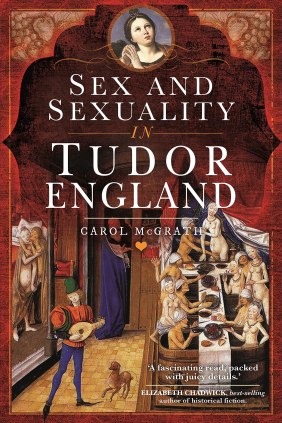 The study of the Tudor dynasty has led us on many different adventures throughout the centuries. We have analyzed this period from numerous angles, from the royals and nobles to the essential lives of those who lived in England during this time. We tend to leave the more intimate moments for historical fiction novels and dramas, but one must wonder what those moments might have been like for those who lived in Tudor England. What were the romantic and the more intimate moments like for the Tudors? In her book, “Sex and Sexuality in Tudor England,” Carol McGrath gives her readers an in-depth look at these private moments.
 When we think about love, we have ideas about how people fall in love through dating and wooing one another. Sweet words and gestures. Flowers and chocolate. Dates at fun venues and romantic dinners. This is a more modern interpretation of romance and love, which was vastly different than the concept of courtly love that was common in royal circles in medieval Europe. What exactly was courtly love, and how did it play a role in the Tudor dynasty? Sarah Gristwood explores this topic in her latest nonfiction book, “The Tudors in Love: The Courtly Code Behind the Last Medieval Dynasty.”
 Action, adventure, drama, heartache, and love are what people crave when they read fictional stories. Yet, these elements are ever-present in the stories from the past. Each one of these topics could be explored in numerous ways when we are discussing history, but an area in history where romance and love were intermingled with politics was Elizabethan England. Queen Elizabeth I was obviously known as the “Virgin Queen” because she chose not to marry, but that did not mean that her subjects were banned from love and marriage. How did Elizabethans view the ideas of love, marriage, and sex? In this book, “Sex, Love, and Marriage in the Elizabethan Age”, R.E. Pritchard sets out to explore what love, marriage, and the intimate moments meant to Elizabethans of every class.
 In life, one of the hardest decisions that we must decide is who to trust. Who can we truly depend on to be by our side when times get rough or when they are going our way. Most of the time, we can rely on those who we put our trust in, but there are extraordinary times when our trust in someone is utterly shattered. Betrayal of one’s trust is like a knife in the back, it can be devastating no matter who is being betrayed. It is not a new concept in human nature to betray others. Whether for money, for power, or lust, betrayal can destroy the lives of everyone involved. Can there be redemption after betrayal? In this anthology of historical fiction tales, twelve authors explore every aspect of betrayal throughout history. This is “Betrayal” by the Historical Fictioneers.
 Adventures of a Tudor Nerd