
Book Review: “The House of Beaufort: The Bastard Line that Captured the Crown” by Nathen Amin

51ygXgS66nL._SX327_BO1,204,203,200_The houses of York, Lancaster, the  Nevilles, the Howards, the Mowbrays, the Percys, and the Tudors are often recognized as the families involved in the Wars of the Roses. However, there was one more house that was just as important as the others; the Beauforts. The Beauforts were the sons and daughters of John of Gaunt, Duke of Lancaster and his mistress Katherine Swynford. They were considered bastards since they were born out of wedlock, yet they were connected to the house of Lancaster and rose to power by their own right. They would help change not only English history but the history of Europe forever. The Beauforts made a huge impact during the Hundred Years War and the Wars of the Roses, yet many people only recognize Margaret Beaufort and Edmund Beaufort 2nd Duke of Somerset. The Beauforts don’t get much attention. Nathen Amin, the founder of The Henry Tudor Society, wanted to tell the story of this remarkable family.  It is in his book “The House of Beaufort: The Bastard Line that Captured the Crown”, that the Beauforts are given the attention that they rightfully deserve.

Nathen Amin explains why he chose to focus on the Beauforts:

The Beauforts are a family often encountered when reading or studying the fifteenth century and the Wars of the Roses, although commonly relegated to supporting roles in the life and times of more prominent figures like Richard, duke of York, Edward IV, and Henry IV, V, and VI. They were always in the background, serving a king, counselling a king, and even fighting for or against a king. …Yet, there were few family units more influential in the governance of England during the period, and none more devoted to defending the Lancasterian dynasty, whether against France in the last vestiges of the Hundred Years War, or against the House of York in a new war of a very different kind. Born as bastards to a mighty prince, the Beauforts were the right-hand men of their royal kinsmen, amassing considerable authority on the national and continental stage. From uncertain beginnings, the Beauforts became earls, dukes and cardinals, and in time kings themselves, their blood seeping into every corner of the English artistocracy within a few generations of their birth. (Amin, 7).

So how exactly were the Beauforts able to accomplish all of this, going from bastards to kings? It starts with John of Gaunt marrying his mistress Katherine Swynford, making his four children with Katherine legitimate and they were given the name “Beaufort”, after his second marriage did not work out. After their half-brother King Henry IV( also known as Henry of Bolingbroke) became king, he allowed his half-siblings to obtain royal status, however, they could not be in line for the English throne.

John of Gaunt and Katherine Swynford’s four children found a way to live successful lives without pursuing the English throne and they continued to support their Lancasterian family. John Beaufort became the 1st Earl of Somerset and his children became earls, counts, dukes and his daughter Joan became Queen of Scotland. John Beaufort’s granddaughter was Margaret Beaufort, the mother of the future King Henry VII. Henry Beaufort was able to become a very wealthy man and was promoted all the way to Cardinal of England, quite a feat for an English man at that time. Thomas Beaufort became the  1st Duke of Exeter and his sister Joan Beaufort Countess of Westmoreland was the matriarch of the powerful Neville family.

The Beauforts went through numereous highs and lows as they worked hard to protect England and the honor of their Lancastrian relations. Nathen Amin is able to navigate the complex world of the English court during both the Hundred Years War and the Wars of the Roses to give us the intricate story of the Beaufort family. As someone who is acquianted with parts of the Beaufort family story, I found this book rather fascinating and very informative. This was my first time reading a book by Nathen Amin and I cannot wait to read more of his books. In a complex time, it would be easy to forget one person, but Amin spends the time to write about each Beaufort child and how they made a difference.

The only real issue I had with the book was the family tree. I wished that there were birth and death dates included because I found myself getting a tad bit confused about who was who, especially when some of the Beauforts shared the same name and a similar title.

Overall, I found this book extremely fascinating and informative. Amin’s writing style is easy to understand and he brings the Beauforts from the background and onto center stage. They may have started as illegitimate children of John of Gaunt and Katherine Swynford, but they rose to be dukes and kings. If you want to learn more about this remarkable family and their influence in both the Hundred Years War and the Wars of the Roses, I absolutely recommend that you read “The House of Beaufort: The Bastard Line that Captured the Crown” by Nathen Amin.
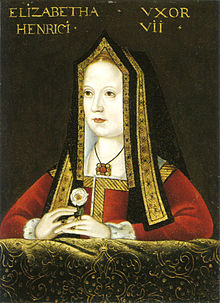
Biography: Elizabeth of York

220px-Elizabeth_of_York_from_Kings_and_Queens_of_England(Born February 11, 1466- Died February 11, 1503). Daughter of King Edward IV and Elizabeth Woodville. Married to King Henry VII. Mother of Arthur, Prince of Wales, Margaret, Queen of Scots, Henry VIII, King of England and Mary, Queen of France.
Elizabeth of York was the daughter, niece, sister, wife and mother of kings. It was through her marriage with Henry VII that helped create the Tudor Dynasty.

Elizabeth of York was the eldest child of Edward IV and Elizabeth Woodville. She was born at the Palace of Westminster on February 11, 1466. She was christened at Westminster Abbey; her godparents were Jacquetta of Luxembourg, Duchess of Bedford, Cecily Neville, Duchess of York, and Richard Neville 16th Earl of Warwick. When she was three years old in 1469, she was briefly betrothed to George Neville, the nephew of Richard Neville, but it did not go far since his uncle would die two years later. In 1475, Louis XI agreed to arrange a marriage between nine year old Elizabeth of York to his son, Charles, the Dauphin of France; in 1482, Louis decided not to go along with the promised wedding.

Elizabeth’s world drastically changed forever when her father, Edward IV, suddenly died on April 9, 1483. Her young brother Edward V was proclaimed king and her uncle Richard Duke of Gloucester was named Lord Protector. On April 29, as previously agreed, Richard and his cousin, the Duke of Buckingham, met Queen Elizabeth’s brother, Anthony Woodville, 2nd Earl Rivers, at Northampton. The young king himself had been sent to Stony Stratford. Richard had Earl Rivers, his nephew Richard Grey and his associate, Thomas Vaughan, arrested. They were taken to Pontefract Castle, where they were executed on June 25 on the charge of treason against the Lord Protector after appearing before a tribuna. Richard took the young king under his protection, escorted him to London, and placed him in the Tower for his protection. After hearing about what had happened, Elizabeth Woodville took her children, including Elizabeth of York, her other daughters, her youngest son Richard Duke of York, and fled to sanctuary in Westminster Abbey. Elizabeth Woodville tried to keep her son Richard Duke of York away from Richard Duke of Gloucester, but she eventually did give up her son. We do not know how Elizabeth of York reacted to these events.

In early June of 1483, the marriage between Elizabeth’s parents, Edward IV and Elizabeth Woodville, was declared invalid because it is said that Edward IV had entered into a pre-contract marriage with Lady Eleanor Butler before he married Elizabeth Woodville. This meant that any children of Edward IV and Elizabeth Woodville were considered illegitimate, including Edward V, Richard Duke of York and Elizabeth of York. Since the children of George Duke of Clarence were barred from succession because of their father’s treason and execution, the next in line to the throne was Richard Duke of Gloucester. Richard was crowned King Richard III on July 6, 1483 and Elizabeth’s brothers disappeared. Some say that they were murdered, others say they escaped, but at this point we do not know what happened to Edward V and Richard Duke of York.

Elizabeth’s mother Elizabeth Woodville was now known as Elizabeth Grey and she decided to side with the Duke of Buckingham and Margaret Beaufort to put Margaret’s son Henry Tudor on the throne. Henry Tudor was the closest male Lancastrian heir and in order to cement this new alliance, Elizabeth Woodville and Margaret arranged that Henry would marry Elizabeth of York. Buckingham’s rebellion against Richard would fail and he would be killed on November 2, 1483. In December 1483, Henry Tudor made an oath in Rennes, France that he would marry Elizabeth of York when he became King of England. In January 1484, the act known as Titulus Regius was passed by Parliament, which confirmed under law that the marriage between Edward IV and Elizabeth Woodville was invalid.

On March 1, 1484, Elizabeth Woodville and her daughters left sanctuary after Richard III promised not to harm them and to arrange marriages for all of Elizabeth’s daughters. There were rumors that after Anne Neville in March 1485, Richard III’s wife, died that he was seeking to marry Elizabeth of York, but there is no evidence to support this claim. Soon after Anne Neville’s death, Richard III sent Elizabeth away from court to the castle of Sheriff Hutton and opened negotiations with King John II of Portugal to marry his sister, Joan, Princess of Portugal, and to have Elizabeth marry their cousin, the future King Manuel I of Portugal.

These marriage arrangements did not come to fruition. Elizabeth of York stayed at Sheriff Hutton during August 1485, when Henry Tudor invaded England and on August 22, 1485 when Richard III fell at the Battle of Bosworth Field and Henry Tudor became King. Henry did keep his promise and married Elizabeth of York on January 18, 1486. The couple’s first child, Arthur, was born on September 20, 1486.

During 1487, a young man named Lambert Simnel, claimed that he was the earl of Warwick, Elizabeth’s cousin, so Henry VII had the real earl of Warwick taken from the Tower and paraded through London. It was at the last battle of the Wars of the Roses, the Battle of Stoke Field on June 16, 1487 that Lambert Simnel was defeated. Henry decided to let the boy live and gave him a job at the castle. Elizabeth was crowned on November 25, 1487 and she would have seven children total, four survived into adulthood; Arthur, Henry, Margaret and Mary. Although Elizabeth had a strong claim to the throne, she did not seek to become queen regnant.
In the early 1490s, another threat to the peace emerged with the contention that Elizabeth’s younger brother, Richard, Duke of York, was still alive. Her aunt, Margaret of York, Dowager Duchess of Burgundy and James IV of Scotland, were sponsoring a young man, later revealed to be a youth named Perkin Warbeck. Warbeck received wide-spread support from amongst Yorkists, who did not like Henry VII. Ultimately, however, Warbeck could not command enough support at home or abroad, to mount a successful challenge and in 1497, he was captured.

Warbeck’s wife Lady Catherine Gordon was made one of the ladies-in-waiting for Queen Elizabeth of York. In June 1498, Warbeck was forced to make two public appearances at Westminster and Cheapside, where he admitted that he was not Richard Duke of York and that Margaret of Burgundy was to blame for the entire scheme. Henry VII was kind to Warbeck at the beginning, allowing him to live at court, but Warbeck tried to escape and it landed him in the Tower of London, close to Edward Plantagenet, 17th Earl of Warwick, son of the late George, Duke of Clarence. Warbeck and Warwick plotted to escape the Tower, but the plan was uncovered and both men were charged with treason. Perkin Warbeck was hanged at Tyburn on November 23, 1499. We don’t know if Elizabeth of York ever met Warbeck.

Elizabeth was a very pious woman and was very dedicated to her children’s wellbeing. Elizabeth was very involved in the marriage negotiations for her two eldest children, Arthur and Margaret, Arthur to Katherine of Aragon, daughter of Isabella I of Castile and Ferdinand II of Aragon, and Margaret to James IV of Scotland. Elizabeth helped convince Katherine’s parents that she would be well taken care of and with Margaret’s marriage, Elizabeth was concerned that she was getting married at such a young age.

In November 1501, Katherine of Aragon arrived in England and Elizabeth was part of the celebrations of the marriage. The following year, tragedy hit hard as Arthur died on April 2, 1502. This was a tragic loss for Henry and Elizabeth because this meant that there was only one heir to save the Tudor Dynasty, the young Henry Tudor. While Henry was grieving, it is said that Elizabeth comforted him and told her husband that they were still young enough to have more children. Later, Elizabeth would break down and it was Henry who consoled his wife. Elizabeth would have one more child, a girl named Katherine, on February 2, 1503, but the baby would not live long. Elizabeth of York would die on her 37th birthday, on February 11, 1503.

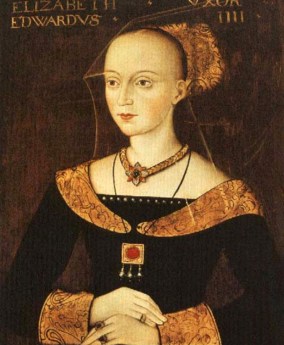
Biography: Elizabeth Woodville

(Born around 1437- Died June 8, 1492). Daughter of Jacquetta of Luxembourg and ElizabethWoodvilleRichard Woodville. Married to Sir John Grey and King Edward IV of England. Mother of Thomas Grey, Marquess of Dorset, Richard Grey, Elizabeth, Queen of England, Mary of York, Cecily, Viscountess Welles, Edward V, King of England, Margaret of York, Richard, Duke of York, Anne, Lady Howard, George, Duke of Bedford, Catherine, Countess of Devon and Bridget of York. Elizabeth Woodville was the woman who Edward IV fell in love with and married, much to the chagrin of Warwick. Elizabeth was the mother of the Princes in the Tower and Elizabeth of York, the mother of the Tudor Dynasty.
Elizabeth Woodville was the eldest child of Richard Woodville and Jacquetta of Luxembourg, born around 1437 at Grafton Regis, Northamptonshire. Her parents marriage was controversial because they married for love and without King Henry VI’s permission. Jacquetta was previously married to the brother of King Henry V and, although the Woodvilles were wealthy landowners, they were still considered genteel rather than nobles. Jacquetta was considered the second lady at court, next to the Queen Margaret of Anjou and Elizabeth was able to become one of the maids of honor for Queen Margaret of Anjou. With her high position at court, Elizabeth was able to marry well with her first marriage. She married Sir John Grey of Groby in 1452 and during this time, Elizabeth became one of the four ladies of the bedchamber to Margaret of Anjou. In 1461, Sir John Grey would die at the Second Battle of St. Albans, fighting for the Lancastrian cause, leaving Elizabeth a widow with two infant sons, Thomas and Richard Woodville.

Elizabeth Woodville’s sons, Thomas and Richard, did not receive the Bradgate inheritance that they deserved. Elizabeth went into mourning for two years at her family home at Grafton Regis in Northamptonshire. After the Yorkist victory a few weeks later at Towton, Edward IV, the new king, stopped by at Grafton Regis for a couple of days, where it is said he fell in love with Elizabeth Woodville. It is said that he saw her under an oak tree, waiting for him to arrive and to plead her case to get her sons’ inheritance, but there is no evidence that this actually happened. The couple married in secret sometime in May 1464.

At this time, Richard Neville “The Kingmaker” Earl of Warwick, was working on a marriage alliance with France. When Warwick and the Council found out about the marriage, they were rightfully upset. Not only did the King marry a woman who was a widow and not a princess, but now her relations were able to capitalize in the marriage market. Three of Elizabeth’s sister married sons of earls and her brother John, who was in his 20s at the time married Katherine Duchess of Norfolk, who was widowed three times and was in her 60s, causing quite a scandal. On May 16, 1465, Elizabeth was crowned queen consort and the following year, she gave birth to the couple’s first child, Elizabeth of York. Elizabeth of York’s godparents were her grandmother Jacquetta of Luxembourg and Warwick.

In 1469, Warwick decided to rebel against Edward IV and join the Lancastrian cause to put Henry VI back on the throne. After the Battle of Edgecote Moor, Elizabeth’s father Richard and her brother John were arrested and executed on August 12 at Kenilworth. Elizabeth’s mother Jacquetta was arrested by Warwick on the charges of witchcraft. These charges were dropped in February 1470.

In September 1470, Warwick invaded England and placed Henry VI back on the throne, forcing Edward IV to flee and Elizabeth and her children sought sanctuary at Westminster Abbey. During this time, Elizabeth gave birth to her first son, the future Edward V. In total, Elizabeth and Edward would have 10 children, including Richard Duke of York. Edward IV returned and defeated Warwick at the Battle of Barnet in April 1471. When Margaret of Anjou returned, she formed an army to march against Edward IV, which forced Elizabeth to seek shelter at the Tower of London. After the Battle of Tewkesbury, Elizabeth exited the Tower and Margaret of Anjou and Henry VI entered it; Henry VI would later die in the Tower. Elizabeth’s mother Jacquetta would die on May 30, 1472.

Life returned to a normal pace for Elizabeth Woodville and her family. In January 1477, she watched as her young son Richard Duke of York was married to Anne Mowbray; both the bride and groom were not over the age of 5 when the wedding happened. Another marriage, arranged between Elizabeth’s daughter Elizabeth of York and the Dauphin of France, fell through. Shortly afterward, Elizabeth’s world changed forever when her husband Edward IV died April 9, 1483 and Elizabeth was made queen dowager.

Elizabeth’s son was named Edward V and his uncle Richard Duke of Gloucester was named Lord Protector. On April 29, as previously agreed, Richard and his cousin, the Duke of Buckingham, met Queen Elizabeth’s brother, Anthony Woodville, 2nd Earl Rivers, at Northampton. At the queen’s request, Earl Rivers was escorting the young king to London with an armed escort of 2000 men, while Richard and Buckingham’s joint escort was 600 men. The young king himself had been sent to Stony Stratford. Richard had Earl Rivers, his nephew Richard Grey and his associate, Thomas Vaughan, arrested. They were taken to Pontefract Castle, where they were executed on June 25 on the charge of treason against the Lord Protector after appearing before a tribunal led by Henry Percy, 4th Earl of Northumberland. Richard took the young king under his protection, escorted him to London, and placed him in the Tower for his protection. After hearing about what had happened, Elizabeth Woodville took her children, including her daughters and her youngest son Richard Duke of York, and fled to sanctuary in Westminster Abbey.

Gloucester wanted Elizabeth to hand over her son Richard Duke of York. Elizabeth was very reluctant to hand over her son to his uncle, but eventually she did. Richard was said to have been informed with information that Edward V was illegitimate because Edward IV had entered into a previous marriage contract. On June 25, Parliament agreed that Edward V was illegitimate and the following day, June 26, Richard was proclaimed king. His joint coronation with his wife Anne Neville would occur on July 6, 1483, and his title was confirmed in an act of Parliament called the Titulus Regius, which was passed in January 1484.

We do not know what happened to the Princes in the Tower, Edward V and Richard Duke of York. They disappeared from sight after the summer of 1483, which has led many to speculate that Richard III had them murdered. At this point we cannot confirm or deny this theory. We don’t even know if they were murdered at all. It still remains one of the biggest unsolved mysteries in history.

Elizabeth Woodville was now known as Elizabeth Grey and she decided to side with the Duke of Buckingham and Margaret Beaufort to put Margaret’s son Henry Tudor on the throne. Henry Tudor was the closest male Lancastrian heir and in order to cement this new alliance, Elizabeth and Margaret arranged that Henry would marry Elizabeth of York. Buckingham’s rebellion against Richard would fail and he would be killed on November 2, 1483. In December 1483, Henry made an oath at a cathedral in Rennes, France to marry Elizabeth of York. At Richard III’s first Parliament in January 1484, he stripped Elizabeth Woodville of all of her lands that were granted to her during the reign of Edward IV. On March 1, 1484, Elizabeth and her daughters left sanctuary after Richard III promised not to harm them and to arrange marriages for all of Elizabeth Woodville’s daughters. There were rumors that after Anne Neville in March 1485, Richard III’s wife, died that he was seeking to marry Elizabeth of York, but there is no evidence to support this claim.

Later in August 1485, Henry Tudor invaded England and was able to defeat Richard III at the Battle of Bosworth on August 22, Henry became King Henry VII of England. Henry would marry Elizabeth of York, revoke the Titulus Regius and restore Elizabeth Woodville’s title and honors of queen dowager. The last five years of Elizabeth Woodville’s life she spent at Bermondsey Abbey. She was present for the birth of her grandchildren including Margaret Tudor and Henry Tudor, the future Henry VIII. Elizabeth of York and her sister Cecily Woodville would often visit their mother. Elizabeth Woodville died at the Abbey on June 8, 1492 and she was buried with her husband King Edward IV in St George’s Chapel in Windsor Castle.

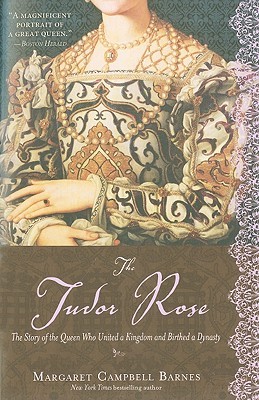
Book Review: “The Tudor Rose” by Margaret Campbell Barnes

6536233The beginning of the Tudor Dynasty was full of action and drama. Richard III and Henry Tudor met on the battlefield at Bosworth on August 22, 1485 to determine who would be the King of England. Richard III fell and Henry Tudor triumph, becoming Henry VII. However, there was another person whose fate was determined on that battlefield; Elizabeth of York, daughter of Edward IV and Elizabeth Woodville. It was at this battle that Elizabeth knew that she would marry Henry Tudor and become queen of England. But what was it like for her to live through this time of change? From the death of her father to the case of her missing brothers. From to Richard III’s short reign to her relationship with her husband Henry VII and her children. How did she feel during the most difficult times in her life? Margaret Campbell Barnes explores this question in her novel, “The Tudor Rose”.
“The Tudor Rose” starts off in the middle of Elizabeth of York’s childhood when the French decided to back away from the marriage arrangement between her and the Dauphin. Elizabeth, clearly distress, goes to his loving father Edward IV for comfort. When Edward IV died, we see how Elizabeth and her family reacted. It is Barnes theory that the family was quite close, especially Elizabeth and her younger brother Richard. Elizabeth’s brother is made Edward V and both boys are placed in the Tower of London for their protection by their uncle Richard Duke of Gloucester. Barnes writes Richard as a villain, similar to the way Shakespeare described him, and it feels as though Elizabeth is disgusted by him. Its Elizabeth’s mother Elizabeth Woodville who decides to get back at Richard by arranging a marriage between Elizabeth and the son of Margaret Beaufort, the future Henry VII.

After Bosworth, Henry is made king and marries Elizabeth of York. Even though Elizabeth was from the York and Henry was a Lancastrian supporter, history books tell us that they loved each other. Barnes takes a different approach to their relationship. She writes Henry as a miserly king who never had real feelings towards Elizabeth. Elizabeth, according to Barnes, had more love towards her children than she did towards husband. It’s a darker look at Henry VII, but one that is not uncommon in literature.

A common theme during Henry VII’s reign was the constant threat of people who pretended to be Elizabeth of York’s brothers. Elizabeth is not known to have met with any of the pretenders, but in this book, Elizabeth met with both Lambert Simnel and Perkin Warbeck. The interactions are quite unique and makes the reader wonder if Warbeck especially could have been one of Elizabeth’s long lost brothers. Barnes explains the importance of these pretenders to both Henry and Elizabeth:

It was like a cloud above the Tudors’ lives. At first it had been just something which they joked about. But gradually, as the years went on and more and yet more people believed -or, for their own ends, pretended to believe- that a son of Edward’s still lived, it began to darken their world- and perhaps even to cloud their own certainty. Because it affected them both it brought Henry and Elizabeth closer together. But it affected them differently. To Henry, with his poor claim to the throne, the whole affair stood for affront and fear; whereas to Elizabeth- although it brought fear for her family- it never really ceased to hold a shining element of hope. A hope which she wore herself out trying to extinguish, knowing it for the crazy thing it was. (Barnes, 236).

I had read this book before I really started researching the Wars of the Roses and I really enjoyed the interactions between Elizabeth and her family. This was probably the first book that I read about Elizabeth of York that I really enjoyed and it was the book that got me interested in researching her life. Its been a few years since I have read this book and now that I have done a little research on Elizabeth of York’s life, I found myself questioning how certain characters were portrayed. If you want a book to help you get into the Wars of the Roses and the life of Elizabeth of York, I would recommend “The Tudor Rose” by Margaret Campbell Barnes. It gives a different perspective on the life of Elizabeth of York, the first Tudor queen.

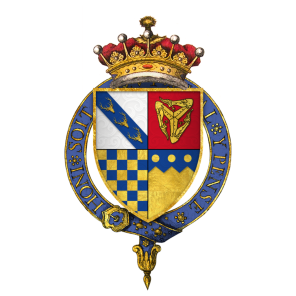
Biography: Thomas Stanley, 1st Earl of Derby

Quartered_arms_of_Sir_Thomas_Stanley,_1st_Earl_of_Derby,_KG(Born 1435- Died July 29, 1504). Son of Thomas Stanley, 1st Baron Stanley and Joan Goushill. Married to Lady Eleanor Neville and Lady Margaret Beaufort. Father of George Stanley, 9th Baron Strange, Sir Edward Stanley, James Stanley, Bishop of Ely.  Thomas Stanley was a wealthy landowner who was able to find favor with successive kings during the Wars of the Roses, until his death in 1504.

Thomas Stanley was born around 1435 and he was the eldest son of Thomas Stanley, 1st Baron Stanley and his wife Joan Goushill. The Stanleys supported Henry Bolingbroke and the Lancastrian cause until the reign of Henry VI. Stanley was a squire for King Henry VI in 1454, but then the king fell mentally ill. In 1455, the Wars of the Roses broke out between the Duke of York and the Duke of Somerset. Somerset was killed at the first battle of St. Albans, which should have ended the conflict, but it only embroiled it. In the late 1450’s, Stanley decided to marry Eleanor Neville, the sister of Richard Neville Earl of Warwick, aligning himself with the Yorkist cause. In 1459, after a lull in the fighting, Margaret of Anjou marched against the Yorkist army, which included Warwick, Stanley’s brother in law. At the Battle of Blore Heath in August 1459, Margaret of Anjou ordered Stanley to raise an army to stop Warwick, but Stanley refused to fight; Stanley’s brother William was firmly on the Yorkist side and he was attainted.

In 1460, Stanley saw that the Yorkist cause was coming into power and so he decided to side with York and his cause. Stanley fought alongside his brother in law Warwick against the Lancastrian army. Edward placed Stanley in charge of maintaining the peace in north-west England, which he did. After the death of his father in 1459, Stanley inherited his father’s titles, including those of Baron Stanley and “King of Mann” as well as his extensive lands and offices in Cheshire and Lancashire. Stanley was the last person to call himself “King of Mann” as his successors would style themselves as “Lord of Mann”.

When Warwick decided to revolt against the king between 1469 and 1471, Stanley was torn on who to support, his king or his brother in law. In 1470, when Warwick fled to France to join the Lancastrian cause, Stanley made his choice and decided to go to Manchester to seek aid and support. When Warwick made his way back to England, Stanley joined forces with him to restore Henry VI to the throne. Edward came back in 1471 and Warwick was killed. Stanley was forgiven for his disloyalty and right after Edward was restored to the throne, Stanley was appointed steward of the king’s household and thereafter became a regular member of the royal council. Stanley’s wife Eleanor Neville died around this time, cutting his ties with the Warwicks and the Nevilles.

Stanley was looking for another wife and in 1472, he married Lady Margaret Beaufort, dowager Countess of Richmond and the mother of Henry Tudor. In 1475, Stanley led an expedition to France and in 1482, he helped Richard Duke of Gloucester in Scotland, playing a large role in capturing Berwick upon Tweed.

On April 9, 1483, Edward IV died, leaving his son Edward V king, Stanley was among those who sought to maintain a balance of power between the young king’s uncle, Richard, Duke of Gloucester, who was now Lord Protector, and his maternal family, the Woodvilles. When the Duke of Gloucester attacked this group at a council meeting in June 1483, Stanley was wounded and imprisoned but was not executed like Hastings. That month, Parliament declared Edward V and his younger brother Richard, Duke of York illegitimate on the grounds that their father Edward IV’s marriage to Elizabeth Woodville was invalid , by way of a prior pre-contract of marriage with Eleanor Butler. The Duke of Gloucester was therefore declared king Richard III and it was confirmed through the act of Parliament called Titulus Regius.

Richard III decided not to isolate Stanley so he let Stanley to keep his position at court and allowed Margaret Beaufort to carry Queen Anne’s train at her coronation. Shortly afterward, Margaret’s properties and titles were given to Stanley and she was placed under house arrest instead of being executed for treason for aiding her son to overthrow Richard III. After the failed Buckingham rebellion in 1483, Stanley was given more forfeited properties and he was made Lord High Constable of England. Margaret was one of the conspirators in this plot and the one who arranged the marriage between her son Henry Tudor and Elizabeth of York. Stanley, in 1485, asked to leave court to go to his estates in Lancashire. Richard III , being very suspicious, agreed that he could if Stanley would allow his son George Stanley Lord Strange to stay at court. In reality, Lord Strange was a hostage.

The Stanleys were in constant communication with Henry Tudor and they were helping him with his landing in Wales and his invasion into England. Richard, hearing about this plan, ordered Stanley to raise an army and join him without delay. Stanley decided to fake an illness. Richard knew that Stanley had switched sides and the morning of the Battle of Bosworth Field, Richard said that he would kill Lord Strange if Stanley didn’t side with him. Stanley and his brother William decided to sit on the sidelines. Stanley did not fight, but it was his brother William who decided to intervene on Henry Tudor’s behalf, which helped Henry win the crown. Even though Stanley did not participate in the fighting, it is said that he is the one who placed the crown on Henry’s head after the battle was won. Henry VII was grateful to Thomas Stanley and made him the 1st Earl of Derby. William Stanley would foolishly side with Perkin Warbeck and would be executed for treason in 1495.

Stanley died at Lathom, Lancashire on July 29, 1504, and was buried in the family chapel in Burscough Priory, near Ormskirk in Lancashire. His son Lord Strange would die shortly afterward so the earldom of Derby was passed onto Stanley’s grandson Thomas Stanley, 2nd Earl of Derby.

Biography: Anne Neville

Anne_Neville_portrait(Born June 11, 1456- Died March 16, 1485). Daughter of Richard Neville, 16th Earl of Warwick and Anne Beauchamp, 16th Countess of Warwick. Married to Edward of Westminster, Prince of Wales and  King Richard III. Mother of Edward of Middleham, Prince of Wales. Anne Neville was the daughter of “the Kingmaker”. She was part of the powerful Neville family and she was married to two very important people in the houses of Lancaster and York respectfully. She played a critical role in the Wars of the Roses.

Anne Neville was born at Warwick Castle on June 11, 1456 to Richard Neville, 16th Earl of Warwick and Anne Beauchamp, 16th Countess of Warwick. Her father’s aunt was Cecily Neville, the wife of Richard Duke of York and the mother of Edward IV, George Duke of Clarence and Richard Duke of Gloucester (later Richard III). Richard Neville did not have any sons so he made sure that his daughters were educated very well so that they could make advantageous marriages. Anne and her older sister Isabel spent most of their childhood at Middleham Castle, where they met their future husbands, George Duke of Clarence and Richard Duke of Gloucester. On December 30, 1460, Richard Duke of York was killed at the battle of Wakefield and in March 1461, Warwick helped Edward IV become king. It is possible that during this time that the idea of Richard marrying Anne and George marrying Isabel was being considered.

Warwick and Edward IV were close, or that’s what Warwick thought. After Edward IV became king, Warwick worked on making an alliance with France by marrying Edward IV to Bona of Savoy. That was the plan, but Edward IV had other ideas. In 1464, Edward married Elizabeth Woodville, which made Warwick rather upset. Warwick decided to marry his daughter Isabel to George Duke of Clarence and Warwick tried to put George on the throne instead of Edward, which angered Edward IV and Parliament. Warwick took his family and his son-in-law George to France where Warwick reconciled with Margaret of Anjou. In order to cement their new alliance in order to get Henry VI back on the throne, Warwick had Anne marry Edward of Westminster, Prince of Wales, on December 13, 1470, making Anne Neville Princess of Wales. Their marriage would not last long.

In 1470, Warwick was able to restore Henry VI to the throne, but Edward IV would come back with a vengeance in 1471. On April 14, 1471 at the Battle of Barnet, Warwick was killed. A few weeks later, on May 4, 1471 at the battle of Tewkesbury, Edward of Westminster, Prince of Wales, was killed, leaving Anne a widow and Edward IV securely on the throne. Anne was taken prisoner first to Coventry and then to the house of her brother-in-law the Duke of Clarence in London, while her mother Anne Beauchamp, sought sanctuary in Beaulieu Abbey.

Anne Neville was now a very powerful widow and there were again talks about her marrying Richard Duke of Gloucester. This made George Duke of Clarence nervous since he didn’t want to share the Warwick inheritance with his brother. George treated Anne like she was his ward and opposed her getting married. The story goes that George made Anne dress as a maid and hid her in a London shop, but Richard found her and escorted her to sanctuary at the Church of St Martin’s le Grand. In order to secure his marriage with Anne, Richard denounced all of the Warwick lands as well as the earldom of Warwick and Salisbury and the office of Great Chamberlain of England to George.

Anne and Richard were married probably in the spring of 1472 and Anne was made Duchess of Gloucester. The couple’s only son Edward of Middleham was born in 1473, the year Anne’s mother joined their household. In 1478, Anne Neville gained the Lordship of Glamorgan, which was initially her sister’s but it went to Isabel’s husband George. When George was executed for treason, the title was passed onto Anne, but since Anne was a woman, she could not inherit the title so her husband Richard became Lord of Glamorgan.

On April 9. 1483, Edward IV died and his eldest son became King Edward V. Richard became Edward V’s Lord Protector, but on June 25, 1483, Edward V and his siblings were declared illegitimate, making Richard the next king. King Richard III. Anne was crowned Queen of England in a joint coronation with Richard on July 6, 1483; Margaret Beaufort, Countess of Richmond and mother of Henry Tudor, would carry Anne’s train at her coronation. Edward of Middleham was created Prince of Wales on September 8, 1483. Things seemed to be going well for Anne and her family, but their happiness would not last long.

Edward of Middleham would die in April 1484 in Sheriff Hutton. His death hit Anne and Richard extremely hard; Anne would fall gravely ill from the grief. Anne Neville effectively adopted Edward, Earl of Warwick, her and Richard III ‘s mutual nephew. Richard III made the boy his heir presumptive to comply with Anne’s wishes. On March 16, 1485, Anne Neville died of possibly tuberculosis. Richard is said to have cried at Anne’s funeral and he would die a few months later at the Battle of Bosworth Field on August 22, 1485.

Biography: Henry Stafford, 2nd Duke of Buckingham

Henry_Stafford(Born September 4, 1454- Died November 2, 1483). Son of Humphrey, Earl of Stafford and Margaret Beaufort, daughter of Edmund Beaufort 2nd Duke of Somerset. Married to Catherine Woodville, the sister of Queen Elizabeth Woodville. Father of Edward Stafford, 3rd Duke of Buckingham, Elizabeth Stafford, Henry Stafford, 1st Earl of Wiltshire and Anne Stafford. Henry Stafford, Duke of Buckingham would become one of Richard III’s most trusted advisors, but he would switch sides and side with Henry Tudor, leading to his ultimate execution.

Henry Stafford was born on September 4, 1454 to Humphrey Earl of Stafford and Margaret Beaufort, the daughter of Edmund Beaufort, 2nd Duke of Somerset. Henry’s father, Humphrey Stafford, was killed at the first battle of St. Albans in 1455. His grandfather Humphrey the 1st Duke of Buckingham was killed at Northampton in 1460. Both men were fighting for the Lancastrian cause. His grandfather, the 1st Duke of Buckingham, gained his title from his mother and was the son of Edmund, 5th Earl of Stafford, and of Anne, daughter of Thomas, Duke of Gloucester, youngest son of Edward III. His mother was Margaret Beaufort (not to be confused with Margaret Beaufort mother of Henry Tudor), daughter of Edmund Beaufort, 2nd Duke of Somerset, grandson of John of Gaunt. When his grandfather passed away, the title of Duke of Buckingham passed onto Henry at the tender age of 4. With the royal blood on both sides of his family plus his title and inheritance, Henry’s future was very important to Edward IV.

In 1466, Henry Stafford married Catherine Woodville, the sister of Queen Elizabeth Woodville, and became the brother-in-law to the king Edward IV. Henry and Catherine had four children; Edward Stafford, 3rd Duke of Buckingham, Elizabeth Stafford, Henry Stafford, 1st Earl of Wiltshire and Anne Stafford. In 1474, Henry was made a Knight of the Garter and in 1478, he was a high steward at the trial of George, 1st Duke of Clarence. After Edward IV’s death on April 9, 1483, Henry decided to join forces with Richard Duke of Gloucester.
It was Buckingham who helped Richard obtain possession of the young King Edward V. For helping Richard, he was rewarded with the offices of Justiciar and Chamberlain of North and South Wales, and Constable of all the royal castles in the principality and Welsh Marches. According to Sir Thomas More, it was Buckingham who gave a speech at Guildhall on June 24, 1483 to the people to make Richard Duke of Gloucester king.

Richard Duke of Gloucester became King Richard III and Buckingham served as chamberlain and later Constable of England. Richard III thought that he could trust Buckingham as one of his right hand men, but he was sadly mistaken. In early August, Buckingham withdrew from court to Brecon, a town in Wales. Some say that he withdrew because he believed that he deserved more for his services to Richard III, others believe that he became disgusted with Richard III, or that he had his own desire for the crown since he did have royal blood in his veins. What we do know is that he began talking with a man name John Morton, who was a prisoner in the custody of Buckingham. Morton told him about a young Henry Tudor and Buckingham decided to support Henry Tudor and his mother Margaret Beaufort to have Henry Tudor replace Richard III as king of England.

A widespread plot was soon formed, but Richard had early warning, and on October 15, 1483, he issued a proclamation against Buckingham. Buckingham, as arranged, prepared to enter England with a large force of Welshmen. Buckingham’s troops were stopped by a massive flood on the Severn and he himself took refuge with a follower, Ralph Bannister, at Lacon Hall. Bannister betrayed him for a large reward, and on the November 1, 1483, Buckingham was brought to the king at Salisbury. Buckingham never saw Richard III and right after his trial on November 2, 1483, a Sunday, he was beheaded in the courtyard between the Blue Boar Inn and the Sarcen’s Head Inn near the marketplace at Salisbury. He died at the age of 29 and his titles and honors were forfeited.

Book Review:“Elizabeth of York: A Tudor Queen and Her World” by Alison Weir

91FsSB3hb9LThe Wars of the Roses was a dynastic battle between the houses of York and Lancaster for the throne of England that lasted for 30 years. There were plenty of people who lived during this time that continue to fascinate us even to this day. Men like Richard III, Henry VI, Edward IV, Henry VII,  and Richard Neville duke of Warwick to just name a few. There were also women who worked hard on the sidelines to make sure that their sides would win the wars. Women like Margaret of Anjou, Elizabeth Woodville, Cecily Neville, and Margaret Beaufort. However, one of the most important person during this conflict tends to get left behind when discussing the most influential people of this conflict; Elizabeth of York, the wife of Henry VII. She was the mother of the Tudor dynasty, yet she does not get the attention that she rightfully deserves. In Alison Weir’s book “Elizabeth of York: A Tudor Queen and Her World”, Weir explores the life of this influential woman and her impact on the world around her.

Weir begins her book by explaining her role in history:

Elizabeth of York’s role in history was crucial, although in a less chauvinistic age it would, by right, have been more so. In the wake of legislation to give women the same rights in the order of succession as male heirs; it is interesting to reflect that England’s Elizabeth I would not have been celebrated Virgin Queen but Elizabeth of York. But in the fifteenth century, it would have been unthinkable for a woman to succeed to the throne. Elizabeth lived in a world in which females were regarded as inferior to men physically, intellectually, and morally. It was seen as against the laws of God and Nature for a woman to wield dominion over men: it was an affront to the perceived order of the world. Even so, Elizabeth of York was important. She was the daughter, sister, niece, wife, mother and grandmother of monarchs: daughter  to Edward IV, sister to Edward V, niece to Richard III, wife to Henry VII, mother to Henry VIII, and grandmother to Edward VI, Mary I, and Elizabeth I; and she was the mother of two queen consorts. She was also the ancestress of every English monarch since 1509, every Scots monarch since 1513, and every British monarch since 1603, including the present queen, Elizabeth II. (Weir, xviii).

Elizabeth of York obviously had a significant impact on English history from the end of the Wars of the Roses on to the present day, but what is more impressive is when you realize how much Elizabeth went through in her lifetime in order to achieve these accomplishments. Elizabeth of York was the eldest daughter of Edward IV and Elizabeth Woodville.  She was going to be married to the Dauphin of France, until the French decided to pull out of the marriage agreement. When her father fled as Warwick marched against him for the Lancastrians, Elizabeth Woodville took her children into sanctuary, where she gave birth to the future Edward V. Her father was a strong man, but he tragically died at the age of 40. Her young brother Edward V was to be the next king, but Edward was taken into the custody of her uncle, the future Richard III. Elizabeth Woodville took her children back into sanctuary where Richard told Elizabeth to give up her younger son. She did comply. The young king and his brother were taken to the Tower, Elizabeth’s brothers were never seen again, and Richard III became king.

Elizabeth’s mother never liked Richard so she arranged a marriage between Elizabeth of York and Henry Tudor, the son of Margaret Beaufort. When Richard III’s wife Anne Neville died there were rumors circulating that Richard would marry his niece, but Weir explains thoroughly the relationship between Elizabeth and her uncle. After Richard was defeated at the Battle of Bosworth Field, Henry VII waited to marry Elizabeth of York and have her crowned queen, which angered many Yorkist supporters, but Elizabeth loved Henry and kept her cool. Elizabeth took her role as wife and mother very seriously. When there were those who tried to take Henry’s throne by pretending to be Elizabeth’s brothers, she stood by Henry and by his claim to the throne. Elizabeth was the mother of Arthur Tudor, Margaret Tudor, Mary Tudor and the future Henry VIII. When Arthur died, Elizabeth consoled her husband in his sorrow and helped him realize that they did have another heir in Henry. She would die on February 11, 1503. Her husband Henry VII would never marry again and mourned her greatly.

Alison Weir brought Elizabeth of York’s life and her world to life in this book. As many of you know, I love the Wars of the Roses and one of the reasons I do is because of the life of Elizabeth of York. There is just something about her story that completely fascinates me. I have read a few fiction books about the life of Elizabeth of York,  but this was the first biography that I have read about Elizabeth of York. Like any Alison Weir book, Weir is able to balance her unique writing style with amazing details to create a vivid description of the person’s life, in this case the life of Elizabeth of York. This is a beautiful book about the life of a pious queen who united the houses of York and Lancaster to create the Tudor Dynasty through her marriage with Henry Tudor. I highly recommend “Elizabeth of York: A Tudor Queen and Her World” by Alison Weir for anyone who is interested in the Wars of the Roses or the love story of Elizabeth of York and Henry VII. An amazing woman who lived in an extraordinary time.

Biography: Margaret Beaufort

(Born May 31, 1443- Died June 29, 1509). Daughter of John Beaufort, 1st Duke of Somersetdownload (2) and Margaret Beauchamp of Bletsoe. Married to John de la Pole 2nd Duke of Suffolk, Edmund Tudor 1st Earl of Richmond, Sir Henry Stafford, and Thomas Stanley 1st Earl of Derby. Mother of Henry Tudor, later known as Henry VII. Margaret was the mother of the Tudor Dynasty. She never gave up on her son Henry Tudor.

Margaret Beaufort was born on May 31, 1443 to John Beaufort, 1st Duke of Somerset and Margaret Beauchamp of Bletsoe. She had seven half-siblings from her mother’s first marriage to Sir Oliver St John. Her father was the  second son of John Beaufort, 1st Earl of Somerset, the first son of John of Gaunt and Katherine Swynford. Margaret’s father went to France to fight for King Henry VI, but it went badly, and he either died from illness or committed suicide on May 27, 1444, leaving Margaret his sole heiress.

Under a deal that her father made with Henry VI, the king took wardship of Margaret, but the king broke that deal and passed on the wardship to William de la Pole 1st Duke of Suffolk. At this time, Margaret remained in her mother’s house to receive her education. On January 28, 1450, William de la Pole, who was not popular at all with Parliament, was ordered to be arrested. Between January 28 and February 7, 1450, Margaret and John de la Pole, the eldest son of William de la Pole, were married, yet they never lived together. With this marriage, William de la Pole was seen as reaching too far since Margaret was a potential heir for the throne and was charged with treason. William de la Pole was murdered on May 2, 1450. Margaret never recognized this marriage as she was under twelve when she was married.

In 1453, Margaret and her mother were called to court when Henry VI granted the wardship of Margaret to his half brothers Edmund and Jasper Tudor. With her first marriage annulled, it paved the way for the marriage between Margaret and Edmund. Margaret was 12 and Edmund was 24 at the time of the wedding on November 1, 1455. The marriage was consummated and soon Margaret was pregnant. Unfortunately, Edmund would never meet his son as he died on November 1, 1456 of the plague. Margaret gave birth to her only son Henry Tudor on January 28, 1457 at the age of 13. It was a difficult birth and Margaret was never to have another child after Henry.

Being a single mother and a young widow, Margaret knew that she had to marry again to make sure that she could financially survive. She arranged her own marriage and after the required one year of mourning was over, Margaret married Sir Henry Stafford on January 3, 1458. From what we can tell, it sounds like a happy marriage between Margaret and Sir Henry Stafford. When Henry was two years old, his uncle Jasper was granted wardship over him and so Margaret and Henry were seperated. After the Battle of Towton, Jasper fled to Scotland to help Margaret of Anjou, Edward Duke of York became Edward IV, and Henry Tudor was stripped of his lands and put in the custody of William Herbert. At this time, Margaret was able to keep in contact with her son.

In 1469, the House of Lancaster came back into power, but only for a short amount of time as the House of York came back into power. At the Battle of Barnet on April 14, 1471, Sir Henry Stafford was injured  fighting for the Yorkists and he would die from his wounds on October 4, 1471. Margaret was a widow again at the age of 28. Henry and Jasper fled the country for their own protection, leaving Margaret alone and in need of another husband and protector.

In June 1472, Margaret married her fourth and final husband Thomas, Lord Stanley. This was a marriage of convenience as Margaret was able to enter the court of Edward IV and Elizabeth Woodville in order to gain favor and secure her son’s return to England. Before this could happen, Edward IV died on April 9, 1483. The crown passed on to the king’s eldest son Edward V, but Edward and his brother Richard went to the tower for their own protection, never to be seen again. Their uncle Richard III became king, and even though Margaret carried the train at Queen Anne’s coronation, Richard stripped Margaret of all of her titles and land. During this time Margaret was plotting with Elizabeth Woodville to arrange a marriage between Henry Tudor and Elizabeth of York.

In 1483, Henry and Jasper failed to invade England. Richard found out that Margaret was part of this plot and she was charged with high treason, but instead of being executed, she was placed under house arrest. Margaret’s life changed for the better when her son was able to defeat Richard at the Battle of Bosworth Field on August 22, 1485, with the help of Margaret’s husband Thomas, Lord Stanley, and became King Henry VII.  Thomas, Lord Stanley was made Earl of Derby and Margaret was made Countess of Richmond and Derby. Margaret was able to see her son once again after 14 years apart. Margaret became the King Mother and was the second most important woman at court, next to Queen Elizabeth of York, who married Henry VII on January 18, 1486. Margaret was there to help with the births of her grandchildren, and the deaths of a few including Arthur Prince of Wales, who died on April 2, 1502.

Elizabeth of York would die on February 11, 1503, leaving Margaret’s son a widower. Thomas, Lord Stanley would die in 1504, and although she spent most of her son’s reign styling herself as a widow in order to have control over her own properties and finances, it still must have been a hard loss for Margaret. Margaret’s beloved son Henry VII died on April 21, 1509, and she took his death the hardest. Margaret Beaufort was able to see her grandson Henry VIII’s coronation on June 23, 1509, but then she died only six days later on June 29, 1509.

Biography: Jasper Tudor

410px-Arms_of_Jasper_Tudor,_Duke_of_Bedford.svg(Born November 1431- Died December 21, 1495). Son of Owen Tudor and Catherine of Valois. Married to Catherine Woodville. Jasper was really one of the unsung heroes of the Wars of the Roses. He never gave up on fighting for the cause he believed in and he did his best to keep his nephew Henry Tudor safe.

Jasper Tudor was the second son born to Owen Tudor and Catherine of Valois born in 1431. He was the brother of Edmund Tudor and half- brother of King Henry VI. After his mother’s death on January 3, 1437, Jasper and Edmund were sent to Barking Abbey where they were raised and educated by Katherine de la Pole from July 1437 until March 1442. Around that time, their half-brother Henry VI allowed for Edmund and Jasper to live at court, where they received the military training that would be essential for their survival later in life. In 1449, Jasper was knighted and in 1452, he was created the earl of Pembroke.

Jasper worked hard to stop the fighting between the Yorks and the Lancasters while he was still living in the courts. Jasper’s brother Edmund took in a young Margaret Beaufort as his ward and he later married her on November 1, 1455. The following year, on November 3, 1456, Edmund died of the plague, leaving his young and pregnant widow in Jasper’s custody. Henry Tudor, earl of Richmond was born on January 28, 1457.  Jasper was also responsible for maintaining the Lancastrian ties in Western Wales between 1456 and 1459. In 1460, Jasper was able to capture the Duke of York’s North Welsh stronghold of Denbigh Castle.

Jasper and his father Owen Tudor raised an army in Wales for Henry VI and met against the Yorkist forces at the battle of  Mortimer’s Cross on February 2, 1461. It was an utter defeat for the Lancastrians. Owen Tudor was taken into custody and executed while Jasper escaped first into Ireland and then into Scotland.  Jasper then went to France where he was welcomed by King Louis XI in 1462. He stayed in France for 6 years, until he returned to Wales in 1468, when he lost his title of earl of Pembroke and Pembroke Castle to William Herbert.

Jasper did regain the earldom of Pembroke when Henry VI was restored to the throne, but in 1471, he fled to the continent yet again once Edward IV was crowned king. Jasper  and Henry tried to gather more support for the Lancastrian cause but they got caught in a bad storm in the English Channel while escaping from Tenby. They landed in Brittany where they sought the protection of Francis II, Duke of Brittany, which he did give to them.The Lancastrians along with Jasper and Henry, were housed at  the Château de Suscinio in Sarzeau. Edward IV tried his best to apprehend Jasper and Henry but he failed to do so.

In October 1483, Jasper and Henry tried to go back to England, but it failed and they were forced to return to Brittany. When the Duke of Brittany got very ill in 1484, his treasurer Pierre Landais made a deal with Richard III to give over Jasper and Henry in exchange for 3,000 English archers to defend a French attack. A bishop in Flanders John Morton heard about the deal and warned Jasper and Henry just before Landais could reach them. Jasper and Henry fled into France where King Charles VIII allowed them to stay until Duke Francis II felt better.

Jasper and Henry made their way back to England in August 1485, where they faced off against Richard III at the Battle of Bosworth Field on August 22, 1485. Richard III was defeated and Henry became Henry VII. Jasper’s titles and properties were all returned to him and he was made a Knight of the Garter as well as Duke of Bedford. On November 7, 1485, Jasper married Catherine Woodville, the sister of Queen Elizabeth Woodville. They had no children. Jasper would die on December 21, 1495 at Thornbury Castle at the age of 64.