
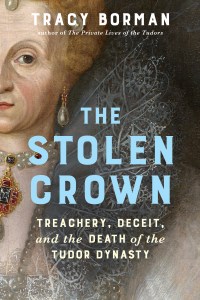
Book Review: “The Stolen Crown: Treachery, Deceit and the Death of the Tudor Dynasty” by Tracy Borman

It is March 1603, and the Virgin Queen is dying. She has no children to inherit her throne directly, so she must choose a successor. She chooses the son of Mary Queen of Scots, the queen who had been executed a few years before. James VI of Scotland will become James I of England, but was it as easy as William Camden makes it in his account? What does a recent discovery about Camden’s original manuscript of Annales tell us about James’ succession to the throne of England? Tracy explores the messy conflict to find an heir to the English throne in her latest book, “The Stolen Crown: Treachery, Deceit and the Death of the Tudor Dynasty.”

I would like to thank Grove Atlantic and Net Galley for sending me a copy of this book. I have been a fan of Tracy Borman’s books for a few years now because of how she is able to present new information about stories from the past that I already know and give them a fresh look. When I heard that James might have stolen the crown from Elizabeth I, that thought intrigued me so much that I knew I wanted to read this book.

So how did the Stuarts come into power, and why did Elizabeth have James as her successor? To understand that question, we have to explore briefly the origins of the Tudor dynasty and how Elizabeth I came to the throne. After we are firmly established in the reign of Elizabeth I, Borman goes through why Elizabeth needed to elect a successor and the nominees. Those up for Elizabeth’s throne were: James VI, Arbella Stuart, Lady Katherine Grey, Mary Grey, and Henry Hastings, Earl of Huntingdon. We get to see how Elizabeth handled each of her potential choices as the next ruler of England, but the two that are highlighted significantly in this book are Arbella Stuart, the daughter of Charles Stuart, 5th Earl of Lennox, and Elizabeth Cavendish, and the man who would become King James VI of Scotland.

Borman shows her readers the complex relationship between Elizabeth and James, a tumultuous relationship, especially after the death of James’ mother, Mary Queen of Scots. It was not the most cordial relationship that has been shown in history, including the Annales written by William Camden. However, due to extraordinary research that was revealed in 2023, it was shown that Camden’s writing had serious revisions to paint James in a better light during the fight for succession. In fact, there were attempts on Elizabeth’s life that James knew about, including one incident where he might have been directly involved. Just because James became King of England after Elizabeth’s death does not mean that he had an easier time in England. In fact, the Stuarts lasted less than a hundred years before the monarchy was dissolved with the execution of James’s son Charles I in 1649.

This is another spectacular book by Borman, one that changed how I viewed the relationship between Elizabeth and James in the final years. It reads like a political thriller and offers a deeper appreciation for Elizabeth’s fight for the English throne, while also highlighting how the Stuarts employed similar tactics to the Tudors in securing their right to rule England. Suppose you want an extremely well-researched book that provides great insight into the end of Elizabeth’s reign and provides new information about this period. In that case, I highly recommend you read “The Stolen Crown: Treachery, Deceit and the Death of the Tudor Dynasty” by Tracy Borman.

Book Review: “Sisters of Treason” by Elizabeth Fremantle

Sisters of TreasonThose born of royal blood are either blessed by being able to sit on the throne or cursed to be under intense scrutiny for fears of treason. That is the case for the Grey sisters. Jane, Katherine, and Mary were the daughters of Henry and Frances Grey and the granddaughters of Mary and Charles Brandon. Their bloodline made them cousins to Mary I and Elizabeth I, which meant they threatened the two queens, especially when Edward VI named Lady Jane Grey his heir. After Mary I executes Jane and their father Henry for treason, the remaining Grey sisters, Katherine and Mary, must survive the treacherous Tudor court or end up like their sister. Can Katherine and Mary survive in a court where their royal blood leaves a target on their backs? Elizabeth Fremantle tells the tale of the lesser-known Grey sisters in her novel, “Sisters of Treason.”

A few years ago, I read the first book in The Tudor Trilogy by Elizabeth Fremantle called, “Queen’s Gambit: A Novel of Katherine Parr,” and I adored it. I have always been fascinated with Tudor heroines that do not get enough attention. I feel like Katherine and Mary Grey fit that bill and another woman Fremantle included in this novel, Levina Teerlinc. When I read the description of this book, I knew I would enjoy it.

We begin with the tragic execution of Lady Jane Grey as her mother Frances and Levina Teerlinc, a family friend, watch in horror in the middle of the crowd. They know they cannot save her, but they can protect her sisters from the same grisly fate by keeping a close eye on them from themselves and the schemes of others. Mary Grey can keep herself from major scandals and close to her cousins because of her misshapen body. She knows that she cannot threaten the house of Tudor because she cannot have children. On the other hand, Katherine Grey only cares about love and having her own family; she does not care about the consequences that she may have to deal with if she marries without the queen’s permission.

While Mary Grey is a constant companion for Queen Mary and Queen Elizabeth, Katherine is on the outside looking in, wanting her own life and to marry Edward Seymour, Earl of Hertford. Eventually, they marry secretly, much to the chagrin of Queen Elizabeth I. Katherine and Hertford suffer the consequences of their love match by spending time in the Tower. Mary on the other hand knows her duty to the throne and how it is important to keep her family safe from the Tudor queens’ ire, even when she falls in love with Thomas Keyes. We also have the perspective of the artist Levina Teerlinc, a family friend of the Greys and a surrogate mother to Katherine and Mary after the death of Frances. The Greys and Teerlinc must also navigate the ever-changing religious world as they are reformers when Catholicism battles it out with Protestantism.

This is yet another sublime novel by Elizabeth Fremantle. It is full of tension, intrigue, romance, and love for one’s family, whether a friend as close as a mother or the bonds of blood. Even though I knew how the stories of Katherine and Mary Grey played out, it was still a thrilling read, especially with the addition of Levina Teerlinc. I have loved every novel that I have read by Fremantle so far and I look forward to reading more. If you want an excellent novel about the Grey sisters, I highly recommend you read “Sisters of Treason” by Elizabeth Fremantle.

Book Review: “Uncrowned: Royal Heirs Who Didn’t Take the Throne” by Ashley Mantle

UncrownedA life of luxury from birth, destined to be crowned King or Queen of England. This is what we often think life must have been like for royal heirs who reached the ultimate destination of a crown and a throne. However, the stories of those who failed to reach the throne are mired in tragedy and heartache. The question of royal succession in England is a complex issue, especially when the heir to the throne dies unexpectedly, leaving doubts on whether a dynasty will survive through blood or dissolve in conflict. How did the deaths of these potential rulers radically transform the fabric of English history as a whole and what can their lives tell us about what kind of rulers they might have been? Ashley Mantle hopes to answer all of these questions and more in his latest book, “Uncrowned: Royal Heirs Who Didn’t Take the Throne.”

I would like to thank Amberley Publishing for sending me a copy of this book. The description of this book caught my attention. I wanted to see what heirs Mantle would feature in this book and if he would stay with well-known tales or venture into the realm of the relatively unknown heirs.

To begin his book, Mantle explains that he will be going through over a thousand years of royal succession history for England, which is a lot of history to include in one book. He also explains the difference between heir apparent and heir presumptive, which is key to understanding the complex nature of royal succession. While many of the stories included in this book focus on the male heirs, Mantle does include heiress to the throne like Empress Matilda, the Grey sisters (Lady Jane, Catherine, and Mary), Mary Queen of Scots, and Sophia Electress of Hanover, just to name a few.

Mantle’s deep dive into royal succession begins with Robert II Duke of Normandy, also known as Robert “Curthose”, the son of William the Conqueror and Matilda of Flanders; it concludes with Frederick Duke of York and Albany, the son of King George III and Charlotte of Mecklenburg-Strelitz. Each chapter focuses on one of the heirs, in chronological order, with miniature family trees at the beginning to help readers understand how close they were to the throne. This book is full of stories of betrayal, deaths, disappearances, family feuds, and heartache. Some of these heirs were relatively new stories for me, especially the ones more current than the Tudors, which was exciting to discover.

I must say that this task of combining over a thousand years of royal history into a comprehensive book is no easy task, but Mantle does a spectacular job. It was an informative and engaging read that would be perfect for any fan of royal history. If you want a fascinating book about those who were so close to the throne but never ruled, I highly suggest you read, “Uncrowned: Royal Heirs Who Didn’t Take the Throne” by Ashley Mantle.

Book Review: “Crown of Blood: The Deadly Inheritance of Lady Jane Grey” by Nicola Tallis

39330966._SY475_“Uneasy lies the head that wears the crown.” This famous quote from William Shakespeare’s play Henry IV, Part III has been used throughout the centuries to describe how difficult it is to rule a country for any duration of time. Most kings and queens of the past lasted for a few years, but there was one queen who lasted for a handful of days. She was the successor of Henry VIII’s only male son, King Edward VI, and was meant to replace his eldest half-sister, who would become Queen Mary I. It was a battle between Protestantism and Catholicism with a 17-year-old scholar caught in the middle. Her name was Lady Jane Grey, but many refer to her as the “Nine Day Queen of England”. Lady Jane Grey’s tragically short story, how she became queen, and the consequences of her reign are discussed thoroughly in Nicola Tallis’ beautifully written debut biography, “Crown of Blood: The Deadly Inheritance of Lady Jane Grey”.

I have been a fan of Nicola Tallis’ other biographies, “Uncrowned Queen: The Fateful Life of Margaret Beaufort, Tudor Monarch” and “Elizabeth’s Rival: The Tumultuous Life of the Countess of Leicester: The Romance and Conspiracy that Threatened Queen Elizabeth’s Court”. I had heard about this one through recommendations from other Tudor history fans, so naturally, I wanted to give it a try. Lady Jane Grey has been one of those historical figures that I have felt sympathy for in the past and I wanted to learn more about her life.

Lady Jane Grey was born into a royal family full of fighting for the throne of England and for the right to either be Protestant or Catholic. She was the eldest daughter of Henry and Frances Grey. It was through her mother Frances that Jane had a claim to the throne because Frances Grey was the daughter of Mary Tudor, the younger sister of Henry VIII, and Charles Brandon. If Frances and Henry Grey had sons, we would not have to talk about Jane’s claim to the throne, but Jane had two sisters, Katherine and Mary Grey. Jane was a rather unusual royal girl because she was not concerned about who she would one day marry. Lady Jane Grey has been known throughout history as a young scholar and a martyr for Protestantism. Her zeal for learning is so admirable and relatable. It makes you really wonder what her life might have been like if she had not been coerced to become Queen of England.

Unfortunately, on his deathbed Jane’s cousin King Edward VI declared that Lady Jane Grey would be his heir, not his eldest half-sister Mary, who his father had named as Edward’s heir if Edward had no children of his own. Jane never coveted the throne, but her father-in-law, John Dudley 1st Duke of Northumberland saw the opportunity to make his son Guildford king of England. It was not the role that Jane wanted in her life, but she was outspoken and courageous about things that mattered to her, even as she approached the scaffold that would seal her fate on earth.

Tallis’ writing style and her attention to detail brought Jane out of the shadows to uncover the truth behind the myths that surrounded her young life. This biography could have easily become a Mary vs. Jane book, but Tallis took the utmost care to make sure it was balanced for both women. It was dynamic and thoughtful, full of drama and revelations of the life of Lady Jane Grey. In short, it is a magnificent biography of one of the Tudor monarchs whose reign was quickly forgotten. Jane may have been a scholar, a lady, and a martyr, but she should also be remembered for another position she held in life. Jane was a Queen of England. If you want a stunning biography about Lady Jane Grey, I highly suggest you read, “Crown of Blood: The Deadly Inheritance of Lady Jane Grey” by Nicola Tallis.

Book Review: “Forgotten Royal Women: The King and I” by Erin Lawless

38507412._SY475_In English history, the story of the royal families tends to capture the imagination of those who study it. Full of dynamic tales of kings and queens, and numerous nobles, these are tales that make it into history books and history classes. We tend to focus on the same kings and queens, who have become the popular royals. But what about those who are left in the dust of those popular royals? Who were the royal women who lived in the shadow of the throne that time has forgotten? What were the lives of these women like? It is these women who are the focus of Erin Lawless’s latest book, “Forgotten Royal Women: The King and I”.

I would like to thank Pen and Sword Books for sending me a copy of this book. The title of this book initially caught my eye and I really wanted to see what royal women Erin Lawless would be discussing in this particular book.

Lawless has decided to write about thirty different royal women, from Scota to Princess Charlotte, covering several centuries of vivacious women. Some of these women I have encountered in my own studies, like Margaret Pole, Margaret Tudor, Eleanor Cobham, and Mary Grey( who are obviously women from the Tudor dynasty). Others were women that I have never heard of, like Gwellian ferch Gryffydd and Isabella MacDuff, who lead armies for their respective countries, Wales and Scotland respectfully, to fight against the English. Grace O’Malley, also known as Granuaile, who was Queen of Umaill, chieftain of the O Maille clan, and a pirate from Tudor Ireland. And of course, plenty of royal women who married for love and suffered the consequences.

These tales are truly tantalizing, yet they are tragically too short as Lawless only spends a few pages on each woman. Just as you are starting to really get into the story, you move onto another lady and her history. It may seem a little bit unfair, but I think it should be noted that Lawless did this with a rather important purpose behind it. Lawless wanted to give an introduction to the lives of these women, both the fictional tales and the facts so that readers would be intrigued and decide to study more about them. It’s a great strategy to get more people interested in studying the obscure and forgotten royal women in history. Of course, I wanted more details, but that is because I love having a plethora of information about a subject in books that I read, yet in this case, I think the amount of details works in Lawless’s favor.

The one thing that I really wish Lawless did include was a bibliography or a list of books that helped her with her own research when it came to this book. I really like seeing an author’s research in the back of biographies or history books, especially for a book that covers different topics, so that I can have a starting point for my own personal research.

Overall, I found this book incredibly enjoyable. It is certainly a conversation starter for those who discuss the English monarchy. Lawless has a delightful writing style that feels like you are having a casual history conversation with her. This book is small in size, but it could be the stepping stone for new research for those novice historians who want to write about someone who has been stuck in the shadow for centuries. If you would like to read short stories about royal women who have stayed in the background for a long time, I highly recommend you read “Forgotten Royal Women: The King and I” by Erin Lawless.

Book Review: “The House of Grey: Friends and Foes of Kings” by Melita Thomas

51fOOu0p2GL._SX332_BO1,204,203,200_There are many noble or royal families that truly were the backbone of the English society and that could help or hinder the monarchy. One such family was the Greys, who started as a baronial family and rose through the ranks by good marriages and staying loyal to those who were in power. Of course, when one rises high, there is also the risk of falling low spectacularly, which happens when Lady Jane Grey becomes Queen of England for a mere 9 days. The story of the house of Grey is complex, yet it has never been told in its entirety, until now. This extraordinary family saga is told in Melita Thomas’s latest book, “The House of Grey: Friends and Foes of Kings”. 
I would like to thank Amberley Publishing for sending me a copy of this book. Melita Thomas is the co-founder and editor of Tudor Times and this is her second book.  This particular book caught my eye as I did not know much about the Grey family, besides the story of Lady Jane Grey and her sisters. 

The story of the House of Grey begins with a rivalry between Owain Glyndwr and Lord Grey of Ruthyn over throwing off English dominance in Wales. Not a great start for a family who would become loyal to the crown of England. It was during the Wars of the Roses and the Battle of Northampton when Edmund Grey switched from supporting the Lancasters to supporting the Yorks, splitting the Grey family apart for a time. It was when Sir John Grey died at the Second Battle of St. Albans that the Greys truly supported the Yorkist crown since his widow, Lady Elizabeth Woodville, married King Edward IV. It is here that Thomas tracks the road to the crown through Elizabeth Woodville’s two Grey sons, Thomas and Richard.

Melita Thomas shows how the Grey boys made names for themselves; Richard Grey being executed while Richard of Gloucester was Lord Protector and Thomas Grey turning rebel and joining the Tudor cause to put Henry Tudor on the throne. Thomas Grey married Cecily Bonville and it was through their line that the Greys inherited the title of Marquis of Dorset. The title would pass onto each son until it reached Henry Grey, who’s ambitions for his daughter would prove fatal.

Thomas navigates the tumultuous times of the Greys to show how truly colorful the family was, from tiffs with fellow landowners to grand fallouts with kings and queens. The Grey family was able to restore themselves time after time to the monarchy’s good favor, no matter how low they fell. The Greys and their influence did not just reach England, but other corners of Europe as well, which is rather remarkable to read all about. Thomas gives the reader an opportunity to understand the roller coaster dynamics of the Grey family and the political atmosphere of the royal courts of different monarchs. The times that the Grey family lived in was one of great change and they were all along for the ride.

I found this book rather engaging and utterly fascinating. It is meticulously researched and you can tell that Melita Thomas had a passion for the subject she was writing about. Many people only know the story of Lady Jane Grey and her immediate family, but I think that this book paints a vivid picture of a complex family who survived the reigns of medieval and Tudor kings and queens. If you want to a delightful in-depth dive into the lives of the Greys, I highly recommend you read, “The House of Grey: Friends and Foes of Kings” by Melita Thomas.


“The House of Grey: Friends and Foes of Kings” by Melita Thomas will be available in the United States on January 1, 2020. If you would like to pre-order this awesome book, you can follow this link: https://www.amazon.com/House-Grey-Friends-Foes-Kings/dp/1445684977/


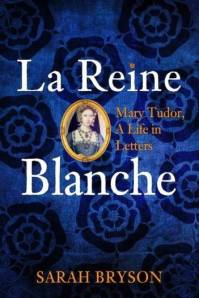
Book Review: “La Reine Blanche: Mary Tudor, A Life in Letters” by Sarah Bryson

35067557_1710198212397536_7023071200330907648_nWhen we think of the Tudors, we often think of  strong women like Katherine of Aragon, Anne Boleyn,  Elizabeth I, Margaret Beaufort and Mary I. However, there was another Mary who made an impact during this time. She was the daughter of Henry VII, the sister of Henry VIII, and the wife of King Louis XII of France. She was referred to as one of the most beautiful women in the world. She gave away all of her titles to marry the man she loved, even though he was not a king. She took on debt to have a family and helped those who needed help. This is the life of Mary Tudor.  In Sarah Bryson’s debut book, “La Reine Blanche: Mary Tudor, A Life in Letters”, Bryson explores the life of this extraordinary woman through her letters.

Sarah Bryson explains why she decided to include Mary’s letters in this book:

Mary Tudor’s letters are a fascinating and captivating look at how a woman could wield power without publically challenging the patriarchy. They show how Mary was able to manoeuvre those around her to follow her heart- marrying her second husband for love, rather than being dragged back to the international chess game as a marriage pawn. They are also, on occasion, a way of looking into Mary’s life whereby the layers of princess and queen are stripped back and only the woman remain. (Bryson, 11).  

Bryson decides to begin her book not with the birth of Mary, but rather with the Wars of the Roses in order to understand how the Tudors came into power and the importance of the marriages that Henry VII established for his children were. She then moves onto the family aspect of the Tudors and the birth of Mary, which to me was fascinating to understand those early years of a young princess. Unfortunately  Mary’s world was not a picture perfect one as her father was constantly fighting those who wanted to take his throne, including Lambert Simnel and Perkin Warbeck. Her brother Arthur, Prince of Wales, would marry Katherine of Aragon, but only a few months after they were married, Arthur tragically died. Mary’s mother would also pass away while trying to give birth to a baby girl. In order to build a strong alliance, Henry VII made a marriage treaty between Mary and Archduke Charles (later Charles V, Holy Roman Emperor), but it would eventually fall through.

Henry VII would die on April 21, 1509, leaving the throne to his son Henry VIII; Henry would marry his brother’s widow Katherine of Aragon on June 11, 1509. Henry arranged Mary’s first marriage with King Louis XII with an enormous dowry, but their marriage would not last long as Louis XII would die on January 1, 1515. Mary would retire from public life and would wear the white mourning clothes of a widow, thus the nickname “La Reine Blanche”, the white queen. Mary would not stay single for long as she married Charles Brandon, Duke of Suffolk. Charles Brandon was a notorious ladies’ man and happened to be one of the people who Henry VIII sent over to France to help Mary. To say that Henry was upset would be an understatement; he refused for the couple to return to England, for a time, and ordered that Charles Brandon would pay off Mary’s dowry. It would leave the couple impoverished for the rest of their lives, but they were happy and in love. It was really during this time that Mary’s letters showed her heart and who she truly was. Mary had to be incredibly strong to show the love that she had for her husband to her brother. Henry eventually accepted the couple and they went on to have four children of their own: Henry, Frances, Eleanor and Henry 1st Earl of Lincoln. Their daughter Frances would marry Henry Grey and would become the mother of Lady Jane Grey, Katherine Grey and Mary Grey. Mary Tudor would die on June 25, 1533, shortly after Anne Boleyn was crowned queen.


Mary Tudor’s story is one of tragedy and love. I will be honest and say that I only knew about half of her story, but Sarah Bryson made Mary come alive. “La Reine Blanche: Mary Tudor, a Life in Letters” may be Bryson’s debut book but it feels like she has been writing for a while. This is a lovely book that combines facts and letters in such a way that it is a joy to read. I look forward to reading more from Sarah Bryson in the near future. If you are interested in the life of Mary Tudor, this is a great book about her life through her letters.

Book Review: “The Sisters Who Would Be Queen” by Leanda de Lisle

3980321When we think of the Grey family, we often come up with certain stereotypes. Lady Jane Grey was a passive, obedient girl who did whatever her family and her husband’s family wanted her to do. Frances Grey was a cruel mother. Katherine and Mary lived very uneventful lives. These could not be further from the truth. Leanda de Lisle in her book, “The Sisters Who Would Be Queen” attempts to paint a more realistic of the Grey sisters; Jane, Katherine and Mary.

Leanda de Lisle explains the importance of the Grey sisters:

Dynastic politics, religious propaganda, and sexual prejudice have since buried the stories of the three Grey sisters in legend and obscurity. The eldest, Lady Jane Grey, is mythologized, even fetishized, as an icon of helpless innocence, destroyed by the ambitions of others. The people and events in her life are all distorted to fit this image, but Jane was much more than the victim she is portrayed as being, and the efforts of courtiers and religious factions to seize control of the succession did not end with her death. Jane’s sisters would have to tread carefully to survive: Lady Katherine Grey as the forgotten rival Queen Elizabeth feared most, and Lady Mary Grey as the last of the sisters who were heirs to the throne. (de Lisle, xxx).

These three sisters were the daughters of Henry and Frances Grey. Frances is often viewed as a power hungry mother who didn’t care about Jane, but de Lisle explains why this is merely a stereotype. The Grey’s gave their daughters the best education imaginable for those who were in line for the throne. Jane, Katherine and Mary were raised to be educated and opinionated young ladies, which really defined who Jane was, even when she became queen for a fortnight, not the nine days of the myth. Jane was in fact one of the leaders of the new Protestant movement and she stuck to her beliefs, even when she was facing execution.

It was the memory of Jane that was always in the back of Katherine and Mary’s minds. After Jane’s death, neither girl truly pursued the crown of England. Instead, they wanted to be happy and marry who they wanted for love, no matter what. It started with Katherine, who was going to be next in line to the throne after Elizabeth became queen since Elizabeth never married. Katherine wanted a simple life so she married Edward Seymour, 1st Earl of Hertford without Elizabeth’s knowledge. Elizabeth sent both Katherine and Edward to the Tower where they had two children, Thomas and Edward Lord Beauchamp. Katherine would die sick, impoverished and under house arrest, separated from her husband and her children.

Mary did not fare much better. Mary married Thomas Keyes, a sergeant porter to Elizabeth I, in secret. Unlike Katherine, Mary and Thomas’s marriage ended badly after Thomas was sent to a cramp and dark prison cell. Mary never married again, but she was able to return to court.

This is the story of the Grey family without all the frills. The stories of Jane, Katherine and Mary are stories of heartache and pain. They were too close to the throne to have a normal life that they wanted. When I started reading this book, I will admit that it shocked me. I thought I knew the story of the Grey family, but I was wrong. Leanda de Lisle has opened my eyes to the truth about the Greys with her book “The Sisters Who Would Be Queen”. This book is very well written and so easy to understand. If you are interested in the Grey family and the story of Jane, Katherine and Mary, this is the book for you.