
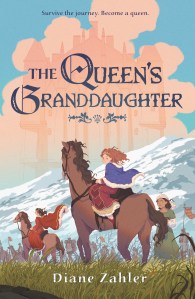
 When a medieval princess married, most of the time, she had to take an arduous journey to their new country. For many of these royal ladies, they had an idea that this would be their fate at a young age, but for others, it would come as a complete surprise. Take, for example, Blanca (Blanche) of Castile. She was the granddaughter of the indomitable Eleanor of Aquitaine. When it is time to create a marriage alliance between Castile and France, Blanca believes that her sister Urraca will be the one who will become Queen of France. However, Eleanor has other plans. How will the journey change Blanca and get her ready to rule a nation? Diane Zahler tells the tale of Blanca’s journey to the throne in her middle grade novel, “The Queen’s Granddaughter.”
I would like to thank Roaring Brook Press and Net Galley for sending me a copy of this novel. I tend to read books tailored towards young adults and adults, but I wanted to see how middle grade books handle historical figures. My love of history started with a middle grade book, so I wanted to see how middle grade books are for the next generation of history nerds.
We are introduced to Blanca of Castile when she was twelve years old. As the daughter of Alfonso VIII of Castile and Eleanor of England, Blanca realizes that she will have to marry one day, but she wants to stay with her family in Castile. With the arrival of her grandmother, Eleanor of Aquitaine, from England to discuss a match between Castile and the French dauphin Louis. Blanca believes that the intended bride will be her elder sister Urraca, but she doesn’t want her sister to leave. Grandmother Eleanor has a different plan and says that the bride to be is Blanca.
To say Blanca is shocked will be an understatement, but after spending time with her best friend Suna and her family, who are Almohads, Blanca decides that she will go to France. Suna, grandmother Eleanor, and Sir William Marshal join Blanca in her journey over the Pyrenees Mountains to France. The journey is arduous as they encounter a snow storm that lands the party in a cave while grandmother Eleanor recovers from an illness. They also face off against Hugh de Lusignan, a man who is seeking vengeance. Throughout the journey, Blanca learns that a queen must make difficult decisions and say the hardest goodbyes for the good of her new kingdom.
This was a great novel to get younger future history nerds interested in history. It was well researched and even gives Zahler’s readers mini biographies about the main characters so that they can begin their own journey into medieval European history. If you want a book for a young history lover in your life that focuses on medieval Castile and France, I recommend you check out “The Queen’s Granddaughter” by Diane Zahler.
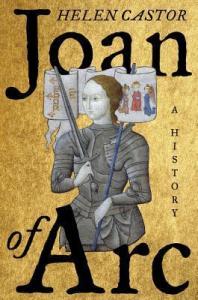 We all believe we know the story of Joan of Arc, one of the patron Saints of France. A young peasant woman who God called to lead the dauphin to the altar to be crowned King Charles VII of France in a time of civil war between the Armagnacs and the Burgundians, as well as the continuation of the war between England and France. It was a political quagmire, but somehow, as the story goes, Joan of Arc resolved the civil war and gave France a fighting chance against the English. But what did Joan of Arc actually accomplish during her short life? Helen Castor examines the life of this extraordinary young woman in her book “Joan of Arc: A History.”
 Lady Katherine Turner was never meant to be the Countess of Leicester, but when her brother William dies suddenly, she must take on the mantle of power. Unfortunately, with power comes responsibility, and in medieval England, women in power could not hold onto that power unless they married. That does not sit well with Katherine, who is a very independent woman. However, a choice must be made between two suitors, Lord Henry Tyrell, Earl of Dornton, and Lord James Stanford. Who will Lady Katherine Turner choose, and can she maintain her independent spirit while falling in love? Laura Johnson-Smith explores Lady Katherine’s love story in her debut novel, “The Rose Amongst the Thorns.”
 Medieval England, under the reign of Henry II and Eleanor of Aquitaine, was a turbulent time. The focus tends to be on the rebellion of Henry’s sons against their father and how Eleanor sided with her sons. This story has been told, but there is a story of another woman who was caught directly in the middle of the entire ordeal. Her story is most known for her role during the reign of King John and the Magna Carta, but that was when she was an older woman. The story of Nicola de la Haye and Lincoln Castle has been told in biographies and nonfiction books, but not really in historical fiction novels. Rachel Elwiss Joyce hopes to change that with her novel, “Lady of Lincoln.”
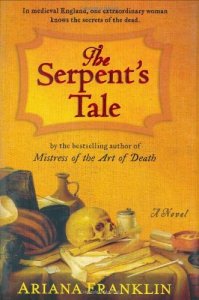 The story of Henry II and Eleanor of Aquitaine is legendary. The queen of France decided to divorce her first husband and marry the young upstart Henry Plantagenet. But things turned disastrous for the couple when Eleanor sided with their sons in a revolt against Henry later in life. At this time, Henry took a mistress named Rosamund Clifford, but when Rosamund was found dead in her tower, it is believed that Eleanor exacted her revenge on the poor woman. It is now up to Adelia Aguilar to solve the case before another civil war breaks out. This is the premise of book two in the Mistress of the Art of Death series by Ariana Franklin, which is entitled “The Serpent’s Tale.”
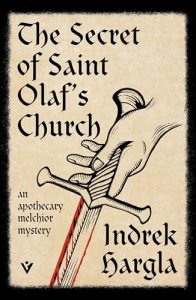 15th-century Estonia was at the edge of Christendom. It also just finished facing off against the notable Victual Brothers, a band of brigands and pirates who wreaked havoc across the land. In the town of Tallinn, St. Olaf’s Church is being constructed, but nefarious dealings are coming to the surface. A serial killer is turning this once peaceful town, which is finding its identity on its head. Now, an apothecary named Melchior Wakenstede must help the magistrate solve the case before anyone else is killed. This is the premise for the first Apothecary Melchior Mystery by Indrek Hargla, entitled “The Secret of Saint Olaf’s Church.”
 When we think about significant law documents from medieval England, we think about the Doomsday Book, the Assize of Clarendon, and the Statutes of Westminster. These documents would remain significant to England, but there is only one that would transcend its original purpose: the Magna Carta. To many nations, it is the foundation of liberty and justice for all. But, if we take away all the sparkling praise of the present day for the document, what can we discover about the Magna Carta? What was the Magna Carta truly at its heart, and why was it written? Dan Jones examines this document and the circumstances behind its creation in his book, “Magna Carta: The Birth of Liberty.”
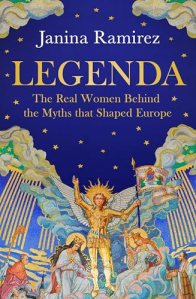 When we think of famous medieval European women, we often think of figures like Joan of Arc and Isabella of Castile. They are seen as women who broke the mold and challenged traditional stereotypes by becoming leaders in traditionally male-dominated fields. These women would be used to craft the identities of their respective nations, but they would help shape the identities of other women from the 18th and 19th centuries. We think we know the stories about these medieval women and their lives, but what new information can we learn from their lives when we examine their lives from their eras? Janina Ramirez takes the stories of seven medieval women and their contemporaries to show how their legacies have been transformed in her latest book, “Legenda: The Real Women Behind the Myths That Shaped Europe.”
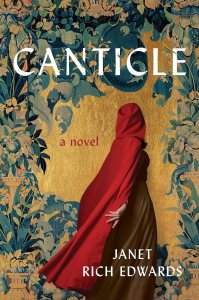 Have you ever believed in something or someone so much that you were willing to do anything to be with them? What if it meant isolating yourself from everyone and everything you loved? Aleys knows this all too well. Born near Bruges during the 13th century, Aleys believes that she is destined for great things and has religious visions. Can this young woman survive both religious and political challenges to make her aspirations of being closer to God a reality, or will she fly too close to the sun and lose everything? Janet Rich Edwards tells Alleys’ tale in her debut novel, “Canticle.”
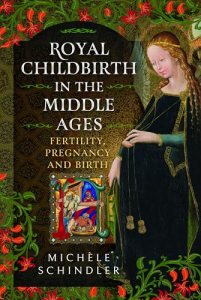 Throughout history, many aspects of life have changed drastically, but one thing has remained the same: the different stages of life—birth, youth, adolescence, adulthood, old age, and death. It is the first stage of life, birth, that tends to get the least amount of attention when it comes to historical research. In recent years, it has been gaining more and more attention, especially when it comes to royal births, which have the most amount of written records. Michele Schindler has chosen to focus on the aspects of medieval childbirth in her latest book, “Royal Childbirth in the Middle Ages: Fertility, Pregnancy and Birth.”
 Adventures of a Tudor Nerd