 I am pleased to welcome Jane Loftus to my blog today to share a guest post about the historical setting of her novel, “The Herb Knot.” I would like to thank The Coffee Pot Book Club and Jane Loftus for allowing me to participate in this blog tour.
The historical setting for the Herb Knot is mainly Winchester, where I live (which makes things a lot easier!). The early chapters were set in Ghent, where I used maps, drawings, pictures, and the history of the Flanders cloth trade as a guide, but tried hard to focus on people and their interactions rather than straying too far into descriptions of Ghent itself. I’ve never been to Ghent, although, as it happens, I will be there at the end of August.
Winchester, however, is within walking distance of my house, and its medieval layout and industry have been extremely well documented. The city itself was the former capital of England and seat of King Alfred, but compared to many other cities – Salisbury, for instance, which is also mentioned in the novel – it is quite small. This gives the author fewer opportunities for geographical variety – you’re not going to get docks, as you would in Southampton, or mazes of streets to get lost in, as you would in London. However, this does have advantages.
When Rafi looks out the window in Joan’s turret, it is perfectly feasible for him to have seen all the way down the high street to where his enemies were having a menacing huddle. When he runs from Stefan and gets stuck at the bottom of Hammond’s passage, there really isn’t anywhere else for him to go. He can’t wander unseen through Seven Dials or hide in a Southampton dock warehouse. Unless you leave the city and hide out in the marshes or woods, you’ll probably get caught.
It does make Rafi’s attempts to hide from Roger as he goes about his business that much more difficult, and, ultimately, futile. Roger could stand in any number of places on the High Street and see absolutely everything. It does eventually bite Roger on the backside when Rafi is able to see him leg it up Blue Boar Hill and follow him, but we all know that incident doesn’t end particularly well.
In terms of comparisons with then and now, the castle gate is still there, although the castle itself is long gone. The Guildhall has moved, the inns are now shops, and the Helle Tavern is somewhere beneath Montezuma’s chocolate shop and Occitane, the beauty shop. Not sure either of these would appeal to Adam as much as a large, frothy ale. St Maurice’s, where the curfew bell was rung, is just a tower now, with a flower market underneath. The Abbey has completely gone, bar a few stone tombs near the Tourist Information Board, and the charnel chapel is (probably) under the public toilets in Abbey Gardens.
The cathedral, of course, is still there. There are no markets in the immediate environs anymore; they’re on the High Street. It is not, as Rafi observes, as graceful and elegant as Salisbury Cathedral. It’s squat, it’s square, it’s a bit in your face. But it’s quite lovely and I’m very fond of it even though it was put there by the Normans and I’m not much of a fan of theirs. The top cathedral they built there, though. Gotta give them credit for that.
St John’s is still there, on the hill in the east, overlooking the city. As with many churches, it’s rarely open. It is outside the soke, so not within the city proper, and as you climb, it’s as if you’re in a completely different world. It’s suddenly quieter; there are usually very few people around. If you decided to do a Stefan and hurl someone at a hawthorn tree, you probably wouldn’t be seen (please don’t do this). The frieze is still there and is quite remarkable.
Doesn’t feature top of the list of things to do in Winchester, but it’s top of my list. If it’s open, go in; you won’t be disappointed.
Try not to hide under any tombs, though.
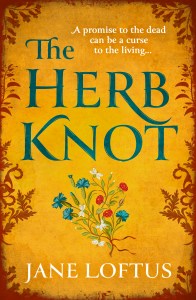 Blurb:
The Hundred Years’ War comes to life in this spellbinding tale of love, betrayal, and conspiracy …
A quest born on the battlefield will change a young boy’s destiny…
Rafi Dubois is five years old when his mother is murdered after the Battle of Crecy in 1346. Alone and lost, Rafi is given a token by the dying Englishman who tried to save his mother’s life: a half-broken family seal which he urges Rafi to return one day to Winchester.
Years later, when Rafi saves a wealthy merchant’s wife from a brutal robbery, he is rewarded with the chance to travel to England, taking the seal with him.
But when he reaches Winchester, Rafi finds himself in a turbulent world full of long-held allegiances, secrets, and treachery. His path is fraught with danger and with powerful enemies working against him, Rafi falls in love with Edith, a market apothecary. But in doing so, Rafi unleashes a deadly chain of events which threatens to overwhelm them both…
The Herb Knot is a sweeping and passionate novel set in one of the most tumultuous times in English history, from a powerful new voice.
Buy Link:
Universal Buy Link: https://books2read.com/u/bzN6Z2
 Author Bio:
Jane Loftus gained a degree in 16th-century European and British history from Surrey before taking a postgraduate degree in modern political history. As a lone parent, she worked in Winchester Waterstones before returning to IT once her son was older.
Hugely passionate about the Middle Ages, she drew inspiration for this novel from the medieval layout of Winchester, which has been painstakingly documented.
Jane is originally from London but has lived in Winchester for over twenty years. When not writing, she is usually out walking or watching costume dramas on Netflix – the more medieval the better. She also plays far too many RPGs.
Author Links:
Website: https://janeloftus.com/
Facebook: https://www.facebook.com/profile.php?id=61577760507961
Instagram: https://www.instagram.com/janeloftusauthor/
Bluesky: https://bsky.app/profile/janeloftus.bsky.social
Amazon Author Page: https://www.amazon.co.uk/stores/author/B0F3Q52X9Y
Goodreads: https://www.goodreads.com/author/show/29357528.Jane_Loftus

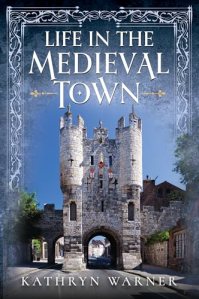 Have you ever watched a movie, played a video game, or read a novel set in the Middle Ages and wondered if life was really like that? Was it super dirty, grimy, and deadly, or is this a fictional device to show how bad the past was compared to the present? Kathryn Warner has delved into the archives to uncover the truth about what life was like in an average medieval town for her latest book, “Life in the Medieval Town.”
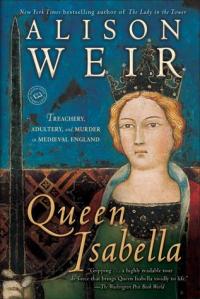 Throughout medieval English history, there have been some famous queens who left their marks. Empress Matilda, Eleanor of Aquitaine, Eleanor of Castile, Philippa of Hainault, and Margaret of Anjou each left an impression on English history, either good or bad. However, there was one queen whose negative reputation came with the nickname “She-Wolf of France,” and her name was Queen Isabella of France. The wife of Edward II and mother of Edward III, she left her husband for Roger Mortimer and overthrew her husband in favor of her son. For centuries, she has been viewed as a horrible villainess, but is that a fair assessment of her life? Alison Weir dives into the archives to find the truth about Isabella of France, and she presents her findings in her biography, “Queen Isabella: Treachery, Adultery, and Murder in Medieval England.”
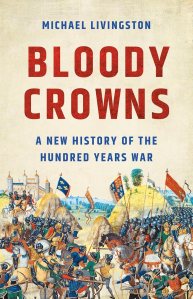 Medieval Europe was a time of conflicts and change. While smaller disputes between countries or civil wars would define borders, the most prominent conflict during this period was the Hundred Years’ War. A conflict that has been traditionally taught to have lasted 116 years between England and France. It is often told from the English perspective, with battles such as Agincourt, Crecy, and Poitiers celebrated. But what if we look at the bigger picture and expand our lens to the whole of Europe while keeping a neutral approach to the France vs England conflict? What if the conflict did not last a mere hundred years, but in fact two hundred years? What type of story would this kind of approach tell when it comes to medieval European history? Michael Livingston takes on the mammoth challenge of telling the tale of how this war changed European history forever in his latest book, “Bloody Crowns: A New History of the Hundred Years War.”
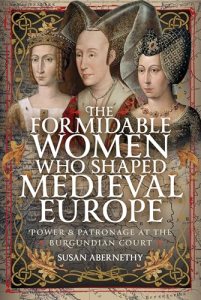 Throughout European history, we tend to think about the countries as a whole when it comes to the political sphere of influence. We think of the big countries like France, Spain, Italy, Germany, Austria, and England as having the most impact, but we have to consider that during the Middle Ages, duchies held immense power. Take, for example, the Duchy of Burgundy, also known as the Burgundian Empire. It was a part of France, but that does not mean that the dukes stayed on the side of the French. The Burgundians used their influence to expand and marry into the medieval European families, affecting European history as a whole. While we tend to focus on the Dukes of Burgundy, we should be paying attention to the women of this duchy. That is why Susan Abernethy chose to focus on these women in her latest book, “The Formidable Women Who Shaped Medieval Europe: Power and Patronage at the Burgundian Court.”
 The weather is getting colder, and life is getting a bit busier in preparation for winter and family gatherings. It’s time to get ready for the holiday season, and there is one that is universally loved. No, it’s not Halloween, even though it is October when I am writing this review. No, I am talking about Christmas. But one wonders what the origins of Christmas and how our traditions evolved? Toni Mount explores this most important holiday time in her latest book, “Medieval Christmas: The Origins and Traditions of Christmas in the Middle Ages.”
 Today, I am pleased to welcome Ken Tentarelli to share information about his research into Renaissance Italy for his novel, “The Blackest Time.” I would like to thank The Coffee Pot Book Club and Ken Tentarelli for allowing me to participate in this blog tour.
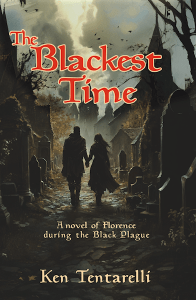 Blurb:
  Author Bio
 The Plantagenets, one of England’s most dynamic dynasties, were always in the middle of some sort of conflict. Whether they were fighting foreign adversaries, their own people, or their own family, it felt like the Plantagenets were always getting into some sort of trouble. And there was one king who knew how to use the weaknesses of the kings of England to his advantage. He was King Philip II of France, also known as Philip Augustus. He had to deal with four different Plantagenet kings and had a strategy for each one of them. Just what were Philip II’s strategies, and how did his reign affect English/French relationships as a whole? These questions are answered in Catherine Hanley’s book, “Nemesis: Medieval England’s Greatest Enemy.”
 Today, I am pleased to welcome Julia Ibbotson back to my blog to share a blurb for her novel, “A Shape on the Air.” I would like to thank The Coffee Pot Book Club and Julia Ibbotson for allowing me to participate in this blog tour.
  Blurb:
 Author Bio
 When we think about how we study history, we often consider documents and chronicles that can provide us with dates and the stories of historical figures. However, this is only half the story. We can learn a great deal from the artifacts left behind. Each era left behind its treasure trove of trinkets for archaeologists and historians to discover and interpret their meanings and purposes. One of the most fascinating periods of history was medieval Europe, full of war, religious struggles, artwork, plagues, and technological advances. What types of artifacts were left behind from medieval Europe? Lorris Chevalier explores the trinkets and artifacts left behind in his book, “A Medieval Cabinet of Curiosities.”
 Adventures of a Tudor Nerd