
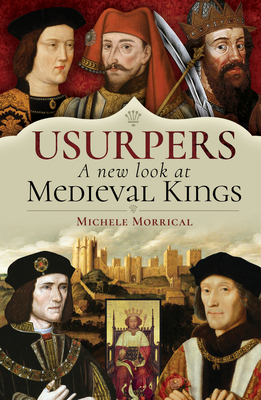
In medieval Europe, to be considered a strong king, you must keep a firm grasp on your crown, or those who see you as weak will take advantage. These men were known as usurpers throughout history who steal the throne through combat or by illegal means. Some of the most well-known kings in English history have been categorized as usurpers, but is this a fair assessment of their mark in history, or is it a case of propaganda changing their legacy? In her debut nonfiction book, “Usurpers, a New Look at Medieval Kings,” Michele Morrical explores the lives of six English kings who bear that title to see if it makes sense with the facts of how they came into power.
I would like to thank Net Galley and Pen and Sword Books for sending me a copy of this book. When I heard this book was published, I wanted to see how Morrical described a usurper and which king she considered usurpers. I have never heard of a book that focused solely on those who stole thrones in England, so I was excited to see how well it read.
Morrical breaks her book into six sections, with each part focusing on one specific king and his rise to power. She focuses on William the Conqueror, Stephen of Blois, Henry IV, Edward IV, Richard III, and Henry VII as examples of rulers in English history known to be usurpers. Morrical writes biography vignettes to give her readers an understanding of how they came to power and who they had to remove from the throne to become the next monarch. In some cases, it meant starting a new dynasty, and in others, it was just a continuation of the family’s lineage, but it was a different branch of the family tree. The biographies tend to get repetitive, especially with the sections dedicated to the Wars of the Roses. If you are new to these kings and the events of their lifetimes, the repetitive nature will help you understand how everything is connected.
I think Morrical can improve if she writes another nonfiction book by using quotes from primary sources and other historians to strengthen her arguments. I wish she had included discussions from chronicles or other primary sources from around the times that these men became rulers to see the consensus of the time towards the new king. It would have added an extra layer to the stories, and readers could see how our definition of a usurper king would have compared or contrasted to the views of the past. I would have also liked Morrical to have discussed whether being a usurper king had a positive or negative connotation. Many kings on this list were considered game-changers when ruling England and transformed how England was viewed in the grander scheme of European politics.
I think for her first book, Morrical does a decent job of presenting her viewpoints about certain kings and presenting the facts about their lives. One can tell that Morrical is passionate about usurpers and understanding why they took the English throne from their predecessors. Overall, I think it is not bad for a book that combines the lives of six kings of England into one text. If you want a good introductory book into the lives of usurper kings, you should give “Usurpers, a New Look at Medieval Kings” by Michele Morrical a try.
 In the middle of the night on November 25, 1120, screams could be heard from the English Channel. A ship known as The White Ship hit a rock and began to sink. Those on board were the glamorous English elite, including the legitimate son of King Henry I, William Aetheling. In an era where people feared the sea and could not swim, those on board sank to their watery death on that cold winter night that began with such frivolity. No one knew that night that this one disaster at sea would cause a dynastic struggle that would lead to the founding of the infamous Plantagenet dynasty. In his latest book, “The White Ship: Conquest, Anarchy and the Wrecking of Henry I’s Dream”, Charles Spencer takes his readers on a journey to fully understand the impact that this tragedy had on the English royal family.
 The year is 1399 in Paris and the royal family is concerned about the Priory in Poissy. Something has happened behind the cloistered walls and only one person who is extremely loyal to the king and queen can figure out what is amiss, Christine de Pizan the famous medieval writer. Christine goes to Poissy to act as a copyist for the prioress, but she soon finds herself in the middle of a sinister murder case. A nun has been found dead and it is up to Christine and her allies, plus one frenemy, to figure out who killed the nun while protecting the king’s youngest daughter who calls the priory home. Can Christine figure out who murdered the young nun and make it out of the priory alive? This is the premise of Tania Bayard’s latest installment of her Christine de Pizan murder mystery series, “Murder in the Cloister”.
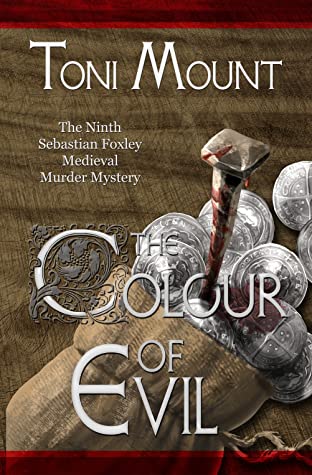 Money problems litter the streets of London like debris. Those who have money have power. Yet, there are those who try to beat the system by making their own counterfeit currency to beat the system. When this counterfeit currency leaves to murder, only Seb Foxley and his merry band of friends and family members can bring justice to those who were killed. When unexpected complications arise, like Seb’s wayward brother Jude coming home with an Italian child bride and a commission from King Edward IV himself, can Seb solve the case before anyone else becomes the next victim in this vicious cycle of greed and exploitation? Toni Mount takes her readers on another thrilling adventure in, “The Colour of Evil”, the ninth installment of the Sebastian Foxley Medieval Murder Mystery series.
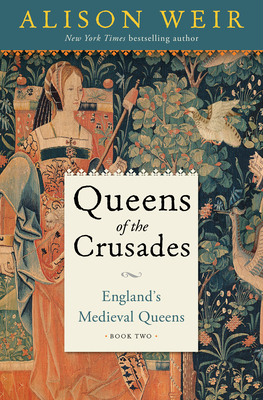 One of the most prominent royal families of English history was the Plantagenets, who reigned for over three hundred years. In the first one hundred years of this family’s infamous history, five kings ruled (the first two are considered kings of the Angevin dynasty): Henry II, Richard I, John, Henry III, and Edward I. These five kings saw England change drastically, but they also participated in the international political landscape of the day, which involved the series of wars that today we simply refer to as the Crusades. The early Plantagenet kings saw much bloodshed and war, but they were not alone in their struggle to keep the dynasty going. These men would not have gotten as far as they did without their wives who stood by their sides. In Alison Weir’s latest installment of England’s Medieval Queens series, “Queens of the Crusades”, she takes a deep dive into the lives of the first five Plantagenet queens to show how remarkable these women truly were to stand beside their husbands during the times of the Crusades in Europe.
 In the times of medieval kings, the power of the crown was dependent on the support that they maintained with noble families. One of the most notorious noble families in England was the baronial family known as the Despensers. Between the 13th and the 15th centuries, the Despensers were at the heart of royal politics and some of the biggest power plays during the reign of the Plantagenets. We know about the few members who truly made waves during this time, especially Hugh Despenser the Elder and Hugh Despenser the Younger, but this family’s story is much more than a few members. In Kathryn Warner’s latest book, “The Rise and Fall of a Medieval Family: The Despensers”, she takes on the challenge of explaining the entire family story of this infamous baron clan.
 Numerous castles with remarkable stories dot the landscapes of many European countries, especially England. Few are in good condition whereas others are in a rather ruinous stage. In the village of Sheriff Hutton, there is a shell of a once illustrious castle that protected England and its monarchs for centuries, aptly named Sheriff Hutton Castle. For those who are familiar with the family York and the Nevilles of the Wars of the Roses, you might be familiar with the name of this castle, but do you know the entire story of the castle? Why was this castle so significant to the history of northern England and why did it fall into disarray? These questions and more are explored in Alexander Hill’s debut book, “A Princely Lodging: A History of Sheriff Hutton Castle”.
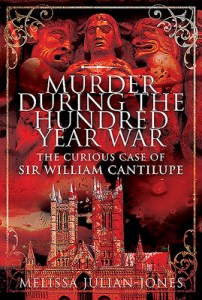 In 1375, the body of Sir William Cantilupe was found murdered in a field. He was stabbed multiple times, yet it looked like he was moved as his clothing had no marks on it. The initial investigation pointed to William Cantilupe’s immediate family and his household staff who appeared dissatisfied with how he ran his household. This particular case has been an area of fascination for medieval historians for centuries as it explores different aspects of life during the Hundred Years War. Some of these areas include domestic violence, social norms, law and order, and the punishment for crimes like murder. Melissa Julian-Jones explores every aspect of this case while combining contemporary sources to give readers a new approach to this murder in her book, “Murder During the Hundred Year War: The Curious Case of Sir William Cantilupe”.
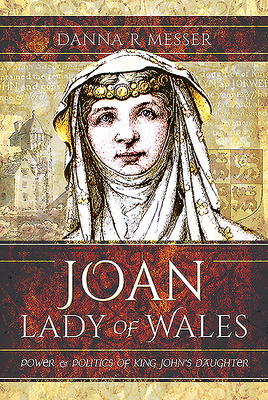 Medieval women held many different titles that defined their roles and their connections. Mothers, daughters, and wives tended to be the most popular and the most common. Titles such as queen, political diplomat, and peace weaver tend to be rare and given to women of power. Yet, these words accurately depict a unique woman who lived during the Angevin/ Plantagenet dynasty. She was the illegitimate daughter of the notorious King John and the wife of Llywelyn the Great, a Prince of Wales. She worked tirelessly to establish peace between England and Wales, yet she has not received much attention in the past. Her name was Joan, Lady of Wales, and her story is brought to life in Danna R. Messer’s book, “Joan, Lady of Wales: Power and Politics of King John’s Daughter”.
 Adventures of a Tudor Nerd