
 The year is 1517, and Florence is experiencing great change. No longer is it a grand republic that it once was; instead, it is under the control of the Medici family. They ruthlessly controlled Florence, especially Pope Leo X, who was born Giovanni di Lorenzo de’ Medici. The people suffer as the Medici become increasingly wealthy, but a band of misfits and thieves plan to give some power back to the people with one of the greatest heists of 16th century Italy. Can they survive as a group when revelations from the past and dangers lurk around every corner? The adventure with this ragtag team of thieves as they fight for Florence is explored in Caitlin Schneiderhan’s novel, “Medici Heist.”
I want to thank Feiwel and Friends and Net Galley for sending me a copy of this novel. It’s been a little bit since I read a new YA historical fiction novel, and so when I read the description of this one, I jumped at the chance to read it. I like a good novel set in Italy during the Renaissance, so I wanted to see what Schneiderhan could bring to the genre.
We kick off with Pope Leo X in all his grandeur entering the city and being greeted by a girl named Cat throwing a mud pie at the Pope. This incident sets the mood of the city towards the Medicis. We then jump to meeting our main four protagonists; the con woman/ leader of the misfits Rosa Cellini, Sarra the Tinkerer, Khalid the skilled fighter, and Giacomo the master of disguise. Along with the apothecary Agata, Dominic the apprentice, and even Michelangelo, the crew has decided that the only way to free Florence from Medici rule was to steal the indulgences that the people gave the church for the forgiveness of their sins so they spend less time in purgatory when they died. The Medicis were able to gather about 10,000 florins, an impressive amount that the band of thieves hoped to split evenly. However, complications do arise such as unexpected reminders of the past, romances, and those who want the treasure for their nefarious purposes.
While I do applaud Schneiderhan for writing her first-ever historical fiction novel, which is not an easy task, I did have a few issues when I was reading this particular novel. I felt like this book read more like a screenplay in that it gave locations and information, but it was hard to visualize for someone who cannot see these locations as images. The characters felt a bit generic and blended together, especially with the short chapters that might have been purposeful to get through the story quickly, but I was not able to build a connection to these characters. Finally, I feel like this story does not feel like it could take place in the 16th century, except for a few famous name drops, historical places, and the currency used at the time. It feels too modern and it could be put into any period and it would still work. I wanted to get lost in 16th century Florence and that did not happen for me.
Overall, as a YA heist book, I think it is a pretty good book, but it missed the mark when it came to the historical element for me. I feel like the concept of this book was strong, but the execution was a bit lacking. It was a difficult book for me to read and at times, I did want to put it into a did not finish pile, which I never do with books. I know that some books just are not right for me, but they might be right for other people, which is why I continued to read this book. If you do want to read this book, it might be a good idea to have a device next to you to look up the locations mentioned to help visualize what is happening. If you want a heist book with some history sprinkled in, “Medici Heist” by Caitlin Schneiderhan might be the book for you.
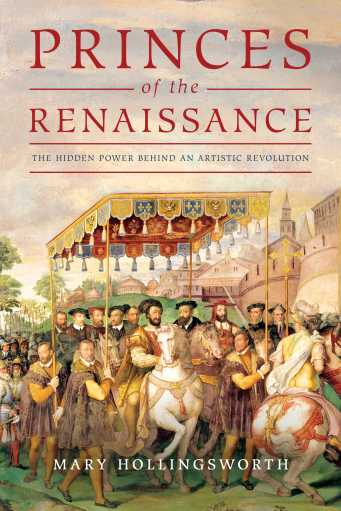 The 15th and 16th centuries were full of dynamic political and religious reforms, but they were also known for cultural changes throughout Europe. The medieval foundations started to crumble, and the early modern age emerged. One of the centers of change was Italy, a series of states with their rulers vying for power and prestige. These rulers would help finance masterpieces in art, literature, and architecture, but it was their rivals that threatened to tear the Renaissance society apart. In “Princes of the Renaissance: The Hidden Power Behind an Artistic Revolution,” Mary Hollingsworth explores the lives of the men and women who helped shape the Renaissance.
 A man ahead of his time who never finished the tasks that he was given as his mind was constantly racing, thinking of new ideas. This is what we consider a genius or a Renaissance Man today, but during Leonardo da Vinci’s time, it was just considered odd. Leonardo da Vinci was an enigma. He could make the impossible possible. His art seemed to leap off the canvas with its realism. However, there are still so many mysteries surrounding his life and his works. What made this one artist/inventor so fascinating for centuries? In her book, “The Real Leonardo da Vinci” Rose Sgueglia opens the curtain to reveal Leonardo da Vinci’s truth and inner circle.
 Adventures of a Tudor Nerd