
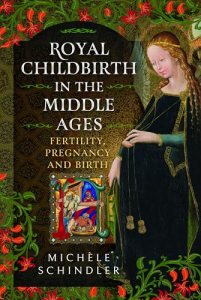
 Throughout history, many aspects of life have changed drastically, but one thing has remained the same: the different stages of life—birth, youth, adolescence, adulthood, old age, and death. It is the first stage of life, birth, that tends to get the least amount of attention when it comes to historical research. In recent years, it has been gaining more and more attention, especially when it comes to royal births, which have the most amount of written records. Michele Schindler has chosen to focus on the aspects of medieval childbirth in her latest book, “Royal Childbirth in the Middle Ages: Fertility, Pregnancy and Birth.”
I would like to thank Pen and Sword Books and Net Galley for sending me a copy of this book. I have enjoyed the previous book that I have read by Michele Schindler, and so when I saw that she had a new book about the medieval period out, I was excited to read it. I have read a few books that featured childbirth, primarily in the Tudor period, but never when it comes to the medieval period, so I wanted to learn more.
Schindler has decided to divide her book into sections, each part focusing on a different stage of childbirth: conception, pregnancy, birth, baptism, infant care, and how society as a whole understood childbirth as part of a woman’s life. Each section has sub-sections that explore aspects like miscarriages, twins, confinement, stillbirths, wet nurses, and deaths during infancy. These are very heavy topics, but they are discussed in a respectful manner.
To give context to the topics discussed, Schindler uses examples from multiple centuries to show how royal and noblewomen dealt with childbirth and its struggles. Some of the women featured in this book include Margaret Beaufort, Margaret of Anjou, Eleanor Cobham, Isabella of Castile, Alice Chaucer, Anne Neville, and Elizabeth of York. She also compared these lives and how they experienced childbirth to the common people to show the difference in status and the importance of ceremonies like confinement to the nobility.
Overall, I found this book to be really well researched, as well as being pretty easy to follow along with. I found a deeper appreciation for medieval women and what they had to go through to have a child. If you want to learn more about medieval childbirth practices pertaining to the higher echelons of society, I would recommend you read “Royal Childbirth in the Middle Ages: Fertility, Pregnancy and Birth” by Michele Schindler.
 The weather is getting colder, and life is getting a bit busier in preparation for winter and family gatherings. It’s time to get ready for the holiday season, and there is one that is universally loved. No, it’s not Halloween, even though it is October when I am writing this review. No, I am talking about Christmas. But one wonders what the origins of Christmas and how our traditions evolved? Toni Mount explores this most important holiday time in her latest book, “Medieval Christmas: The Origins and Traditions of Christmas in the Middle Ages.”
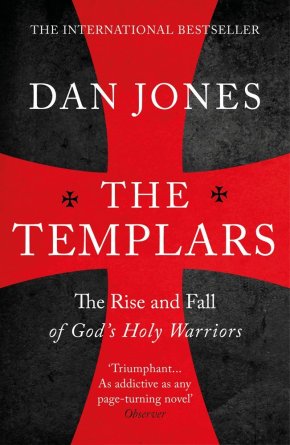 The Crusades were a series of wars between Christian and Muslim warriors for the right to control the Holy Lands of the Middle East. Many men on both sides earned legacies that would surpass their earthly bodies during bloody battles. It created many bands of knights that would last for generations, such as the Hospitallers and the Teutonic Knights. The Templars were the most famous of these knight groups, who may have lasted only for less than two hundred years, but whose legacy would turn into myth. Dan Jones has taken on the arduous task of discerning fact from fiction about the Templars in his book, “The Templars: The Rise and Fall of God’s Holy Warriors.”
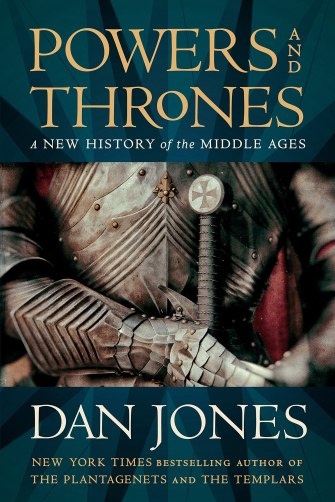 When we study human history, in general, we tend to pick a country and a period to focus on and research. Books on the subject material tend to focus on one land with interactions between other nations. It is infrequent for authors to take on multiple countries unless concentrated on one event that affected numerous locations. Those books often read like textbooks and can be a bit dry. Finding the perfect balance between these elements and engaging with the reader is a monumental task for any author, but Dan Jones has taken on the challenge. His latest behemoth tome, “Powers and Thrones: A New History of the Middle Ages,” takes on the gigantic task of telling the story of the Middle Ages from diverse perspectives.
 When we think of knights, we often think of shining armor, King Arthur and his fabulous court, fair maidens, and of course chivalry. These are considered to be literary ideals, almost too fantastic to be real. However, knights did live in the Middle Ages into the 14th century where some of the greatest knights lived. One is known as The Black Prince; the other was John of Gaunt. Both were brothers, sons of Edward III, the one who helped launch the Hundred Years’ War with France. The Black Prince might have a pretty cool nickname, but the one who really stole the show was John of Gaunt. The subject of Norman F. Cantor’s book “The Last Knight: The Twilight of the Middle Ages and the Birth of the Modern Era” is none other than the third son of Edward III, John of Gaunt.
 Adventures of a Tudor Nerd