
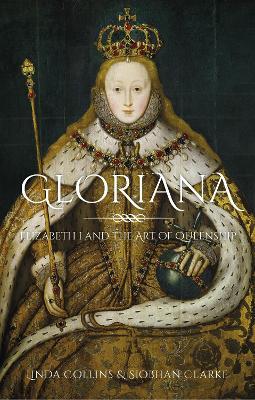
 A queen locked in a struggle of being a single woman and the sole ruler of her kingdom must create the image that would help lead her divided country to a golden age. This image must comfort her people while showing strength and perseverance to her enemies who would try to take the throne from her. Elizabeth I worked hard with artists, poets, playwrights, and musicians to create the almost mythological image of “Gloriana,” the virgin goddess. Linda Collins and Siobhan Clarke explore how this image was created throughout Elizabeth’s reign in their latest book, “Gloriana: Elizabeth I and the Art of Queenship.”
When you first see the title of this book, you would assume that it will be yet another biography with art sprinkled in. You would be wrong. This book focuses solely on the different forms of artwork that built the Gloriana persona over the decades of Elizabeth I’s reign and how we perceive the pieces of art centuries later. Each section of this book discusses a particular aspect of Elizabeth’s reign while examining how art changed with a different artist or courtier highlighted, alongside portraits and miniatures thoroughly inspected for the symbolism hidden in plain sight.
I love examining Tudor-era artwork on my own to try and crack the code behind the symbols they chose to use, especially Elizabethan portraits, particularly The Rainbow Portrait. Collins and Clarke’s examination of the symbolism in each portrait and miniature, including dendrochronology to determine when paintings might have been painted, was captivating and enlightening. It reminded me of a history class I took in college about art history, which I have fond memories of learning about how art changed up to the Renaissance. I found it equally fascinating that they chose to highlight the life of Nicholas Hilliard, who does not get enough attention as a Tudor artist compared to Hans Holbein the Younger.
However, Collins and Clarke examine more than just the typical portraits, paintings, and miniatures. The myth of Gloriana would not have survived without poets, musicians, and playwrights, like Edmund Spenser, Thomas Tallis, William Byrd, and William Shakespeare. It was a multi-faceted effort to promote the Elizabethan propaganda that allowed Elizabeth not only to survive but for England to thrive.
“Gloriana: Elizabeth I and the Art of Queenship” by Linda Collins and Siobhan Clarke is a delightful book for any Tudor or art nerd in your life; informative, educational, and easy to read. Each page will give you a better understanding of Elizabeth I’s reign, her propaganda, and the myth of Gloriana.
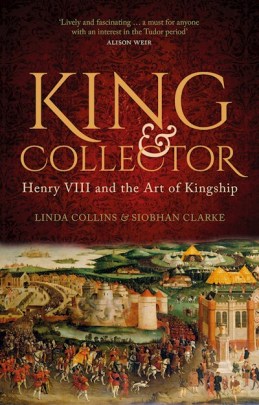 When we think of the legacy of King Henry VIII, a few descriptions come to mind—married six times, father of three children who would be the king and queens of England one day. We often see him as a man conflicted with religious changes and someone who could be tyrannical when dispatching his enemies and those closest to him. We don’t usually associate Henry VIII with a collector and patron of fine art, but his collection would help bring the Royal Collection to life. The artwork that Henry VIII commissioned and collected tells how he wanted to be viewed by the world. In “King and Collector: Henry VIII and the Art of Kingship,” Linda Collins and Siobhan Clarke peel back the layers of Tudor propaganda to show the truth about King Henry VIII and the artists who made his ideal image.
 Adventures of a Tudor Nerd