
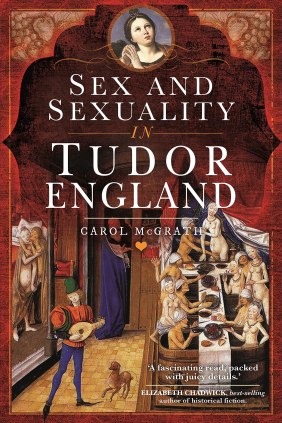
 The study of the Tudor dynasty has led us on many different adventures throughout the centuries. We have analyzed this period from numerous angles, from the royals and nobles to the essential lives of those who lived in England during this time. We tend to leave the more intimate moments for historical fiction novels and dramas, but one must wonder what those moments might have been like for those who lived in Tudor England. What were the romantic and the more intimate moments like for the Tudors? In her book, “Sex and Sexuality in Tudor England,” Carol McGrath gives her readers an in-depth look at these private moments.
I want to thank Pen and Sword Books and Net Galley for sending me a copy of this book. I have heard great things about the Sex and Sexuality series by Pen and Sword Books, so when they announced the book about Tudor England, I knew that I wanted to read it.
McGrath begins by informing her readers that to understand how Tudors viewed sex and sexuality, we must know how the Catholic Church and Protestantism viewed sex. We also see what kinds of aphrodisiacs the Tudors found the most effective, where prostitution reigned supreme for a time, how music and dancing influenced courtship. They viewed hygiene and their overall health through the Humours Theory and how the Tudors viewed witchcraft compared to other dynasties that would follow.
She also mentions how those accused of adultery and impotence were tested and tried and how a couple could prevent an unwanted pregnancy. McGrath makes sure that no stone is unturned in this journey to understand better these private moments from love and lust, sex inside and outside of marriage, clothing, and symbols in art.
One complaint with this title was that she spent a little too much time on Henry VIII and his wives. Still, I wanted to see more about other less known Tudor relationships to gain a more comprehensive understanding of different Tudor relationships.
This is a well-written and informative book on the more private moments in Tudor history. They played a dynamic role in our understanding of the Tudors. It is educational, and a fun read for any fan of the Tudor dynasty. If you want to learn more about the more intimate side of the Tudor dynasty, I highly recommend you read “Sex and Sexuality in Tudor England” by Carol McGrath.
 In human history, when citizens have disagreed with a new law or those in charge, they often stage a protest to show their frustration. When their voices are not heard, people often turn to rebellions and revolts to make sure their opinions matter. We might think that revolution and rebellion as a form of protest are modern ideas, but they go back for centuries. Revolutions and rebellions shaped history, no more so than in the middle ages. In his latest book, “Rebellion in the Middle Ages: Fight Against the Crown,” Matthew Lewis examines the origins of the most famous rebellions in medieval England and how they transformed the course of history.
 When it comes to studies into the Tudor dynasty, many different approaches have been taken in the past. We have examined every monarch, their spouses, how they lived, what they wore, and the various political events that defined the dynasty. The list is endless to the different studies that have been done with the Tudors, yet there are still new areas of study that are being explored. One of those areas of study is how individuals with disabilities survived in the past. How did society treat those who had disabilities, and what rights did they have according to the laws of the land? In her first non-fiction book, “Disability and the Tudors: All the King’s Fools,” Philippa Vincent-Connolly explores the lives of famous fools and monarchs with disabilities to discover how they were treated by Tudor society.
 As the weather gets colder, the leaves turn brilliant colors and fall from their trees, marking the perfect time of the year to snuggle with a blanket, a cup of tea, and a good spooky tale. Many would reach for a modern supernatural story, but ghost tales have been hiding in archives for centuries. One such story comes from the time of King Richard II. It was first found and transcribed from Latin in 1922 by medievalist M.R. James. Dan Jones has taken on the challenge to retell this story for a modern audience. Initially written by an unknown monk of Byland Abbey, this medieval ghost story is called “The Tale of the Tailor and the Three Dead Kings.”
 The period of human history that we know today as the Middle Ages spanned over a thousand years, and within that time, significant progress was made into understanding our world. Inventions and discoveries were made not just in Europe but throughout the known world during this time. One area of study that saw a lot of change was medical studies and understanding the human body. How did physicians heal the sick during the Middle Ages, and how did their experiences change their field of study? These questions and more are all explored in Juliana Cummings’ latest book, “Medicine in the Middle Ages: Surviving the Times.”
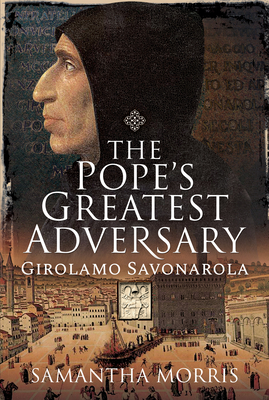 When we think about men who challenged the Church and are known as Reformers, we tend to think of Martin Luther, Jan Hus, and John Calvin. However, a man fought against corruption in his beloved Florence who should be included in the list of great reformers. He was a Dominican monk who was not afraid to preach against sin and took aim at the most powerful men in all of Italy, including Pope Alexander VII. His sermons were so scandalous that they would lead to his demise upon a pyre in the middle of Florence. His name was Girolamo Savonarola, and his story is told in Samantha Morris’s latest biography, “The Pope’s Greatest Adversary: Girolamo Savonarola.”

 Adventures of a Tudor Nerd