
 A man ahead of his time who never finished the tasks that he was given as his mind was constantly racing, thinking of new ideas. This is what we consider a genius or a Renaissance Man today, but during Leonardo da Vinci’s time, it was just considered odd. Leonardo da Vinci was an enigma. He could make the impossible possible. His art seemed to leap off the canvas with its realism. However, there are still so many mysteries surrounding his life and his works. What made this one artist/inventor so fascinating for centuries? In her book, “The Real Leonardo da Vinci” Rose Sgueglia opens the curtain to reveal Leonardo da Vinci’s truth and inner circle.
I would like to thank Net Galley and Pen and Sword Books for sending me a copy of this book. I am one of those people who is familiar with da Vinci’s works, but not so much with his actual life and what made him tick. I have always wanted to read biographies about the great artists of the Renaissance, but I didn’t know where to start. This was the perfect book to start my journey into art history.
To understand da Vinci’s lifestyle later in life, we have to understand his origins. His mother was an absent figure in his life as Leonardo was her illegitimate son, but his father seemed to have taken care of him. Leonardo was trained under Verrocchio where he would learn the skills that would be vital for his art career, however, it was his insatiable appetite for exploring new subjects that would make him a polymath to many.
Sgueglia dives into the intricacies of da Vinci’s life, including his love life which has been debated for centuries. As an illegitimate son, he was not tied down to one location so he frequently traveled and would be employed by some of the greatest families in Italy, including the Borgias, the Medicis, and Ludovico Sforza. Along the way, he would create his own following of artists that were loyal to him until the bitter end. Da Vinci would also encounter fellow masters Donatello and Michelangelo as he competed for commissions.
I think Sgueglia does a decent job introducing the Leonardo da Vinci that she has gotten to know through her research. She also included interviews between her and a researcher of the Mona Lisa as well as the director of a movie about Leonardo da Vinci within this book, which I found fascinating. I think it is these interviews and including the transcripts as part of the book that sets it apart from other biographies about Leonardo da Vinci.
There were a few things about this book that I found a bit off or lacking. My big concern was the lack of illustrations of his lesser-known pieces of art and the artwork of other artists that Sgueglia references. If this is a biography about a well-known artist and inventor, then let’s celebrate the masterpieces and the inventions. I had to find the obscure artworks online while I was reading to act as a companion to get the full impact of what she was writing about. I also think it was a tad repetitive and I would have personally liked to have seen more books in the bibliography for research purposes.
Overall, I found this book was an adequate biography about Leonardo da Vinci. It is easy to read with intriguing facts that will captivate those who are new to da Vinci’s story. There is something intriguing about looking at the man behind these masterpieces and I think Sgueglia does an excellent job of showing a unique side of this artist’s life. If you want a great book that will introduce you to this polymath’s life and times, I recommend you read, “The Real Leonardo da Vinci” by Rose Sgueglia.
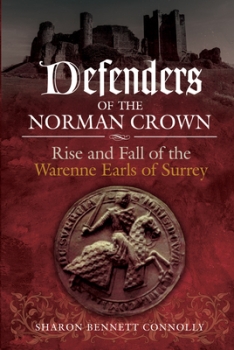
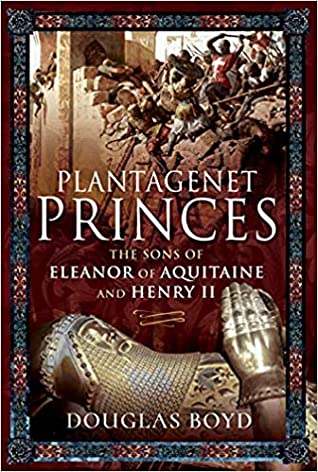 One of the most infamous families in the history of England lasted for over three hundred years and it was filled with numerous princes that fought for their right to rule, much to the chagrin of the Tudor dynasty. The Plantagenet Dynasty was full of scandals and bloodshed, testing the core values of what it meant to be a family and rulers of an emerging country like England. This dynastic clash for power that came to define this dynasty began with Henry II and his sons by his wife Eleanor of Aquitaine. When their father refused to give the boys any true power, which was to be excepted with all princes, his sons waged war against Henry II and their brothers. The stories of these bonds and what ultimately tore them asunder are told in Douglas Boyd’s latest collection of biographies aptly titled, “Plantagenet Princes: The Sons of Eleanor of Aquitaine and Henry II”.
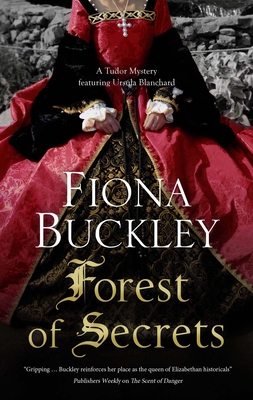 The year is 1586 and Ursula Blanchard is on a mission to protect Queen Elizabeth I. After returning home from a previous mission, Ursula and her household come into contact with a countrywoman named Etheldreda Hope who has brought a peculiar case to the forefront. In the forest by the village that Etheldreda calls home, there have been strange rituals occurring that include reference to an evil queen. Are these rituals harmless or is there a sinister motive behind the beliefs of the pagans who meet in the forest? Will Ursula and her household solve the case in time? This is the premise of Fiona Buckley’s latest Ursula Blanchard Tudor mystery, “Forest of Secrets”.
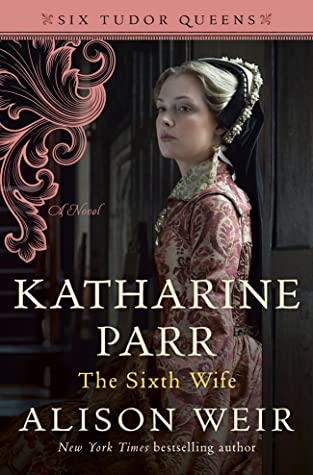 A woman twice widowed with no children of her own has the opportunity to choose who she will marry next. Will she marry the man of her dreams or marry the man who has been married numerous times and has killed two of his wives already? It seems like a no-brainer who she should choose, but the man she married for her third marriage was the man who was married numerous times before simply because he is the notorious King Henry VIII and you do not disobey the king. However, his last wife, Katharine Parr, is willing to fight for the religious reforms and her stepchildren that she loves dearly. In the last book of the Six Tudor Queens series, “Katharine Parr: The Sixth Wife”, Alison Weir takes her readers on an extraordinary journey to explore who this brave woman was and why she is the one who survived Henry’s last days.
 Margery Kempe, the only daughter of the mayor of Bishop’s Lynn, England has made a tough decision in 1413. She has decided to leave her home, her husband, and her fourteen children to go on a pilgrimage to the holy city of Jerusalem as a way to honor her late father’s dying wishes. As she begins her journey, she meets the famous anchoress Julian of Norwich, who entrusts Margery with an important mission. She gives Margery her book Revelations of Divine Love and tells her to spread her message throughout the world in secret. Margery’s pilgrimage, her connection to Julian of Norwich, and the aftermath of her journey are intricately woven together in Mary Sharratt’s stunning novel, “Revelations”.
 In 1483, King Edward IV’s family received a devastating announcement; the king in the prime of his life died, leaving the throne to his young son Edward V. However, neither Edward V nor his younger brother Richard of York would ever see the throne. Instead, they were taken to the Tower of London by their protector, Richard of Gloucester, for protection, never to be seen again. For over five hundred years, many theories have emerged about what happened to the princes in the tower and who might have possibly killed the boys. In MJ Trow’s latest book, “The Killer of the Princes in the Tower: A New Suspect Revealed”, he works hard to uncover the truth of what might have happened to the sons of King Edward IV.
 The year is 1399 in Paris and the royal family is concerned about the Priory in Poissy. Something has happened behind the cloistered walls and only one person who is extremely loyal to the king and queen can figure out what is amiss, Christine de Pizan the famous medieval writer. Christine goes to Poissy to act as a copyist for the prioress, but she soon finds herself in the middle of a sinister murder case. A nun has been found dead and it is up to Christine and her allies, plus one frenemy, to figure out who killed the nun while protecting the king’s youngest daughter who calls the priory home. Can Christine figure out who murdered the young nun and make it out of the priory alive? This is the premise of Tania Bayard’s latest installment of her Christine de Pizan murder mystery series, “Murder in the Cloister”.
 Action, adventure, drama, heartache, and love are what people crave when they read fictional stories. Yet, these elements are ever-present in the stories from the past. Each one of these topics could be explored in numerous ways when we are discussing history, but an area in history where romance and love were intermingled with politics was Elizabethan England. Queen Elizabeth I was obviously known as the “Virgin Queen” because she chose not to marry, but that did not mean that her subjects were banned from love and marriage. How did Elizabethans view the ideas of love, marriage, and sex? In this book, “Sex, Love, and Marriage in the Elizabethan Age”, R.E. Pritchard sets out to explore what love, marriage, and the intimate moments meant to Elizabethans of every class.
 Adventures of a Tudor Nerd