
 Have you ever read about a historical figure and used what they went through to help you get through difficult times? It is as if you read about their life at the perfect time in your life to help you get through your own struggles. Growing up, for me, it was reading about young Elizabeth I. For Ana Garriga and Carmen Urbita, it was reading about 16th and 17th-century nuns, the ones that they were researching for their PhDs. What lessons did Garriga and Urbita find when they were researching two centuries and the nuns who lived during this period? They share the lessons that they learned from the past in their book, “Convent Wisdom: How Sixteenth-Century Nuns Could Save Your Twenty-First Century Life.”
I would like to thank Avid Reader Press/ Simon & Schuster and Net Galley for sending me a copy of this book. I am a novice when it comes to nun research, especially when it comes to those outside of England, so when I saw the title of this book, it was intriguing to me. I wanted to see how they could blend the past with the present day.
Garriga and Urbita met while working on their PhDs at Brown University, and this book follows their journeys as graduate students. They choose to pair their life experiences with those of nuns like Saint Teresa, Maria de San Jose, Catherine of Siena, Veronica Giuliani, and Sor Juana Inés de la Cruz. We get to see these nuns deal with everything from extreme diets, feats of levitation, relationships with other nuns, and entrepreneurship to keep their convents and their own legacies going.
While I appreciate what they were attempting to do, I felt like the modern portions did take away from the stories of the nuns and were a tad distracting for me. I enjoyed learning about the different types of Catholic orders of nuns and fun facts about the nuns. I also enjoyed learning about the authors experiences as graduate students. When the separate elements were put together, it did not work as well as I had hoped in this book.
Overall, this was a decent book. A bit too modern for my taste when it comes to a historical nonfiction book, but that is just a personal preference. I do want to check out their podcast, Las hijas de Felipe, and I want to learn more about some of the nuns mentioned in this book. If you want a self-help book with advice from the past that has a modern twist, I recommend you read “Convent Wisdom: How Sixteenth-Century Nuns Could Save Your Twenty-First Century Life” by Ana Garriga and Carmen Urbita.
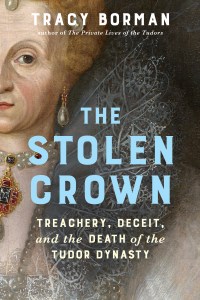 It is March 1603, and the Virgin Queen is dying. She has no children to inherit her throne directly, so she must choose a successor. She chooses the son of Mary Queen of Scots, the queen who had been executed a few years before. James VI of Scotland will become James I of England, but was it as easy as William Camden makes it in his account? What does a recent discovery about Camden’s original manuscript of Annales tell us about James’ succession to the throne of England? Tracy explores the messy conflict to find an heir to the English throne in her latest book, “The Stolen Crown: Treachery, Deceit and the Death of the Tudor Dynasty.”
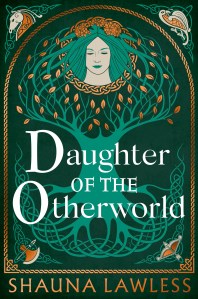 When we think about the Norman Conquest, we often think about how it impacted England, Wales, and Scotland, but we tend to forget about Ireland. Early medieval Ireland do not get a whole lot of attention in historical fiction. That is, until Shauna Lawless’s Gael Song trilogy. Now, fifty years after the events of the original trilogy, Lawless has brought in a new cast of characters, as well as old characters, into the fight between the Descendants of the Tuatha De Danann and the Fomorians. When a child of prophecy is introduced into the mix that is said to be able to defeat the Fomorians, the race is on to protect the child or to kill her. Will the Descendants survive, or will the Fomorians torch the land and the Descendants’ hope? Shauna Lawless jumps back into this work with the Gael Song Era 2 book 1, “Daughter of the Otherworld.”
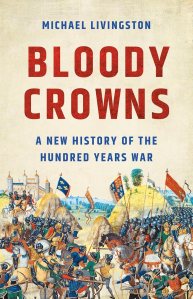 Medieval Europe was a time of conflicts and change. While smaller disputes between countries or civil wars would define borders, the most prominent conflict during this period was the Hundred Years’ War. A conflict that has been traditionally taught to have lasted 116 years between England and France. It is often told from the English perspective, with battles such as Agincourt, Crecy, and Poitiers celebrated. But what if we look at the bigger picture and expand our lens to the whole of Europe while keeping a neutral approach to the France vs England conflict? What if the conflict did not last a mere hundred years, but in fact two hundred years? What type of story would this kind of approach tell when it comes to medieval European history? Michael Livingston takes on the mammoth challenge of telling the tale of how this war changed European history forever in his latest book, “Bloody Crowns: A New History of the Hundred Years War.”
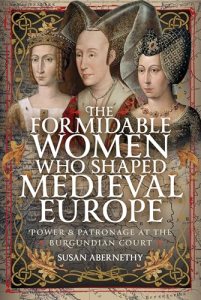 Throughout European history, we tend to think about the countries as a whole when it comes to the political sphere of influence. We think of the big countries like France, Spain, Italy, Germany, Austria, and England as having the most impact, but we have to consider that during the Middle Ages, duchies held immense power. Take, for example, the Duchy of Burgundy, also known as the Burgundian Empire. It was a part of France, but that does not mean that the dukes stayed on the side of the French. The Burgundians used their influence to expand and marry into the medieval European families, affecting European history as a whole. While we tend to focus on the Dukes of Burgundy, we should be paying attention to the women of this duchy. That is why Susan Abernethy chose to focus on these women in her latest book, “The Formidable Women Who Shaped Medieval Europe: Power and Patronage at the Burgundian Court.”
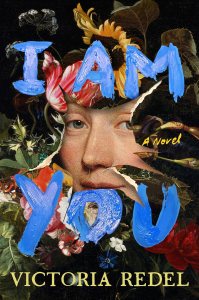 Have you ever looked at a painting and wondered what it must have been like for the artist to paint it? Have you ever wondered what their lives might have been like when they were painting these images that have sparked discussion and intrigue? Usually, we tend to focus on the male artists and their lives, but there has been a trend in recent years to tell the stories of women artists. Take, for example, the story of Maria van Oosterwijk and her maid Geertje Pieters Wyntges. Can these two women find their own successes during Amsterdam’s Golden Age through their art while navigating their own feelings towards each other? Victoria Redel explores the lives of these two women in her latest novel, “I Am You.”
 When we think of Elizabethan England, we tend to think of the Golden Age of England. A time of discoveries and for the arts to flourish under the Virgin Queen, Elizabeth I. However, there is a darker side. It was also a time of espionage, fears of invasions from other countries, and the hatred between Catholics and Protestants. The dangers of the Elizabethan underworld have reached the queen, as there is an attempt on her life. Can Jack, the son of a crime boss, change his life and find the culprit before they find him, or will he be betrayed by those he calls his friends? Amie McNee explores the seedy underworld of Elizabethan England in her novel, “To Kill a Queen.”
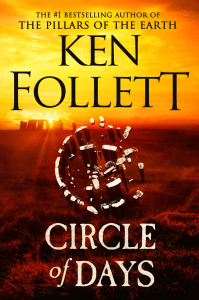 Stonehenge, a marvel of the ancient world that still stands centuries after it was built. It has been the center of mystery and wonder for all who gaze upon it. A gigantic monolithic structure, whose purpose has been a source of discussion since its origins, but that raises another quandary: who were the people who built such an impressive landmark? This single question presents a grand opportunity for historical fiction writers as we don’t have many written records for this period of time, which means authors have room to play. Ken Follett took on the daunting task of telling the tales of those who built this imposing monument in his latest novel, “Circle of Days.”
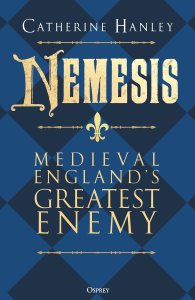 The Plantagenets, one of England’s most dynamic dynasties, were always in the middle of some sort of conflict. Whether they were fighting foreign adversaries, their own people, or their own family, it felt like the Plantagenets were always getting into some sort of trouble. And there was one king who knew how to use the weaknesses of the kings of England to his advantage. He was King Philip II of France, also known as Philip Augustus. He had to deal with four different Plantagenet kings and had a strategy for each one of them. Just what were Philip II’s strategies, and how did his reign affect English/French relationships as a whole? These questions are answered in Catherine Hanley’s book, “Nemesis: Medieval England’s Greatest Enemy.”
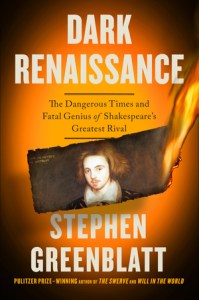 Sixteenth-century England was a time of great change. There were religious changes as the crown passed from one member of the Tudor family to another. Wars and illnesses like the plague and the sweating sickness were rampant. However, this was also a time of an explosion of the arts, particularly of the theatre. We see men like William Shakespeare and Ben Jonson rise from obscurity to write plays that would propel them to become phenomena. There was a third playwright who should be included in this list. He was the son of a cobbler who was educated at Cambridge University. A brilliant man who wrote groundbreaking plays while he was a spy for her majesty Queen Elizabeth I, his cause of death when he was only in his twenties would remain a mystery for centuries. Christopher (Kit) Marlowe’s story is told in Stephen Greenblatt’s latest book, “Dark Renaissance: The Dangerous Times and Fatal Genius of Shakespeare’s Greatest Rival.”
 Adventures of a Tudor Nerd