
 During the reign of King Henry VIII, the king would elevate well-qualified men to positions of power and prestige. We all know the story of Thomas Cromwell, but it is his mentor, Sir Thomas Wolsey, whose story shows how one can rise from humble beginnings, but whose fate is ultimately tied to the mood of the monarch. The son of a butcher turned scholar who became a priest, a lover, a father, and the closest advisor to the king. His life, his loves, his successes, and his struggles are told in Alison Weir’s latest novel, “The Cardinal.”
I would like to thank Ballantine Books and Net Galley for sending me a copy of this novel. I am a fan of Weir’s novel, so when I saw her writing a new one about Sir Thomas Wolsey, I knew I wanted to read it. Wolsey is someone who tends to be a side character, so to have a novel dedicated to his life was an exciting idea.
Weir begins her story with Thomas (known in this novel as Tom) at the age of 11, going to school. His father, Robert Wolsey, is a butcher from Ipswich who wants his son to climb the social ladder in the church. Tom will eventually rise to the level of becoming King Henry VII’s chaplain and will begin working with King Henry VIII. Life for Tom is thrilling with the twists and turns of court life, but the one thing that is missing in his life is someone to share it with. Since he is a member of the church, he cannot marry or have his own family, but things change for Tom when he meets Joan Larke. Their love for each other is genuine, even though it is taboo in the eyes of the church and King Henry VIII, which comes across as quite hypocritical.
It was under King Henry VIII that Tom’s star rose to remarkable heights. He became a Cardinal, was the King’s right-hand man and best friend, and was able to create the architectural marvel of Hampton Court Palace. But his rise in prominence came with a cost. Tom must help the king navigate not only international affairs, such as the Field of Cloth of Gold, but also more personal matters, such as the divorce of King Henry VIII and Katherine of Aragon, which would become known as The Great Matter. Tom would have many enemies at court, including Anne Boleyn, the future wife of King Henry VIII, who would ultimately lead to Tom’s fall from grace.
This is such an engrossing novel about one of the most complex figures of the Tudor dynasty. Thomas Wolsey’s story shows the struggle of fighting for those you love over the ambitions and prestige of the glittering court life. If you want an excellent novel about one of Henry VIII’s closest advisors and his life, I would highly recommend you read “The Cardinal” by Alison Weir.
 Throughout history, pandemics have ravaged human populations and changed the course of history. None more so than the Bubonic Plague, also known as the Black Death. It devastated entire families and altered entire countries, primarily in Europe. Although England is an island nation, that does not mean it could not escape the pandemic’s horrors for long. In her latest book, “The Black Death in England: Journal of the Plague Years in the Fourteenth Century, “ Kathryn Warner explores the lives of the victims of the Black Death throughout England during this century.
 The Wars of the Roses are ending, and with it comes uncertainty about who will lead the country. On one side is King Richard III, who many believe killed his nephews to become King of England; on the other is Breton Henry, Henry Tudor, who believes he is the rightful king due to his bloodline. However, there is a third player in this entire debacle. A young farm boy named John Collan may spend his days daydreaming and studying to his heart’s content, but he is destined for more. A path that will lead him to hobnob with nobility and become the enemy of a king who just sat on his throne. Just who is John Collan, and how did this boy go from the farm to a life of infamy? Jo Harkin tells the story of how John Collan became Lambert Simnel in her novel, “The Pretender.”
 Throughout English history, a colorful cast of queens has left their marks in their distinct ways. While the Plantagenet and Tudor queens are more well-known, the Stuart queens and the mistresses of the Stuart kings were dynamic in their unique ways. One of the lesser-known queens was the wife of King Charles II. Though Charles II is known for his numerous mistresses, his wife Catherine of Braganza is not discussed much in England, but in her native Portugal, she is famous. So who was Catherine of Braganza, and what is her legacy in England and Portugal? Susan Abernethy tells the story of this almost forgotten queen in her book, “Charles II’s Portuguese Queen: The Legacy of Catherine of Braganza.”
 For centuries, fairy tales have entertained and taught lessons to those young and young at heart. One of the most memorable stories was the tale of Rapunzel, the maiden a witch kidnapped because her parents stole a Rapunzel plant from her while Rapunzel’s mother was pregnant. For years, Rapunzel languished in a Tower, her hair growing exponentially until a rogue/ prince climbs her hair and rescues the damsel in distress. The witch dies and Rapunzel and her hero live happily ever after. At least, that is how the story has been passed down to us throughout the centuries, but where did the story come from and how are the stories of three women from different generations and countries connected? Kate Forsyth weaves together the stories of three women and their fates into one delightful novel called, “Bitter Greens.”
 Have you ever had an incident that was so impactful that it defined your entire life from that moment on? For Anne Howard, Countess of Arundel, it was the death of her younger brother, George. She vows vengeance against those who were behind his untimely demise. In the present day, Sarah must return to her godmother’s home, which holds a lot of memories, mostly painful. It is in the halls of this ancient house that Sarah meets Anne through a book of poetry. Can these two women find peace or will the truths bring even more disasters? Clare Marchant tells the stories of these two women, the tragedies and the poetry that unite them, in her latest novel, “The Shadow on the Bridge.”
 For centuries, man’s best friend has been the dog, but don’t tell your feline friends that. In ancient times, cats were revered as idols, but something changed during the medieval period. For a thousand years, from 500 to 1500, cats were vilified and believed to be working with witches and the devil—a harsh assessment for small, fluffy cats, which we consider pets nowadays. So how were cats portrayed in medieval art and literature? Catherine Nappington hopes to give her readers a glimpse of feline art and literature in her book, “Medieval Cats: Claws, Paws, and Kitties of Yore.”
 Medieval wars were not just fought on the battlefield. They also fought in court through marriage alliances and politics. While we often think about wars and men, we should also consider the women who played their parts either in exile or glistening palaces. We often think about medieval queens like Margaret of Anjou as these strong women who fought in their ways, but we have to consider the wife of Richard Neville Earl of Warwick, known as the Kingmaker; her name was Anne Beauchamp Countess of Warwick. The relationship between Margaret of Anjou and Anne Beauchamp has not been discussed much until now. Anne O’Brien tells the stories of these two women and the wars that bound them together in her latest novel, “The Queen and the Countess.”
 Have you ever had a dream for your life that seemed so impossible that you would do anything to make sure it happened? Whether the matter of age or gender or even circumstances of one’s birth, there is always that one dream that keeps you going even during the most difficult times. Sander Cooke and his best friend Joan Buckler have dreams that seem impossible, especially living in Elizabethan England. Sander wants to stay young so he can continue to act in female roles in plays whereas Joan wants to be a natural philosopher even though she is a woman. Can they achieve their dreams or will they be doomed to fall to greater powers? The story of Sander and Joan is told in Nicole Galland’s latest novel, “Boy.”
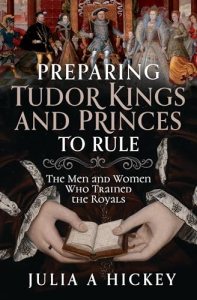 In life, when it comes to a new skill or job, you must be trained to become good at it. The same can be said for the monarchy, which in a sense is a job that encompasses one’s entire life. You have to understand different languages, rhetoric, the arts of dancing, and music, as well as diplomacy and physical activities if you want to rule a nation. It may seem like a lot for one person to handle, but from the moment of their birth, a prince or princess has a team of people behind them to make sure that they are ready to either rule their home country or create an alliance with other nations. The Tudors knew how important educating their future monarchs was for the survival of the dynasty. Julia A. Hickey examines the people behind the teams raising the future Tudor monarchs in her book, “Preparing Tudor Kings and Princes to Rule: The Men and Women Who Trained the Royals.”
 Adventures of a Tudor Nerd