
Book Review: “Mary Tudor: Queen of France” by Amy McElroy

The life of a 16th-century princess is not all that it is cracked up to be. You can have jewels, and glamorous dresses, attend the glittering yet treacherous court, and have numerous homes. You must marry the person the king says you should marry to create strong alliances for the kingdom, so the concept of marrying for love is not in your vocabulary. You had to ensure your opinions were kept in line with the monarch’s views so you didn’t meet a disastrous end. In other words, the closer you are to the throne, the more scrutiny is forced upon you. No one understood this advice better than Mary Tudor, the daughter of King Henry VII and the younger sister of Henry VIII. She was a daughter, a sister, a wife, a queen, a duchess, and a mother. Her remarkable story is told in Amy McElroy’s book, “Mary Tudor: Queen of France.”
I want to thank Pen and Sword Books and Net Galley for sending me a copy of this book. I have read Amy McElroy’s previous books, “Women’s Lives in the Tudor Era” and “Educating the Tudors,” and I enjoyed both books. When I heard that she would write her first-ever biography on Mary Tudor, I jumped at the chance to read it because Mary is my favorite of the children of Henry VII and Elizabeth of York.

McElroy begins with a quick overview of the conflict that brought the Tudors to the throne, the Wars of the Roses. The marriage of Mary’s parents, Henry VII and Elizabeth of York united the kingdom and started the Tudor dynasty. Like any dynasty, it was important to have heirs, spares, and daughters who could be used essentially as pawns in the marriage market to create strong alliances. Mary’s eldest brother Arthur married Katherine of Aragon to form an alliance with Spain and her older sister Margaret married James IV of Scotland for another alliance. From a young age, Mary Tudor was a proposed bride for Charles of Castile, the son of King Philip the Handsome and Queen Joanna of Castile and Aragon, who would become Holy Roman Emperor Charles V. Unfortunately, this marriage plan fizzled, but another bride groom was waiting in the wing, King Louis XII of France.

Mary’s marriage to King Louis XII of France and her time as Queen of France did not last long because Louis died mere months after their wedding. Now Mary could have returned to England or stayed in France and waited for another royal match to happen, but Mary chose option number three. Mary’s heart belonged to her brother Henry VIII’s best friend Charles Brandon, and the two devised a plan to marry in secret. It was out of the ordinary and it did create quite the scandal, but at the end of the day, it was a love match. Charles and Mary had a family and were involved in court politics including the Great Matter, before Mary died on June 26, 1533.

I think what has impressed me about McElroy’s books, including this one, is her ability to reveal something new to the subject material. While I knew quite a bit about Mary’s life, it was the marriage negotiations and her inner circle that truly fascinated me. If you want a new book about the sister of Henry VIII with new insight into her life and the politics of marriage, I highly suggest you read, “Mary Tudor: Queen of France” by Amy McElroy.

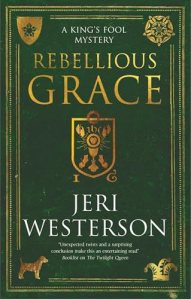
Book Review: “Rebellious Grace” by Jeri Westerson

Christmas is a time of merriment and joy unless you are in the court of Henry VIII in 1536. Then it is a time of stress and murder. Henry’s second wife Anne Boleyn has only been dead for a few months while his third wife Jane Seymour is slowly adjusting to her new role as queen. A rebellion known as the Pilgrimage of Grace is taking over northern England and the leader Robert Aske wants to visit the court to discuss matters with King Henry VIII. To top it all off, a servant of Queen Jane has been murdered and the only one who can solve the crime is a fool, Will Somers. Can Will Somers connect the dots and save those closest to him, or will the treasonous act be another downfall in such a tumultuous year? This is the premise for the third book in the A King’s Fool Mystery series, “Rebellious Grace” by Jeri Westerson.

Thank you Severn House and Net Galley for sending me a copy of this novel. This is the second book in the A King’s Fool Mystery series I have read, the first being The Twilight Queen. While I had issues with The Twilight Queen when I saw that Westerson would cover the Pilgrimage of Grace and Jane Seymour in her next novel, I decided to give the series another chance.

We begin with the discovery of the body. The male servant Geoffrey Payne had his neck slashed in a rather unusual way, but there was no murder weapon by the body. The body is quickly buried and the investigation is left to Sir Nicholas Carew. However, this is not the only distraction at court, as Will Somers will soon find out. There is a real divide between Protestants and Catholics throughout the kingdom and while Queen Jane Seymour acts as a peacemaker at court, in other areas of England, the Pilgrimage of Grace is on the move to bring back Catholicism, led by Robert Aske. Thomas Cromwell has the idea of inviting Robert Aske to join the Christmas celebrations to discuss matters. And then there is the fact that Elizabeth and Mary are joining their father at court as a way to reconcile. So, you know, a very quiet Christmas.

With the craziness of court, Will Somers is of course caught directly in the middle of the mess. He is not only trying to cheer up his friend and employer King Henry VIII, but after it is discovered that poor Mr. Payne’s corpse was dug back up and disemboweled, he is asked to assist Sir Nicholas Carew with the investigation. To add even more drama, there is a connection between the dead man, the queen’s jewels, and the Seymour family. Will has to juggle all of this plus his ever-complicated love life between his wife Marion and his lover Nicholas Pachett.

I loved this mystery, especially the additions of the characters John Blanke, Jane Foole, Jane Seymour, and Edward Seymour. It was so gripping and well-balanced that I finished it in a day, which I hadn’t done with a book in a while. If you want a delightful murder mystery set in the court of Henry VIII or if you have read the other books in the A King’s Fool Mystery series, I highly recommend you read, “Rebellious Grace” by Jeri Westerson.

Book Review: “Scotland’s Medieval Queens: From Saint Margaret to Margaret of Denmark” by Sharon Bennett Connolly

Scotland is a land of beauty and a culture all its own, but when it comes to the history of the Scottish monarchy only one word will suffice, messy. The tales of the Scottish monarchy are full of tragedies, violence, and bloody ends. As so often with many other monarchies we tend to focus on the men who wore the crown and those around them, but what about the tales of the queens who stood beside their husbands? The stories of the medieval queens of Scotland have often been overlooked for their more famous husbands, until now. Sharon Bennett Connolly has compiled the stories of these queens in her latest book, “Scotland’s Medieval Queens: From Saint Margaret to Margaret of Denmark.”

I want to thank Pen and Sword Books and Net Galley for sending me a copy of this book. I am a big fan of Sharon Bennett Connolly and her books, so when I heard that she was writing a book about Scottish medieval queens, I knew I wanted to read it. I know very little about Scottish history, other than the Stewarts because of a different book, so I was excited to learn more.

As Connolly states in her introduction, her inspiration for this book was from the Shakespearean play Macbeth, specifically the character of Lady Macbeth. A historical figure who has been much maligned in history, Lady Macbeth’s actual name was Gruoch, and her story and Macbeth’s make a fabulous introduction to her book. We stay in the 11th century with the first queen featured heavily in this text, and that is the only saint, Saint Margaret, the wife of Malcolm III and the one who reformed the Scottish Church.

We get to explore the daughters-in-law of Saint Margaret, Ethelreda of Northumbria, Sybilla of Normandy, and Matilda of Senlis who played more quiet roles than the saintly woman whose shoes they were trying to fill. It should be noted that there were some women like Ada de Warenne who never sat on a throne or wore a crown but were the mother of a future King of Scotland, Malcolm IV the Maiden. Since Malcolm never married or had kids, the throne passed to his brother William the Lion, who was not a huge fan of the English and helped establish the Auld Alliance, with his wife Queen Ermengarde by his side. Although the Scottish did not have the best relationships with the English, it did not mean that they didn’t try to establish peace through marriage with English princesses like Joan of England and Margaret of England. Along the way, a princess of Scotland named Margaret of Scotland married Erik II of Norway, and their daughter Margaret Maid of Norway would become the first Queen Regent of Scotland, albeit for a short period.

After the death of Margaret Maid of Norway, there was to no one’s surprise, a fight for the throne that culminated with John Balliol becoming King of Scotland. The throne would pass to Robert the Bruce, with a feature from a certain rebel named William Wallace. Things were not easy for the Bruce women such as Elizabeth de Burgh and Marjorie Bruce. We also had women like Joan of the Tower and Margaret Drummond who tried to help David Bruce of Scotland rule with different results. Finally, we reach the origins of the House of Stewart with women like Euphemia Ross, Annabella Drummond, Joan Beaufort, Mary of Guelders, and finally Margaret of Denmark. Each woman added something different to the story of Scotland and had to deal with war, executions, childbirth, religious matters, and political intrigue in their unique ways to better Scotland.

I have to applaud Connolly for the amount of history she was able to cover in a single book as she covered four centuries worth of Scottish royal history and made it relatively easy to follow along. I learned so much about Scotland’s royal history and the remarkable women who were queens of Scotland. If you want a fantastic introduction to the turbulent world of medieval Scotland and the women who helped shape the monarchy, I strongly recommend you read, “Scotland’s Medieval Queens: From Saint Margaret to Margaret of Denmark” by Sharon Bennett Connolly.

Book Review: “Embers of the Hands: Hidden Histories of the Viking Age” by Eleanor Barraclough

When we think of the term “Viking”, we often get images of battle-harden warriors, covered in guts and dirt, with horned helmets. We also believe that Vikings are warriors primarily from the Scandinavian world and that the Viking age ended in 1066 with the Norman Invasion of England. Our assumptions, thanks to television and a certain operatic cycle, are wrong. The Viking Age is a complex period of the past that spans centuries over half the known world. Using archeological evidence and written records, Eleanor Barraclough tells the tale of the Viking Age in her book, “Embers of the Hands: Hidden Histories of the Viking Age.”

I want to thank W.W. Norton & Company and Net Galley for sending me a copy of this book. I enjoy reading books about archeological discoveries, so when I heard about a book about the Viking Age and archeology, I jumped at the chance to read it. I have read a few historical fiction novels about the Viking Age and a few about the Anglo-Saxons, so I was curious what new information Barraclough would present in her book.

The short answer to that question is that Barraclough provided a plethora of information about the Viking Age. As she explains in her prologue, we try to compartmentalize history, but history flows like a river. Just because we label a period like the Viking Age does not mean that it ends at a certain date. We have artifacts from other parts of the world, including Russia and the Middle East, that would be dated to the 1500s. So what can the artifacts from the past tell us about this diverse age?

To tell the story of this age, Barraclough breaks her book into sections that focus on different elements such as beginnings, love, travel, slavery (known in this book as unfreedom), and endings. Each section focuses on not only the artifacts, like a comb, a chess piece, or a runestone with a love story, but also what these pieces can tell us about the average citizens who lived during this period. We can learn about their grooming habits, how they lived, how they traveled, their ever-changing beliefs from Norse mythology to Christianity, and how they approached issues like slavery and childbirth. Barraclough also takes the time to show what the chronicles and sources tell us about this period while showing how to understand what the runes on artifacts can tell us. I think my one concern about this book is that because it was not in chronological order, it was a bit hard to follow and there were points where it was a bit dry for my taste.

Overall, I found this book fascinating and a difficult read. It took me a long time to understand how complex the Viking Age was as I am not as familiar with the language and historical accounts. I think Barraclough does a decent job of presenting the information to not only those who are familiar with the era but to complete novices. If you want to understand the Viking Age through archeological research, I suggest you read, “Embers of the Hands: Hidden Histories of the Viking Age” by Eleanor Barraclough.

Book Review: “City of Silk” by Glennis Virgo

When we think about the period known as the Renaissance, we often think about Italy and the artists like painters and sculptors. However, other craftsmen made Italy their home. Take, for example, tailors and seamstresses. These skilled craftsmen and women can create art you can walk in with their hands. However, there are gender barriers between tailors and seamstresses in that only men can be tailors and only women can be seamstresses. One orphan girl from Bologna not only challenges what it means to be a woman tailor but also challenges one of the wealthiest merchants in the entire city who has a dark connection to her past. This is the premise for Glennis Virgo’s debut novel, “City of Silk.”
I want to thank Allison & Busby and Net Galley for sending me a copy of this novel. I know we are not supposed to judge a book by its cover, but this cover is really why I wanted to read more about it. The description and knowing that it was a debut were also appealing factors as I wanted to see what a new author would do with 16th-century Italy and its complex nature.

We begin with the orphanage of Santa Maria del Baraccano where we find out that our protagonist is a young girl whose parents, a tailor and a seamstress, both died. The girl, Eleana Morandi, was raised in the orphanage, but something happened and she ran away. She would eventually work at the Palazzo of Signora Ruffo, a widowed seamstress who runs a successful business. Elena works as an assistant to Signora Ruffo alongside a girl named Sophia, a former slave. It is a happy life for Elena, until one day, Signora Ruffo arranges a marriage for Elena with Signor Martelli. Elena is not a fan of this idea so she does what stereotypical teenagers do, she runs away from home again.

Elena runs to the workshop of the tailor Maestro Francesco Rondinelli, but he is reluctant to take Elena on as women are not accepted as tailors in the guild, but he allows her to help out in other ways around the workshop. One day, a Signor Antonio della Fontana comes into the workshop and asks for a summer wardrobe. Fontana is not some stranger to Elena as she knows him from her life in the orphanage, but he is not the benevolent merchant that everyone believes him to be. Elena fights not only for the right to become a female tailor but for her friend Laura and the other girls who were traumatized by Fontana. Virgo has created a colorful cast of characters filled with the traumas that they have to deal with in such a short book. My only critique is that as someone who is not as familiar with Italian terms or the locations in 16th-century Bologna, I wish there was a map and a glossary to help the readers picture the world a bit better.

Overall, I found this a rather enjoyable debut full of heart and a cast who care for each other as well as their respective crafts. It shows a different side of Renaissance Italy and once I started reading, I did not want to stop. I am looking forward to seeing what type of story Virgo will tell next. If you want a novel that focuses on a different aspect of the Italian Renaissance, I would recommend you read, “City of Silk” by Glennis Virgo.

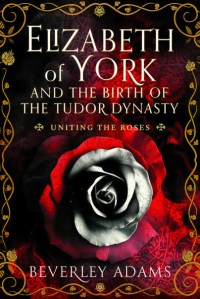
Book Review: “Elizabeth of York and the Birth of the Tudor Dynasty: Uniting the Roses” by Beverley Adams

Throughout English history, some of the most famous queens have been associated with the Tudor dynasty. We have the six wives of Henry VIII (Catherine of Aragon, Anne Boleyn, Jane Seymour, Anna of Cleves, Catherine Howard, and Catherine Parr), Queen Mary I, and Queen Elizabeth I. However, one Tudor queen is often overlooked for her daughters-in-law and granddaughters, the first Tudor queen, Elizabeth of York. So who was Elizabeth of York and what role did she play in the transition between the Plantagenet dynasty and the Tudor dynasty? Beverley Adams hopes to enlighten readers about this remarkable queen in her latest book, “Elizabeth of York and the Birth of the Tudor Dynasty: Uniting the Roses.”

I want to thank Pen and Sword Books and Net Galley for sending me a copy of this book. While I know quite a bit about Elizabeth of York, the Wars of the Roses, and the origins of the Tudor dynasty, I wanted to see how Adams would portray these topics for beginners. 

To begin with, Adams lays out the origins of the conflict that we know today as the Wars of the Roses with Edward III and his sons, John of Gaunt 1st Duke of Lancaster, and Edmund of Langley, 1st Duke of York. This led to a clash between King Henry VI and Richard Duke of York. Elizabeth of York’s father, the future King Edward IV, was the son of Richard Duke of York and he had to fight for his throne. Adams explores Elizabeth’s childhood as the eldest child of Edward IV and his wife Elizabeth Woodville during this tumultuous period of English history, which would form the foundation of what kind of queen she would be in the future.

Everything changed when Edward IV died suddenly, which meant that Elizabeth’s younger brother became Edward V and left Richard Duke of Gloucester as Lord Protector. For some reason, Richard Duke of Gloucester decided to take matters into his own hands, took control of the country, declared the children of Edward IV and Elizabeth Woodville illegitimate (including Elizabeth of York), and was crowned King Richard III in a matter of months. Some resisted the new king including the son of Margaret Beaufort and Edmund Tudor, Henry Tudor. Margaret Beaufort and Elizabeth Woodville arranged a marriage between Henry and Elizabeth that would occur if Henry was able to defeat Richard III and become King of England, which he did at the Battle of Bosworth Field. The rest of this book is dedicated to showing how Elizabeth of York was as a wife, queen, and mother as she dealt with death, treachery from Lambert Simnel and Perkin Warbeck, and triumphs as she was able to see the start of the Tudor dynasty.

I think Adams does a decent job with a book that is an introduction to Elizabeth of York, the Wars of the Roses, and the beginning of the Tudor dynasty. There are some myths that she repeats to debunk, but I feel like, in some places, Elizabeth of York was not the main focus, which was a bit disappointing. Overall, if you want a solid introductory book to the life and times of the first Tudor queen, I would recommend you read, “Elizabeth of York and the Birth of the Tudor Dynasty: Uniting the Roses” by Beverley Adams.

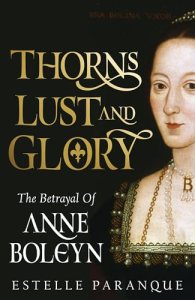
Book Review: “Thorns, Lust, and Glory: The Betrayal of Anne Boleyn” by Estelle Paranque

A young woman catches the attention of a king already married to a princess from a faraway kingdom. The king desires the young lady and divorces his wife to marry her. However, there is a catch. The young lady spent some time in the French court of Francis I and Claude of France, whereas the king’s wife was the daughter of the Spanish King and Queen as well as the aunt of the Holy Roman Emperor. The Great Matter of Henry VIII, Anne Boleyn, and Catherine of Aragon is considered one of the messiest divorces in English history and rightfully so when you consider the diplomatic consequences that this divorce would have across Europe. Estelle Paranque highlights the connection between Anne Boleyn and the French court in her latest book, “Thorns, Lust, and Glory: The Betrayal of Anne Boleyn.”

I want to thank Hachette Books and Net Galley for sending me a copy of this book. I heard that Estelle Paranque was writing a new book about the 16th century, but when I heard that it dealt with Anne Boleyn’s connections with the French court, I jumped at the chance to read it. While I do know quite a bit about the rise and fall of Anne Boleyn, it is her connection with the French court that I have never really explored in depth.

Paranque begins her book by examining the meeting between King Henry VIII and King Francis I with Anne Boleyn at Calais between October 25th and 27th, 1532. This was a significant meeting as it was right before Henry and Anne married in secret and they desired that Francis would support their side in the Great Matter. But how did they get to this meeting in Calais? This is where this book shines as Paranque takes the time to show her audience what life was like for Anne in the French court and the connections that she forged with women like Louise of Savoy, Claude of France, and Marguerite of Angouleme Queen of Navarre. It was fascinating to see how the Boleyns were able to use their connections to forge alliances with the French court that would prove useful in the future.

Possibly my favorite part of this book was seeing how the diplomatic channels across Europe interacted with one another during the Great Matter, the queenship of Anne Boleyn, and the fall of the Boleyns. I think we so often overlook that there were diplomats who were working on the sidelines to convey messages between kings and emperors to form or strengthen alliances. While many might consider the way Paranque wrote the correspondence and dialogue between diplomats and the monarchy as hard to get used to because she does insert emotions, I believe it adds depth to the story because they were human beings not in a vacuum. They had feelings about what was happening around them, passionate feelings in fact, and that should be displayed to readers.

While the actual events of this book were not new to me, the way that Paranque was able to present the information and show the men behind the scenes was fascinating. It presents the relationship between Henry VIII and Anne Boleyn in a different more complex light. If you want a different angle to the rise and fall of Anne Boleyn, I recommend you read, “Thorns, Lust, and Glory: The Betrayal of Anne Boleyn” by Estelle Paranque.

Book Review: “Stuart Spouses: A Compendium of Consorts from James I of Scotland to Queen Anne of Great Britain” by Heather R. Darsie

English royal history is filled with fantastic stories of triumphs and tribulations, grand romances, and divorces that shook the foundations of the monarchy. It is also filled with struggles over religion, wars both inside England and with foreign nations, and heartbreaking child losses. We often think about the spouses of the Plantagenets and the Tudors when we think about royal romances, but we shouldn’t forget about the dynasties that came after, like the Stuarts. So how did the Stuart dynasty come to be and how did the unions between monarchs and their significant others affect the dynasty and England? Heather R. Darsie explores this often-overlooked dynasty and the stories of their marriages and romances in her latest book, “Stuart Spouses: A Compendium of Consorts from James I of Scotland to Queen Anne of Great Britain.”

I want to thank Pen and Sword Books and Net Galley for sending me a copy of this book. I didn’t know much about the Stuarts before reading this book, except for those associated with the Plantagenets and the Tudors. I wanted to learn more about the Stuarts because I tend to stop after the death of Elizabeth I, so when I heard that Darsie was writing a book about the consorts of the Stuart dynasty, it was intriguing to me.

Darsie begins by explaining that she will be exploring the entirety of the Stuart dynasty, starting with its patriarch Walter Fitzalan, Stewart of Scotland for David I of Scotland in the 1100s. It is a fascinating story of how the family went from serving the monarchy to being the rulers of Scotland, all the way up to 1406 when James I became King of Scotland. The first royal consort that Darsie discusses might be familiar to anyone who knows about the origins of the Tudors, Joan Beaufort. We then track the Scottish story of the Stuarts through the death of Mary Queen of Scots through their significant others such as Mary of Guelders, Margaret of Denmark, Margaret Tudor, Madeleine of Valois, Marie de Guise, Francis II of France, Henry Stewart Lord Darnley, and James Hepburn 4th Earl of Bothwell.

It was under James VI of Scotland that things changed drastically for both England and Scotland as James became King James I of England with the death of Elizabeth I, and so James’ wife Anna of Denmark became the first Stuart Queen of England. This is the segment that I thoroughly enjoyed because they were new stories for me. We have Henriette Marie of France, a Catholic queen who married Charles I who was a Protestant, which did not have a happy ending as we get to see the English Civil War play out and the execution of Charles I on January 30, 1649. Darsie also includes the stories of the women who married Oliver Cromwell and his son Richard Cromwell, both Lord Protectors of England when the monarchy was not popular. Eventually, the Stuarts returned to their place on the English throne with Charles II and his queen Catherine of Braganza; followed by the women who married James Stewart Duke of York, Anne Hyde and Mary of Modena. James would become James II before the Glorious Revolution led by William of Orange, which led to the co-rulers William III and Mary II. Finally, we reach the tragic tale of Queen Anne of Great Britain and her Prince Consort George of Denmark.

I was so impressed with the amount of stories over centuries that Darsie was able to cover in this book. It was a fantastic introduction to Scottish Stuart history, how the dynasty survived, and created international relationships that allowed England to thrive. There were tales of tragedies, but there were also alliances that created stronger bonds, religious rifts, and romances. This was another triumph for Darsie and it is a book that made me interested in reading more about the Stuarts. If you are like me and you want a book that is a fantastic introduction to the Stuart monarchs and their consorts, I highly recommend you read, “Stuart Spouses: A Compendium of Consorts from James I of Scotland to Queen Anne of Great Britain” by Heather R. Darsie.

Book Review: “The Eagle and the Hart: The Tragedy of Richard II and Henry IV” by Helen Castor

The story of the Plantagenets is filled with high triumphs and devastating tragedies. It is a story of families torn apart for a crown and the desire to either rule with an iron fist for the glory of England or live a life of luxury at the expense of their citizens. The story explored in this particular book is the tale of two cousins born months apart, Richard of Bordeaux and Henry Bolingbroke. Richard and Henry were not born to become King of England, but Fortune’s Wheel had a different plan for the cousins. So how did these cousins become kings and how did their tale turn to tragedy not only for their relationship but for all of England? Helen Castor tells the tale of these two Plantagenet kings in her latest book, “The Eagle and the Hart: The Tragedy of Richard II and Henry IV.”

I want to thank Avid Reader Press and Net Galley for sending me a copy of this book. I have seen this book on social media and ever since it was announced, I knew I wanted to read it. I have enjoyed Castor’s posts online as well as her documentary on the She-Wolves, based on her book of the same name, so when I heard about this one, it was an intriguing premise and so I jumped at the chance to read it. 

The fact that Richard of Bordeaux and Henry Bolingbroke became King Richard II and King Henry IV respectively is quite the story. Richard was the son of Edward The Black Prince and Henry was the son of John of Gaunt; both of their fathers were sons of Edward III and so the idea was that one of his sons would inherit the throne. However, Edward III had different plans after the death of Edward The Black Prince. It was announced that the young Richard of Bordeaux would be crowned King of England. This should have been the first red flag for England because it means that a Regency council must be formed. There are fights for power and fights over finances that culminate in the Peasants’ Revolt. Richard II doesn’t have much desire to fight for his country on the battlefield against the French or the Scottish, but he does care about favoring his favorites, even if it means turning the government against him. One such group, the Appellant Lords, will prove an extremely dangerous challenge for Richard II, and it will include his cousin Henry Bolingbroke. While many of the Appellant Lords will end up dead, Henry Bolingbroke is merely exiled, which in the long run, was not the best decision for Richard II. 

In 1400, John of Gaunt died and the title as well as the lands of the Duke of Lancaster were turned over to Richard II while Henry Bolingbroke was in exile in France. This marks the turning point for Henry as he decides to invade England while Richard is away dealing with problems in Ireland. It will end with Richard’s abdication and the coronation of Henry Bolingbroke as King Henry IV. However, things are not all sunshine and rainbows for Henry IV, the 1st Lancastrian King of England, as he finds out that it is not easy being a king. 

I must applaud Castor for writing a dual biography that is both balanced and utterly brilliant. It did take me a while to read this book because I was taking so many notes while I was reading and it gave me a better understanding of this tumultuous time. I would suggest that if you do read this book, take your time so that you can understand the complex nature of the conflict between these two cousins. If you are a fan of the Plantagenet dynasty, I highly recommend you read, “The Eagle and the Hart: The Tragedy of Richard II and Henry IV” by Helen Castor.

Book Review: “Queen Macbeth” by Val McDermid

When we think of the name Macbeth, we often imagine the play by William Shakespeare of a power-hungry man and his equally vicious wife willing to do whatever it took to become King and Queen of Scotland. It is a play about revenge and murder, but Shakespeare did not pull these characters out of thin air. He took these characters from the annals of history, such as a man named Macbeth and his wife, a Lady Macbeth named Gruoch. However, the names are about as much as Shakespeare gets right regarding the story of one of the first Kings of Scotland. Val McDermid tells her version of Macbeth and Gruoch’s story in her latest novel, “Queen Macbeth.”

I want to thank Atlantic Monthly Press and Net Galley for sending me a copy of this novel. It has been a minute since I read the Shakespearean play of Macbeth, but I did know that it was a story based on history. When I saw that this was specifically about Macbeth’s wife, it was intriguing to me and I knew I wanted to give it a try.

We begin with a sense of panic and dread. Reports have reached Gruoch that her husband Macbeth was slain at the Battle of Lumphanan and now Gruoch is on the run from his enemy Malcolm. Their son, Lulach, is on his way to be crowned King of Scotland while Gruoch, her ladies (Ligach, Aife, and Eithne), and Macbeth’s man Angus wait for the opportune moment to escape the monastery they are staying in before Malcolm catches up to them.

Sprinkled in between events in the modern day, McDermid included flashbacks to how Macbeth and Gruoch met and fell in love. At the time of their first meeting, Gruoch was the wife of Gille Coemgain, the Mormaer of Moray. Macbeth believes that Gille was responsible for the death of his father, Findlaich, and Gruoch fears that Macbeth is only visiting Gille to seek his revenge. However, this unexpected encounter between Macbeth and Gruoch turns into love and they have a child while Gruoch is still married to Gille. A rather awkward situation, but eventually, Macbeth and Gruoch are united to become King and Queen of Scotland.

As someone who is not familiar with the historical story of Macbeth and Gruoch, I found this novella engrossing and thrilling. This version of Macbeth and his Lady Macbeth was much more believable with danger around every corner and I did not know where the story was heading. It did not feel like a novella and I did not want it to end. If you are a Shakespeare fan or someone who loves a good medieval tale, I highly recommend you read, “Queen Macbeth” by Val McDermid.