
 English royal history is filled with fantastic stories of triumphs and tribulations, grand romances, and divorces that shook the foundations of the monarchy. It is also filled with struggles over religion, wars both inside England and with foreign nations, and heartbreaking child losses. We often think about the spouses of the Plantagenets and the Tudors when we think about royal romances, but we shouldn’t forget about the dynasties that came after, like the Stuarts. So how did the Stuart dynasty come to be and how did the unions between monarchs and their significant others affect the dynasty and England? Heather R. Darsie explores this often-overlooked dynasty and the stories of their marriages and romances in her latest book, “Stuart Spouses: A Compendium of Consorts from James I of Scotland to Queen Anne of Great Britain.”
I want to thank Pen and Sword Books and Net Galley for sending me a copy of this book. I didn’t know much about the Stuarts before reading this book, except for those associated with the Plantagenets and the Tudors. I wanted to learn more about the Stuarts because I tend to stop after the death of Elizabeth I, so when I heard that Darsie was writing a book about the consorts of the Stuart dynasty, it was intriguing to me.
Darsie begins by explaining that she will be exploring the entirety of the Stuart dynasty, starting with its patriarch Walter Fitzalan, Stewart of Scotland for David I of Scotland in the 1100s. It is a fascinating story of how the family went from serving the monarchy to being the rulers of Scotland, all the way up to 1406 when James I became King of Scotland. The first royal consort that Darsie discusses might be familiar to anyone who knows about the origins of the Tudors, Joan Beaufort. We then track the Scottish story of the Stuarts through the death of Mary Queen of Scots through their significant others such as Mary of Guelders, Margaret of Denmark, Margaret Tudor, Madeleine of Valois, Marie de Guise, Francis II of France, Henry Stewart Lord Darnley, and James Hepburn 4th Earl of Bothwell.
It was under James VI of Scotland that things changed drastically for both England and Scotland as James became King James I of England with the death of Elizabeth I, and so James’ wife Anna of Denmark became the first Stuart Queen of England. This is the segment that I thoroughly enjoyed because they were new stories for me. We have Henriette Marie of France, a Catholic queen who married Charles I who was a Protestant, which did not have a happy ending as we get to see the English Civil War play out and the execution of Charles I on January 30, 1649. Darsie also includes the stories of the women who married Oliver Cromwell and his son Richard Cromwell, both Lord Protectors of England when the monarchy was not popular. Eventually, the Stuarts returned to their place on the English throne with Charles II and his queen Catherine of Braganza; followed by the women who married James Stewart Duke of York, Anne Hyde and Mary of Modena. James would become James II before the Glorious Revolution led by William of Orange, which led to the co-rulers William III and Mary II. Finally, we reach the tragic tale of Queen Anne of Great Britain and her Prince Consort George of Denmark.
I was so impressed with the amount of stories over centuries that Darsie was able to cover in this book. It was a fantastic introduction to Scottish Stuart history, how the dynasty survived, and created international relationships that allowed England to thrive. There were tales of tragedies, but there were also alliances that created stronger bonds, religious rifts, and romances. This was another triumph for Darsie and it is a book that made me interested in reading more about the Stuarts. If you are like me and you want a book that is a fantastic introduction to the Stuart monarchs and their consorts, I highly recommend you read, “Stuart Spouses: A Compendium of Consorts from James I of Scotland to Queen Anne of Great Britain” by Heather R. Darsie.
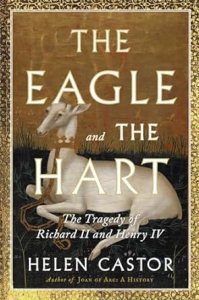 The story of the Plantagenets is filled with high triumphs and devastating tragedies. It is a story of families torn apart for a crown and the desire to either rule with an iron fist for the glory of England or live a life of luxury at the expense of their citizens. The story explored in this particular book is the tale of two cousins born months apart, Richard of Bordeaux and Henry Bolingbroke. Richard and Henry were not born to become King of England, but Fortune’s Wheel had a different plan for the cousins. So how did these cousins become kings and how did their tale turn to tragedy not only for their relationship but for all of England? Helen Castor tells the tale of these two Plantagenet kings in her latest book, “The Eagle and the Hart: The Tragedy of Richard II and Henry IV.”
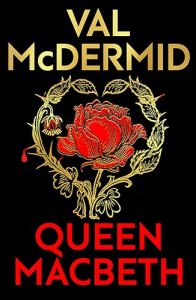 When we think of the name Macbeth, we often imagine the play by William Shakespeare of a power-hungry man and his equally vicious wife willing to do whatever it took to become King and Queen of Scotland. It is a play about revenge and murder, but Shakespeare did not pull these characters out of thin air. He took these characters from the annals of history, such as a man named Macbeth and his wife, a Lady Macbeth named Gruoch. However, the names are about as much as Shakespeare gets right regarding the story of one of the first Kings of Scotland. Val McDermid tells her version of Macbeth and Gruoch’s story in her latest novel, “Queen Macbeth.”
 Throughout history, women have been seen as pious mothers, wives, or daughters who stayed in their lane or vile manipulators who wanted power and were willing to do anything to maintain their status. While the former group of women would be an interesting study, as the saying goes, well-behaved women seldom make history. So why did certain women receive a villainess lens when we look at their lives and what do the historical records tell us about them? Samantha Morris has chosen to take the stories of these misunderstood maidens and tell them in her latest book, “The Most Maligned Women in History.”
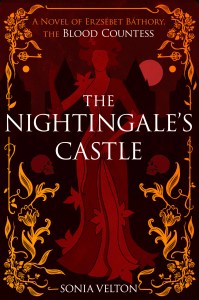 A castle looms in the distance and the owner, a glamourous countess, has asked for fair maidens from the surrounding areas to work for her. But this is not an ordinary castle and this was not a benevolent countess. The rumors say if you enter the castle, you will never return as the infamous Blood Countess Erzsebet Bathory will kill you and bathe in your blood. A rather gruesome tale that has been told for centuries, but how true is this story? What truly happened in the Countess’s castle and what was the countess like? Sonia Velton hopes to answer these questions in her novel about Erzsebet Bathory’s life, entitled “The Nightingale’s Castle.”
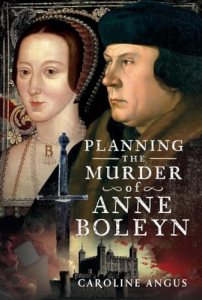 The 16th century was filled with tales of remarkable women. Still, one of the most defining figures of the century was a woman of noble birth who the King of England fell in love with and decided that he was going to divorce his first wife of over twenty years to marry her. The Great Matter caused a great scandal across Europe, however, it was a love match that would not last long. The relationship between Henry VIII and his second wife Anne Boleyn would turn volatile and in the end, Anne and the men around her would be executed. We often blame Anne Boleyn’s death at the foot of Henry VIII’s right-hand man Thomas Cromwell, but who was behind the death of this famous queen? Caroline Angus has chosen to re-examine the case to find out who was truly responsible for the fall of this famous queen in her latest book, “Planning the Murder of Anne Boleyn.”
 The year is 1517, and Florence is experiencing great change. No longer is it a grand republic that it once was; instead, it is under the control of the Medici family. They ruthlessly controlled Florence, especially Pope Leo X, who was born Giovanni di Lorenzo de’ Medici. The people suffer as the Medici become increasingly wealthy, but a band of misfits and thieves plan to give some power back to the people with one of the greatest heists of 16th century Italy. Can they survive as a group when revelations from the past and dangers lurk around every corner? The adventure with this ragtag team of thieves as they fight for Florence is explored in Caitlin Schneiderhan’s novel, “Medici Heist.”
 As humans, we love a good love story. Tales of courtships, grand confessions of love, over-the-top weddings, and marriages that last decades. These seem like high expectations, especially when we compare these expectations to royal courtships of the past. The majority of royals married and they were more focused on political matches instead of love. However, few chose a different path altogether, they decided to be single. One of the most famous monarchs with a single status was Queen Elizabeth I of England, the Virgin Queen So why did Elizabeth stay single throughout her reign, and how did she navigate her numerous suitors? Carol Ann Lloyd tries to answer these questions in her latest book, “Courting the Virgin Queen: Queen Elizabeth I and Her Suitors.”
 When we think about the great female minds of the 16th century, we often think about those closest to the throne. Women of privilege who were destined to rule or to be a queen consort in a far-off land where their education would be imperative for the success or failure of their respective dynasty. However, some women did not live a life of glitz and glamor and received an equally impressive education. One such woman was the daughter of the great statesman Sir Thomas More, Margaret More Roper. Her remarkable story is told in the debut book by Aimee Fleming, “The Female Tudor Scholar and Writer: The Life and Times of Margaret More Roper.”
 Treason is the crime of betraying one’s country or monarch by trying to overthrow the government or kill a sovereign. While many English dynasties dealt with treason in their ways, the most infamous were the Tudors and how they dealt with the nobility. By the end of 1572, there were no more dukes in England, until 1623 when George Villiers became the Duke of Buckingham. What was classified as treason during the Tudor dynasty and why did the members of the nobility have to die? Helene Harrison hopes to answer these questions in her latest book, “Tudor Executions: From Nobility to the Block.”
 Adventures of a Tudor Nerd