
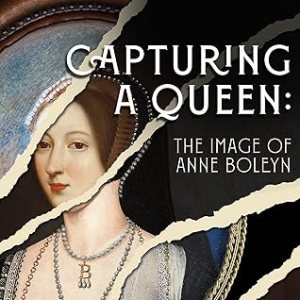
 Have you ever stared at a portrait of a historical figure and wondered if that’s what they really looked like? Anne Boleyn is one of the most famous queens in all of English history. Her image of a woman with dark hair, wearing a dark gown with a French hood, and a B initial necklace. For many people, this is what Anne Boleyn looked like, but is that accurate? What did Anne Boleyn look like, and why does it matter? The most recent exhibit at Hever Castle explores these questions, and the book that accompanies this exhibit goes deeper into the research behind this exhibit. The book shares the same name as the exhibit, “Capturing a Queen: The Image of Anne Boleyn” by Owen Emmerson and Kate McCaffrey.
I would like to thank Owen Emmerson for sending me a copy of this book. I have been interested in this exhibit ever since it was announced that Dr. Owen Emmerson and Kate McCaffrey were researching portraits of Anne Boleyn. Since I could not visit the exhibit in person, I really wanted a copy of this companion book as a way to support the research that is ongoing at Hever Castle.
So how can we possibly understand what a woman who lived over 500 years ago looked like? Well, to begin with, we need to examine how her daughter, Queen Elizabeth I, brought her mother’s name and figure out of obscurity to solidify her own legitimacy as Queen of England. We get an exploration of corridor portraits and the famous Chequers Ring to show how the Elizabethans remembered Anne Boleyn. The book then moves to the term damnatio memoriae, which was a Roman practice to eliminate someone’s name and images from history. In the case of Anne Boleyn, her image and name were not eliminated, and in fact, we do have a few artifacts that survived to the modern day, including some that were recently discovered, and her personal books.
Now, we come to the main topic of the exhibition, what Anne Boleyn looked like. We get to examine physical descriptions of Anne, including her hair color, which might surprise people. We also get a glimpse of how Anne’s European education shaped her time as queen consort. Finally, Emmerson and McCaffrey give their readers a deep dive into contemporary portraits of Anne, what messages the portraits tell, and how the image of Anne transformed over the centuries through different media. This includes an in-depth analysis of the Hever Rose portrait, which is one of the most famous portraits of Anne Boleyn, that recently underwent more scientific research.
I loved this book so much. I learned a great deal from this book, and I am sure the exhibit is fabulous in person. The amount of research that went into this exhibit and this book was extraordinary, and I applaud the respect that they gave to those historians who came before in this field of research. If you are a Tudor nerd or an Anne Boleyn fan, the new exhibit at Hever Castle is a must-see exhibit, and “Capturing a Queen: The Image of Anne Boleyn” by Owen Emmerson and Kate McCaffrey is a book you must read.
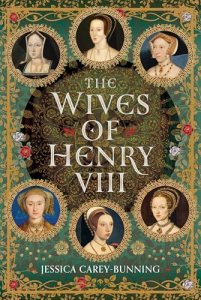 The wives of Henry VIII have been an area of fascination for history nerds and novices alike for centuries. We all know the stories of Catherine of Aragon, Anne Boleyn, Jane Seymour, Anna of Cleves, Katherine Howard, and Kateryn Parr. However, these stories only offer a glimpse at the lives of these women. They follow the more traditional studies of the Tudor queens, but what happens if we take a more revisionist approach to their lives? What can we learn about these women besides their crowns and who they all married? There is more to their stories, like the minute details that Jessica Carey-Bunning explores in her book, “The Wives of Henry VIII: Rethinking the Stories Behind the Symbols.”
 When we think about royal history, we often tend to think about the monarchs and their immediate families. However, the stories of the noble families that surround the crown can have some of the more interesting tales of how the families were created and how they survived. The stories of the English nobility are particularly fascinating, with some families and titles dating back centuries. How did these great families begin? How did they earn their titles? Who were the major figures in these noble houses, and how did they survive to the modern day? Patrick Coleman explores the tales of the nobility and how they shaped England’s history in his book, “Dynasties: The Noble Families of England.”
 When we think about significant law documents from medieval England, we think about the Doomsday Book, the Assize of Clarendon, and the Statutes of Westminster. These documents would remain significant to England, but there is only one that would transcend its original purpose: the Magna Carta. To many nations, it is the foundation of liberty and justice for all. But, if we take away all the sparkling praise of the present day for the document, what can we discover about the Magna Carta? What was the Magna Carta truly at its heart, and why was it written? Dan Jones examines this document and the circumstances behind its creation in his book, “Magna Carta: The Birth of Liberty.”
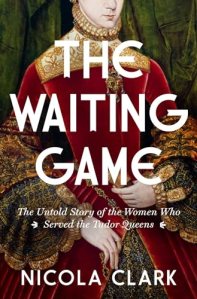 When we think about queens of the Tudor dynasties, we often think about films and dramas that show the queen with a gaggle of girls following behind, gossiping, and just being best friends with their queen. However, things on TV and on the screen are not always truthful. The ladies-in-waiting during the Tudor dynasty lived on a tightrope on whether to live their truths or to stay neutral and silent. For centuries, these women tended to be in the shadows of those whom they served, until now. Nicola Clark, in her debut book, “The Waiting Game: The Untold Story of the Women Who Served the Tudor Queens,” tells the stories of these hidden figures of Tudor history.
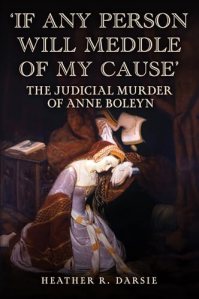 We all know the story of Anne Boleyn. The story of the English noblewoman who caught the eye of King Henry VIII, who decided to divorce his first wife, Katharine of Aragon, to marry Anne. He broke away from Rome and created the Church of England to do it, but marital bliss did not last long, as a few years later, Anne would leave their three-year-old daughter Elizabeth behind when she was executed by Henry over charges of adultery. We know this version of the story, but what if we look at Anne’s story from a continental European perspective? How does her story change when we view her life through a religious lens? Heather R. Darsie hopes to show her audience a different side of Anne Boleyn in her latest book, “‘If Any Person Will Meddle of My Cause’: The Judicial Murder of Anne Boleyn.”
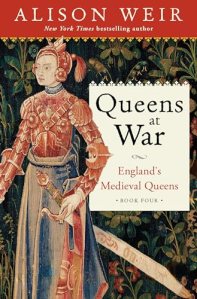 The fifteenth century in England was a time of war. Between a usurper king, fighting with France, and fighting amongst themselves, an English king must be prepared to go into battle at any moment, and his queen must be ready to support him in any way. During this period, there were five kings and queens, and while the kings get a lot of attention, it is the queens who should get their flowers for what they did in times of distress. Alison Weir explores the lives of the final five Plantagenet queens in her final book in the England’s Medieval Queens series, entitled “Queens at War.”
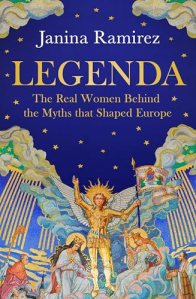 When we think of famous medieval European women, we often think of figures like Joan of Arc and Isabella of Castile. They are seen as women who broke the mold and challenged traditional stereotypes by becoming leaders in traditionally male-dominated fields. These women would be used to craft the identities of their respective nations, but they would help shape the identities of other women from the 18th and 19th centuries. We think we know the stories about these medieval women and their lives, but what new information can we learn from their lives when we examine their lives from their eras? Janina Ramirez takes the stories of seven medieval women and their contemporaries to show how their legacies have been transformed in her latest book, “Legenda: The Real Women Behind the Myths That Shaped Europe.”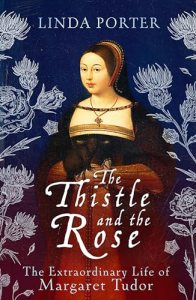
 Adventures of a Tudor Nerd