 Today, I am pleased to welcome Heather R. Darsie to my blog to share an excerpt from her latest book, “Children of the House of Cleves: Anna and Her Siblings.” I would like to thank Heather R. Darsie and Amberley Publishing for allowing me to be part of this blog tour. \
Anna von der Mark and her siblings, deemed by their father to be known as being “of Cleves,” his family’s territory, came from a somewhat new line of ducal power. The Duchy of Cleves existed as a county for hundreds of years before becoming a duchy. From whom the dynasty descends is a bit of a mystery, but thankfully, they have a certain mythology to explain,
“The noble Von der Mark family traces their lineage from a princess named Beatrix and her hero, the mythical Swan Knight Elias Gral… Family lore held that …[it was] the [Roman] Orsini…arrived in Cleves …. Such tales of noble heritage were common in the Medieval to Early Modern period…
A family origin tale specific to the Von der Marks involves the young, beleaguered heiress Beatrix. Beatrix, heiress of Nijmegen and Cleves, married the legendary Swan Knight after he floated down the Rhine in his boat, pulled by a swan wearing a golden collar. At the time, according to legend, Beatrix was being aggressively pursued by her suitors. The Swan Knight, named Elias Gral, came to her rescue. He agreed to be Beatrix’s husband on the condition that she never ask about his origin. The couple was happily wed for some time and had three sons together. Beatrix convinced one of her sons to ask Elias about his background. Elias sorted what was going on and instantly disappeared. Beatrix died shortly after Elias’ disappearance.
…. Elias Gral … lived in the 8th century…, and served the Frankish leader Charles Martel. … Martel was imprisoned in Cologne around 714 by his stepmother Plectrude because Martel’s father died, and Plectrude wished for her son to be heir. Gral helped free Martel from prison in Cologne. In return, Martel raised the Bailiwick of Cleves to the status of county, creating Gral the first Count of Cleves.….
The Von der Mark dynasty, thought to have arisen from servants of the Grals, was established when Margaretha [of Cleves] married Count Adolf von der Mark. Through the right of Margaretha, Adolf and Margaretha’s children became counts and countesses of the combined Duchy of Cleves and County of Mark, simply called Cleves-Mark…
Margaretha’s and Count Adolf von der Mark’s son, also named Adolf, greatly expanded the territories under Cleves-Mark’s control. Adolf of Cleves-Mark had his own son, whom he also named Adolf. This second Adolf of Cleves-Mark was the last Count of Mark and first Duke of Cleves.… Duke Adolf … married Marie of Burgundy in 1406. Marie was a daughter of John the Fearless, and sister of Philip the Good. Marie was only about thirteen years old when she married Adolf. Marie did not move to Cleves until 1415, when she was around twenty-two years old.
Duke Adolf and Marie of Burgundy had a lasting impact on the court culture in Cleves. Marie popularized the concept of the Frauenzimmer, which is directly translated as, “women’s room”, but was more like a women’s shadow court of the main masculine court. Women occupied the offices necessary to administering the Frauenzimmer. …
Marie of Burgundy and Duke Adolf of Cleves-Mark had eight children together, all of whom lived to adulthood and married well. It is through Marie’s and Adolf’s children that Mary, Queen of Scots and Louis XII of France were related to Anna of Cleves and her siblings.”
Anna’s family was known to be very supportive of the Holy Roman Emperor throughout the 15th century and on into the 16th. Unfortunately, her brother Wilhelm’s unreasonable behavior
 If this excerpt piqued your interest, consider reading Children of the House of Cleves: Anna and Her Siblings, set for release in the UK on 15 June 2023 and in the US/Internationally on 12 September 2023. Can’t wait until September? The US Kindle version is released on 15 June, too! You might also like to read Heather R. Darsie’s biography on Anna of Cleves, the first researched and written from the German perspective, Anna, Duchess of Cleves: The King’s Beloved Sister. Links below.
Amazon UK
Children of the House of Cleves, Anna and Her Siblings hardcover (15 June 2023): https://www.amazon.co.uk/Children-House-Cleves-Anna-Siblings/dp/1445699427/ref=sr_1_1?crid=19OOEUO2EX5PV&keywords=heather+darsie&qid=1686571230&sprefix=heather+darsi%2Caps%2C190&sr=8-1
Children of the House of Cleves, Anna and Her Siblings Kindle (15 June 2023): https://www.amazon.co.uk/Children-House-Cleves-Anna-Siblings-ebook/dp/B0C74VTCR3/ref=tmm_kin_swatch_0?_encoding=UTF8&qid=1686571230&sr=8-1
Amazon US
Children of the House of Cleves, Anna and Her Siblings hardcover (12 September 2023): https://www.amazon.com/Children-House-Cleves-Anna-Siblings/dp/1445699427/ref=sr_1_1?crid=5K793F0IN117&keywords=heather+darsie&qid=1686571143&sprefix=heather+darsie%2Caps%2C87&sr=8-1
Children of the House of Cleves, Anna and Her Siblings Kindle (15 June 2023): https://www.amazon.com/Children-House-Cleves-Anna-Siblings-ebook/dp/B0C74VTCR3/ref=tmm_kin_swatch_0?_encoding=UTF8&qid=1686571143&sr=8-1
 Heather R. Darsie works as an attorney in the US. Along with her Juris Doctorate, she has a BA in German, which was of great value in her research. She completed multiple graduate-level courses in Early Modern History, with her primary focus being the Holy Roman Empire under Charles V. She runs the website MaidensAndManuscripts.com and is a co-host of the Tudors Dynasty podcast.
Sources & Suggested Reading
Darsie, Heather R. Children of the House of Cleves: Anna and Her Siblings. Stroud: Amberley (2023).
Darsie, Heather R. Anna, Duchess of Cleves: The King’s Beloved Sister. Stroud: Amberley (2019).

 Have you ever watched a historical drama and wondered what it might have been like to wear the outfits for that period? You see so many reenactment groups online and you are envious of their talents for being able to bring clothing from the past, especially clothes from the 16th century, to life in the modern age. What might it have been like to dress like a lord or a lady? What about a commoner or a monk? How did fashion change throughout the Tudor dynasty? Judith Arnopp answers all of these questions and more in her latest book, “How to Dress Like a Tudor.”
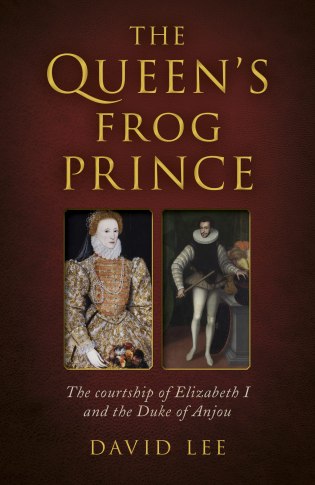 Romances in the Tudor era are legendary for their effects on English, European, and world history. From international matches to domestic love stories, the Tudors had a way of capturing our attention with whom they married. The one Tudor whose relationships caught everyone’s attention just as much as Henry VIII is his daughter with Anne Boleyn, Elizabeth I. The legendary “Virgin Queen” did have some men who caught her eye and some that she even considered marrying. There was Robert Dudley, but the one who may surprise a lot of people is the French prince, Francis Duke of Anjou. So how did this whirlwind romance begin and why did Elizabeth choose to stay single instead of marrying to secure a strong alliance with France? In his latest book, “The Queen’s Frog Prince: The Courtship of Elizabeth I and the Duke of Anjou,” David Lee explores the heart of this long-forgotten international romance.
 In any society throughout history, there are certain rules and regulations which citizens must follow to maintain order. When there is a transfer of power, those rules and their punishments shift a little bit to fit the vision of those who are in power. England was in a chaotic spiral as law and order were thrown asunder during the Wars of the Roses. The rise of the Tudors marked another shift to the justice system of England, with each monarch during this dynasty, the legal system changed yet again. In her book, “Crime and Punishment in Tudor England: From Alchemists to Zealots,” April Taylor examines the crimes of Tudor England and their respective punishments through case studies.
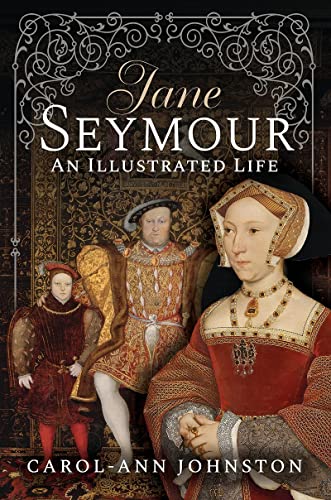 King Henry VIII’s six wives each have their unique story that transcends time. Katherine of Aragon was his first wife, the mother of Mary Tudor, and the one Henry left behind after 24 years to marry his mistress Anne Boleyn, the most famous of his wives and the mother of Elizabeth Tudor. Anna of Cleves had the shortest marriage to Henry VIII and ended up with an excellent annulment deal. Catherine Howard was young and a bit naive when it came to the ways of men, which led to her downfall while Catherine Parr survived until the end of Henry VIII’s reign. These five women are stories we know by heart, but the one whose story remains a mystery is Jane Seymour, Henry’s third wife, and the mother of the future King Edward VI. In her debut book, “Jane Seymour: An Illustrated Life” Carol-Ann Johnston tells the story of the wife who gave Henry his desired son.
 A war between brothers and cousins to determine the future of England is raging, but it is not the same kind of war England saw during medieval times. It is a clash of ideas, religious beliefs, and a fight for the survival of the reigning English king. On one side were the Catholic supporters of King Charles I, known as Cavaliers, and on the other were the Protestant Roundheads who wanted to see the king removed from the throne. Caught in the middle was the home of the Winchesters, known as Basing House, a royalist stronghold, which withstood sieges and bloodshed for two years amid the conflict. Jessie Childs’ latest book, “The Siege of Loyalty House: A Story of the English Civil War,” is dedicated to telling the story of this remarkable house and the men and women who fought to the death to defend it.
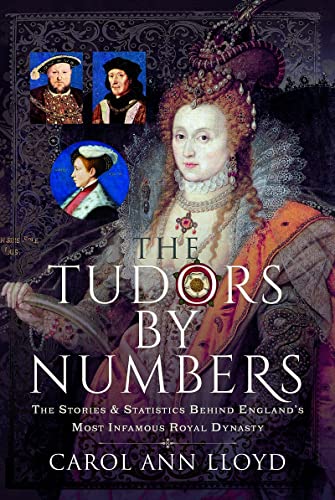 The story of the Tudor dynasty has been told in numerous different ways. We know the major figures, the significant events, and the stories of their love lives. We understand how they changed the history of England and Europe forever, but these are just the basic facts. If we look at the numbers surrounding the dynasty, what type of story does it tell? This is the approach Carol Ann Lloyd has taken in her debut book, “The Tudors by Numbers: The Stories and Statistics Behind England’s Most Infamous Royal Dynasty.”
 When we think about food during the Tudor dynasty, one of the first images that pop into our head is of Charles Laughton, who played King Henry VIII in “The Private Life of Henry VIII” from 1933. He is seen in a popular image online devouring a chicken at a Tudor feast. We assume that the Tudors were indulgent regarding their food, not caring about what they put in their bodies and their benefits. However, the recipes from this period, from the beginning of King Henry VII’s reign to the death of Queen Elizabeth I, tell a different story. In her debut nonfiction book, “Eating with the Tudors: Food and Recipes,” Brigitte Webster shows how the political and religious changes during the Tudor dynasty affected how those living in England ate every day.
 When we think of the German Duchy of Cleves, our first thoughts tend to go to Anna of Cleves, King Henry VIII’s fourth wife, whom he immediately divorced due to not being attracted to her looks, at least according to English tales. We tend to leave Anna’s German life to the side and forget about her family’s story when we study the ever-changing 16th and 17th centuries, even though Germany was dealing with the Reformation. We have an inkling about how life might have been like for Anna of Cleves in England with the fabulous book, “Anna, Duchess of Cleves: The King’s Beloved Sister,” but what about Anna’s siblings, Sybylla, Wilhelm, and Amalia? Heather Darsie has decided to take up the challenge of telling the story of Anna of Cleves’ family from the German perspective in her latest book, “Children of the House of Cleves: Anna and Her Siblings.”
 The tales of the Tudor kings are unique in how they became kings of England. We all know the story of how Prince Henry became King Henry VIII. His eldest brother, Prince Arthur, died shortly after he married the Spanish Princess Katherine of Aragon. Much has been discussed about Arthur’s wedding night and death, but not much has been written about his time as the Prince of Wales. In his debut book, “Arthur, Prince of Wales: Henry VIII’s Lost Brother” Gareth Streeter explores the life of the first Tudor prince.
 Adventures of a Tudor Nerd