
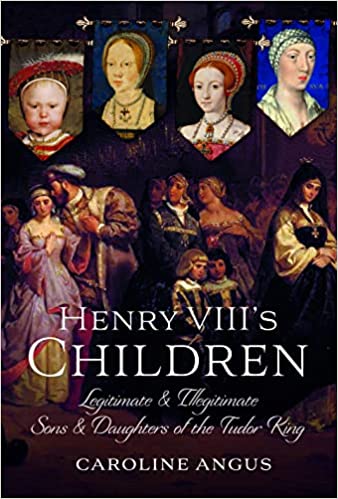
 When we think about the title royal children, images of children who get whatever they want, being spoiled with gems and gowns, and ruling kingdoms, they are married to create alliances. In that sense, it would define a life of luxury. However, for the children of King Henry VIII, luxury was not always in their dictionary. What was life like for the legitimate and illegitimate children of Henry VIII? Caroline Angus explores this question in her latest book, “Henry VIII’s Children: Legitimate and Illegitimate Sons and Daughters of the Tudor King.”
I want to thank Pen and Sword Books and NetGalley for sending me a copy of this book. I have read quite a few books about the children of Henry VIII, so when I saw the title, I was interested to see what new information Angus would provide in her book.
To understand why Henry VIII desired a large family, especially male heirs, Angus explores Henry’s childhood as the second son of Henry VII and Elizabeth of York. We then transition to the marriage of Henry and Katherine of Aragon and her multiple miscarriages until her beloved daughter Mary was born. After Mary, Angus explores the relationships of Henry VIII with Bessie Blount, Anne Boleyn, and Jane Seymour and his other children that were recognized as his own, Henry Fitzroy, Elizabeth, and Edward, respectively.
What I enjoyed in this book is the amount of information that Angus provided about not only Henry’s legitimate children but his illegitimate children, primarily the information about Henry Fitzroy. For so long, Henry Fitzroy was a footnote in the Henry VIII story, but it is so fascinating how much he relied on his eldest son even though he was illegitimate. Then, you have Mary’s upbringing compared to Elizabeth’s, and you see how much of a struggle it was to be a daughter of Henry VIII instead of a treasured son.
Angus also included a section about children who many questioned if they were indeed illegitimate children of the king, including the children of Mary Boleyn. She also included some Tudors I had never heard about, which was interesting to read about how their life experiences differed from their royal counterparts. The king’s legitimate and illegitimate children dealt with so much pain and suffering because of who their dear old dad was, and they all craved a little bit of his love in return.
Angus has done an excellent job telling the tales of the rather sad upbringings of the children of Henry VIII. A crown and a king as a father did not mean your life was a fairy tale. By understanding their childhoods, we can understand why the Tudor children became strong-willed leaders. If you want an excellent book that gives you a glimpse into what it meant to be a child of a monarch during the Tudor period, check out, “Henry VIII’s Children: Legitimate and Illegitimate Sons and Daughters of the Tudor King” by Caroline Angus.
 Two women destined to be rivals for one man’s affection. One is the daughter of royalty, destined to become Queen of England since she was a baby. Her first husband died suddenly, and she married her brother-in-law, the young King Henry VIII. The other woman is the daughter of a family on the rise at court. She has been educated in courts abroad but has returned to her native England to serve the Queen of England, but King Henry VIII falls in love with this young woman. Catherine of Aragon and Anne Boleyn; are two women destined to be rivals, but a new museum exhibit uncovers these women’s similarities. In this corresponding book, “Catherine and Anne: Queens, Rivals, Mothers,” Owen Emmerson, Kate McCaffrey, and Alison Palmer share the latest academic research to understand better these two queens who dominated the 16th century.
 When we think of the infamous queens of England, some names come to mind, but one rises to the top for the number of black myths and influence surrounding her name: Eleanor of Aquitaine. The orphaned Duchess of Aquitaine, who married the future King Louis VII of France, went on the Second Crusades with her husband, survived battles and kidnappings, and ended up divorcing her first husband because she couldn’t give a male son. So, she married the young Count of Anjou, who would become the first king of the Plantagenet dynasty, King Henry II, who had a large family and split her time between England and France. Eleanor would eventually side with her sons, rebel against Henry, and spend 15 years in prison. A fire-cracker of a queen, but how many of the stories surrounding the titular queen are true? In her latest biography, “Eleanor of Aquitaine: Queen of France and England, Mother of Empires,” Sara Cockerill dives deep into the archives to tell the true story of this much-maligned queen of England and France.
 When we think of the phrase “middle ages,” we think of a time of bloody battles and deadly plagues, full of warriors and kings, and a more patriarchal society where women sat on the sidelines. Only the highly pious women or women who tore down barriers genuinely stood out in the history books. At least, that is what we have been told for centuries, but what does archeological research tell us? How about the newly discovered historical records? In her latest book, “Femina: A New History of the Middle Ages, Through the Women Written Out of It,” Janina Ramirez tells the story of the Middle Ages innovatively; through the stories of women who, until recently, were hidden voices from the past.
 I appreciate all the love and support you have all given me over the past five years. I started Adventures of a Tudor Nerd after writing a guest article for Tudors Dynasty. I have always been nervous about sharing my writing with others, but I have always loved history and wanted to share my passion. I took a chance, and I am so glad that I did.
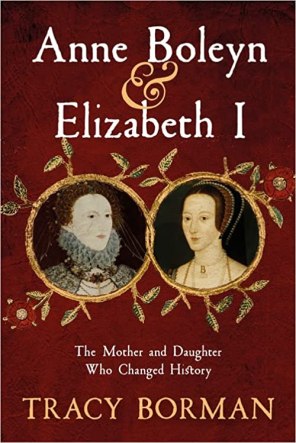 The year is 1536. A young woman climbs the scaffold for her execution while her three-year-old daughter is miles away, not knowing what will happen to her mother. Never speaking about her mother in public for decades, it would seem that the bond between mother and daughter broke that fateful day. Still, Elizabeth I kept the memory of her influential mother, Anne Boleyn, close to her heart. How did Anne prepare her beloved daughter for the complex nature of the Tudor court, and how did Elizabeth keep the memory of her mother alive? This bond is explored in depth in Tracy Borman’s latest book, “Anne Boleyn & Elizabeth I: The Mother and Daughter Who Changed History.”
 One of the most critical years in English history was 1066, when William Duke of Normandy invaded England in the Norman Conquest. Known as William the Conqueror, his strength and ruthlessness made him a legend, but William would not have been the Duke or King of England without his equally formidable wife. Matilda of Flanders stood her ground, became the Duchess of Normandy, had a large family with William, and would become the first crowned Queen of England. Although much has been written about William the Conqueror and the Norman Conquest, Matilda of Flanders has not received the same attention until now. Tracy Borman has written the first biography dedicated to this remarkable woman entitled, “Matilda: Wife of the Conqueror, First Queen of England.”
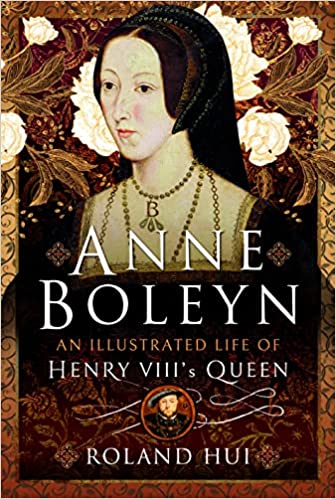 The wives of King Henry VIII have been discussed for centuries in length through novels and nonfiction books. Katherine of Aragon, Jane Seymour, Anna of Cleves, Catherine Howard, and Catherine Parr are all very popular queens, but there is one that you have all been waiting for, the most famous Tudor queen, Anne Boleyn. Her story has been told so many different ways by historians and historical fiction authors for centuries, and now it is time for another historian to write their spin on her story. In his latest book, “Anne Boleyn, An Illustrated Life of Henry VIII’s Queen,” Roland Hui paints a picture of the tumultuous life, love life, and death of Anne Boleyn.
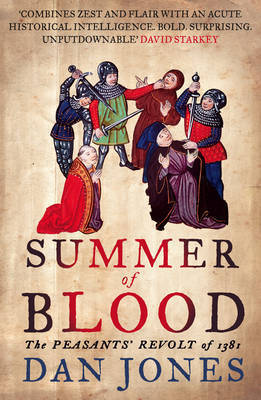 The year was 1381, and England was engulfed in chaos. A band of ruffians and revolters descended on London to achieve political change and a fair chance for the lower classes who suffered greatly from war and plague. The young King Richard II watched as men like Wat Tyler and the preacher John Ball led this ragtag army to his doorstep, fighting against his advisors, like John of Gaunt, to end a poll tax that was their last straw. Why did this ragtag army march on London? How did men like Ball and Tyler convince the masses to march against their sovereign and his government? How did this revolt end, and did the people get what they wanted due to their revolution? Dan Jones brings the bloody story of the first significant revolution by the English people to life in his book, “Summer of Blood: The Peasants’ Revolt of 1381.”
 Two kings, two rivals from different countries defined the 16th century. One was the spare to his father’s crown, but when his eldest brother suddenly passed away, he became the next Tudor king. The other was the sole heir to his parent’s large kingdom and would become the Holy Roman Emperor. Wars, the Reformation, and family drama kept these two men, Henry VIII and Charles V, busy and at each other’s throats. They would sometimes join and fight for one another’s causes, showing the importance of international politics. With each new scenario, their relationship would shift, either for the best or the worst. Richard Heath has combined the stories of these two monarchs, these “frenemies,” into one joint biography, “Henry VIII and Charles V: Rival Monarchs, Uneasy Allies.”
 Adventures of a Tudor Nerd