
 A man hidden from the world languishes for decades in a prison cell. He is not allowed to speak to anyone, or he will face severe consequences. Often in literature, his head is covered in a mask made of iron. His identity and why he angered King Louis XIV so much have remained a mystery for centuries. The prisoner was known as the man in the iron mask throughout history, but who was this enigmatic figure? In her latest book, “The Man in the Iron Mask: The True Story of Europe’s Most Famous Prisoner,” Josephine Wilkinson dives deep into the archives to construct his story and the stories of the men behind the mystery.
I want to thank Pegasus Books for sending me a copy of this book. I usually do not read books about 17th century France; however, I had heard high praise about this particular title. I wanted to learn more about different great mysteries in history, so I decided to try this narrative.
Wilkinson’s narrative follows Eustache Danger, who many believe to be the infamous prisoner. He spent nearly 30 years in the prison system of France during the reign of King Louis XIV and was constantly under the watchful eye of his jailer, Benigne Dauvergne de Saint-Mars. Saint-Mars followed the direct orders of the minister of war, Francois Michel Le Tellier, marquis de Louvois. Eustache was not the only prisoner who was kept under Saint-Mars’ surveillance. Wilkinson also tracks the movements of prominent prisoners like Nicholas Foucquet and Antonin Nompar de Caumont, Comte de Lauzun to show how drastically different Eustache’s punishment is compared to the higher echelons of society.
Eustache’s story is broken down by who he was associated with and the actual prisons he would call home for 30 years. The story of the man in the iron mask is often associated with Bastille, but that was his final destination. Starting in Pignerol, Eustache would follow Saint-Mars to the Chateau d’Exilles and the Ile Sainte-Marguerite, until finally ending up at the Bastille; each prison had its unique accommodations and transportation issues for the silent prisoner. No one was aware of what crime he committed and why silence was his punishment. Yet, people have speculated throughout the centuries, from Voltaire to Alexander Dumas, with Wilkinson providing her theory about who he was and the crime he might have committed to enduring the wrath of the king for so long. These theories would take an obscurely silent prisoner to a man whose face was hidden from the world in a mask made of iron.
There is a reason that the story of Eustache Danger’s imprisonment has captured the imagination of historians for generations, and that is because it is so mysterious. Wilkinson’s narrative and her meticulous research into the archives have brought his story back into the spotlight. The descriptions of prison life are so vivid, with details of Eustache’s life interwoven beautifully. He may not have had a chance to speak while he was alive, but Wilkinson has given the prisoner a voice that will capture anyone’s attention. If you want a thrilling read full of intrigue, drama, and myths galore, you should check out “The Man in the Iron Mask: The True Story of Europe’s Most Famous Prisoner” by Josephine Wilkinson.
 If you go to Fontevrault Abbey in France, you will find two rather extraordinary tombs. These tombs belong to King Henry II and Queen Eleanor of Aquitaine, the first King, Queen of the Plantagenet Dynasty, and the Angevin Empire. Their effigies tell us a lot about the couple that was buried side by side. The husband was restless; his model shows him ready to take action at any moment, with his crown upon his head and a scepter in his hand. His queen lays beside him, reading an unknown book. They seem to be prepared to watch over their kingdom and their family even beyond the grave. Those who know English history recognize their names and understand the family drama behind the scenes. We think we know the truth about Henry and Eleanor, but is there more to their story and their feuding family? In Matthew Lewis’s latest dual biography, “Henry II and Eleanor of Aquitaine: Founding an Empire,” he explores the relationship between this dynamic king and queen and how it shaped European and English history forever.
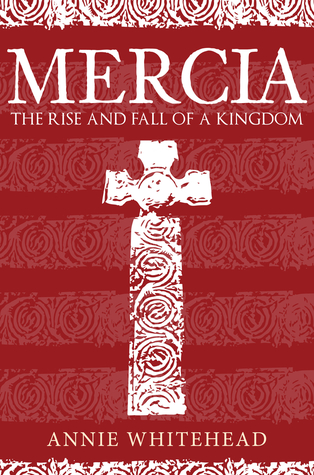 England’s history is full of daring moves and colorful characters, but it is also very ancient compared to other countries. We often considered the “start” of English history in school as the Norman Conquest in 1066. Nevertheless, this was just a stage in the massive story of the island. We have to consider those who called England their home; those who knew England, not as a unified country, but seven kingdoms known as the heptarchy. The most famous of these seven kingdoms was Wessex, the last kingdom, but their mortal enemy had a rich history of their own. Mercia was a thriving kingdom for hundreds of years, with colorful characters that many people are not familiar with. Annie Whitehead has taken the tales of this forgotten kingdom to the forefront with her book, “Mercia: The Rise and Fall of a Kingdom.”
  The story of King Henry VIII and his six wives has been regaled for centuries in different mediums. We love the marital problems of this one English king because of how much of an impact it made on all of Europe in the 16th century and beyond. Yet our love affair with the Tudor dynasty would not have gotten to the point that it is today without the tireless efforts of the ambassadors who went to England to report the news of the day to their respected kings and emperors. We tend to think that the ambassadors are better left in the shadows, working to promote peace between countries and report what was happening, but one man made a name for himself as an ambassador and transcended time. His name was Eustace Chapuys. His story and his mission are finally being told in Lauren Mackay’s brilliant debut book, “Inside the Tudor Court: Henry VIII and his Six Wives through the eyes of the Spanish Ambassador”.
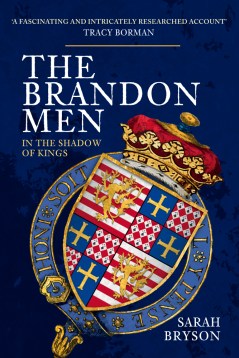 Loyalty to one’s king was imperative during times of war and strife. This statement was painfully true during periods of civil war when cousins fought against cousins. The Wars of the Roses was where we see families rise and fall like the tides, depending on which side they were loyal to and who was on the throne. One family who was able to navigate this political quagmire and end up on the side that would win in the end was the Brandons. Many recognize the name Brandon because of Charles Brandon and his rise in the court of Henry VIII, but how did they reach that point? What are the origins of the Brandon family? In her latest book, “The Brandon Men: In the Shadow of Kings”, Sarah Bryson takes her readers on a ride to find out what loyalty to the crown gave this family and why their legacy lives on today.
 In the middle of the night on November 25, 1120, screams could be heard from the English Channel. A ship known as The White Ship hit a rock and began to sink. Those on board were the glamorous English elite, including the legitimate son of King Henry I, William Aetheling. In an era where people feared the sea and could not swim, those on board sank to their watery death on that cold winter night that began with such frivolity. No one knew that night that this one disaster at sea would cause a dynastic struggle that would lead to the founding of the infamous Plantagenet dynasty. In his latest book, “The White Ship: Conquest, Anarchy and the Wrecking of Henry I’s Dream”, Charles Spencer takes his readers on a journey to fully understand the impact that this tragedy had on the English royal family.
 A man who was young and had charisma would attract the attention of the Virgin Queen herself, yet that attention came with a price. The young man could not do what he desired and was buried in debt. His anger could not be quenched and he would end up rebelling against the very queen who brought him so much glory and honor. This rebellion would lead to his execution. The man’s name was Robert Devereux, 2nd Earl of Essex, and his story is told in Sarah-Beth Watkins’ latest bite-size biography, “Elizabeth I’s Last Favourite: Robert Devereux, 2nd Earl of Essex”.
 Adventures of a Tudor Nerd