
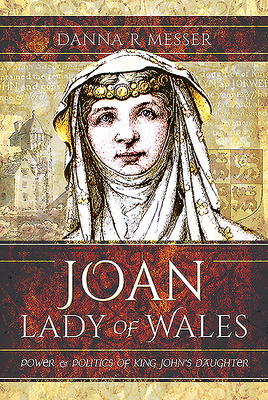
 Medieval women held many different titles that defined their roles and their connections. Mothers, daughters, and wives tended to be the most popular and the most common. Titles such as queen, political diplomat, and peace weaver tend to be rare and given to women of power. Yet, these words accurately depict a unique woman who lived during the Angevin/ Plantagenet dynasty. She was the illegitimate daughter of the notorious King John and the wife of Llywelyn the Great, a Prince of Wales. She worked tirelessly to establish peace between England and Wales, yet she has not received much attention in the past. Her name was Joan, Lady of Wales, and her story is brought to life in Danna R. Messer’s book, “Joan, Lady of Wales: Power and Politics of King John’s Daughter”.
I would like to thank Pen and Sword Books and Net Galley for sending me a copy of this book. I did not know much about Joan, except what I read about her in Sharon Bennett Connolly’s latest book, “Ladies of Magna Carta: Women of Influence in Thirteenth-Century England”. She sounded really interesting so when I heard about this book by Messer, I wanted to read it to learn more about Joan.
As someone who did not know a lot about Joan or medieval Wales, I found this book informative and enjoyable. Messer takes the time to explain what life was like for a royal Welsh couple, like Joan and Llywelyn, and why their marriage made such an impact in the long run. On paper, it was a princess from England marrying a prince from Wales, but what made this union so unique was the fact that Joan was the illegitimate daughter of King John and yet she was treated like a beloved legitimate child. Of course, this marriage was first and foremost, a political match, but it seemed to have developed into a strong and loving partnership, that endured 30 years of trials and tribulations.
One of the major trials that Joan had to deal with was to prevent England and Wales from going to war against each other. Truly a monumental challenge for, as Messer meticulously points out, Llywelyn and either King John or King Henry III were constantly having disagreements. I could just picture Joan getting exasperated that she had to try to calm things down between England and Wales every single time. Her diplomatic skills were truly remarkable, especially with how much influence she possessed in both countries.
Probably the most controversial event in Joan’s life is her affair with William de Braose, which led to his execution and her imprisonment. Messer does a good job explaining what we know about this situation. Unfortunately, like many events in Joan’s life, Messer has to use a bit of guesswork to try and put together the clues about Joan and figure out what happened. It can be a bit frustrating, but we have to remember that Joan lived over 800 years ago and women were not recorded as detailed as they are now or even 500 years ago. I think we can give Messer a pass on guessing where Joan was and what her role was in certain events.
Overall, I found this book enlightening. I think Messer’s writing style is engaging and she was dedicated to finding out the truth, as far as the facts would take her. I think this is a fantastic book for someone who needs an introduction to medieval Welsh royal lifestyle, the power of royal Welsh women, and of course, a meticulously detailed account of the life of Joan, Lady of Wales. If this describes you, check out “Joan, Lady of Wales: Power and Politics of King John’s Daughter” by Danna R. Messer.
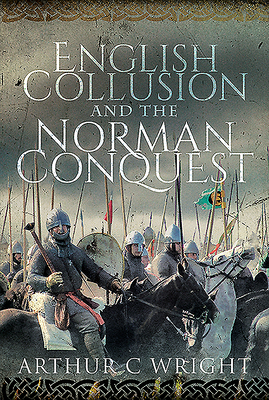 The Norman Conquest of 1066 was one of the most important dates in English and world history. It signaled the start of the Norman influence in England with Duke William, also known as William the Conqueror, becoming King of England. But does William I deserve the reputation that is attributed to him in history, or should we be careful with how we view him because his story is told by the avaricious Church? How much help did William and the Normans receive from their English counterparts? Can we call this event a “conquest”? Who was to blame for the “Harrowing of the North”? These questions and more are discussed in Arthur C. Wright’s latest book, “English Collusion and the Norman Conquest”.
 When one thinks about Medieval Europe and buildings, we tend to focus on the luxurious castles with their impenetrable walls. It is a rather glamorous image, but the problem is it is not accurate. Castles were used for defensive measures to protect the kingdom from attacks, either from outsiders or, in some cases, from within. Medieval warfare and castles go hand in hand, but one conflict where we tend to forget that castles play a significant role is in the civil war between the Yorks and the Lancasters, which we refer to today as The Wars of the Roses. Dr. Dan Spencer has scoured the resources that are available to find out the true role of these fortresses, both in England and in Wales, in this complex family drama that threw England into chaos. His research has been compiled in his latest book, “The Castle in the Wars of the Roses”.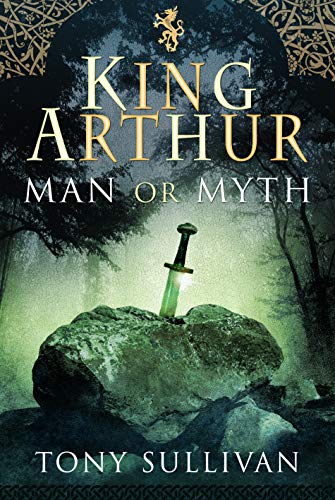
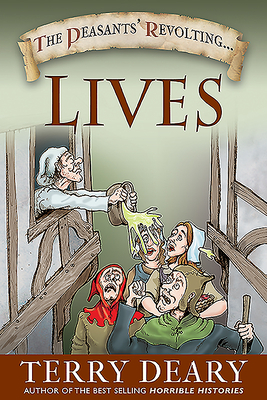 When we study history, we tend to focus on the lives of the elite and the royalty because their lives are well documented. However, there was a large majority of the population who tends to be forgotten in the annals of the past. They are the lower classes who were the backbone of society for centuries, the people who we would call peasants. Now, if we know so much about the higher echelons of society, we must ask ourselves what was life like for those who had almost nothing in life. How did they work? When they did speak out about injustices through revolutions, how were they received? How did they worship? How were they educated? How did they relax after long days of back-breaking labor? Where did they live? These questions and more are answered in Terry Deary’s latest book, “The Peasants’ Revolting Lives”.
 The year of 1215 marked a turning point in English history with the sealing of a rather unique document; the Charter of Liberties, or as we know it today, the Magna Carta. It was a charter from the people to a king demanding the rights that they believed that they deserved. Those who sealed it were rebel barons who were tired of the way King John was running the country, yet instead of asking for his removal, they wanted reform. The clauses mostly concerned the problems of the men who made the charter, however, three clauses dealt with women specifically. In her latest book, “Ladies of Magna Carta: Women of Influence in Thirteenth Century England”, Sharon Bennett Connolly explores the lives of the women who were directly impacted by this document.
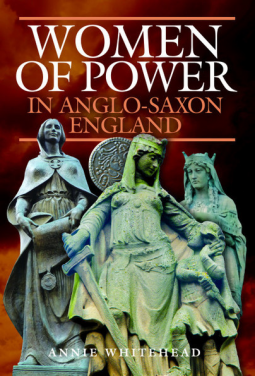 When one studies English history, many people tend to focus on the year 1066 with William the Conqueror and the Norman Conquest as a starting point. However, just like any great civilization, others formed the foundation of English history; they were known as the Anglo-Saxons. What we know about the Anglo-Saxons come from the records of the kings of the different kingdoms of England, which paints a picture of harsh and tumultuous times with power-struggles. However, every strong king and gentleman of the time knew that to succeed, they needed a woman that was equally strong with a bloodline that would make them untouchable. The stories of these women who helped define this era of Anglo-Saxon rulers in England have long been hidden, until now. In her latest book, “Women of Power in Anglo-Saxon England”, Annie Whitehead dives deep into the archives to shed some light on the stories of the formidable women who defined an era.
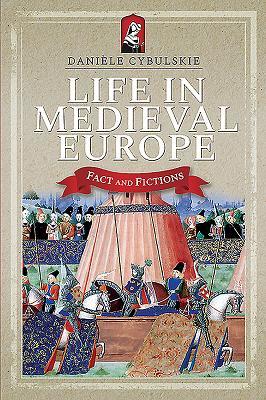 Have you ever read a book, either historical fiction or nonfiction, about medieval Europe and wondered if what the author was writing about was true? What about historical movies or dramas? You know that they probably have the facts about the important people and events correct, or at least you hope, but you wonder about the small details. What did they eat? How did they keep themselves clean and healthy? How did religion and the criminal justice system work in medieval Europe? What was medieval warfare like? These questions and more are explored in Daniele Cybulskie’s enchanting book, “Life in Medieval Europe: Fact and Fiction”.
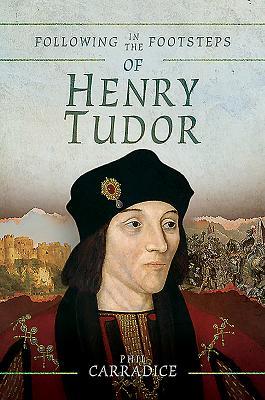 In the study of history, we tend to look at the beginning and the end of a battle and why they were fought. We rarely pay attention to the march that led to the battle, but when we do, there is a distinct reason why. One particular case is of Henry Tudor’s march to the Battle of Bosworth Field. It is a tale that started from his birth at Pembroke Castle to being an exile and then from an exile to being King of England. The story of how an exile became a king and founded the infamous Tudor dynasty deserves attention. Phil Carradice believed that it was time for the story of the first Tudor king and his march to destiny to be told in his latest book, “Following in the Footsteps of Henry Tudor: A Historical Journey From Pembroke to Bosworth”.
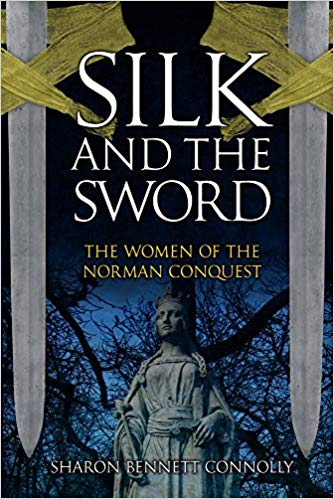 There are quite a few events that one can name that radically shaped the course of British history. None more so than the events of 1066, the year that saw Norman, Breton, Flemish, and French forces, led by the Duke of Normandy, William the Conqueror, invaded England in what we know today as the Norman Conquest. Most history books tend to focus on the men who lived before, during, and after the Norman Conquest: Aethelred the Unready, Edward the Confessor, Cnut, Harold II, Harald Hardrada, and of course William the Conqueror just to name a few. What the history books tend to gloss over is the strong women who stood by their husbands, brothers, and sons during this conflict. Who were these women? What were their stories? How did they help their families before, during and after 1066? These questions are answered in Sharon Bennett Connolly’s delightful book, “Silk and the Sword: The Women of the Norman Conquest”.
 Adventures of a Tudor Nerd