
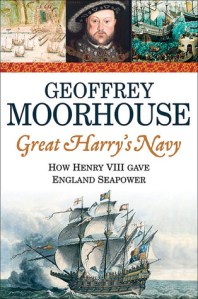
 One would assume that, since England is an island nation, its navy has been its strength since its foundation. That, however, was not always the case. While there were naval battles during the Middle Ages, it was not a navy like we know today. The concept of the Royal Navy was founded during the time of the Tudors, especially under the reign of Henry VIII. So, how did Henry VIII turn a navy from 7 ships to over fifty ships that could stand with other European navies? Geoffrey Moorhouse examines the creation of the English navy in his book, “Great Harry’s Navy: How Henry VIII Gave England Sea Power.”
This particular title was a used bookstore find for me. I saw that it was about the Tudors, and an aspect that I am not super familiar with. I don’t read a lot of nautically-based books, especially nonfiction, so I decided to go on a whim and try it out.
Moorhouse recognizes that this is a highly specialized book, so before delving into the history, he includes an extensive glossary at the beginning of the book to assist those unfamiliar with nautical terminology. He then dives into the origins of the English navy pre-Henry VII, and we can see that Henry VII did not leave his son, Henry VIII, many ships. However, Henry VIII had such a passion for ships that he got to work right away making shipbuilding centers and making sure that the right men were in the positions of power to make his navy superior to those in Europe. Moorhouse goes into minute detail to show how the Tudor navy rose, fell, and rose again to create a foundation that Henry’s children, Edward VI, Mary I, and Elizabeth I would build upon to create a sea superpower.
I am a fan of challenging books and discovering new topics in history. I wanted to learn more about naval history, presented in an easy-to-follow writing style. While Moorhouse does attempt to do this, his exuberant nerdy side for naval history comes out, and it felt like he was having a conversation with experts, not novices. It was one of those books that took me a long time to read because there was so much information that I was trying to digest as a novice.
I think this book is definitely written for a specific group of people, and they are those who love nautical history and learning about the Tudors. For novices, like myself, it may be quite a trial to read. If you are in the latter category and you want to read this, take your time and take notes if need be. I think this is a book that could be a great resource for historical fiction authors and just those who want a different approach to the Tudors. If that is you, “Great Harry’s Navy: How Henry VIII Gave England Sea Power” by Geoffrey Moorhouse might be a book to add to your collection.
 Sixteenth-century England was a time of great change. There were religious changes as the crown passed from one member of the Tudor family to another. Wars and illnesses like the plague and the sweating sickness were rampant. However, this was also a time of an explosion of the arts, particularly of the theatre. We see men like William Shakespeare and Ben Jonson rise from obscurity to write plays that would propel them to become phenomena. There was a third playwright who should be included in this list. He was the son of a cobbler who was educated at Cambridge University. A brilliant man who wrote groundbreaking plays while he was a spy for her majesty Queen Elizabeth I, his cause of death when he was only in his twenties would remain a mystery for centuries. Christopher (Kit) Marlowe’s story is told in Stephen Greenblatt’s latest book, “Dark Renaissance: The Dangerous Times and Fatal Genius of Shakespeare’s Greatest Rival.”
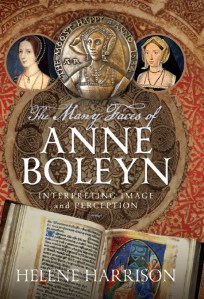 Anne Boleyn, a queen whose story has lived on for centuries. She was the woman who stood between Catherine of Aragon and King Henry VIII. Her daughter, Queen Elizabeth I, was her greatest legacy and her pride and joy. It was her untimely death due to charges that many believe were unfounded. We all have our image of the infamous queen, but how does that change when we switch the type of media we consume? Helen Harrison explores how our idea of Anne Boleyn changed over time in her latest book, “The Many Faces of Anne Boleyn: Interpreting Image and Perception.”
 In each era throughout history, we see how men and women adapt to the struggles and triumphs of the age. Take, for example, the 16th century, primarily in Tudor England. It was a time of great religious changes and dynamic rulers who would change the course of European history forever. While men had the most power, except for a handful of women, the majority of women struggled to survive each stage of life. So, what was life truly like for Tudor women? Elizabeth Norton explores this topic in her book, “The Lives of Tudor Women.”
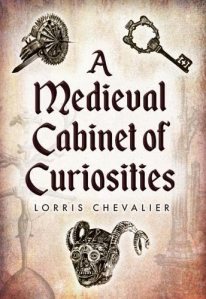 When we think about how we study history, we often consider documents and chronicles that can provide us with dates and the stories of historical figures. However, this is only half the story. We can learn a great deal from the artifacts left behind. Each era left behind its treasure trove of trinkets for archaeologists and historians to discover and interpret their meanings and purposes. One of the most fascinating periods of history was medieval Europe, full of war, religious struggles, artwork, plagues, and technological advances. What types of artifacts were left behind from medieval Europe? Lorris Chevalier explores the trinkets and artifacts left behind in his book, “A Medieval Cabinet of Curiosities.”
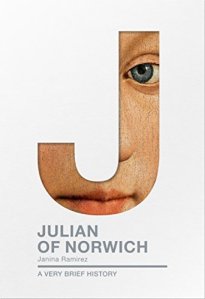 When we think about the most impactful women authors, we often think about writers like Agatha Christie, Mary Shelley, and Jane Austen. However, when it comes to religious texts, we have to go back in time centuries. We think about nuns like Bridget of Sweden and a mother of 14 children named Margery Kempe. Yet, we must include an anchorite who stayed in her cell for almost thirty years. Her book, Revelations of Divine Love, is considered the first great work of English prose, but many people are not familiar with the author until now. Janina Ramirez tells the story of Julian of Norwich and how impactful her book was in her book, “Julian of Norwich: A Very Brief History.”
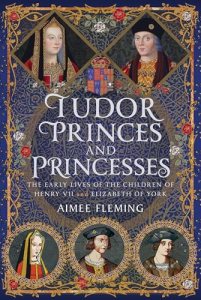 The year is 1485, and the last Plantagenet king, Richard III, is dead. The young man whose army defeated the king is Henry Tudor, and he is about to start a dynasty that will reshape world history forever. Henry Tudor, now King Henry VII, married the daughter of King Edward IV and Elizabeth Woodville, Elizabeth of York. Their marriage and their children would lay the foundation for the Tudor dynasty, but what was life like for the children who were the first generation of this remarkable dynasty? Aimee Fleming explores the lives of these royal siblings in her latest book, “Tudor Princes and Princesses: The Early Lives of the Children of Henry VII and Elizabeth of York.”
 Throughout history, women have had one major job: giving birth and raising future generations. Each new generation had different ways of dealing with childbirth and raising children, and the Tudors were no exception. While the Tudors lived in the 16th century, the joys and fears of being a mother were similar to those of the modern age. However, the way women approached different stages of life in the 16th century is unique compared to the ways of modern women. So, how did Tudor women approach motherhood? Stephanie Kline hopes to answer this question in her latest book, “Raising the Tudors: Motherhood in Sixteenth-Century England.”
 The Plantagenets, a dynasty that ruled England for over three hundred years. At least that is if you include the Lancastrian and Yorkist kings. Otherwise, the reign of the Plantagenets ended with Richard II being overthrown. So, how did the Plantagenets fall? How did wars, favoritism, and the plague factor into the fall? Helen Carr examines these questions and the rule of three kings over the fourteenth century in her latest book, “Sceptred Isle: A New History of the Fourteenth Century.”
 When we think of the greatest writers of all time, we often think about novelists like Jane Austen and Agatha Christie. There is a playwright who we know quite well in our century, but he wrote during the sixteenth century; William Shakespeare, “the Bard.” He may have been a star in his own time and is seen as one of the greats in our era, but it took a while to get him to such a status. In fact, he was forgotten for quite some time, until the 18th century, when an unlikely group of women decided to save the bard from obscurity. The story of the Shakespeare Ladies Club, its members, and the women’s impact is told in Christine and Jonathan Hainsworth’s book, “The Shakespeare Ladies Club: The Forgotten Women Who Rescued the Bawdy Bard.”
 Adventures of a Tudor Nerd