
 The Italian Renaissance was a time of great artwork, eccentric artists, and patrons who created these masterpieces. While the art tells a story, the artist and patron want the audience to understand, but sometimes the story of how the art came to be can be just as fascinating. One of the most famous pieces of art from the early 16th century was the ceiling of the Sistine Chapel. A stunning piece created by an artist who primarily created sculptures, and his patron was a pope who was more like a warrior. The story of how Michelangelo and Pope Julius II created an unlikely team to create this remarkable masterpiece is told in Ross King’s book, “Michelangelo and the Pope’s Ceiling.”
This is one of those books that caught my eye in a used bookstore. I am a fan of art history, so it intrigued me when I saw the title. Obviously, I have seen images of the Sistine Chapel, and I knew that Michelangelo was the one who painted the ceiling, but beyond that, I didn’t know much about this piece or the history behind it. With the recent Papal Conclave, which takes place in the Sistine Chapel, I thought this would be the perfect time to read this book.
The year is 1508, and the Sistine Chapel has just been restored. Pope Julius II wants someone to paint the ceiling of the Chapel. While others would have easily chosen a painter who knew how to paint frescoes as an ideal choice, Julius II and his assistant, Donato Bramante, decided to pick the young man who was in charge of carving Pope Julius’ tomb, Michelangelo Buonarroti. To say Michelangelo was not a fan of this assignment from the Pope would be an understatement. All the man wanted to do was sculpt amazing sculptures like David and the tomb for the Pope, but no, the Pope wanted him to paint. So he reluctantly taught himself how to paint in fresco over four years to create this masterpiece, telling tales of the Old Testament in the Bible with a specific emphasis on Creation and the stories of Moses.
Those four years saw much action for Michelangelo and Pope Julius II, who was known as il papa terribile. Michelangelo had to keep an eye on his fresco, his rival Raphael, and his family, who were always causing trouble. Pope Julius had to fight not only illness, but also the French, led by King Louis XII, which led to the creation of the Holy League against France. King also lays out the process and the inspiration for Michelangelo’s masterpiece, which I found quite fascinating.
This was a captivating read that gave such wonderful information about the era and the creation of this masterpiece. I have been a fan of art history and the history of the 16th century, so this book ticked so many boxes for me. If you want a delightful book full of art history and the history of Italy during the 16th century, I would recommend reading “Michelangelo and the Pope’s Ceiling” by Ross King.
 Throughout history, pandemics have ravaged human populations and changed the course of history. None more so than the Bubonic Plague, also known as the Black Death. It devastated entire families and altered entire countries, primarily in Europe. Although England is an island nation, that does not mean it could not escape the pandemic’s horrors for long. In her latest book, “The Black Death in England: Journal of the Plague Years in the Fourteenth Century, “ Kathryn Warner explores the lives of the victims of the Black Death throughout England during this century.
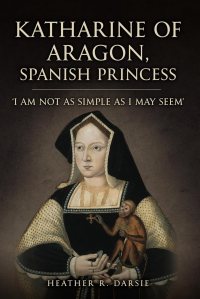 We all know the gist of the tragic tale of Katharine of Aragon. A Spanish princess who was brought to England to marry the heir of the Tudor throne, Prince Arthur Tudor. When the prince died mere months after their wedding day, Katharine was left in limbo and desolate as the Kings of Spain and England bickered over her dowry. Eventually, she would marry King Henry VIII, was his wife for over twenty years, and have numerous miscarriages before Henry decided to divorce her and marry Anne Boleyn. We know how Katharine’s story ends, but how did the stories of her Trastamara family influence her life and her reign as Queen of England? Heather R. Darsie explores Katharine’s Spanish origins in her latest book, “Katharine of Aragon, Spanish Princess: ‘I Am Not as Simple as I May Seem.’”
 Do you have a favorite painting? One that grabs your attention whenever you look at it and discover something new. Most paintings are from da Vinci, van Gogh, Rembrandt, Picasso, or Michelangelo, just to name a few. However, there is one artist that I feel doesn’t get a whole lot of attention unless you study the 16th century: Hans Holbein the Younger. While Holbein is known for his single portraits, his double portrait, known as The Ambassadors, is stunning to look at and is filled with symbolism. Tracy Borman, in collaboration with the National Gallery, has written a short book about this remarkable painting entitled “Holbein: The Ambassadors.”
 Throughout English history, a colorful cast of queens has left their marks in their distinct ways. While the Plantagenet and Tudor queens are more well-known, the Stuart queens and the mistresses of the Stuart kings were dynamic in their unique ways. One of the lesser-known queens was the wife of King Charles II. Though Charles II is known for his numerous mistresses, his wife Catherine of Braganza is not discussed much in England, but in her native Portugal, she is famous. So who was Catherine of Braganza, and what is her legacy in England and Portugal? Susan Abernethy tells the story of this almost forgotten queen in her book, “Charles II’s Portuguese Queen: The Legacy of Catherine of Braganza.”
 History is not just dates and conflicts with men and women sprinkled in, so we can learn a lesson. It’s not just births, conflicts, triumphs, marriages, and deaths. The people of the past are similar to us in so many ways, and it is through the field of study known as Living History or Experimental Archeology that we can understand the past through a more hands-on approach. One of the most popular methods of studying living history is cooking recipes from the past. But one must wonder how our tastes and understanding of the benefits of food change over time. Emma Kay takes the question of how eating and drinking changed over the medieval period in England and explores it in her book, “Wortes and All: Medieval Cooking.”
 Throughout history, many civil wars have altered the course of the history of the countries where they occurred. While we think about the American Civil War, the French Revolution, and the Wars of the Roses, another civil war often overlooked outside of England is the English Civil Wars. A series of conflicts between the Parliamentarians and the Royalists led to the execution of King Charles I and the rise of the English Republic under Oliver Cromwell. We often view the conflict from either Charles’ or Oliver’s perspective, but we have to consider the family that Charles left behind. How did the English Civil Wars mold the children of Charles I and his Catholic Queen Henrietta Maria? Linda Porter explores the lives of the royal children in her book, “Royal Renegades: The Children of Charles I and the English Civil Wars.”
 England’s history is centuries old, full of colorful characters and change galore. What truly defines the history of England is the monarchy, which has lasted over a thousand years. Over 40 kings and queens left their distinct marks on the history of this proud island nation. While some could maintain the crown with no issues, others had to fight to earn the crown, and a few even died for the crown. While there has been a plethora of books and novels written about individual monarchs and their impacts on the history of England, only a select few have chosen to take the arduous task of telling the story of the British Monarchy from its origins to the modern-day. One such historian who has chosen the latter is Tracy Borman in her book, “Crown and Sceptre: A New History of the British Monarchy from William the Conqueror to Elizabeth II.”
 The Great Matter was a defining event in the lives of King Henry VIII, Catherine of Aragon, and Anne Boleyn. One of the world’s messiest divorces, it saw Henry VIII trying everything in his bag of tricks to annul his marriage to Catherine of Aragon to marry his new infatuation, Anne Boleyn. While we know that the basis for his argument that he should be able to divorce Catherine comes from the book of Leviticus in the Bible, we often see Henry’s debate through the Catholic and Protestant lenses. However, Henry relied on another group of people who had not been on English soil for centuries, the Jews. What does Jewish law bring to the discussion of the Great Matter and did it help Henry? Jerry Rabow examines this often overlooked aspect of Henry’s road to divorce in his book, “Henry VIII and His Rabbis: How the King Relied on Jewish Law to End His First Marriage- and Why He Failed.”
 For centuries, man’s best friend has been the dog, but don’t tell your feline friends that. In ancient times, cats were revered as idols, but something changed during the medieval period. For a thousand years, from 500 to 1500, cats were vilified and believed to be working with witches and the devil—a harsh assessment for small, fluffy cats, which we consider pets nowadays. So how were cats portrayed in medieval art and literature? Catherine Nappington hopes to give her readers a glimpse of feline art and literature in her book, “Medieval Cats: Claws, Paws, and Kitties of Yore.”
 Adventures of a Tudor Nerd