
Book Review: “Isabella: The Warrior Queen” by Kirstin Downey

In an age when most women of power did not have much power outside their own countries, one stood higher than most. She was not even supposed to become queen, but fate had a bigger mission for the young woman: rescue Christianity from dying out. As a ruler, this seems like a monumental task to complete especially when their enemies were the Ottoman Empire and the Turks at the height of the power. There was one woman who was up to the challenge while fighting to reclaim Spain for the Christians, exploring the new world, and dealing with her family drama. Isabella of Castile is either viewed as a saintly queen or a horrible woman ruler, but what do the archives tell us about her reign? Kirstin Downey tells the story of this revolutionary queen in her biography, “Isabella: The Warrior Queen.”

I knew a little bit about Queen Isabella of Castile from my research into her daughters Catherine of Aragon and Joanna. I learned about the stories of Christopher Columbus mostly through school. Finally, when it comes to the Inquisition and the Reconquista, it was mostly from movies and television shows. In other words, I did not know much about the reign of Queen Isabella and the history of Spain during this period, so I was excited to start learning through this biography.

Isabella of Castile may have been the daughter of King Juan II and his second wife Isabella of Portugal, but she had two brothers, Alfonso and her half-brother Enrique IV. As the son of King Juan’s first wife Maria of Aragon, Enrique IV became King of Castile after the death of King Juan. Enrique IV helped raise Isabella and Alfonso, but his court was filled with trials, tribulations, and battles. While Enrique IV did marry twice to Blanche II of Navarre and Joan of Portugal, he only had one child, a girl named Juanna le Beltraneja, but a woman could not rule, so the crown was supposed to pass to Alfonso. However, Alfonso died unexpectedly, which left Isabella and Juanna to fight for the throne after Enrique died. Isabella was a prize on the marriage market, but she decided to take her fate into her own hands instead of being a pawn in the game of international politics; she married a man of her choice, the future King Ferdinand II of Aragon.

However, this is not the only time that Isabella took matters into her own hands. When King Enrique IV of Castile died in December 1474, Isabella decided to crown herself Queen of Castile. Although she was married to Ferdinand, she ruled Castile on her own. Ferdinand was not a faithful husband as he was known to have dalliances on the side, but Isabella and Ferdinand did have children who would marry and influence European countries. Isabella was not a wallflower queen as she channeled the spirit of Joan of Arc, especially when it came to battles against the Ottoman Empire under the command of Mehmed II the Conqueror, the fall of Granada in 1492, and ended a struggle between Christians and Muslims in Spain. Isabella also created some questionably dark moments in European history including the Reconquista of Spain, the Inquisition, and the voyages of Christopher Columbus. While we often remember these events as something done by Ferdinand and Isabella, it should be noted that most of these were done according to Isabella’s will. It was not until the death of Isabella that one gets a sense of the type of ruler Ferdinand truly was as he fought against Philip the Handsome and Joanna of Aragon, Ferdinand’s daughter, for the right to rule Castile.

I found this book extremely accessible and informative. Downey was able to be balanced and fair when it came to the more controversial topics about Isabella’s reign. I have a new appreciation for Isabella’s life, her reign, and the history of Spain in general. If you want a fantastic biography about Isabella of Castile that is well-balanced and well-researched, I highly recommend you read, “Isabella: The Warrior Queen” by Kirstin Downey.

Book Review: “Mary Tudor: Queen of France” by Amy McElroy

The life of a 16th-century princess is not all that it is cracked up to be. You can have jewels, and glamorous dresses, attend the glittering yet treacherous court, and have numerous homes. You must marry the person the king says you should marry to create strong alliances for the kingdom, so the concept of marrying for love is not in your vocabulary. You had to ensure your opinions were kept in line with the monarch’s views so you didn’t meet a disastrous end. In other words, the closer you are to the throne, the more scrutiny is forced upon you. No one understood this advice better than Mary Tudor, the daughter of King Henry VII and the younger sister of Henry VIII. She was a daughter, a sister, a wife, a queen, a duchess, and a mother. Her remarkable story is told in Amy McElroy’s book, “Mary Tudor: Queen of France.”

I want to thank Pen and Sword Books and Net Galley for sending me a copy of this book. I have read Amy McElroy’s previous books, “Women’s Lives in the Tudor Era” and “Educating the Tudors,” and I enjoyed both books. When I heard that she would write her first-ever biography on Mary Tudor, I jumped at the chance to read it because Mary is my favorite of the children of Henry VII and Elizabeth of York.

McElroy begins with a quick overview of the conflict that brought the Tudors to the throne, the Wars of the Roses. The marriage of Mary’s parents, Henry VII and Elizabeth of York united the kingdom and started the Tudor dynasty. Like any dynasty, it was important to have heirs, spares, and daughters who could be used essentially as pawns in the marriage market to create strong alliances. Mary’s eldest brother Arthur married Katherine of Aragon to form an alliance with Spain and her older sister Margaret married James IV of Scotland for another alliance. From a young age, Mary Tudor was a proposed bride for Charles of Castile, the son of King Philip the Handsome and Queen Joanna of Castile and Aragon, who would become Holy Roman Emperor Charles V. Unfortunately, this marriage plan fizzled, but another bride groom was waiting in the wing, King Louis XII of France.

Mary’s marriage to King Louis XII of France and her time as Queen of France did not last long because Louis died mere months after their wedding. Now Mary could have returned to England or stayed in France and waited for another royal match to happen, but Mary chose option number three. Mary’s heart belonged to her brother Henry VIII’s best friend Charles Brandon, and the two devised a plan to marry in secret. It was out of the ordinary and it did create quite the scandal, but at the end of the day, it was a love match. Charles and Mary had a family and were involved in court politics including the Great Matter, before Mary died on June 26, 1533.

I think what has impressed me about McElroy’s books, including this one, is her ability to reveal something new to the subject material. While I knew quite a bit about Mary’s life, it was the marriage negotiations and her inner circle that truly fascinated me. If you want a new book about the sister of Henry VIII with new insight into her life and the politics of marriage, I highly suggest you read, “Mary Tudor: Queen of France” by Amy McElroy.

Book Review: “Notre Dame: A Short History of the Meaning of Cathedrals” by Ken Follett

April 15, 2019, will be a dark day for Paris and the world. We watched in horror as the magnificent Notre Dame Cathedral burned. For centuries, it stood as the symbol of medieval Paris, and in minutes, it was engulfed in flames. While so many of us felt helpless, Ken Follett decided to do something to help rebuild the great cathedral. He wrote this book, “Notre Dame: A Short History of the Meaning of Cathedrals,” with the proceeds going to the charity La Fondation du Patrimoine. 

While I did not have the chance to buy this book when the fundraiser was initially happening, I wanted a copy. After President Macron announced his plans to rebuild Notre Dame, which was finished in 2024, it seemed like the perfect time to read a book like this and reflect on the cathedral’s significance.

As this is a relatively short book for Follett, less than a hundred pages, I will also keep this review relatively short. Follett begins in the year 2019 and how he felt when he watched on television as Notre Dame burned. He had visited the famous cathedral for decades, starting in 1966, and since one of his most famous books, The Pillars of the Earth was about the construction of a cathedral, Follett has a deep connection to cathedrals even though, as he stated, he is not a very religious man. 

He then jumps back to the story of how the cathedral was constructed, beginning in the year 1163 when Bishop Maurice du Sully decided that Notre Dame Cathedral needed to be bigger if it was going to compete with other cathedrals in Paris. Follett explains how cathedrals were constructed, why we do not have the original construction plans for Notre Dame, and how men and women helped construct these remarkable buildings. We then flash forward to the year 1831 when Victor Hugo found inspiration for his novel Notre Dame de Paris, or as we know it now The Hunchback of Notre Dame. It was written after the French Revolution and the cathedral had fallen into a state of disrepair. A contest was held to see who could repair the cathedral, which was won by a young architect Eugene Viollet-le-Duc. It took him twenty years to restore the cathedral to its former glory. Finally, we enter the end of World War II on August 26, 1944, when France was liberated and General Charles de Gaulle had his famous victory march down the Champs-Elysees. 

I found this little book a delight to read for the historical information about the famous cathedral, but also the emotional side. I found it fascinating how a building centuries-old can still create a sense of wonder for those who are not very religious. It was interesting to read this book after the most recent reconstruction was finished as there was a sense of mourning but also a hope that Notre Dame, this ever-resilient cathedral, would rise from the ashes once again. If you want a short book that focuses on the history of Notre Dame with a sense of hope and wonder even after the fire, I would recommend you read, “Notre-Dame: A Short History of the Meaning of Cathedrals” by Ken Follett.

Book Review: “Scotland’s Medieval Queens: From Saint Margaret to Margaret of Denmark” by Sharon Bennett Connolly

Scotland is a land of beauty and a culture all its own, but when it comes to the history of the Scottish monarchy only one word will suffice, messy. The tales of the Scottish monarchy are full of tragedies, violence, and bloody ends. As so often with many other monarchies we tend to focus on the men who wore the crown and those around them, but what about the tales of the queens who stood beside their husbands? The stories of the medieval queens of Scotland have often been overlooked for their more famous husbands, until now. Sharon Bennett Connolly has compiled the stories of these queens in her latest book, “Scotland’s Medieval Queens: From Saint Margaret to Margaret of Denmark.”
I want to thank Pen and Sword Books and Net Galley for sending me a copy of this book. I am a big fan of Sharon Bennett Connolly and her books, so when I heard that she was writing a book about Scottish medieval queens, I knew I wanted to read it. I know very little about Scottish history, other than the Stewarts because of a different book, so I was excited to learn more.

As Connolly states in her introduction, her inspiration for this book was from the Shakespearean play Macbeth, specifically the character of Lady Macbeth. A historical figure who has been much maligned in history, Lady Macbeth’s actual name was Gruoch, and her story and Macbeth’s make a fabulous introduction to her book. We stay in the 11th century with the first queen featured heavily in this text, and that is the only saint, Saint Margaret, the wife of Malcolm III and the one who reformed the Scottish Church.

We get to explore the daughters-in-law of Saint Margaret, Ethelreda of Northumbria, Sybilla of Normandy, and Matilda of Senlis who played more quiet roles than the saintly woman whose shoes they were trying to fill. It should be noted that there were some women like Ada de Warenne who never sat on a throne or wore a crown but were the mother of a future King of Scotland, Malcolm IV the Maiden. Since Malcolm never married or had kids, the throne passed to his brother William the Lion, who was not a huge fan of the English and helped establish the Auld Alliance, with his wife Queen Ermengarde by his side. Although the Scottish did not have the best relationships with the English, it did not mean that they didn’t try to establish peace through marriage with English princesses like Joan of England and Margaret of England. Along the way, a princess of Scotland named Margaret of Scotland married Erik II of Norway, and their daughter Margaret Maid of Norway would become the first Queen Regent of Scotland, albeit for a short period.

After the death of Margaret Maid of Norway, there was to no one’s surprise, a fight for the throne that culminated with John Balliol becoming King of Scotland. The throne would pass to Robert the Bruce, with a feature from a certain rebel named William Wallace. Things were not easy for the Bruce women such as Elizabeth de Burgh and Marjorie Bruce. We also had women like Joan of the Tower and Margaret Drummond who tried to help David Bruce of Scotland rule with different results. Finally, we reach the origins of the House of Stewart with women like Euphemia Ross, Annabella Drummond, Joan Beaufort, Mary of Guelders, and finally Margaret of Denmark. Each woman added something different to the story of Scotland and had to deal with war, executions, childbirth, religious matters, and political intrigue in their unique ways to better Scotland.

I have to applaud Connolly for the amount of history she was able to cover in a single book as she covered four centuries worth of Scottish royal history and made it relatively easy to follow along. I learned so much about Scotland’s royal history and the remarkable women who were queens of Scotland. If you want a fantastic introduction to the turbulent world of medieval Scotland and the women who helped shape the monarchy, I strongly recommend you read, “Scotland’s Medieval Queens: From Saint Margaret to Margaret of Denmark” by Sharon Bennett Connolly.

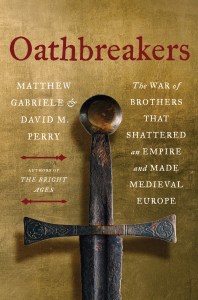
Book Review: “Oathbreakers: The Wars of Brothers that Shattered an Empire and Made Medieval Europe” by Matthew Gabriele and David M. Perry

The life of an empire is very cyclical: the birth of a people group united under one ruler, the empire’s expansion through conquest, and ultimately its demise. When we think of empires, we often think about the Roman and British empires, but another significant one in medieval Europe is the Carolingian Empire. It was an empire that hit its zenith with the reign of Charlemagne in the 9th century, but within two generations, it fell due to forces inside its court. What happened to this once glorious empire that fell after the Carolingian Civil War? Matthew Gabrielle and David M. Perry tell how a once glorious empire fell quickly after its height in their latest book, “Oathbreakers: The Wars of Brothers that Shattered an Empire and Made Medieval Europe.”

I want to thank David M. Perry and Harper for sending me a copy of this book. I don’t know much about the Carolingian Empire other than Charlemagne and his coronation on Christmas day in the year 800, so when I saw the premise of this book, it was intriguing to me.

Before we have the fall of an empire, we must understand the rise of the empire and how the empire worked. Gabriele and Perry begin their book by explaining the origins of the empire starting with the Franks and how they gained power. It starts with a legendary hero named Merovech, the Merovingians, and his grandson King Clovis I who converted to Christianity around the year 500. The Merovingians did not last long because Charles Martel would begin the reign of the Carolingians with a battle, which is almost a bit of foreshadowing of how the Carolingians fell. After Charles Martel came Pepin III and after the death of Pepin III, the kingdom was split between two co-emperors, Carolman and Charlemagne; ultimately Carolman died leaving Charlemagne to be the sole Roman emperor and was crowned on Christmas Day in the year 800.

Charlemagne’s reign was by no means perfect as his son Pepin I the Hunchback, staged a failed rebellion. Like Pepin III before him, Charlemagne decided to divide the empire between his three legitimate sons because sharing is caring. His son Louis the Pious would succeed his father and this is where the troubles ramped up to a civil war between Louis’s sons, Lothar I, Louis the German, and Charles the Bald. It was a time full of chaos, revolts, the Battle of Fontenoy, and oaths that could not save an empire.

As someone relatively new to this subject material, I thought it was a decent read. It took me a while to figure out which Pepin was which (because, shockingly, there are multiple Pepins as well as Louises and Charles all in one family, not confusing at all). I think it was interesting to read about a dynasty that I have heard mentioned in passing in other historical books about great kings, but I never personally dived into until now. In short, the Carolingians were a messy empire and I think they should get more attention. If you want a solid nonfiction book that tells the tale of one of the major empires of Europe, I suggest you read, “Oathbreakers: The Wars of Brothers that Shattered an Empire and Made Medieval Europe” by Matthew Gabriele and David M. Perry.

Book Review: “Embers of the Hands: Hidden Histories of the Viking Age” by Eleanor Barraclough

When we think of the term “Viking”, we often get images of battle-harden warriors, covered in guts and dirt, with horned helmets. We also believe that Vikings are warriors primarily from the Scandinavian world and that the Viking age ended in 1066 with the Norman Invasion of England. Our assumptions, thanks to television and a certain operatic cycle, are wrong. The Viking Age is a complex period of the past that spans centuries over half the known world. Using archeological evidence and written records, Eleanor Barraclough tells the tale of the Viking Age in her book, “Embers of the Hands: Hidden Histories of the Viking Age.”
I want to thank W.W. Norton & Company and Net Galley for sending me a copy of this book. I enjoy reading books about archeological discoveries, so when I heard about a book about the Viking Age and archeology, I jumped at the chance to read it. I have read a few historical fiction novels about the Viking Age and a few about the Anglo-Saxons, so I was curious what new information Barraclough would present in her book.

The short answer to that question is that Barraclough provided a plethora of information about the Viking Age. As she explains in her prologue, we try to compartmentalize history, but history flows like a river. Just because we label a period like the Viking Age does not mean that it ends at a certain date. We have artifacts from other parts of the world, including Russia and the Middle East, that would be dated to the 1500s. So what can the artifacts from the past tell us about this diverse age?

To tell the story of this age, Barraclough breaks her book into sections that focus on different elements such as beginnings, love, travel, slavery (known in this book as unfreedom), and endings. Each section focuses on not only the artifacts, like a comb, a chess piece, or a runestone with a love story, but also what these pieces can tell us about the average citizens who lived during this period. We can learn about their grooming habits, how they lived, how they traveled, their ever-changing beliefs from Norse mythology to Christianity, and how they approached issues like slavery and childbirth. Barraclough also takes the time to show what the chronicles and sources tell us about this period while showing how to understand what the runes on artifacts can tell us. I think my one concern about this book is that because it was not in chronological order, it was a bit hard to follow and there were points where it was a bit dry for my taste.

Overall, I found this book fascinating and a difficult read. It took me a long time to understand how complex the Viking Age was as I am not as familiar with the language and historical accounts. I think Barraclough does a decent job of presenting the information to not only those who are familiar with the era but to complete novices. If you want to understand the Viking Age through archeological research, I suggest you read, “Embers of the Hands: Hidden Histories of the Viking Age” by Eleanor Barraclough.

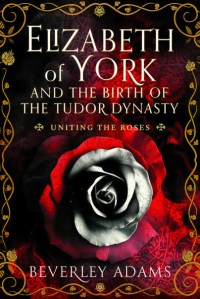
Book Review: “Elizabeth of York and the Birth of the Tudor Dynasty: Uniting the Roses” by Beverley Adams

Throughout English history, some of the most famous queens have been associated with the Tudor dynasty. We have the six wives of Henry VIII (Catherine of Aragon, Anne Boleyn, Jane Seymour, Anna of Cleves, Catherine Howard, and Catherine Parr), Queen Mary I, and Queen Elizabeth I. However, one Tudor queen is often overlooked for her daughters-in-law and granddaughters, the first Tudor queen, Elizabeth of York. So who was Elizabeth of York and what role did she play in the transition between the Plantagenet dynasty and the Tudor dynasty? Beverley Adams hopes to enlighten readers about this remarkable queen in her latest book, “Elizabeth of York and the Birth of the Tudor Dynasty: Uniting the Roses.”

I want to thank Pen and Sword Books and Net Galley for sending me a copy of this book. While I know quite a bit about Elizabeth of York, the Wars of the Roses, and the origins of the Tudor dynasty, I wanted to see how Adams would portray these topics for beginners. 

To begin with, Adams lays out the origins of the conflict that we know today as the Wars of the Roses with Edward III and his sons, John of Gaunt 1st Duke of Lancaster, and Edmund of Langley, 1st Duke of York. This led to a clash between King Henry VI and Richard Duke of York. Elizabeth of York’s father, the future King Edward IV, was the son of Richard Duke of York and he had to fight for his throne. Adams explores Elizabeth’s childhood as the eldest child of Edward IV and his wife Elizabeth Woodville during this tumultuous period of English history, which would form the foundation of what kind of queen she would be in the future.

Everything changed when Edward IV died suddenly, which meant that Elizabeth’s younger brother became Edward V and left Richard Duke of Gloucester as Lord Protector. For some reason, Richard Duke of Gloucester decided to take matters into his own hands, took control of the country, declared the children of Edward IV and Elizabeth Woodville illegitimate (including Elizabeth of York), and was crowned King Richard III in a matter of months. Some resisted the new king including the son of Margaret Beaufort and Edmund Tudor, Henry Tudor. Margaret Beaufort and Elizabeth Woodville arranged a marriage between Henry and Elizabeth that would occur if Henry was able to defeat Richard III and become King of England, which he did at the Battle of Bosworth Field. The rest of this book is dedicated to showing how Elizabeth of York was as a wife, queen, and mother as she dealt with death, treachery from Lambert Simnel and Perkin Warbeck, and triumphs as she was able to see the start of the Tudor dynasty.

I think Adams does a decent job with a book that is an introduction to Elizabeth of York, the Wars of the Roses, and the beginning of the Tudor dynasty. There are some myths that she repeats to debunk, but I feel like, in some places, Elizabeth of York was not the main focus, which was a bit disappointing. Overall, if you want a solid introductory book to the life and times of the first Tudor queen, I would recommend you read, “Elizabeth of York and the Birth of the Tudor Dynasty: Uniting the Roses” by Beverley Adams.

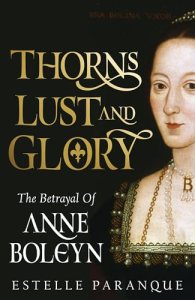
Book Review: “Thorns, Lust, and Glory: The Betrayal of Anne Boleyn” by Estelle Paranque

A young woman catches the attention of a king already married to a princess from a faraway kingdom. The king desires the young lady and divorces his wife to marry her. However, there is a catch. The young lady spent some time in the French court of Francis I and Claude of France, whereas the king’s wife was the daughter of the Spanish King and Queen as well as the aunt of the Holy Roman Emperor. The Great Matter of Henry VIII, Anne Boleyn, and Catherine of Aragon is considered one of the messiest divorces in English history and rightfully so when you consider the diplomatic consequences that this divorce would have across Europe. Estelle Paranque highlights the connection between Anne Boleyn and the French court in her latest book, “Thorns, Lust, and Glory: The Betrayal of Anne Boleyn.”

I want to thank Hachette Books and Net Galley for sending me a copy of this book. I heard that Estelle Paranque was writing a new book about the 16th century, but when I heard that it dealt with Anne Boleyn’s connections with the French court, I jumped at the chance to read it. While I do know quite a bit about the rise and fall of Anne Boleyn, it is her connection with the French court that I have never really explored in depth.

Paranque begins her book by examining the meeting between King Henry VIII and King Francis I with Anne Boleyn at Calais between October 25th and 27th, 1532. This was a significant meeting as it was right before Henry and Anne married in secret and they desired that Francis would support their side in the Great Matter. But how did they get to this meeting in Calais? This is where this book shines as Paranque takes the time to show her audience what life was like for Anne in the French court and the connections that she forged with women like Louise of Savoy, Claude of France, and Marguerite of Angouleme Queen of Navarre. It was fascinating to see how the Boleyns were able to use their connections to forge alliances with the French court that would prove useful in the future.

Possibly my favorite part of this book was seeing how the diplomatic channels across Europe interacted with one another during the Great Matter, the queenship of Anne Boleyn, and the fall of the Boleyns. I think we so often overlook that there were diplomats who were working on the sidelines to convey messages between kings and emperors to form or strengthen alliances. While many might consider the way Paranque wrote the correspondence and dialogue between diplomats and the monarchy as hard to get used to because she does insert emotions, I believe it adds depth to the story because they were human beings not in a vacuum. They had feelings about what was happening around them, passionate feelings in fact, and that should be displayed to readers.

While the actual events of this book were not new to me, the way that Paranque was able to present the information and show the men behind the scenes was fascinating. It presents the relationship between Henry VIII and Anne Boleyn in a different more complex light. If you want a different angle to the rise and fall of Anne Boleyn, I recommend you read, “Thorns, Lust, and Glory: The Betrayal of Anne Boleyn” by Estelle Paranque.

Book Review: “Stuart Spouses: A Compendium of Consorts from James I of Scotland to Queen Anne of Great Britain” by Heather R. Darsie

English royal history is filled with fantastic stories of triumphs and tribulations, grand romances, and divorces that shook the foundations of the monarchy. It is also filled with struggles over religion, wars both inside England and with foreign nations, and heartbreaking child losses. We often think about the spouses of the Plantagenets and the Tudors when we think about royal romances, but we shouldn’t forget about the dynasties that came after, like the Stuarts. So how did the Stuart dynasty come to be and how did the unions between monarchs and their significant others affect the dynasty and England? Heather R. Darsie explores this often-overlooked dynasty and the stories of their marriages and romances in her latest book, “Stuart Spouses: A Compendium of Consorts from James I of Scotland to Queen Anne of Great Britain.”

I want to thank Pen and Sword Books and Net Galley for sending me a copy of this book. I didn’t know much about the Stuarts before reading this book, except for those associated with the Plantagenets and the Tudors. I wanted to learn more about the Stuarts because I tend to stop after the death of Elizabeth I, so when I heard that Darsie was writing a book about the consorts of the Stuart dynasty, it was intriguing to me.

Darsie begins by explaining that she will be exploring the entirety of the Stuart dynasty, starting with its patriarch Walter Fitzalan, Stewart of Scotland for David I of Scotland in the 1100s. It is a fascinating story of how the family went from serving the monarchy to being the rulers of Scotland, all the way up to 1406 when James I became King of Scotland. The first royal consort that Darsie discusses might be familiar to anyone who knows about the origins of the Tudors, Joan Beaufort. We then track the Scottish story of the Stuarts through the death of Mary Queen of Scots through their significant others such as Mary of Guelders, Margaret of Denmark, Margaret Tudor, Madeleine of Valois, Marie de Guise, Francis II of France, Henry Stewart Lord Darnley, and James Hepburn 4th Earl of Bothwell.

It was under James VI of Scotland that things changed drastically for both England and Scotland as James became King James I of England with the death of Elizabeth I, and so James’ wife Anna of Denmark became the first Stuart Queen of England. This is the segment that I thoroughly enjoyed because they were new stories for me. We have Henriette Marie of France, a Catholic queen who married Charles I who was a Protestant, which did not have a happy ending as we get to see the English Civil War play out and the execution of Charles I on January 30, 1649. Darsie also includes the stories of the women who married Oliver Cromwell and his son Richard Cromwell, both Lord Protectors of England when the monarchy was not popular. Eventually, the Stuarts returned to their place on the English throne with Charles II and his queen Catherine of Braganza; followed by the women who married James Stewart Duke of York, Anne Hyde and Mary of Modena. James would become James II before the Glorious Revolution led by William of Orange, which led to the co-rulers William III and Mary II. Finally, we reach the tragic tale of Queen Anne of Great Britain and her Prince Consort George of Denmark.

I was so impressed with the amount of stories over centuries that Darsie was able to cover in this book. It was a fantastic introduction to Scottish Stuart history, how the dynasty survived, and created international relationships that allowed England to thrive. There were tales of tragedies, but there were also alliances that created stronger bonds, religious rifts, and romances. This was another triumph for Darsie and it is a book that made me interested in reading more about the Stuarts. If you are like me and you want a book that is a fantastic introduction to the Stuart monarchs and their consorts, I highly recommend you read, “Stuart Spouses: A Compendium of Consorts from James I of Scotland to Queen Anne of Great Britain” by Heather R. Darsie.

Book Review: “Henry V: The Astonishing Triumph of England’s Greatest Warrior King” by Dan Jones

English history is filled with kings who had to fight for their crown, both at home and away in foreign lands. Men like William the Conqueror, Henry II, Henry IV, Edward IV, and Henry VII can be considered warrior kings, but one stands above them all. He only ruled for a little over nine years, but he proved his worth time and time again, especially against his French adversaries, and secured the crown of France for his young son. He was the son of Henry Bolingbroke, King Henry IV, and the grandson of John of Gaunt. He was Henry V and his story is one of the most remarkable tales in English medieval history, told masterfully in Dan Jones’ latest book, “Henry V: The Astonishing Triumph of England’s Greatest Warrior King.”

I have been a fan of Dan Jones and his books for a few years now and always jump at the chance to read his latest book. When I heard that he was writing a biography about Henry V, it was an instant pre-order for me because it is Dan Jones’ first biography and I did not know much about Henry V minus the main points about his life and reign.

It was a miracle that Henry V became King of England. Henry was the son of Henry Bolingbroke and Mary de Bohun, the grandson of John of Gaunt, and cousin to King Richard II. He was the son of an Appellant lord who was banished from England for opposing Richard II, so the likelihood that he would even be the next Duke of Lancaster was significantly small. Jones shows his audience what Henry’s childhood was like before his father was banished and after he returned and took the throne from Richard II. It was a dramatic change for the young man as it meant that he had to adapt to life as the Prince of Wales, which meant that he had to fight for English control of Wales and against those who also claimed his title, primarily Owain Glyndwr and the Percy family (including Henry Hotspur Percy). The fight for Wales culminated in the Battle of Shrewsbury where Henry Percy died and the army of Henry IV was victorious. Henry V was shot in the face with an arrow and almost died, but Doctor John Bradmore saved his life.

After the arrow incident, we see a different side of the young Prince as he is more mindful of religious matters. When his father Henry IV falls ill, we also see Prince Henry take more of a leading role in politics as part of a council meant to help the king rule England. When Henry IV died on March 20, 1413, the young King Henry V was ready to rule. He believes that to be a strong ruler, he must show it by facing the English’s mortal enemies, primarily France, in battle. He led England to great victories against the French, including the Battle of Agincourt, which was marked as one of the greatest victories for the English during the Wars of the Roses. Henry V was a competent ruler who made England a powerhouse in European history. He was able to secure the French throne for his young son Henry VI, the only child of Henry V and his wife Catherine of Valois before the great warrior king died on August 30, 1422.

I was thoroughly impressed with this biography and I am surprised that it took Dan Jones this long to write a biography. You can tell his passion for the life of Henry V through every page. I hope Jones will write another biography soon. If you are a Dan Jones fan, a medievalist, or just a fan of fantastic biographies, I highly suggest you read, “Henry V: The Astonishing Triumph of England’s Greatest Warrior King” by Dan Jones.