
Book Review: “Four Princes: Henry VIII, Francis I, Charles V, Suleiman the Magnificent, and the Obsessions that Forged Modern Europe” by John Julius Norwich

The 16th century is known to be a century full of powerful women rulers; Mary I, Elizabeth I, Catherine de Medici, and Mary Queen of Scots, just to name a few. However, these rulers were towards the end of the 16th century. For the first half of the 16th century, Europe and the Middle East rulers were predominantly male. Four men truly dominated this period, each with their objectives and desire for glory; Henry VIII of England, Francis I of France, Charles V the Holy Roman Emperor, and Suleiman the Magnificent the ruler of the Ottoman Empire. In his book, “Four Princes: Henry VIII, Francis I, Charles V, Suleiman the Magnificent, and the Obsessions that Forged Modern Europe,” John Julius Norwich hopes to shed some light on the relationships of these men and how they shaped the political landscape of Europe.

This book caught my eye when I was used book shopping one day. The cover was beautiful and then when I saw what the book was about, I knew I wanted to read it. The stories of Henry VIII and Francis I are tales that I know pretty well and I know some facts about Charles V, but when it comes to Suleiman the Magnificent, I know very little about his life.

Essentially this book is four biographies of the princes Henry VIII, Francis I, Charles V, and Suleiman the Magnificent. While Norwich could have broken this book into four parts, focusing on each prince individually, he chose to incorporate their stories into one cohesive book, starting with the birth of Francis I and ending with the death of Suleiman. Each man ruled his kingdom in different ways. Francis was the more Renaissance prince who encouraged education and was a patron of the arts. Henry VIII was the second son who was not destined to rule, but when his eldest brother died, Henry was declared King of England and began to rule with an iron fist. Charles V was full of ambition and was industrial which allowed him to become the Holy Roman Emperor. Finally, Suleiman the Magnificent was the outlier of the group as he was the only Muslim leader who brought forth the golden age of the Ottoman Empire.

Norwich was able to keep a balanced approach to this book, never truly favoring one prince over another. I found his narrative easy to follow and pretty well-researched, even though I think what he had to say about the women in the lives of the four princes was a bit dated compared to modern research. I must say that I did enjoy reading about Charles V and Suleiman the Magnificent whereas I found the points about Henry VIII and Francis I a bit of a review. I think if you want a solid book that explores a different aspect of the 16th century, I would recommend you read, “Four Princes: Henry VIII, Francis I, Charles V, Suleiman the Magnificent, and the Obsessions that Forged Modern Europe” by John Julius Norwich.
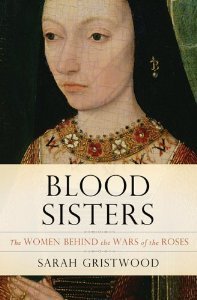
Book Review: “Blood Sisters: The Women Behind the Wars of the Roses” by Sarah Gristwood

Blood SistersWhen it comes to studying wars from the past, we often focus on the men who fought during the battles the strategies that were implemented to win and the plans that backfired spectacularly. So frequently in the study of wars, we forget about the women left behind, but in fact, they had bigger roles to play than sitting on the sidelines. For example, the royal women who lived in England during the conflict known as the Wars of the Roses played an essential role in how the wars concluded. These women are slowly coming into the spotlight in biographies and historical fiction novels, but it is rare to read a book about the Wars of the Roses where the central figures are the women, until now. Sarah Gristwood has taken seven women from this age and weaved their stories into her book, “Blood Sisters: The Women Behind the Wars of the Roses.”

I have been interested in the Wars of the Roses and the women who lived during that period for years. I heard about this book when I started studying this period, but I have never had a chance to read it, until now.

There were so many strong women from this period, but Gristwood narrowed her choices down to seven remarkable women to focus on; Margaret of Anjou, Margaret Beaufort, Elizabeth Woodville, Elizabeth of York, Cecily Neville, Anne Neville, and Margaret of Burgundy. By choosing these women, Gristwood is presenting a story of a conflict that spanned multiple generations, both York and Lancaster, and showing how both the English and Burgundian nobility dealt with the changes that were happening when the Tudors took control.

Gristwood begins with the marriage of Margaret of Anjou and Henry VI. Though she was French by birth, her loyalty was always going to be with her husband’s Lancasterian family. That meant she would eventually become enemies with the proud Cecily Neville, the wife of Richard Duke of York and mother of King Edward IV and King Richard III, but Margaret was allied with Margaret Beaufort, the tenacious mother of King Henry VII, the founder of the Tudor dynasty. The conflict passed onto the daughters of these women, like Anne Neville and Margaret Burgundy, as well as the daughter of Jacquetta of Luxembourg, Elizabeth Woodville. These women would continue the conflict and help seal the fate of the Lancastrians, see the rise and fall of the Yorkists, and the beginning of the Tudor dynasty through the marriage of Elizabeth of York, the daughter of Elizabeth Woodville, and Henry Tudor. This book spans decades and includes events like the disappearance of the Princes in the Tower, well into the Tudor dynasty such as the pretenders, the marriage of Prince Arthur and Catherine of Aragon, the death of Prince Arthur, and the rise of Henry VIII.

This was a delightful look into the Wars of the Roses through the eyes of the women who lived through this period. They were mothers, daughters, wives, queens, fighters, and survivors. They showed that without their tenacity and determination to fight for what they believed was right and for their families. If you are a fan of the women who defined the Wars of the Roses, I highly suggest you read, “Blood Sisters: The Women Behind the Wars of the Roses” by Sarah Gristwood.

Book Review: “Heroines of the Tudor World” by Sharon Bennett Connolly

Heroines of the Tudor WorldThe world of the 16th century was full of change and equally colorful characters. Most of the dynamic figures of this century were women, who were willing to fight in their ways for what they believed in, whether it was family, faith, or their country. They were heroines in different ways, and each had a story to tell. Each woman had to deal with her obstacles to reach their desired goal, no matter what her station was, from queens and great heiresses to nuns, and even a pirate. Sharon Bennett Connolly has decided to include a handful of these stories in her latest book, “Heroines of the Tudor World.”

I would like to thank Amberley Publishing for sending me a copy of this book. I have been a fan of Sharon Bennett Connolly’s books on medieval women, so when I heard that she was going to tackle the 16th-century and the Tudor world, I knew I wanted to read it. I wanted to see what stories she would select and how far into the Tudor world she would explore.

Connolly begins her book by explaining how the 16th century differed from the medieval times as records about women were becoming more accessible. It was also a time of transition, reformation, and the discovery of the “new world.” Each chapter focuses on a different kind of woman; from the ideal to martyrs for their faiths, scandalous heroines, those who were disinherited, pawns in the bigger game of life, warriors, captives, and survivors. Although it can be difficult to place certain tales of women in just one category, Connolly gave her readers a thrilling look into the 16th century.

It was the stories of these extraordinary women who made this book an exceptional read. There are the typical women who are featured heavily in these kinds of narratives; Elizabeth of York, Margaret Beaufort, the wives of Henry VIII, Mary I, Elizabeth I, Mary Queen of Scots, and Catherine de Medici. However, Connolly decided to include lesser-known women. We have mistresses like Diane de Poitiers and spies like Margaret Dymoke, Lady Coffin. Some great heiresses were disinherited like Claude of France and Elizabeth Fitzgerald, as well as pawns like Marguerite de Valois and captives such as Lady Katherine Gordon and Honor Grenville, Lady Lisle. Of course, some women decided to take matters into their own hands and fight for what they believed in, such as Isabella of Castile, Jeanne d’Albret Queen of Navarre, and Grace O’Malley.

I thoroughly enjoyed learning about the heroines that Connolly included in this book, but my only complaint is that it was not a longer book. There are so many interesting women outside of the European world in the 16th century and I wish she would have highlighted them. Maybe Connolly will write a sequel book to this one to include even more Tudor heroines. If you have enjoyed Sharon Bennett Connolly’s previous books and you are a Tudor nerd, I highly suggest you read, “Heroines of the Tudor World.”

Guest Post: “Spotlight for ‘Berengaria of Navarre, Queen of England, Lord of Le Mans’ by Gabrielle Storey”

Today, I am pleased to welcome Gabrielle Storey to share a blurb from her latest book, “Berengaria of Navarre, Queen of England, Lord of Le Mans.”

berengaria of navarreBlurb

Berengaria of Navarre, Queen of England, Lord of Le Mans’ is a biography of one of our least-known queens of medieval England. Wife of Richard the Lionheart, daughter-in-law of Eleanor of Aquitaine, and a participant of the Third Crusade, Berengaria sat at the crossroads of several major political figures and events of the twelfth and thirteenth centuries. Yet her story has received scant attention by historians and the public until now.

This biography, including material not previously discussed in English scholarship, brings a new light to Berengaria’s life, covering her journeys from Navarre, across Europe to Sicily, Cyprus, the Holy Land, and then to the Angevin domains in France. It shows how women exercised power in medieval Europe, and brings to the fore a greater understanding of the life of one of England’s most forgotten queens. Grounded in academic research and written for the interested reader, this biography gives a welcome insight into Berengaria as a woman, queen, widow, and lord.

Buy Link: https://www.routledge.com/Berengaria-of-Navarre-Queen-of-England-Lord-of-Le-Mans/Storey/p/book/9781032121475

Launch 20% discount code for purchases made through the Routledge website: EFLY01

Gabrielle StoreyAuthor Bio: 

Dr Gabrielle Storey is a historian of monarchy, gender, and sexuality. Her research interests include the exercise of power, rulership, and monarchs in the medieval West. She has featured on several podcasts including the BBC ‘You’re Dead To Me’ on Eleanor of Aquitaine and writes regularly for several history magazines including History Extra and Medieval World: Culture and Conflict.

She is currently working on her first non-fiction book for the wider public. Her first book, the academic and accessible biography of Berengaria of Navarre, is published with Routledge in June 2024.

You can find more about her work here: https://gabriellestorey.com/public-engagement/

Author Links:

Website: https://gabriellestorey.com/

X: https://twitter.com/GabbyStorey

Instagram: https://www.instagram.com/drgabbystorey/

Bluesky: https://bsky.app/profile/gabbystorey.bsky.social

Amazon Author Page: https://www.amazon.co.uk/stores/Gabrielle-Storey/author/B0CVSCZVFY

Goodreads: https://www.goodreads.com/author/show/30441642.Gabrielle_Storey


Book Review: “Anthony Woodville: Sophisticate or Schemer?” by Danielle Burton

Anthony WoodvilleThe Woodvilles were a family synonymous with the Wars of the Roses and the rise of King Edward IV. Some of the more notable names from this family include Jacquetta Woodville, the family’s matriarch, and Elizabeth Woodville, the controversial choice for King Edward IV’s wife. However, it was not just the women of the Woodville family who made a name for themselves. Anthony Woodville, the son of Jacquetta and brother of Elizabeth Woodville, would become famous for his unexpected execution at Pontefract Castle. Still, there was so much more to his story than his death. Who was Anthony Woodville and what is his legacy? Danielle Burton hopes to answer these questions and more in her debut biography, “Anthony Woodville: Sophisticate or Schemer?”

I would like to thank Amberley Publishing for sending me a copy of this book. I have had an eye for new takes on the Wars of the Roses and so when I heard about a biography about Anthony Woodville, I jumped at the chance to read it as I knew very little about the man and I wanted to know more.

Burton begins by exploring how Anthony Woodville’s legacy has been overshadowed by other figures in the fifteenth century, like Richard III and Anthony’s sister Elizabeth Woodville. Anthony’s connections with William Caxton, who helped bring the printing press to England, and the education of Edward Prince of Wales, made Anthony a formidable figure all on his own. In fact, unlike the common misconception about the Woodville family, Anthony earned every title on his merits alone. He was not only a scholar and a bibliophile, but also a warrior who fought alongside his brother-in-law King Edward IV.

Anthony Woodville would marry twice in his short life. His first wife was Elizabeth Scales, the daughter and heiress of Thomas Lord Scales and his second bride was Mary FitzLewis. Unfortunately, Anthony had no legitimate children, but he did have an illegitimate daughter named Margaret who would marry Robert Poyntz. It was his connection to the young Prince of Wales that led to his ultimate downfall and rather unjust execution after the meeting with Richard Duke of Gloucester at Stony Stratford.

Burton does have a passion for sharing Anthony Woodville’s story and clearing the air about his legacy. It is a very well-researched biography and Burton does show potential, but there were points where it felt a bit muddled for me. I am interested in seeing who she will write about next. If you want a solid biography about the brother of Elizabeth Woodville and how he impacted the 15th century, I would suggest you read, “Anthony Woodville: Sophisticate or Schemer?” by Danielle Burton.

Book Review: “On This Day in the Wars of the Roses” by Dan Moorhouse

On this day in the Wars of the RosesThe Wars of the Roses, a conflict that engulfed English politics for over 30 years and heralded a new dynasty, the Tudors. While there were battles and political intrigue galore during this period of unrest, there were also births, marriages, and deaths of powerful figures. Each day during the Wars of the Roses holds significance to nobles and commoners alike. Dan Moorhouse has compiled his years of research into this conflict into his book, “On This Day in the Wars of the Roses.”
I would like to thank Dan Moorhouse for sending me a copy of this book. I have been studying the Wars of the Roses for a few years now and so when I hear about books on the subject, I jump at the chance to read them to see if they bring any new revelations to the period.

Like many other books that focus on historical events of the past, Moorhouse highlights each date, starting from January and ending in December. However, unlike other books, the dates do not go in chronological order by year the entries jump from decade to decade, telling a more comprehensive story of the conflict.

Throughout this book, Moorhouse explores major battles, the disappearances of the Princes in the Tower, the madness of King Henry VI, and plots and executions of nobles and commoners alike. We also get to see how commoners got along during these tumultuous times through advancements in trade, alchemy, military tactics, and marriages. By focusing on the stories of those who were not nobility, Moorhouse is showing that even though this was a conflict for the crown, normal life moved on, as it always does.

Moorhouse is very knowledgeable about the period and can share all that he knows succinctly. He is also able to keep a neutral tone, neither siding with the Lancastrians nor the Yorkists, for the historical facts to speak for themselves. I found myself enjoying this book and the new stories from this conflict that I never knew. If you want a different approach to the Wars of the Roses, I recommend you read, “On This Day in The Wars of the Roses” by Dan Moorhouse.

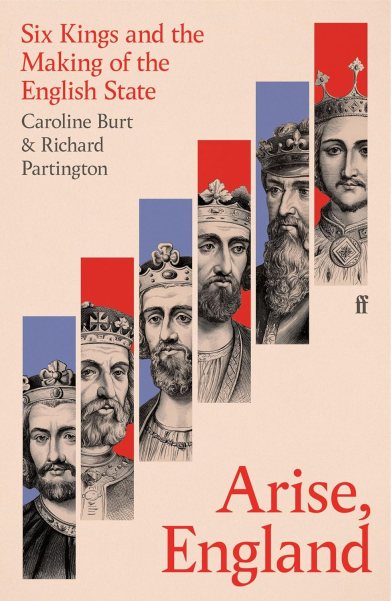
Book Review: “Arise, England: Six Kings and the Making of the English State” by Caroline Burt and Richard Partington

Arise, EnglandLike many other countries, England has been through growing pains when it comes to reforming its political, military, and judicial systems. None more so than the pains of the medieval period, specifically from 1199 to 1399. In those two centuries, there were six Plantagenet kings, each with a different style of being king and a different way of changing England with each reign. We often think that the biggest change to England’s political history during this time was the Magna Carta, but in fact, that was only just the beginning. Caroline Burt and Richard Partington have combed the archives to do a deep dive into each reign of these Plantagenet kings, examining the political and judicial changes that happened in a short period. Their comprehensive book is entitled, “Arise, England: Six Kings and the Making of the English State.”

I want to thank Faber & Faber for sending me a copy of this book. I have seen this particular title circulating on social media and after the endorsement it received from Dan Jones, I decided to give it a shot. I am not a huge fan of political history as I find it a tad dry, but I wanted to give myself a challenge.

This book is broken into six different chapters, a chapter for each king and their reign, but the chapters are separated by sections focusing on distinct aspects of their reigns. The six kings that Burt and Partington have chosen to highlight in this book are King John, Henry III, Edward I, Edward II, Edward III, and Richard II. In these two centuries, England experienced so much change, starting with the Magna Carta, the Black Death, plenty of revolts, overthrowing kings, the establishment of what we now consider Parliament, and the relationship between the king and his nobles. That does not include external forces such as Ireland, Scotland, Wales, and France wanting to conquer England as their own. When you consider how much these kings had to face, it is no wonder that they had to change England’s political system gradually.

Personally, this book was a bit of a struggle for me with how dense and the amount of information that was presented. While it offered great insight and was meticulously researched, there were parts for me that were dry to read. If you do want to read this as a casual read, I would suggest taking it slow so that you can fully understand everything that is being presented. If you are someone who likes political history and how it changed over centuries in England, “Arise, England: Six Kings and the Making of the English State” by Caroline Burt and Richard Partington might be the book for you.

Book Review: “Women’s Lives in the Tudor Era” by Amy McElroy

Women's Lives in the Tudor EraWhen we think about the Tudor dynasty, we often think about the famous men and women who defined the era. An era full of change in all aspects of life, from religious and political, to the arts and literature. Throughout these changes, we tend to focus on how they affected the lives of Tudor men, but there is a growing field of interest in the lives of the average Tudor women and how their lives were affected. In her latest book, “Women’s Lives in the Tudor Era,” Amy McElroy explores women’s life stages in 16th-century England and how their roles changed.

I want to thank Pen and Sword Books and Net Galley for sending me a copy of this book. I enjoyed McElroy’s debut book, “Educating the Tudors,” and when I heard that she had another book about Tudor women, I knew I wanted to read it.

McElroy explains that like the centuries before and since the 16th century, it was riddled with negative views of women in all aspects of life. Women were seen as beneath men, which corresponded with the teachings of Aristotle. Wives, mothers, and daughters were supposed to be obedient and seen rather than heard. However, when we look at the different stages of life, we cannot separate the roles of women from everyday life.

To understand what it meant to be a Tudor woman, McElroy breaks down life into different stages, starting in childhood, going through adolescence, becoming a wife and mother, working life for women, how women relaxed, embracing widowhood, and finally, wills and death. Each stage of life is represented in a chapter in this book. McElroy takes the time to explore what it meant to be a woman at each stage of life and how their social standings changed. We see women receiving an education, going through courtships, getting married and becoming wives, starting their own families and the dangers of childbirth, how women earned a living, what they would do as recreational activities, and how they would survive if their husbands died. In each chapter, McElroy highlights women of different social statuses to show how they survived during the Tudor time.

This was an engrossing and utterly fascinating book. Some elements were completely new information for me, which was quite thrilling. The amount of details that McElroy included in such a short amount of pages was incredible. Another brilliant book by McElroy. If you want a fascinating glimpse into the lives of Tudor women, I highly recommend you read, “Women’s Lives in the Tudor Era” by Amy McElroy.

Book Review: “Kateryn Parr: Henry VIII’s Sixth Wife” by Laura Adkins

kateryn parrThe final wife, the one who survived. These words are what people think about when it comes to Katherine (Kateryn) Parr. However, before she even met Henry VIII, she had already lived quite a life, being married twice before meeting the king. She was a scholar, reformer, daughter, stepmother, wife, and mother. A woman who lived a rather intriguing life and happened to marry the King of England, Kateryn Parr’s life has been told in numerous mediums for centuries. Now, Laura Adkins has chosen to write about this famous Tudor wife in the biography, “Kateryn Parr: Henry VIII’s Sixth Wife.”

I want to thank Pen and Sword Books and Net Galley for sending me a copy of this book. Katherine Parr is my favorite wife of Henry VIII and one of my favorite Tudor queens. I have read a few novels and nonfiction books that featured Katherine Parr, but I have yet to read a biography about the titular woman, until now.

Adkins begins her dive into the past not in the Tudor era, but in the 18th century as we see a group of ladies finding the tomb of Kateryn Parr at Sudeley Castle and her tomb being opened several times. We then jump back into the past and explore the Parr family. Kateryn was the eldest child of Thomas and Maud Parr. We get to see Kateryn’s childhood with her siblings William and Anne and how the Parr siblings continued the Parr legacy in their own ways.

We then dive into Kateryn’s marriages, starting with Edward Borough, then John Neville Lord Latimer, King Henry VIII, and finally Thomas Seymour. With each relationship, we get to see Kateryn change from a young teen who was trying to survive to a strong woman who is willing to fight for those she loves and the faith she believes in. We see Kateryn become a stepmother to the Latimer children, Mary, Edward, and Elizabeth, and finally become the mother of her child, Mary Seymour. Adkins chooses to focus on the different elements of Kateryn’s life instead of having a traditional chronological biography, which is a unique take on Kateryn’s story. I will say that because of the format of this book, there was some repetition of different stories and facts in this book.

Overall, I think this was a decent biography about Kateryn Parr. It was easy to read and included actual letters written to and by Kateryn. A loyal wife and stepmother who influenced those around her long after she died. If you want to read a solid biography about this remarkable woman, I suggest you read, “Kateryn Parr: Henry VIII’s Sixth Wife” by Laura Adkins.

Guest Post: “Excerpt from ‘The Royal Women Who Made England’ by MJ Porter

I am pleased to welcome MJ Porter to my blog to share an excerpt from her nonfiction book, “The Royal Women Who Made England.” I would like to thank MJ Porter and The Coffee Pot Book Club for allowing me to be part of this blog tour.

Ælfthryth, the daughter of King Alfred and Lady Ealhswith – The Continental Connection

The union between Ælfthryth and Count Baldwin II is believed to have taken place sometime between Asser’s writing [of Alfred’s life] and the death of Alfred in 899. As Æthelweard’s Chronicon informs, Ælfthryth was married to Count Baldwin II of Flanders (879–918). Count Baldwin II was the son of Alfred’s stepmother, Judith, through her third marriage to Baldwin, Count of Flanders, with whom she eloped in 860, against her father’s wishes. Perhaps this was a love match that had been denied her before. Judith had previously been married to Æthelwulf, King of Wessex, Alfred’s father, and also to Æthelbald, King of Wessex, Alfred’s brother. There is no record of children born to these unions.

Judith was a daughter of Charles the Bald (823–877), who in turn was the son of Louis the Pious (773–840), a son of Charlemagne (c.742–814). Charles the Bald was king of the Franks from 840–877 and emperor from 875–877.

Blurb:

Throughout the tenth century, England, as it would be recognized today, formed. No longer many Saxon kingdoms, but rather, just England. Yet, this development masks much in the century in which the Viking raiders were seemingly driven from England’s shores by Alfred, his children, and grandchildren, only to return during the reign of his great, great-grandson, the much-maligned Æthelred II.

Not one but two kings would be murdered, others would die at a young age, and a child would be named king on four occasions. Two kings would never marry, and a third would be forcefully divorced from his wife. Yet, the development of ‘England’ did not stop. At no point did it truly fracture back into its constituent parts. Who then ensured this stability? To whom did the witan turn when kings died, and children were raised to the kingship?

The royal woman of the House of Wessex came into prominence during the century, perhaps the most well-known being Æthelflæd, daughter of King Alfred. Perhaps the most maligned being Ælfthryth (Elfrida), accused of murdering her stepson to clear the path to the kingdom for her son, Æthelred II, but there were many more women, rich and powerful in their own right, where their names and landholdings can be traced in the scant historical record.

Using contemporary source material, The Royal Women Who Made England can be plucked from the obscurity that has seen their names and deeds lost, even within a generation of their own lives.

Buy Links:

Universal Buy Link: https://books2read.com/TheRoyalWomenWhoMadeEngland

Publisher Link: https://www.pen-and-sword.co.uk/The-Royal-Women-Who-Made-England-Hardback/p/24395

Author Bio:

MJ Porter is the author of over fifty fiction titles set in Saxon England and the era before the tumultuous events 1066. Raised in the shadow of a strange little building and told from a young age that it housed the long-dead bones of Saxon kings, it’s little wonder that the study of the era was undertaken at both undergraduate and graduate levels.

The Royal Women of the Tenth Century is the first non-fiction title. It explores this period’s ‘lost’ women through the surviving contemporary source material. It stemmed from a frustration with how difficult it was to find a single volume dedicated to these ‘lost’ women and hopes to make it much easier for others to understand the prestige, wealth, and influence of the women of the royal House of Wessex.

Author Links:

Website: www.mjporterauthor.com/ or www.mjporterauthor.blog

Twitter: www.twitter.com/coloursofunison

Facebook: https://www.facebook.com/MJPorterauthor/

LinkedIn: https://www.linkedin.com/in/mj-porterauthor/

Instagram: instagram.com/m_j_porter/

Threads: https://www.threads.net/@m_j_porter

Bluesky: mjporterauthor.bsky.social

Pinterest: https://www.pinterest.co.uk/coloursofunison/

Book Bub: https://www.bookbub.com/authors/mj-porter

Amazon Author Page: www.amazon.com/MJ-Porter/e/B006N8K6X4

Goodreads: https://www.goodreads.com/author/show/7163404.M_J_Porter

TikTok: tiktok.com/@mjporterauthor

LinkTree: https://linktr.ee/MJPorterauthor