
 I am pleased to welcome MJ Porter to my blog to share an excerpt from her nonfiction book, “The Royal Women Who Made England.” I would like to thank MJ Porter and The Coffee Pot Book Club for allowing me to be part of this blog tour.
Ælfthryth, the daughter of King Alfred and Lady Ealhswith – The Continental Connection
The union between Ælfthryth and Count Baldwin II is believed to have taken place sometime between Asser’s writing [of Alfred’s life] and the death of Alfred in 899. As Æthelweard’s Chronicon informs, Ælfthryth was married to Count Baldwin II of Flanders (879–918). Count Baldwin II was the son of Alfred’s stepmother, Judith, through her third marriage to Baldwin, Count of Flanders, with whom she eloped in 860, against her father’s wishes. Perhaps this was a love match that had been denied her before. Judith had previously been married to Æthelwulf, King of Wessex, Alfred’s father, and also to Æthelbald, King of Wessex, Alfred’s brother. There is no record of children born to these unions.
Judith was a daughter of Charles the Bald (823–877), who in turn was the son of Louis the Pious (773–840), a son of Charlemagne (c.742–814). Charles the Bald was king of the Franks from 840–877 and emperor from 875–877.
 Blurb:
Throughout the tenth century, England, as it would be recognized today, formed. No longer many Saxon kingdoms, but rather, just England. Yet, this development masks much in the century in which the Viking raiders were seemingly driven from England’s shores by Alfred, his children, and grandchildren, only to return during the reign of his great, great-grandson, the much-maligned Æthelred II.
Not one but two kings would be murdered, others would die at a young age, and a child would be named king on four occasions. Two kings would never marry, and a third would be forcefully divorced from his wife. Yet, the development of ‘England’ did not stop. At no point did it truly fracture back into its constituent parts. Who then ensured this stability? To whom did the witan turn when kings died, and children were raised to the kingship?
The royal woman of the House of Wessex came into prominence during the century, perhaps the most well-known being Æthelflæd, daughter of King Alfred. Perhaps the most maligned being Ælfthryth (Elfrida), accused of murdering her stepson to clear the path to the kingdom for her son, Æthelred II, but there were many more women, rich and powerful in their own right, where their names and landholdings can be traced in the scant historical record.
Using contemporary source material, The Royal Women Who Made England can be plucked from the obscurity that has seen their names and deeds lost, even within a generation of their own lives.
Buy Links:
Universal Buy Link: https://books2read.com/TheRoyalWomenWhoMadeEngland
Publisher Link: https://www.pen-and-sword.co.uk/The-Royal-Women-Who-Made-England-Hardback/p/24395
 Author Bio:
MJ Porter is the author of over fifty fiction titles set in Saxon England and the era before the tumultuous events 1066. Raised in the shadow of a strange little building and told from a young age that it housed the long-dead bones of Saxon kings, it’s little wonder that the study of the era was undertaken at both undergraduate and graduate levels.
The Royal Women of the Tenth Century is the first non-fiction title. It explores this period’s ‘lost’ women through the surviving contemporary source material. It stemmed from a frustration with how difficult it was to find a single volume dedicated to these ‘lost’ women and hopes to make it much easier for others to understand the prestige, wealth, and influence of the women of the royal House of Wessex.
Author Links:
Website: www.mjporterauthor.com/ or www.mjporterauthor.blog
Twitter: www.twitter.com/coloursofunison
Facebook: https://www.facebook.com/MJPorterauthor/
LinkedIn: https://www.linkedin.com/in/mj-porterauthor/
Instagram: instagram.com/m_j_porter/
Threads: https://www.threads.net/@m_j_porter
Bluesky: mjporterauthor.bsky.social
Pinterest: https://www.pinterest.co.uk/coloursofunison/
Book Bub: https://www.bookbub.com/authors/mj-porter
Amazon Author Page: www.amazon.com/MJ-Porter/e/B006N8K6X4
Goodreads: https://www.goodreads.com/author/show/7163404.M_J_Porter
TikTok: tiktok.com/@mjporterauthor
LinkTree: https://linktr.ee/MJPorterauthor
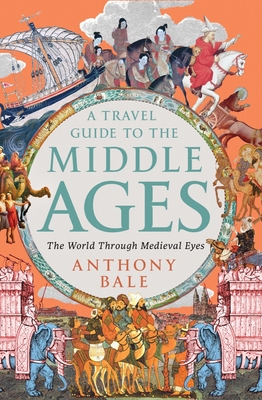 When we think about travel in the Middle Ages, we often think of wealthy nobles or those who went to war fighting in foreign lands. However, that is merely a misconception. Travel was open to everyone, from the wealthy, the poor, the pious pilgrims, and the merchants. Each group had their reasons for traveling to different countries. Still, they all wrote down their experiences to tell future generations about their encounters and encourage others to explore the world, both the known and unknown parts. Anthony Bale has compiled many of these accounts into one comprehensive book called, “A Travel Guide to the Middle Ages: The World Through Medieval Eyes.”
 The field of history for centuries has been focused on men and the struggles that mankind has had to endure for society to survive. We tend to get only a mere glimpse at the lives of women when they are next to powerful men. Some will write about women, mostly royal women, who lead extraordinary lives and left an imprint on the past. But what about those who lived ordinary lives? What about the women who lived daily, fighting to survive every obstacle? What can we learn about history through the eyes of ordinary women? Philippa Gregory has taken on the mammoth task of trying to answer these questions and more with her tome, “Normal Women: Nine Hundred Years of Making History.”
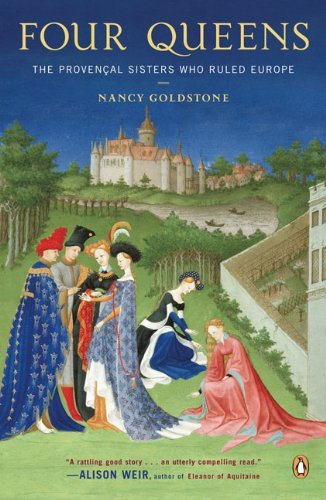 In southeastern France, there is a region called Provence, known today for its lavender fields and its vineyards. In 13th-century France, Provence would be known as the birthplace of four queens who dominated European politics. The daughters, Marguerite, Eleanor, Sanchia, and Beatrice were the daughters of Raymond Berenger V Count of Provence, and his wife Beatrice of Savoy. They would become the queens of France, England, Germany, and Sicily. While the sisters were known for their beauty, how they acted as queen consorts for their husbands cemented their legacies in history. Nancy Goldstone tells the tale of these remarkable siblings and how they changed European history in her book, “Four Queens: The Provencal Sisters Who Ruled Europe.”
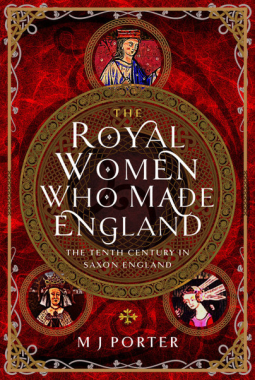 When we think about England, we often think about a unified country with an illustrious history of wars and triumphs. However, England in the 10th century was drastically different. It was barely a country as it was newly formed through politics, but it faced the risk of elimination with a carousel of kings and Viking raiders. Some of the most notable kings of this era include Alfred, Edward the Elder, Athelstan, Edward the Martyr, and Aethelred II, but the most fascinating figures of this time were the women who were hidden in the shadows of the past. M.J. Porter uses the written record from the 10th and 11th centuries to tell the tales of these remarkable women in her book, “The Royal Women Who Made England: The Tenth Century in Saxon England.”
 The royal dynasties of English history are some of the most popular in European history. We have the Normans, the Angevins, the Plantagenets, who occupied the throne for 300 years, the Scottish Stuarts who saw religious change and political upheaval, the haughty Hanovers, and the current Windsor dynasty. However, one dynasty that has captured the imagination of history nerds for centuries has been the tumultuous Tudors. In book two of Peter Ackroyd’s “The History of England: Tudors,” he explores the stories that made the Tudor dynasty so infamous.
 Civil wars, clashes between cousins, are known to be full of battles between men on foot and horseback, with their eyes set on the throne of their desired country. Many stories of civil wars tend to leave out the women who often were left on the sidelines, ready to pick up the pieces. The story of the Anarchy is a bit different than other civil wars as one of the main figures was not a man, but Empress Matilda, the daughter of King Henry I and the rightful heiress of England facing off against the man who stole the throne from her, her cousin, King Stephen. However, it was not just Empress Matilda who defined what it meant to be a woman during the Anarchy. In her latest book, “Women of the Anarchy,” Sharon Bennett Connolly tells the stories of the mothers, sisters, and wives who defined this turbulent period that saw the end of one dynasty and the beginning of another.
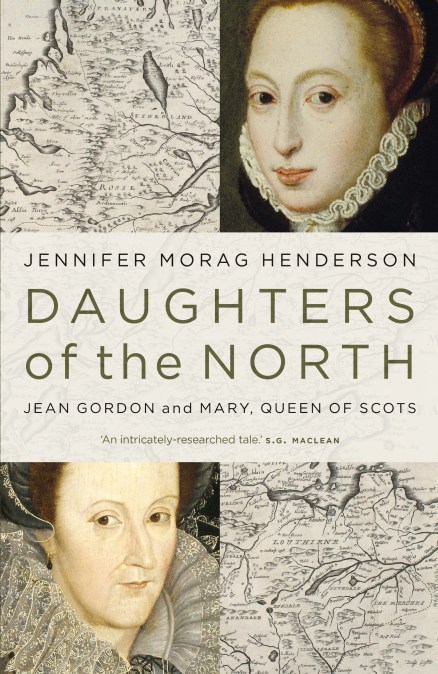 In the late 16th/ early 17th centuries, Scotland was chaotic and full of dynamic characters near or on the throne. People like Mary of Guise, Mary Queen of Scots, Lord Darnley, Earl of Bothwell, the four Maries, and James VI/I show how turbulent the Scottish court was to those around it. However, the stories of those who lived outside the court system and tried their best to maintain control of the country for their monarch tend to fade into obscurity. Take for example the story of Jean Gordon. A noblewoman who was married three times; to James Hepburn, Earl of Bothwell, Alexander Gordon, Earl of Sutherland, and her true love, Alex Ogilive. Jean’s story is full of heartaches, clashing clans, religious squabbles, and loyalty to one’s family, which is told in Jennifer Morag Henderson’s book, “Daughters of the North: Jean Gordon and Mary, Queen of Scots.”
 Castles, the monuments of medieval times, are buildings that hold many tales. Tales of sieges and sorrow, triumphs and tribulations. Through the centuries, their stones and foundations held many secrets. Some of the stories are famous, but most are hidden in the shadows of time and are hidden in ruins. Although castles exist in numerous countries and are centuries old, the castles of medieval England tell a story of a country facing turmoil and changing European and world history forever. Malcolm Hislop, a historian and researcher who specializes in architecture and archaeology, has written a single book exploring every medieval castle and its original architecture entitled, “A Guide to the Medieval Castles of England.”
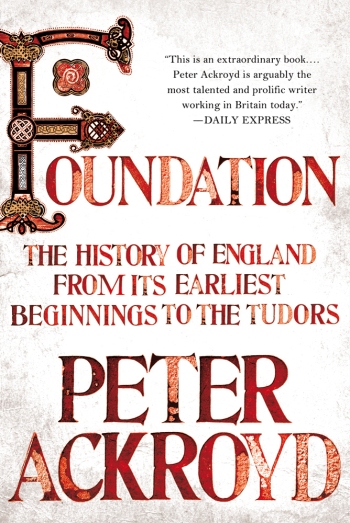 England is a nation that is rich in history and conflicts galore. Through the centuries, England has seen so much change. Many of us know the stories of the medieval and the Tudor kings and queens of England, covered in numerous books, but Peter Ackroyd has taken this concept a step forward. Ackroyd embarked on an epic quest to chronicle the history of England from its prehistoric origins to the modern age. In “Foundation: The History of England From Its Earliest Beginnings to the Tudors,” Peter Ackroyd begins his epic journey into the past to explore the origins of English history.
 Adventures of a Tudor Nerd