
 A life of luxury from birth, destined to be crowned King or Queen of England. This is what we often think life must have been like for royal heirs who reached the ultimate destination of a crown and a throne. However, the stories of those who failed to reach the throne are mired in tragedy and heartache. The question of royal succession in England is a complex issue, especially when the heir to the throne dies unexpectedly, leaving doubts on whether a dynasty will survive through blood or dissolve in conflict. How did the deaths of these potential rulers radically transform the fabric of English history as a whole and what can their lives tell us about what kind of rulers they might have been? Ashley Mantle hopes to answer all of these questions and more in his latest book, “Uncrowned: Royal Heirs Who Didn’t Take the Throne.”
I would like to thank Amberley Publishing for sending me a copy of this book. The description of this book caught my attention. I wanted to see what heirs Mantle would feature in this book and if he would stay with well-known tales or venture into the realm of the relatively unknown heirs.
To begin his book, Mantle explains that he will be going through over a thousand years of royal succession history for England, which is a lot of history to include in one book. He also explains the difference between heir apparent and heir presumptive, which is key to understanding the complex nature of royal succession. While many of the stories included in this book focus on the male heirs, Mantle does include heiress to the throne like Empress Matilda, the Grey sisters (Lady Jane, Catherine, and Mary), Mary Queen of Scots, and Sophia Electress of Hanover, just to name a few.
Mantle’s deep dive into royal succession begins with Robert II Duke of Normandy, also known as Robert “Curthose”, the son of William the Conqueror and Matilda of Flanders; it concludes with Frederick Duke of York and Albany, the son of King George III and Charlotte of Mecklenburg-Strelitz. Each chapter focuses on one of the heirs, in chronological order, with miniature family trees at the beginning to help readers understand how close they were to the throne. This book is full of stories of betrayal, deaths, disappearances, family feuds, and heartache. Some of these heirs were relatively new stories for me, especially the ones more current than the Tudors, which was exciting to discover.
I must say that this task of combining over a thousand years of royal history into a comprehensive book is no easy task, but Mantle does a spectacular job. It was an informative and engaging read that would be perfect for any fan of royal history. If you want a fascinating book about those who were so close to the throne but never ruled, I highly suggest you read, “Uncrowned: Royal Heirs Who Didn’t Take the Throne” by Ashley Mantle.
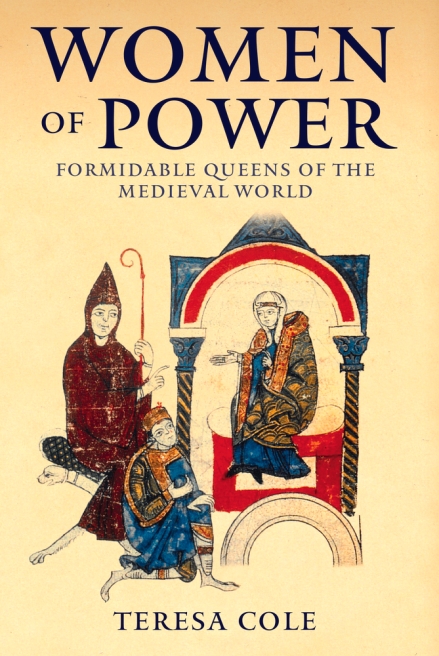 When we think about medieval women, we often think about very pious figures who relied on men, had numerous children, and would often fade into obscurity when they died. While this would be the ultimate fate for many women, it was not so for those close to thrones worldwide. In times of war and political upheaval, the daughters, the wives, and the queens picked up the pieces and patched their respective kingdoms back together. In her latest book, “Women of Power: Formidable Queens of the Medieval World,” Teresa Cole has chosen a select group of women to highlight her point about the strength of women who held power in the Middle Ages.
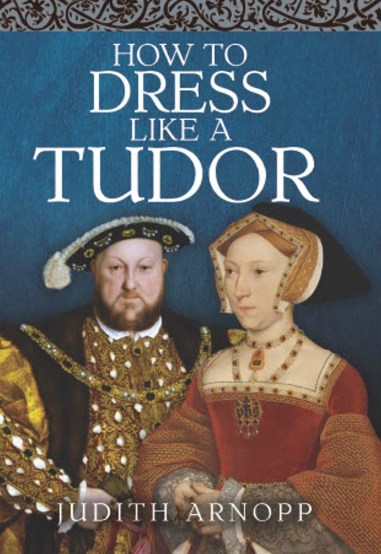
 I am pleased to welcome Judith Arnopp to my blog today to share a blurb for her latest book, “How to Dress Like a Tudor.” I would like to thank Pen and Sword Books, The Coffee Pot Book Club, and Judith Arnopp for allowing me to be part of this blog tour.
  Blurb:
 Author Bio:
 When we think of old homes, we often think of the phrase, “If walls could talk,” because the true treasure of any home is not the floorboards or the walls, but rather the stories of those who lived inside its walls. Take, for example, Hampton Court Palace in England. A home for over 500 years that has seen many architectural and artistic changes in its hallowed halls, but it is the stories of those who stayed for brief periods that truly make this palace spectacular. Stories full of salacious scandals, religious implications, and revelations that would shake England to its core through revolutions. Hampton Court Palace has been the center of English court drama for centuries and finally, these tantalizing tales are being told in a truly remarkable book, “The Palace: From the Tudors to the Windsors, 500 Years of British History at Hampton Court” by Gareth Russell.
 The story of the Boleyn family in the 16th century and their ultimate fall from grace has been told for centuries. However, there is a more intriguing tale hidden in the Boleyn family tree. The origins of the family and how they became such a dynamic family that revolutionized the 16th century. How did this family of peasants rise through the ranks to have one of their own become the Queen of England? It is a tale of struggle, survival, and triumph that is told in Claire Martin’s debut book, “Heirs of Ambition: The Making of the Boleyns.”
 Illegitimate royal children have been known to make an impact on history. Take Henry Fitzroy, the illegitimate son of Henry VIII, and Bessie Blount, whom Henry VIII acknowledged as his son. There were discussions about Henry Fitzroy becoming the heir apparent if Henry VIII did not have a legitimate son. But what about the illegitimate children that a king did not acknowledge? What might their lives have been like? The story of Mary Boleyn and her affair with King Henry VIII has been told many times, but the story of her daughter born during that time is lesser known. In her first full-length nonfiction book, “Henry VIII’s True Daughter: Catherine Carey, A Tudor Life,” Wendy J Dunn has taken on the task of discovering the truth of Catherine Carey’s parentage and how it impacted her life.
 Time travel is a dream for history and science fiction nerds alike. To be able to go to a different period in history to witness major events sounds like it would be tons of fun, but it can also be treacherous if you do not know the era well. What should you wear? Where would you live? What would your occupation be and what should you eat? If you are invited to court, how do you navigate the crazy court intrigue and the ever-changing religious dilemma? Toni Mount has created the ideal book for those who wish to travel to the 16th century called, “How to Survive in Tudor England.”
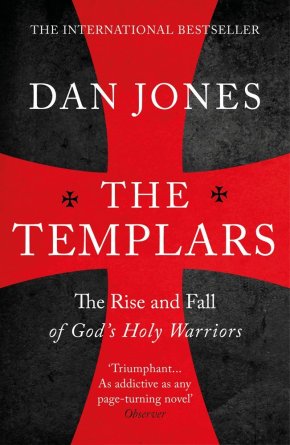 The Crusades were a series of wars between Christian and Muslim warriors for the right to control the Holy Lands of the Middle East. Many men on both sides earned legacies that would surpass their earthly bodies during bloody battles. It created many bands of knights that would last for generations, such as the Hospitallers and the Teutonic Knights. The Templars were the most famous of these knight groups, who may have lasted only for less than two hundred years, but whose legacy would turn into myth. Dan Jones has taken on the arduous task of discerning fact from fiction about the Templars in his book, “The Templars: The Rise and Fall of God’s Holy Warriors.”
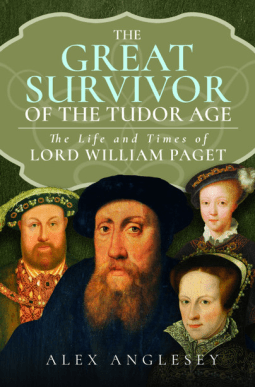 Rulers cannot govern alone. They require a team of men and women behind them to operate as a cohesive unit. The same can be said for rulers during the Tudor dynasty. We know the stories of men like Cardinal Wolsey and Thomas Cromwell, two men who rose through the ranks to prominent seats of power to ultimately have disastrous falls from grace. However, there was a third Tudor politician who should be in this discussion about rags-to-riches stories. He was the son of a common merchant who went to serve most of the Tudor monarchs as an advisor. Conspiracies and rebellions kept him on his toes, but he ultimately survived the Tudor dynasty, which was a difficult thing to achieve. His name was Lord William Paget and his story is told by his descendant Alex Anglesey in his debut book, “The Great Survivor of the Tudor Age: The Life and Times of Lord William Paget.”
 Adventures of a Tudor Nerd