
Book Review: “Searching for the Last Anglo-Saxon King: Harold Godwinson, England’s Golden Warrior” by Paula Lofting

We all know the story of William the Conqueror and the Norman Conquest. William claimed he was the heir of Edward the Confessor instead of his rival Harold Godwinson. Harold was seen as a villain throughout history thanks to the Norman sources, but what was the historical Harold Godwinson like? Was he a malicious usurper who had to die at the Battle of Hastings for the rightful King William I to take the throne or is there more to his story than his death? Paula Lofting scoured the archives to find the truth about this maligned man in her book, “Searching for the Last Anglo-Saxon King: Harold Godwinson, England’s Golden Warrior.”

I want to thank Paula Lofting and Pen and Sword Books for sending me a copy of this book. I will be honest I am not super familiar with the life of Harold Godwinson other than his role in the Battle of Hastings and from the book “The House of Godwin” by Michael John Key. It’s been a while since I dived into the story of the Godwin family and the Norman Conquest, so I was hoping to learn something new about Harold Godwinson.

Harold Godwinson was King of England for only nine months and nine days, but he left quite an impact. What makes him an interesting character is how he rose to the position of power to become a king. It all had to do with his family connections. Lofting lays out the origins of the Godwins, especially Harold’s father Earl Godwin. What makes the Godwin family is that Harold’s father Godwin and his brother Tostig would end up in exile or an enemy to the crown numerous times and yet it was Harold, his brother-in-law, who Edward chose to succeed him due to his loyalty and his strengths.

Then, in walks William Duke of Normandy, the illegitimate son of Robert Duke of Normandy, who not only became the new Duke of Normandy but desired the crown of England. Well, the only thing Harold could do was defend England from this invasion. Lofting goes into great detail about the multiple battles that were fought the most famous one, the Battle of Hastings, where King Harold died. She also goes into detail about the theories about where Harold Godwinson might have been buried after the battle.

As someone who is a relative novice to this subject, I found myself getting lost while reading the first half of this book which detailed the origins of the family and the drama that led Harold to the throne. It was very detailed and a real challenge for me to follow along. Once we hit the introduction of Duke William and Harold’s path to the throne, it became a better read for me. I think if you are interested in the Anglo-Saxon world, the Godwins, and the Battle of Hastings, I would recommend you read, “Searching for the Last Anglo-Saxon King: Harold Godwinson, England’s Golden Warrior” by Paula Lofting.

Book Review: “The Last Duel: A True Story of Crime, Scandal, and Trial by Combat” by Eric Jager

57933320On a cold December day in 1386, two knights met at the field at Saint-Martin-Des-Champs in Paris to face each other in a duel. This may seem like your average duel for entertainment to any outsider, but this was a duel to the death to determine who was telling the truth when it came to a sinister crime. A Norman knight, Jean de Carrouges, accused a squire, Jacques Le Gris, of raping his wife, Marguerite. It was a truly heinous crime, but what was it true, and why did these accusations lead to a duel to the death? Eric Jager explores this specific event and the factors that led to this clash in his nonfiction book, “The Last Duel: A True Story of Crime, Scandal, and Trial by Combat.”
I became interested in this book when I heard that it was being turned into a movie. I talked to the Five Minute Medievalist Daniele Cybulskie on Twitter about the film, and she mentioned this book. I wanted to read this book before I watched the movie to compare the two interpretations of the tale.

During this duel, France was in the midst of the Hundred Years’ War with England. It was a time of tension when loyalty, chivalry, and honor meant a great deal to knights and members of the nobility. Teen King Charles VI ruled France with the help of his uncles and men who were as loyal, such as the wealthy Count Pierre of Alencon and his knights, including Jean de Carrourges. Jean de Carrouges’ family was known for their loyalty and landholding, which Jean IV hoped would continue during his time as head of the family. However, this was not to be. Unlike his predecessor Count Robert of Perche, Count Pierre did not favor the de Carrouges family, but instead to a squire named Jacques Le Gris.

Jacques Le Gris and Jean de Carrouges were old friends, but when Count Pierre gave property that de Carrouges believed would pass onto him as part of the inheritance to Le Gris, a feud began between the two. The feud hit a fever pitch after Jean de Carrouges married his second wife, Marguerite, the daughter of Robert de Thibouville, who betrayed the French king twice and still kept his head. Although he married a traitor’s daughter, de Carrouges stayed loyal to Count Pierre and ventured to Scotland to fight for King Charles VI, which proved disastrous.

Broke and in poor health, de Carrouges pleaded with Count Pierre for financial help, but he insulted Le Gris. This was the final straw for Le Gris, and he decided to attack de Carrouges, where it would hurt, by attacking his innocent wife. Naturally, de Carrourges was upset and took his case against Le Gris to the Parlement of Paris, where he declared that he wanted to face Le Gris in a duel, an ancient trial by combat where the victor would be declared innocent. If de Carrouges lost the fight, he would not only be risking his soul to damnation, but his wife would be burned alive.

Jager brings to life a story from the past full of drama and intrigue that will capture modern readers’ attention. The amount of details that he includes in this nonfiction book makes it feel like a historical fiction novel. Jager spent ten years researching this one story, and it shows. It was such a gripping story, especially the duel itself, that I was a little sad when it ended. If you want a gripping tale of love, revenge, and justice, you must read “The Last Duel: A True Story of Crime, Scandal, and Trial by Combat” by Eric Jager.

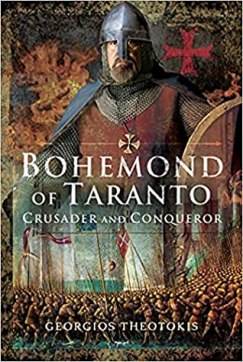
Book Review: “Bohemond of Taranto: Crusader and Conqueror” by Georgios Theotokis

The Crusades have been recently examined as a whole or by individual Crusades to show the significance of these wars and why the Crusaders fought. It is only the main Crusaders, the leaders, whose names and legacies are remembered to this day. One such man was a Norman who was considered the unofficial leader of the First Crusade, Bohemond of Taranto. Bohemond was a true warrior who fought numerous enemies, including the Byzantine emperor Alexios Komnenos, and would become the Lord of Antioch. His deeds would earn him praise from his allies and ire from his enemies. The impact that Bohemond of Taranto left on the First Crusade cannot be underestimated, especially when it came to the military strategies that he employed to secure his numerous victories. In Georgios Theotokis’ latest biography, “Bohemond of Taranto: Crusader and Conqueror”, he explores the life of this legendary man with a particular focus on his military prowess to better understand his legacy.

I would like to thank Pen and Sword Books and NetGalley for sending me a copy of this book. I was not familiar with Bohemond of Taranto and his story so I was keen to learn more about him and the First Crusade.

Bohemond of Taranto was the son of Robert Guiscard and his first wife Alberada of Buonalbergo, but when their marriage was annulled due to consanguinity, Bohemond was declared a bastard. Although he was viewed as illegitimate in the eyes of the church, Robert still treated Bohemond as an equal, especially when it came to military ventures. Under Robert’s tutelage, Bohemond cultivated the strategic skills that would be essential in his conquests of land in Italy, Sicily, the Balkans, and Anatolia. Along the way, Bohemond would become frenemies with the power Byzantine emperor Alexios Komnenos. The interactions between the two men were recorded in the Alexiad, which was written by Alexios’ daughter Anna Komnene; she was not the biggest fan of Bohemond, but Theotokis relies on her work heavily throughout this biography.

It was not just international foes that Bohemond had to deal with as there was a succession battle between him and his brother Roger Borsa for control over their father’s land. On top of all of this, Bohemond of Taranto and his uncle Roger I of Sicily were asked to lead the First Crusade that was declared by Pope Urban II to reclaim the Holy Land. Along the way, Bohemond made the difficult decision to pay homage to Alexios Komnenos, which would prove beneficial up to a point. It was during this time that Bohemond and his Norman army helped capture Antioch for the crusaders and Bohemond was declared Lord of Antioch. While Bohemond was away conquering other cities, his nephew Tancred of Hauteville was his regent in Antioch.

I think Theotokis does an excellent job of showing the military strategies that made Bohemond such a dynamic leader. I found this account extremely fascinating and eye-opening on what one leader could do in a few decades. The one problem that I had with this biography was the fact that there were so many names of leaders and places that I had never heard of that I was getting a bit confused. I wish Theotokis had included a list of important names and places with a quick blurb about their significance in the front of the book to help the First Crusade novices such as myself. Overall, I think this is was a very well written and researched biography. If you want a solid biography about one of the leaders of the First Crusade, check out, “Bohemond of Taranto: Crusader and Conqueror” by Georgios Theotokis.

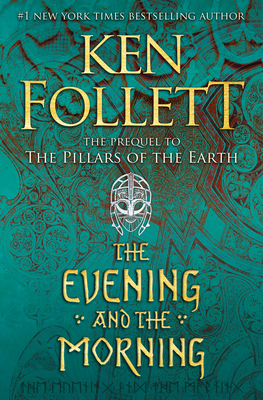
Book Review: “The Evening and the Morning” by Ken Follett

49239093The year is 997 and England is in a dire situation. Fears of invasions from the Welsh and the Vikings leave the Anglo- Saxon residents rattled while those in power take advantage of their citizens. Chaos reigns supreme as those who rule the towns are in constant power struggles between themselves and their king, Ethelred the Unready, with the average villagers caught in the middle, like the villagers of Dreng’s Ferry. It is in this small village where three characters find their lives intertwined with the political and social drama. A young boatbuilder named Edgar endures heartache and sorrow when the Vikings attack his home. A Norman noblewoman named Ragna follows her heart to marry the man she loves and travels to a faraway land but soon finds out how difficult that love can be. Finally, a monk named Aldred works hard for the people while dreaming of transforming his meek abbey into a lively center of learning. Their tales are masterfully woven together in the much-anticipated prequel to the Kingsbridge series by Ken Follett. This is “The Evening and the Morning”. 

When I heard that Ken Follett was writing a prequel to his Kingsbridge series, I was ecstatic. I read the Kingsbridge series a few years ago for the first time and I fell in love with the town of Kingsbridge. I wanted to know more about the origins of this town and I wanted another engrossing tale of strength and struggle, which Follett delivers in this brilliant novel. 

Follett introduces his audience to his colorful cast of characters with a Viking raid in the small village of Combe, the home of Edgar the boatbuilder. He lost everything that he cared about in one night, so he and his remaining family must pick themselves up and rebuild their lives in the town of Dreng’s Ferry. Edgar shows grit and determination as he realizes what is truly important in his life. Ragna is a vivacious Norman noblewoman who fell head over heels in love when she met a charming Englishman named Wilwulf. She decides to leave everything that she knows behind to marry a man she believes she knows very well. However, she soon realizes that Wilwulf and his family are not who she imagined. Ragna fights with vigor for what she believes is right for her immediate family and the people she has sworn to protect from her husband’s family. Her tenacity and courage to weather the storms that life throws her way are truly admirable. Finally, there is the academic monk Aldred who wants to pursue knowledge to better humanity. He believes that Dreng’s Ferry can become greater than what the people believe is possible, which often puts him on a political collision course with Wilwulf’s power-hungry family. 

The stories of these three dynamic protagonists are interwoven to create a sensational prequel to the fabulous Kingsbridge series. This novel is riveting with the gorgeous storytelling that readers have come to expect from Ken Follett. What I love is that Follett’s focus is not on the royal family, King Ethelred and Queen Emma, but the people who built England from the ground up. It is the nobles and the village people that had to endure every decision and mistake that the crown made. They were the ones who suffered when raiders like the Vikings pillaged towns and killed their loved ones. They were the ones who had to fight back time after time to make sure that their families survived. To focus on three people from three different walks of life gives the audience a complete picture of the fictitious town of Dreng’s Ferry. 

I applaud Follett for going back and giving his fans the prequel to the Kingsbridge series that they craved. To see how the town of Dreng’s Ferry became King’s Bridge was a delight. I had to slow down my reading pace to make sure I was fully immersed in the tale that Follett wrote. I loved every minute of reading this prequel and now I want to reread the Kingsbridge series. If you are a fan of Ken Follett’s Kingsbridge series or if you want to jump into a series that is a fabulous historical escape, “The Evening and the Morning” is a must-read. A sensational prequel to one of my all-time favorite historical fiction series.