Book Review: “Daughter of the Otherworld” by Shauna Lawless

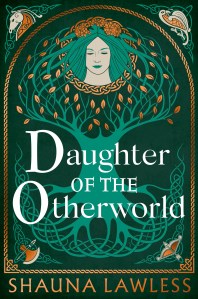
When we think about the Norman Conquest, we often think about how it impacted England, Wales, and Scotland, but we tend to forget about Ireland. Early medieval Ireland  do not get a whole lot of attention in historical fiction. That is, until Shauna Lawless’s Gael Song trilogy. Now, fifty years after the events of the original trilogy, Lawless has brought in a new cast of characters, as well as old characters, into the fight between the Descendants of the Tuatha De Danann and the Fomorians. When a child of prophecy is introduced into the mix that is said to be able to defeat the Fomorians, the race is on to protect the child or to kill her. Will the Descendants survive, or will the Fomorians torch the land and the Descendants’ hope? Shauna Lawless jumps back into this work with the Gael Song Era 2 book 1, “Daughter of the Otherworld.”

I would like to thank Bloomsbury USA and Net Galley for sending me a copy of this novel. I am new to this series, but I wanted to read it because I have never read a book about medieval Ireland or about Irish mythology, so when I saw this book available, I decided to give it a shot, especially with such a stunning cover.

We pick up fifty years after the Battle of Clontarf, and a man named Donnchad is on the run from Broccan of the Tuatha De Danann. Donnchad is a Fomorian, which means he can use fire magic and is the mortal enemy of those descendants of the Tuatha De Danann. Donnchad can reunite with his mother, Gormflaith, in Rome. Meanwhile, Broccan has a dream that tells him that he must go back to Rathlin Island and protect the daughter of Fodla, who has been in the Otherworld for a long time. The daughter, Isolde, is destined to defeat the fire, which might be a reference to the Fomorians.

Broccan raises Isolde as his own daughter until she is 17, but he never tells her who she is or her purpose in this giant conflict. But that all changes when the Fomorians find out about Isolde and decide to attack Rathlin Island. They believe that the threat has been neutralized, but Isolde lives and must travel to the mainland to find her cousin Colmon in Seir Kieran. While Isolde is searching for family and to figure out who she is, the Fomorians seek to control Ireland with the Norman lords of England.

This is a novel full of conflict, both magical and mortal, romance and heartbreak. Lawless does a great job of not only balancing numerous perspectives but also balancing mythology with historical battles and figures to create an original story. While I did enjoy the story, it did take me a while to figure out who the characters were and the overall conflict. I think after reading this particular book, I want to read the previous books in the series before I jump into the latest one. If you have read the previous books in the Gael Song trilogy, I think you will enjoy “Daughter of the Otherworld” by Shauna Lawless.

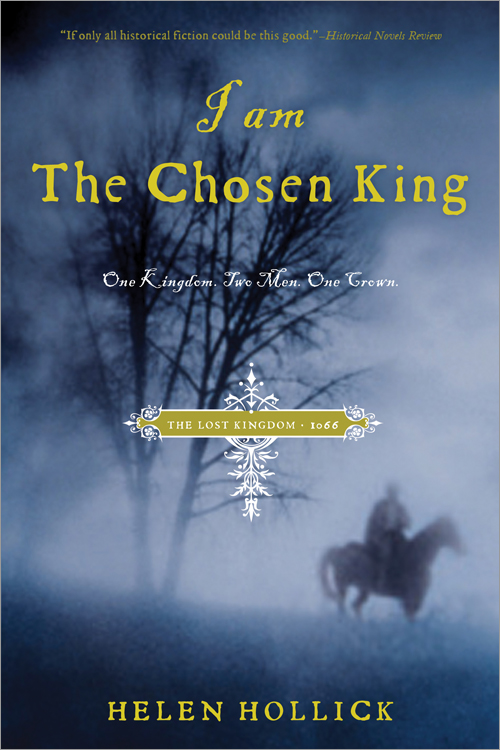
Guest Post: “Book Blast for ‘Harold the King/ I am the Chosen King’ by Helen Hollick

January Harold25YearsI am pleased to welcome Helen Hollick to share the blurb for her book, “Harold the King/ I am the Chosen King,” celebrating its 25th Publication Anniversary. I want to thank The Coffee Pot Book Club and Helen Hollick for allowing me to be part of this special blog tour.

Cover Harold The King UKBlurb: 

First published in 2000 – Celebrating a Silver Anniversary! 

The events that led to the Battle of Hastings and the Norman Conquest of England in 1066 – told from the English point of view. 

Two men. One crown. 

England, 1044. Harold Godwinesson, a young, respected earl, falls in love with an ordinary but beautiful woman. In Normandy, William, the bastard son of a duke, falls in love with power. 

In 1066 England falls vulnerable to the fate of these two men: one, chosen to be a king, the other, determined to take, by force, what he desires. Risking his life to defend his kingdom from foreign invasion, Harold II led his army into the great Battle of Hastings in October 1066 with all the honor and dignity that history remembers of its fallen heroes. 

In this beautifully crafted tale, USA Today bestselling author Helen Hollick sets aside the propaganda of the Norman Conquest and brings to life the English version of the story of the man who was the last Anglo-Saxon king, revealing his tender love, determination, and proud loyalty, all to be shattered by the desire for a crown – by one who had no right to wear it. 

Cover I Am The Chosen King USPraise for Helen Hollick:

“Helen Hollick has it all! She tells a great story, gets her history right, and writes consistently readable books” 

~ Bernard Cornwell 

“A novel of enormous emotional power” 

~ Elizabeth Chadwick 

“Thanks to Hollick’s masterful storytelling, Harold’s nobility and heroism enthrall to the point of engendering hope for a different ending…Joggles a cast of characters and a bloody, tangled plot with great skill” 

~ Publisher’s Weekly 

“Don’t miss Helen Hollick’s colorful recreation of the events leading up to the Norman Conquest.” 

~ Daily Mail 

“An epic re-telling of the Norman Conquest” 

~ The Lady 

“If only all historical fiction could be this good” 

~ Historical Novel Society Review 

Buy Links: 

Universal eBook Link, Harold The King: https://books2read.com/u/4jOdYj  

Harold the King (UK): https://viewbook.at/HaroldTheKing 

I Am the Chosen King (US): https://viewBook.at/ChosenKing 

This title is available on #KindleUnlimited, excerpt in US & Canada.

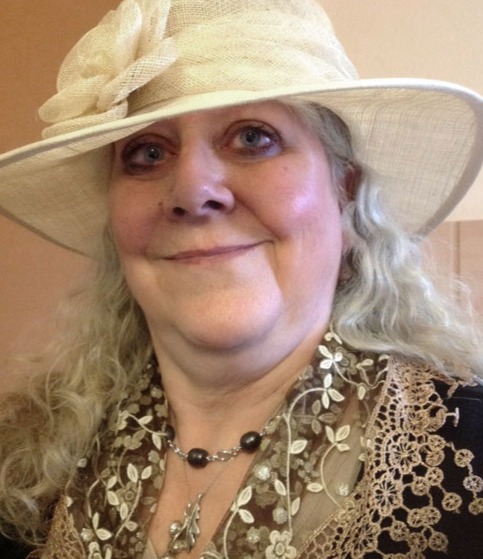
Helen Hollick (edited)Author Bio: 

First accepted for traditional publication in 1993, Helen became a USA Today Bestseller with her historical novel, The Forever Queen (titled A Hollow Crown in the UK) with the sequel, Harold the King (US: I Am The Chosen King) being novels that explore the events that led to the Battle of Hastings in 1066. Her Pendragon’s Banner Trilogy is a fifth-century version of the Arthurian legend, and she writes a nautical adventure/supernatural series, The Sea Witch Voyages. She has also branched out into the quick read novella, ‘Cosy Mystery’ genre with her Jan Christopher Mysteries, set in the 1970s, with the first in the series, A Mirror Murder incorporating her, often hilarious, memories of working as a library assistant. The fifth in the series, A Memory Of Murder, was published in May 2024. 

Her nonfiction books are Pirates: Truth and Tales and Life of a Smuggler. She is currently writing about the ghosts of North Devon and Jamaica Gold for her Sea Witch Voyages.  

Recognized by her stylish hats, Helen tries to attend book-related events as a chance to meet her readers and social-media followers, but her ‘wonky eyesight’ as she describes her condition of Glaucoma, and severe arthritis is now a little prohibitive for travel. 

She lives with her family in an eighteenth-century farmhouse in North Devon, with their dogs and cats. On the farm, there are showjumper horses, fat Exmoor ponies, an elderly Welsh pony, geese, ducks, and hens, as well as several resident ghosts.

Author Links: 

Website: https://helenhollick.net/ 

Amazon Author Page: https://viewauthor.at/HelenHollick 

Facebook: https://www.facebook.com/helen.hollick 

Blog, supporting authors & their books: https://ofhistoryandkings.blogspot.com/ 

Bluesky: https://bsky.app/profile/helenhollick.bsky.social  

Twitter / X: https://x.com/HelenHollick 

Monthly newsletter: Thoughts from a Devonshire Farmhouse: 

Start Here: January 2024 https://ofhistoryandkings.blogspot.com/2024/01/thoughts-from-devonshire-farmhouse.html (posted on her blog)

Book Review: “Normal Women: Nine Hundred Years of Making History” by Philippa Gregory

Normal WomenThe field of history for centuries has been focused on men and the struggles that mankind has had to endure for society to survive. We tend to get only a mere glimpse at the lives of women when they are next to powerful men. Some will write about women, mostly royal women, who lead extraordinary lives and left an imprint on the past. But what about those who lived ordinary lives? What about the women who lived daily, fighting to survive every obstacle? What can we learn about history through the eyes of ordinary women? Philippa Gregory has taken on the mammoth task of trying to answer these questions and more with her tome, “Normal Women: Nine Hundred Years of Making History.”
I would like to thank Harper Collins and Net Galley for sending me a copy of this book. I have had an interesting background regarding Philippa Gregory’s books. When I was in middle school/ high school, I started reading novels by Gregory and I became fascinated with the stories that she was weaving. It was only when I read other books that disproved some of the things that Gregory had included in her novels that I stopped reading them. When I saw this book and its praise, I decided to give Gregory another shot because, in the end, I enjoyed her writing style.

As the title suggests, Gregory covers over nine hundred years of English women’s history, from the Norman Conquest to the modern day. It is a daunting undertaking, but the way Gregory presents the information is so easy to follow that it allows the depth of the subject material to sink in without it being too overwhelming. Each part of this book focuses on a different era in the history of England and has segments that highlight important developments during the era when it comes to women’s roles in society. As readers, we can see changes in society like how the church accepted women, how society accepted women, what kind of rights women had, what jobs women could do for money, how women viewed relationships with men as well as other women, and how men viewed women’s nature.

Unlike Gregory’s previous books and novels, the focus of this book is not the women who wore crowns, but women who lived everyday lives and survived whatever life handed them. Mothers, wives, daughters, soldiers, protesters, doctors, factory workers, Suffragettes, guild widows, pirates, highwaywomen, and women husbands are all represented in this book. By including small snippets of stories from women of every walk of life over centuries, Gregory allows her readers to discover more about these women for themselves, which is an exciting prospect.

I am so glad I read this book and gave Philippa Gregory a second chance. This book was fresh, innovative, challenging at times, and overall a fascinating read. By letting the facts and the stories of these women speak for themselves, Gregory presents the past in a way that is both inspirational and heartbreaking, raw and real. If you want to learn more about English women’s history or you are a fan of Philippa Gregory, I highly suggest you read, “Normal Women: Nine Hundred Years of Making History” by Philippa Gregory.

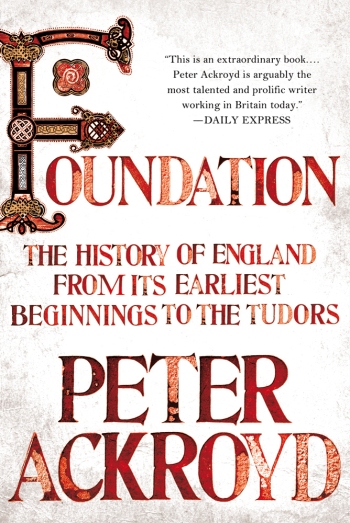
Book Review: “Foundation: The History of England From Its Earliest Beginnings to the Tudors” by Peter Ackroyd

FoundationEngland is a nation that is rich in history and conflicts galore. Through the centuries, England has seen so much change. Many of us know the stories of the medieval and the Tudor kings and queens of England, covered in numerous books, but Peter Ackroyd has taken this concept a step forward. Ackroyd embarked on an epic quest to chronicle the history of England from its prehistoric origins to the modern age. In “Foundation: The History of England From Its Earliest Beginnings to the Tudors,” Peter Ackroyd begins his epic journey into the past to explore the origins of English history.

This book is one that I have seen every time I go to a bookstore and look at the history nonfiction section. I have heard great things about Ackroyd and this series, however, I have yet to read any of his books. It was always an intriguing book to me, but it was one that I never read until now.

Ackroyd has decided to begin his book with one of the most ancient sites in all of England, Stonehenge, explaining that before the first stone was set in Stonehenge, the origins of England were centuries old. We travel through the Stone Age, the Bronze Age, the Iron Age, and into Roman Britain before we dive into the time of the Anglo-Saxons and the Viking invasions. There is a lot of history to cover in less than a hundred pages, but Ackroyd can get his point across about how much change England went through during that time and that it continued to grow throughout the following centuries.

We see the impact that the Norman Conquest and William the Conqueror’s reign. The fall of the Normans with the death of King Stephen led to the rise of the Plantagenets and the reign of King Henry II. It was the Plantagenets that Ackroyd focuses the bulk of this book on as the dynasty lasted over 300 years and witnessed much change. From the Crusades, the Hundred Years War, and the Wars of the Roses, to the Black Death, rebellions, and religious changes, the Plantagenets saw England through major highs and lows. It was not just the monarchs that Ackroyd highlights in this book, he also examines how normal life changed with each dynasty and through the centuries, which adds a bit of depth to his examination of the past. Ackroyd concludes with the fall of Richard III and the rise of Henry VII and the Tudor dynasty. I wish Ackroyd would have waited until his next book to discuss the reign of Henry VII, but it is a minor qualm in the long run.

Overall, I found this an enjoyable and informative read. This is not only a tale of warring kings but a story of the people of England and what makes England so unique. A story whose origins are centuries old, but are rich and vivid in details. I look forward to seeing how Ackroyd will chronicle the Tudors and the rest of England’s history. If you want a book that explores as much of the beginnings of England’s story through multiple dynasties and dramatic changes, I would suggest you read, “Foundation: The History of England From Its Earliest Beginnings to the Tudors” by Peter Ackroyd.

Book Review: “The House of Godwin: The Rise and Fall of an Anglo-Saxon Dynasty” by Michael John Key

52652202When we think of the past, especially those close to a thousand years past our current time, we tend to think about kings and conquerors who transformed the political landscape of certain countries. However, kings and conquerors would be nothing more than mere men if it was not for advisors and allies that stood by their sides or against them. For example, for nearly a century, the men and women of the House of Godwin were at the center of Anglo-Saxon politics and helped or hindered the path of those who wished to sit on the throne of England. The House of Godwin might not be a familiar family for those who are not familiar with Anglo-Saxon England before the Norman Conquest. Still, Michael John Key takes on the challenge to tell their story in his book, “The House of Godwin: The Rise and Fall of an Anglo-Saxon Dynasty.”
I want to thank Amberley Publishing for sending me a copy of this book. I have heard of the House of Godwin, but I only knew about some family members, like Earl Godwin and Harold Godwinson, who would become King Harold II. I wanted to learn more about this family and what kind of influence they held before and after the Norman Conquest.

Key begins by showing his readers how Godwin became Earl Godwin through the reigns of Swein Forkbeard, Edmund the Confessor, and King Cnut. Godwin married a Danish noblewoman named Gytha, and they would go on to have at least eight children, the eldest being a son named Swegn; Swegn was seen as the black sheep of the family and caused quite a few headaches for his father. When Cnut died, Earl Godwin helped navigate the succession squabble to get Harold Harefoot to the throne to become King Harold I.

After Harold I’s death, Godwin decided to take matters into his own hands as he proposed a marriage between Edward the Confessor and his daughter Edith. Under Edward’s reign, we see the rise of the eldest sons of Godwin, Harold, and Tostig, but we also see the Godwinson family in exile. Godwin would win his earldom back, but when news reached him that his eldest son Swegn died, he died soon afterward. Harold would become the head of the family, the chief advisor to Edward the Confessor, and eventually the king’s heir.

Since the events of Edward’s succession and Harold’s reign were the catalyst for the Norman invasion, Key spends a few chapters looking into the events that led to the monumental year of 1066. He also looks at critical battles, especially the Battle of Hastings and how they allowed William the Conqueror to become King of England. Key also examines the relationship between Harold and Tostig, which would help bring the Godwinsons crashing down.

I think Key does a decent job of diving deep into the archives as he tries to find the truth of the 11th century. There were points where it was a bit dry for me, but I did appreciate the charts and maps that he included to help illustrate the wealth and land holdings of the Godwinsons. Overall, I think it was a solid yet complex introduction to the Godwinsons and their legacy. Suppose you want to learn more about Anglo-Saxon England and one of the most influential families of that period in history. In that case, I recommend you read “The House of Godwin: The Rise and Fall of an Anglo-Saxon Dynasty” by Michael John Key.

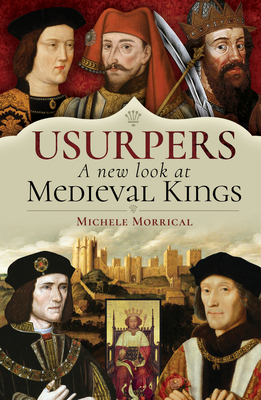
Book Review: “Usurpers, a New Look at Medieval Kings” by Michele Morrical

Pen & Sword Book Cover / Jacket artwork

In medieval Europe, to be considered a strong king, you must keep a firm grasp on your crown, or those who see you as weak will take advantage. These men were known as usurpers throughout history who steal the throne through combat or by illegal means. Some of the most well-known kings in English history have been categorized as usurpers, but is this a fair assessment of their mark in history, or is it a case of propaganda changing their legacy? In her debut nonfiction book, “Usurpers, a New Look at Medieval Kings,” Michele Morrical explores the lives of six English kings who bear that title to see if it makes sense with the facts of how they came into power.

I would like to thank Net Galley and Pen and Sword Books for sending me a copy of this book. When I heard this book was published, I wanted to see how Morrical described a usurper and which king she considered usurpers. I have never heard of a book that focused solely on those who stole thrones in England, so I was excited to see how well it read.

Morrical breaks her book into six sections, with each part focusing on one specific king and his rise to power. She focuses on William the Conqueror, Stephen of Blois, Henry IV, Edward IV, Richard III, and Henry VII as examples of rulers in English history known to be usurpers. Morrical writes biography vignettes to give her readers an understanding of how they came to power and who they had to remove from the throne to become the next monarch. In some cases, it meant starting a new dynasty, and in others, it was just a continuation of the family’s lineage, but it was a different branch of the family tree. The biographies tend to get repetitive, especially with the sections dedicated to the Wars of the Roses. If you are new to these kings and the events of their lifetimes, the repetitive nature will help you understand how everything is connected.

I think Morrical can improve if she writes another nonfiction book by using quotes from primary sources and other historians to strengthen her arguments. I wish she had included discussions from chronicles or other primary sources from around the times that these men became rulers to see the consensus of the time towards the new king. It would have added an extra layer to the stories, and readers could see how our definition of a usurper king would have compared or contrasted to the views of the past. I would have also liked Morrical to have discussed whether being a usurper king had a positive or negative connotation. Many kings on this list were considered game-changers when ruling England and transformed how England was viewed in the grander scheme of European politics.

I think for her first book, Morrical does a decent job of presenting her viewpoints about certain kings and presenting the facts about their lives. One can tell that Morrical is passionate about usurpers and understanding why they took the English throne from their predecessors. Overall, I think it is not bad for a book that combines the lives of six kings of England into one text. If you want a good introductory book into the lives of usurper kings, you should give “Usurpers, a New Look at Medieval Kings” by Michele Morrical a try.

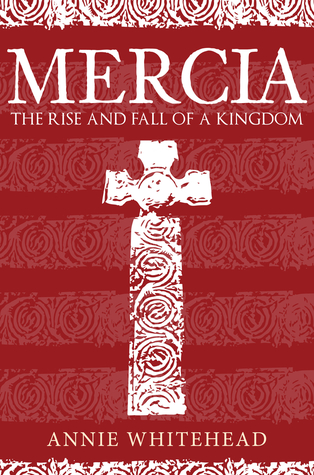
Book Review: “Mercia: The Rise and Fall of a Kingdom” by Annie Whitehead

38243840._SY475_England’s history is full of daring moves and colorful characters, but it is also very ancient compared to other countries. We often considered the “start” of English history in school as the Norman Conquest in 1066. Nevertheless, this was just a stage in the massive story of the island. We have to consider those who called England their home; those who knew England, not as a unified country, but seven kingdoms known as the heptarchy. The most famous of these seven kingdoms was Wessex, the last kingdom, but their mortal enemy had a rich history of their own. Mercia was a thriving kingdom for hundreds of years, with colorful characters that many people are not familiar with. Annie Whitehead has taken the tales of this forgotten kingdom to the forefront with her book, “Mercia: The Rise and Fall of a Kingdom.” 

I would like to thank Amberley Publishing for sending me a copy of this book. I was looking forward to learning about the Mercians and why their stories are significant in Anglo-Saxon England. My knowledge about this kingdom is minutiae, although I know some famous figures, including Lady Godiva, Penda, and Aethelflaed, from other books written by Whitehead. 

Whitehead begins her journey into this kingdom’s rich history with the story of the 7th-century ruler Penda, the Pagan King of Mercia. His tale of surviving savage battles and making Mercia into a powerhouse set the standard for Mercian kings that would follow. His son and successor, Peada, would bring Christianity to Mercia, and the diocese of Lichfield, which still exists today, would be formed shortly afterward. Mercia was a kingdom that fought for survival against the remaining six realms of the heptarchy, especially against Wessex. Of course, it was not just other Anglo-Saxons that the Mercians were pitted against, as we see the rise of the Vikings with their Great Heathen Army and  Welsh princes fight for control of the isle. 

Mercia’s kings would fall into obscurity as Mercia turned from a kingdom to an earldom with the uniting of the heptarchy into one nation under one king. We know about Mercia’s history through scant details included in annuls and accounts written by men like Henry of Huntingdon and Bede and chronicles like the Anglo-Saxon Chronicle. Whitehead has combed every source to give her readers the most comprehensive history of a realm that has been forgotten over time. The very nature is academic, yet Whitehead tries to engage those armchair historians who might be familiar with characters like Godiva, Aethelbad, and Offa with tales of murder and intrigue. My advice for future readers of this title is to take notes as there is a plethora of information, especially royal genealogy. 

Mercia is a bit out of my comfort zone when it comes to my knowledge of its history, but that just made reading this title even more thrilling. If you want a story of one of the ancient Anglo-Saxon kingdoms of England, you should check out, “Mercia: The Rise and Fall of a Kingdom” by Annie Whitehead. Whitehead has brought the tales of Mercia to a modern audience in the best way possible.

Book Review: “The White Ship: Conquest, Anarchy and the Wrecking of Henry I’s Dream” by Charles Spencer

53604802._SY475_In the middle of the night on November 25, 1120, screams could be heard from the English Channel. A ship known as The White Ship hit a rock and began to sink. Those on board were the glamorous English elite, including the legitimate son of King Henry I, William Aetheling. In an era where people feared the sea and could not swim, those on board sank to their watery death on that cold winter night that began with such frivolity. No one knew that night that this one disaster at sea would cause a dynastic struggle that would lead to the founding of the infamous Plantagenet dynasty. In his latest book, “The White Ship: Conquest, Anarchy and the Wrecking of Henry I’s Dream”, Charles Spencer takes his readers on a journey to fully understand the impact that this tragedy had on the English royal family.
Charles Spencer has written many nonfiction books in the past, but they have all been out of the time periods that I enjoy reading about. I might go back and read them in my own time, but when I saw that this particular title was going to be published and how much praise it had received from prominent historians, I decided to give it a try.

Spencer’s tale into this tragedy begins with a vivid account of the night of November 25th and then it jumps to the first part of the tale. To understand why this event was so horrific for Henry I, we have to understand what it took for Henry I to become King of England. Henry, I was one of three sons of William the Conqueror. After his father died in 1087, the third son, William Rufus became King William II, much to the chagrin of the eldest son, Robert Curthose, who remained Duke of Normandy, but he continued to be a thorn at his brother’s side. When William II died after a hunting accident, Henry knew that it was his chance to beat Robert to the throne, which he did, becoming Henry I, who fought hard to restore order to England.

His two legitimate children, William Aetheling and Matilda, allowed Henry I to breathe a sigh of relief, although he had numerous illegitimate children. This is why this tragedy hit me so hard. With William’s death, it meant that anyone could take the throne after Henry I’s death, which is exactly what happened. The period we know as The Anarchy was a battle between Matilda, who was Henry’s heir, and her cousin Stephen of Blois for the throne of England.

Spencer has painted a dramatically dark portrait of the fall of the Norman dynasty. The Normans were notorious for their cruelty towards those who opposed them, even their own family. What I thoroughly enjoyed with this book was Spencer’s tone. It is as if you are having a casual conversation with Spencer about Henry I’s reign and his family’s drama for the throne. I was impressed with how well researched this book was and the new information that Spencer provided to present the bigger picture of this catastrophe.

I found this book to be a thrilling read full of information and vivid descriptions. This may be Charles Spencer’s first dive into the world of medieval nonfiction, but I hope it is not the last. If you want a brilliant read about the aftermath of the Conquest, the rise and fall of Henry I, and the Anarchy, I highly recommend you read, “The White Ship: Conquest, Anarchy and the Wrecking of Henry I’s Dream” by Charles Spencer.

Book Review: “Defenders of the Norman Crown: The Rise and Fall of the Warenne Earls of Surrey” by Sharon Bennett Connolly

Pen & Sword Book Cover / Jacket artwork

To survive during the reigns of the Norman and Plantagenet Kings of England, one must understand where their loyalty and trust lied. Did they follow the crown or did they take a risk and follow those who opposed the person who wore the crown? For one family, there was no question who they were loyal to, which was the crown. The Warenne Earls of Surrey served the Kings of England from William the Conqueror to Edward III, gaining titles, prestige, and marriages that would cement their names in history books. They survived some of the most turbulent times in English history even if they did have a few scandals in their illustrious history. In Sharon Bennett Connolly’s latest non-fiction adventure, “Defenders of the Norman Crown: The Rise and Fall of the Warenne Earls of Surrey ”, she explores this family’s history that spanned over three centuries.

I would like to thank Pen and Sword Books and NetGalley for sending me a copy of this book. I have been a fan of Sharon Bennett Connolly’s books for a while now, so when I heard about this title, I knew I wanted to read it. I was going in a bit blind since I have never heard of the Warenne Earls of Surrey, but that is part of the fun of studying a new aspect of history.

The first Earl of Surrey, William de Warenne began this family’s tradition of royal loyalty as he joined William the Conqueror on his journey to England and fought alongside him to establish Norman rule at the Battle of Hastings. William’s descendants would be involved in some of the most important events of the time, from the crusades to the 1st and 2nd Baron’s Wars and the sealing of the Magna Carta. At some points, the earls would briefly switch sides if they thought the king was not in the best interest of the country, but they remained at the heart of English politics and worked hard to help guide the king and the country to become stronger.

What made the Warennes a tour de force when it came to noble families was their ability to marry well, except for the final earl and his scandalous relationships. The second earl desired to marry into the royal family, which did not happen, but his daughter, Ada de Warenne would marry William the Lion, King of Scotland. One of the daughters of Hamlin and Isabel de Warenne would be the mistress of King John and would give birth to his illegitimate son Richard of Chilham. The only woman of the family who inherited the earldom of Surrey, Isabel de Warenne, was married twice and so both of her husbands, William of Blois and Hamelin of Anjou, are considered the 4th earl of Surrey.

Connolly does a wonderful job explaining each story in de Warenne’s long history, including the minor branches of the family. I was able to understand the difference between family members who shared the same first name, (like William, John, and Isabel) but I know that others might have struggled with this aspect. I think it would have been helpful if Connolly had included either a family tree or a list of family members of the de Warennes at the beginning of this book to help readers who did struggle.

I found this particular title fascinating. The de Warennes were a family that proved loyalty to the crown and good marriages went a long way to cement one’s legacy in medieval England. Connolly proved that she has a passion for bringing obscure noble families to the spotlight through her impeccable research. If you want a nonfiction book of a noble family full of loyalty, love, and action, you should check out “Defenders of the Norman Crown: The Rise and Fall of the Warenne Earls of Surrey” by Sharon Bennett Connolly.

Book Review: “English Collusion and the Norman Conquest” by Arthur C. Wright

51352100 (1)The Norman Conquest of 1066 was one of the most important dates in English and world history. It signaled the start of the Norman influence in England with Duke William, also known as William the Conqueror, becoming King of England. But does William I deserve the reputation that is attributed to him in history, or should we be careful with how we view him because his story is told by the avaricious Church? How much help did William and the Normans receive from their English counterparts? Can we call this event a “conquest”? Who was to blame for the “Harrowing of the North”? These questions and more are discussed in Arthur C. Wright’s latest book, “English Collusion and the Norman Conquest”.

I would like to thank Pen and Sword Books and Net Galley for sending me a copy of this book. When it comes to studying the Norman Conquest, I am a bit of a novice, so I was excited to read another book about this time.

I found this book rather difficult to understand. Wright writes in a style where he is having a conversation to experts, while at the same time saying that every historian has it wrong and he knows exactly what happened. This rubbed me the wrong way. If he had proved his point, I might have found his argument compelling, but he just came off as an angry rambler in the first half of this book. I really wanted to understand what he was trying to say, but I did not see his evidence for English collusion. Instead, he spent a lot of time arguing that feudalism is a myth, which was quite bizarre.

I think the second part of his book was stronger than the first half. It explored the life, commerce, and education of the average citizen. I think if Wright had reorganized his chapters, this book might have been a bit easier to comprehend. Wright tends to focus on after the conquest, without specifying dates, but it is hard to see where the English collusion comes into play. Another problem that I did have is when he tried to insert more modern sayings, ideas, and characters into the conversation. It felt out of place and rather distracting.

I do believe that Wright is knowledgeable when it comes to the subject of the Norman Conquest and England in the years that followed. Unfortunately, his writing style makes it difficult to understand what message he is trying to get across with this particular book. It was readable, but the focus was a bit off and it was hard to figure out his target audience. If you are familiar with the Norman Conquest and would like a challenge, check out “English Collusion and the Norman Conquest” by Arthur C. Wright. It was not my cup of tea, but that does not mean it is a bad book. Someone else might enjoy it.